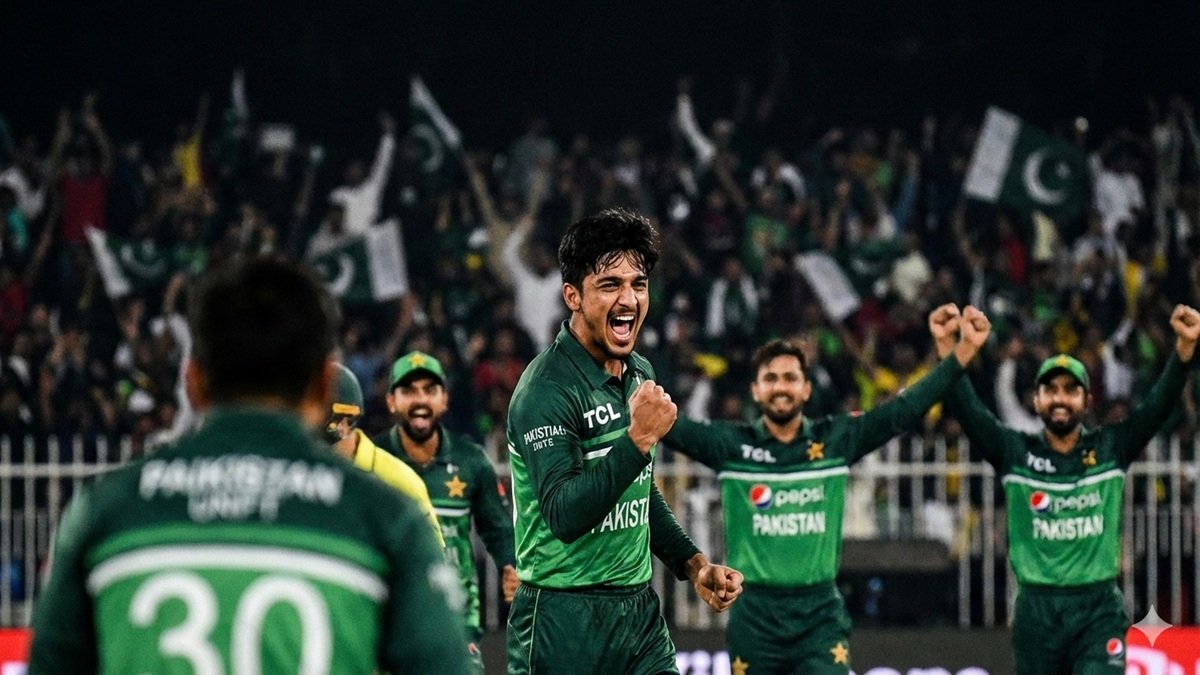
How Pakistan Finally Solved Australia in T20s — And Why This Win Is Bigger Than One Match
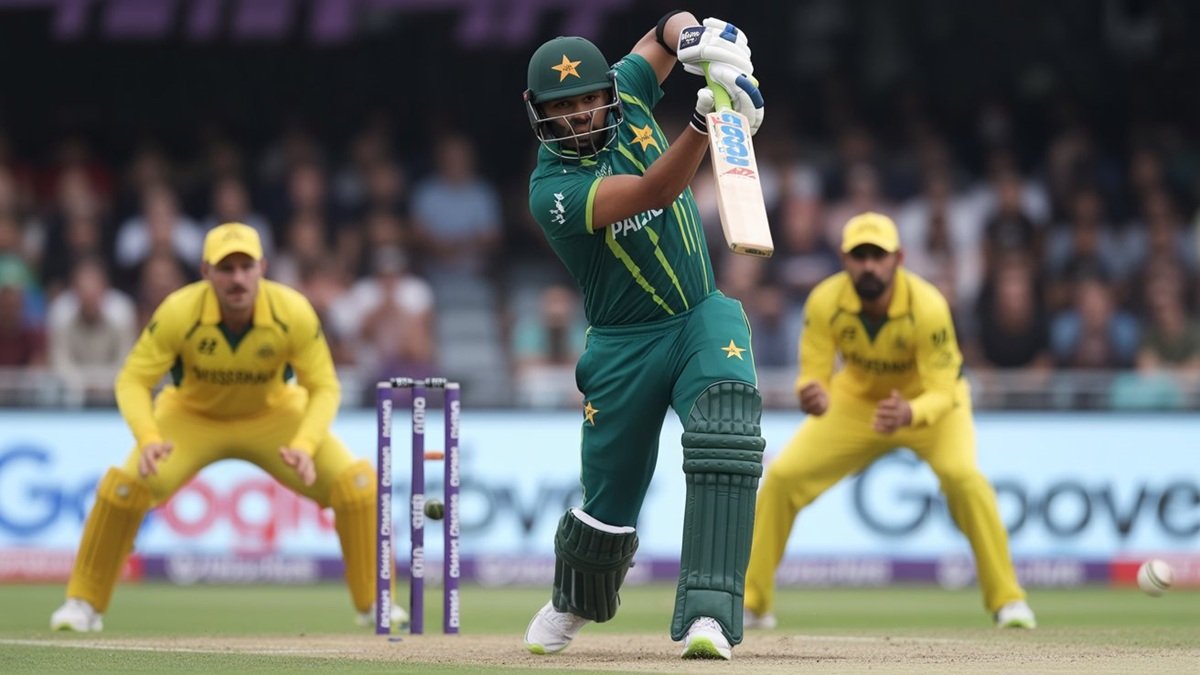
Pakistan’s 22-run win over Australia in the first T20I at Gaddafi Stadium, Lahore, on January 28, 2026, was not just about breaking a 2,650-day losing streak.
It was about changing decision-making, reading conditions better, and trusting the right players at the right time.
At the center of that shift was Saim Ayub, whose all-round performance reflected a deeper change in Pakistan’s T20 approach — one that could shape their World Cup journey.
What Actually Changed This Time (The Missed Angle)
Most teams beat Australia by overpowering them. Pakistan rarely succeed that way. This time, Pakistan out-thought Australia.
Instead of playing safe early — a pattern seen repeatedly since 2019 — Pakistan attacked selectively in the powerplay. The intent was clear but controlled.
According to match observations shared by the Pakistan Cricket Board (PCB) in its post-match release, the team focused on scoring areas rather than boundary-only hitting.
That difference may sound small. It decided the match.
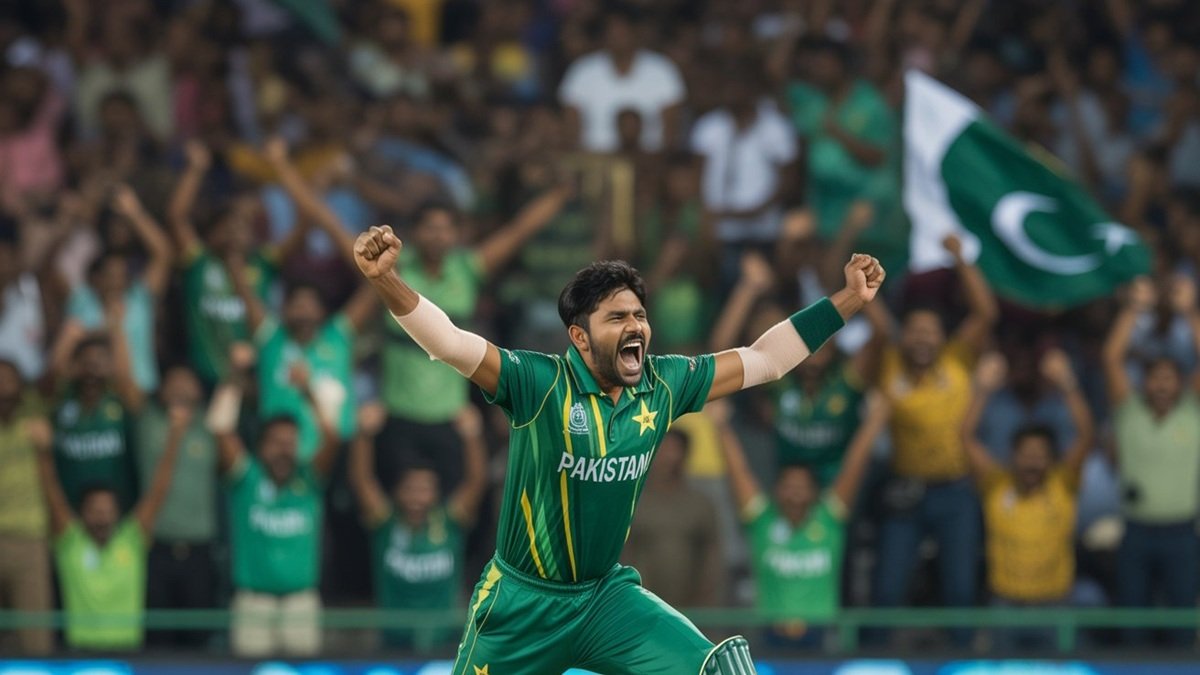
Powerplay Control: Why Saim Ayub’s 40 Mattered More Than the Number
Saim Ayub’s 40 off 22 balls was not reckless. It was structured.
He targeted:
- Square boundaries when fielders were inside
- Singles to disrupt bowling rhythm
- Lofted shots only when bowlers missed length
This approach prevented Australia from applying their usual pressure through dots and short balls.
According to ball-by-ball data on ESPNcricinfo, Pakistan’s powerplay strike rate in this match was one of their best against Australia since 2018.
That early momentum forced Australia into defensive bowling changes much earlier than planned.
Why 168 Was a Winning Total in Lahore (Pitch Reality)
On paper, 168/8 looks average. On this pitch, it was strong.
Lahore surfaces often slow after the first 7–8 overs, especially in night games. Shot timing becomes difficult, and straight boundaries dry up.
This pattern has been documented in recent international matches at Gaddafi Stadium, including bilateral series reports shared by the PCB and ICC match officials.
Pakistan recognized this early. Instead of chasing 180+, they focused on crossing 165, a historically defendable total under similar conditions.
That awareness was missing in past home defeats. Read more about Pakistan’s recent T20 performances in our analysis of the IPL-PSL Schedule Clash 2026.
Bowling Plan: Why Pakistan Defended Instead of Chasing Wickets
Another quiet but crucial change was Pakistan’s bowling mindset.
Instead of hunting wickets aggressively, Pakistan focused on:
- Cutting singles
- Bowling into longer boundaries
- Forcing Australia to take risks late
Saim Ayub’s early dismissal of Travis Head removed Australia’s fastest accelerator. From there, spinners controlled the middle overs.
According to ICC match data, Australia scored well below their usual middle-over average in subcontinental T20s.
This was pressure cricket — not flashy, but effective.
Australia’s Problem in Asia (And Why Pakistan Exploited It)
Australia’s T20 success often relies on pace, bounce, and power. In Lahore, those advantages faded.
Australia struggled to:
- Rotate strike against spin
- Adjust batting order for conditions
- Break run-rate pressure without boundaries
This has been a recurring issue for Australia in Asian conditions, noted in past ICC tournament reviews and series analysis.
Pakistan leaned into that weakness instead of fighting it. For more insights on international cricket dynamics, check out our coverage of T20 World Cup 2026: Scotland Replaces Bangladesh.
Saim Ayub’s Real Value: Balance, Not Brilliance
Pakistan have long searched for players who offer balance, not just moments.
Ayub provides:
- Aggression at the top
- Secondary bowling
- Flexible team combinations
Selectors have repeatedly emphasized the need for multi-skill players in modern T20 cricket during PCB media briefings over the past two seasons.
This performance strengthens Ayub’s case not just for this series, but for long-term planning.
Historical Context: Why This Win Feels Different
Before this match:
- Australia had won 6 straight T20Is against Pakistan
- Pakistan had not beaten Australia in T20s since October 2018
- Australia whitewashed Pakistan 3–0 in 2024
With this win, the overall T20I head-to-head is now level at 14–14, according to official ICC records.
More importantly, Pakistan finally won by playing to conditions, not by copying Australia’s strengths.
Why This Win Matters Right Now (Public Impact)
This result arrives at a sensitive moment.
Pakistan needed:
- Confidence after overseas struggles
- Clarity ahead of World Cup selection debates
- Proof that younger players can deliver under pressure
This match provided all three.
For fans, it brings relief.
For management, it validates direction.
For players, it restores belief.
As Pakistan prepares for major tournaments, understanding the dynamics becomes crucial. Learn about upcoming fixtures in our article on India vs Pakistan T20 World Cup 2026.
What Happens Next in the Series
The remaining matches will also be played in Lahore:
| Match | Date | Time (PST) |
|---|---|---|
| 2nd T20I | Jan 31, 2026 | 6:00 PM |
| 3rd T20I | Feb 1, 2026 | 6:00 PM |
Pakistan are expected to maintain a spin-heavy approach. Australia may respond by reshuffling their middle order to counter slower bowling earlier.
For insights on Pakistan’s cricket infrastructure development, read about the Islamabad Cricket Stadium Construction Update.
Match Snapshot
| Category | Details |
|---|---|
| Match | Pakistan vs Australia, 1st T20I |
| Venue | Gaddafi Stadium, Lahore |
| Date | Jan 28, 2026 |
| Result | Pakistan won by 22 runs |
| Player of the Match | Saim Ayub |
| Series | Pakistan lead 1–0 |
Final Insight: This Was a Thinking Win
Youth cricket also shows promise, as evidenced in our coverage of Pak vs Ind U19 World Cup 2026 Super Six.
Frequently Asked Questions