
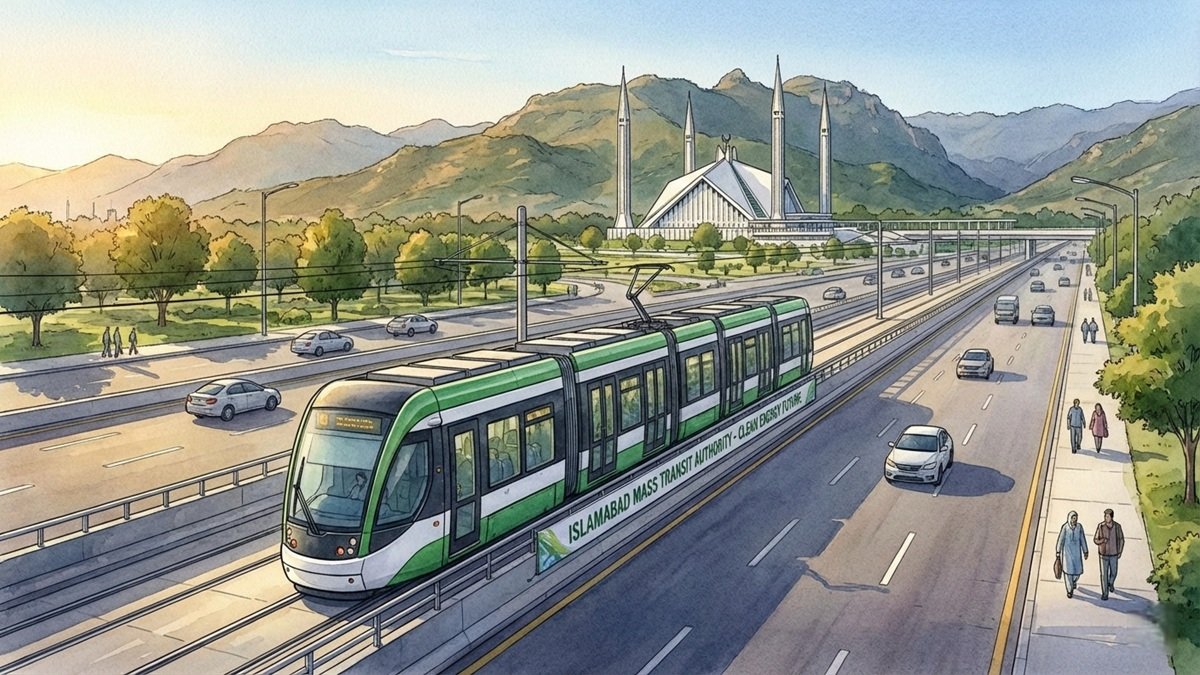
Islamabad Electric Tram Project Advances: What the New Feasibility Study Really Means for Daily Commuters
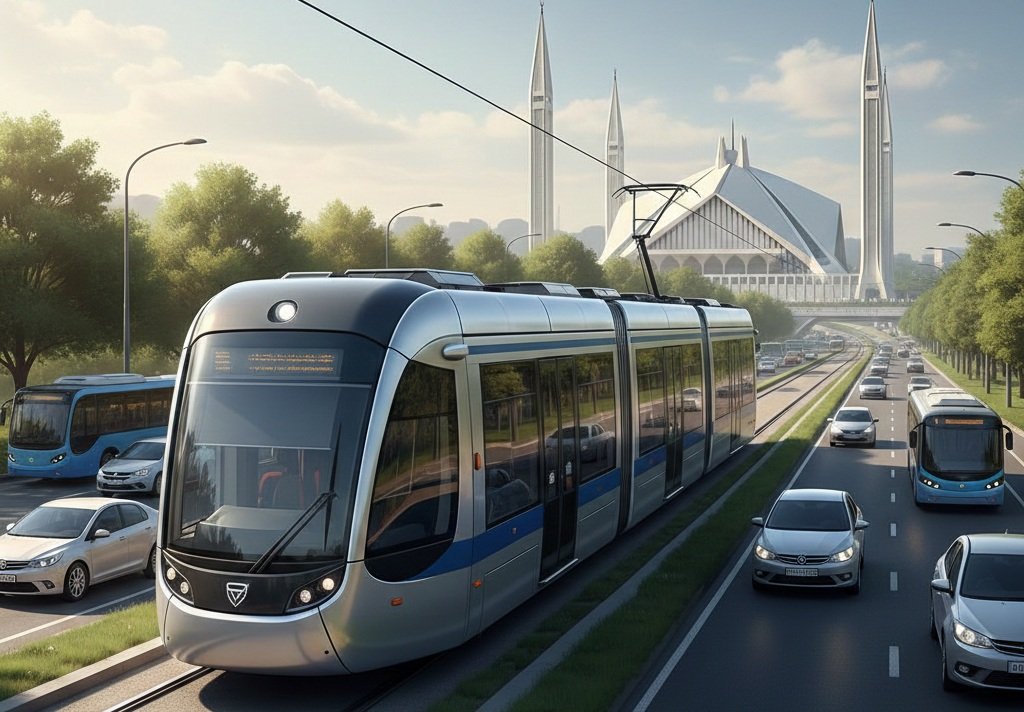
Islamabad’s public transport system may be heading toward its biggest upgrade in decades. The Islamabad electric tram service project has officially moved into the feasibility stage after the Capital Development Authority (CDA) issued fresh directions in late January 2026.
This matters because traffic congestion, fuel costs, and air pollution are no longer future problems—they are daily realities. With electric buses already running, the Islamabad electric tram project is being planned as the next layer of mass transit, especially for long and crowded routes.
Unlike earlier announcements, this time the government has ordered a detailed feasibility study, not just a concept note. For residents, this signals a more serious attempt to fix mobility issues in the capital.
This guide explains what has changed, why it matters now, how it compares with past plans, and what citizens should realistically expect next.
Table of Contents
- What Happened: CDA’s Latest Decision Explained
- Why Islamabad Needs an Electric Tram Now
- Background: How Islamabad’s Transport System Reached This Point
- Proposed Routes and Why They Matter
- Infrastructure and Technology Plans
- How Trams Will Work with Electric Buses
- Timeline: What Changed from Last Year
- Expert and Official Insights
- Public Impact: Who Gains the Most
- Costs, Funding, and Open Questions
- What Happens Next
- Key Facts Summary
- Frequently Asked Questions
What Happened: CDA’s Latest Decision Explained
On January 28, 2026, CDA Chairman Muhammad Ali Randhawa chaired a high-level meeting at CDA headquarters and ordered the immediate launch of a feasibility study for an electric tram system in Islamabad.
Senior officials from planning, finance, and city administration attended the meeting. According to CDA briefings, the study will assess routes, passenger demand, infrastructure needs, and financial models.
This decision builds on earlier approvals granted in May and July 2025, following directives from the Prime Minister and Interior Minister. However, those earlier approvals did not lead to execution.
This time, CDA has moved from discussion to documentation, which is a critical step in any large transport project.
Authoritative reference:
Capital Development Authority (CDA) – https://cda.gov.pk
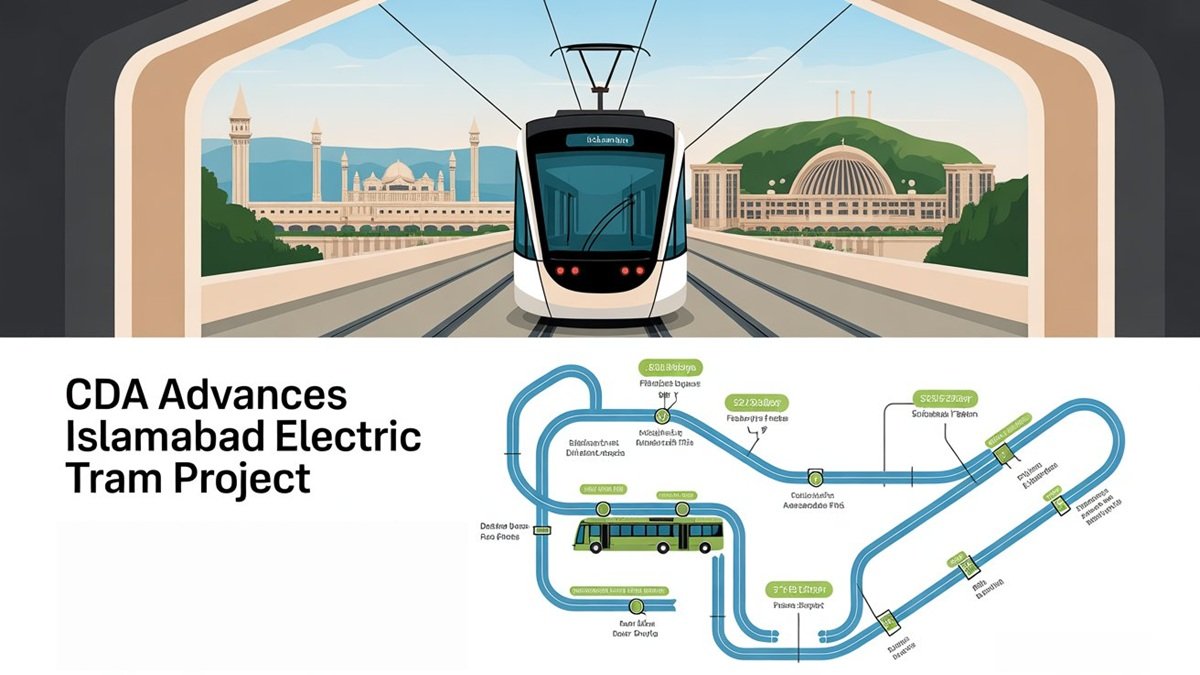
Why Islamabad Needs an Electric Tram Now
Islamabad was designed for fewer people and fewer cars. Over the last decade, however, population growth and urban expansion have changed travel patterns.
Today:
- Expressway and Srinagar Highway face daily congestion
- Fuel price volatility affects household budgets
- Air quality worsens during winter months
Electric buses have helped, but buses alone cannot handle high-demand corridors over long distances.
A tram system offers:
- Higher passenger capacity per trip
- More stable travel times
- Lower long-term operating emissions
Globally, cities are returning to electric trams as a cleaner alternative to diesel-based transport. According to the International Association of Public Transport (UITP), electric rail-based systems reduce per-passenger emissions when demand is high.
Background: How Islamabad’s Transport System Reached This Point
For years, Islamabad depended heavily on private vehicles. Unlike Lahore, which invested early in metro systems, Islamabad focused on road expansion.
Key developments include:
- Launch of metro bus corridors
- Creation of the Capital Mass Transit Authority
- Introduction of electric feeder buses in 2025
According to CDA statements, over 90,000 passengers now use electric buses daily. This performance provided real-world data, showing that citizens are willing to shift to cleaner public transport when it is reliable.
However, planners also noticed limits. On busy highways, buses slow down traffic instead of easing it. This gap is where the Islamabad electric tram service in Islamabad fits.
For more on Pakistan’s modernization efforts, see our coverage of updated immigration rules and satellite internet developments.
Proposed Routes and Why They Matter
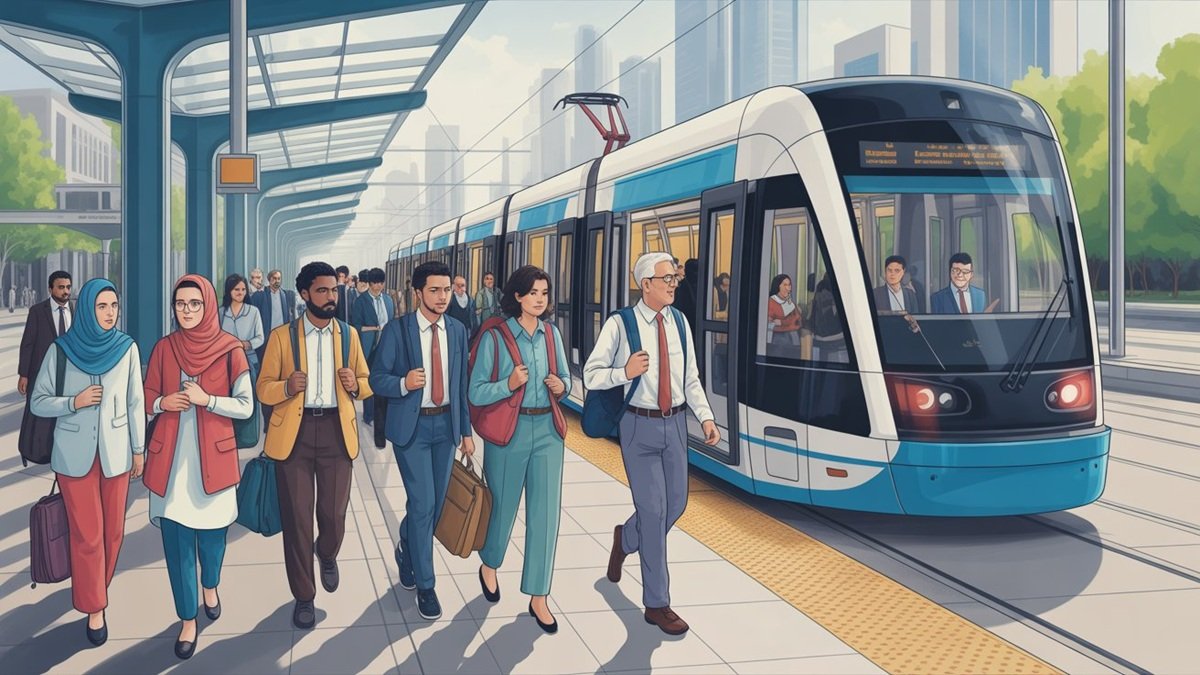
The feasibility study prioritizes routes with the highest daily traffic pressure.
Routes Under Consideration
- Rawat to Faisal Mosque via Islamabad Expressway
- Jinnah Square to Islamabad International Airport via Srinagar Highway
These corridors connect:
- Residential sectors
- Business districts
- Educational institutions
- The international airport
By focusing on these routes, CDA aims to serve both daily commuters and long-distance travelers.
This approach mirrors international best practices, where trams act as high-capacity spines of urban transport systems.
Infrastructure and Technology Plans
The proposed tram system is designed as a fully modern, digital service.
Planned Features
- Dedicated depots and parking yards
- Electric charging infrastructure
- Maintenance facilities
- Digital displays at stops
- Intelligent Transport System (ITS)
Over 140 bus stops are already being upgraded, with plans for 200 more. These upgrades reduce future costs and allow smoother tram integration.
Reference:
Pakistan Ministry of Planning & Development – https://www.pc.gov.pk
How Trams Will Work with Electric Buses
Instead of replacing buses, trams will complement them.
Integration Model
- Trams operate on major corridors
- Electric buses act as feeders
- One digital ticketing system
- Cashless payments and QR codes
This setup reduces waiting times and avoids duplicate routes. More importantly, it allows commuters to travel longer distances without changing multiple vehicles.
Such integrated systems are widely recommended by urban transport experts, including the World Bank, which supports similar models in developing cities.
Pakistan continues to modernize infrastructure across sectors—learn about Pakistani passport improvements and international education opportunities.
Timeline: What Changed from Last Year
In 2025, CDA announced plans but progress stalled due to unclear execution steps.
What changed in 2026:
- Written instructions to start feasibility immediately
- Clear departmental responsibility
- Alignment with federal green mobility goals
Still, expectations must remain realistic. Feasibility, approvals, procurement, and construction take time.
Based on similar projects, 2026–2027 would be the earliest possible window for initial rollout, if approvals move smoothly.
Expert and Official Insights
CDA Chairman Muhammad Ali Randhawa described the initiative as:
“A historic step toward providing modern and eco-friendly travel facilities in the capital.”
Urban planners note that Islamabad now has a rare advantage: existing electric bus data. This allows route planning based on actual demand rather than assumptions, reducing long-term risk.
Public Impact: Who Gains the Most
The tram project directly affects daily life.
Major Beneficiaries
- Office workers commuting long distances
- Students traveling to universities
- Airport passengers and staff
- Women and differently-abled commuters
Reliable public transport reduces household transport expenses and improves access to jobs and education.
Indirectly, businesses benefit from punctual employees and smoother logistics.
Costs, Funding, and Open Questions
CDA has not released official cost figures yet. This is normal at the feasibility stage.
What Is Known
- Public-private partnerships are preferred
- Self-sustaining revenue model is targeted
- Advertising and ticketing will play a role
What Is Still Unknown
- Total project cost
- Fare levels
- Construction duration
All these details depend on feasibility findings.
What Happens Next
Here is the realistic next sequence:
- Feasibility study completion
- Review by federal and city authorities
- Funding and partnership decisions
- Pilot route approval
- Public updates and consultations
Citizens should watch CDA’s official updates for verified progress.
Key Facts Summary
| Area | Status |
|---|---|
| Project Stage | Feasibility Study |
| Lead Authority | CDA |
| Existing E-Bus Users | 90,000+ daily |
| Power Source | Fully Electric |
| Priority Routes | Expressway, Srinagar Highway |
| Accessibility | Inclusive design |
Frequently Asked Questions
When will Islamabad’s electric tram start?
No launch date yet. Timelines depend on feasibility and approvals. Based on similar projects, 2026–2027 would be the earliest possible window for initial rollout, if approvals move smoothly.
Will the tram connect to the airport?
Yes. Airport connectivity is a top priority route. The proposed route from Jinnah Square to Islamabad International Airport via Srinagar Highway is under consideration.
How is this different from electric buses?
Trams carry more passengers and serve longer, busier corridors. They offer higher passenger capacity per trip, more stable travel times, and lower long-term operating emissions compared to buses.
Who is conducting the study?
The Capital Development Authority is leading it internally. Senior officials from planning, finance, and city administration are involved.
Is the project environmentally friendly?
Yes. It is fully electric and supports Pakistan’s climate goals. Electric rail-based systems reduce per-passenger emissions when demand is high.
How will trams work with existing electric buses?
Trams will operate on major corridors while electric buses act as feeders. The system will use one digital ticketing system with cashless payments and QR codes, allowing seamless integration.
Final Analysis: Why This News Matters
The Islamabad electric tram service project is not just about transport. It reflects a shift toward data-driven urban planning.
If executed properly, it can:
- Reduce congestion
- Improve daily commutes
- Set a national example for sustainable transit
For now, the feasibility study is the key test. Its quality will decide whether Islamabad finally gets a modern tram—or another stalled proposal.

Disclaimer: This article is for informational purposes only. All information has been compiled from publicly available sources and official statements. Project timelines, routes, and costs are subject to change based on feasibility study outcomes and government approvals. Readers are advised to check official CDA announcements for the most current updates.