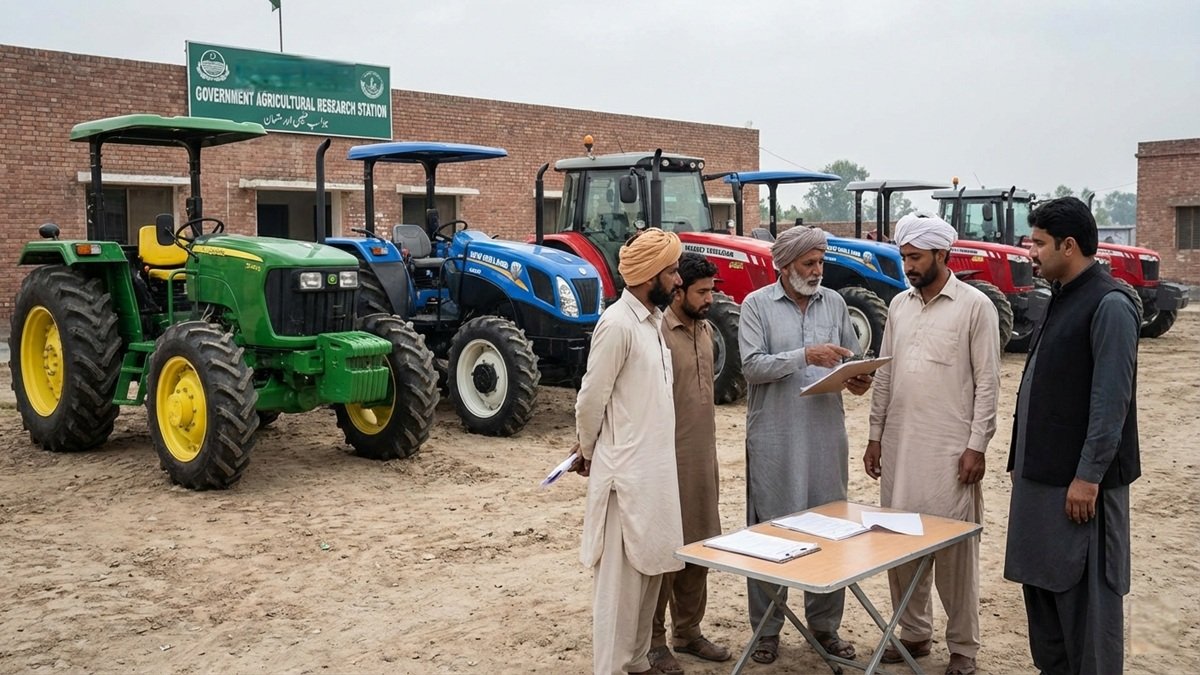
Punjab Green Tractor Scheme 2026 Explained: Registration, Eligibility, Subsidy, and What Farmers Should Do Next
Punjab’s Green Tractor Scheme 2026 arrives at a time when farmers across the province are facing rising fuel prices, labor shortages, and higher input costs. Many small farmers still rely on rented tractors, which increases expenses and delays sowing.
To address this, the Punjab government—under Chief Minister Maryam Nawaz Sharif—launched Green Tractor Scheme Phase 3, aiming to help genuine farmers buy modern tractors at subsidized prices. Instead of short-term cash relief, the scheme focuses on long-term productivity and food security.
This article explains the scheme in simple terms—what it is, who qualifies, how registration worked, and what happens next—using official sources and a neutral news + explainer tone.
Table of Contents
- Why the Green Tractor Scheme 2026 Matters
- Scheme Overview: Official Government Plan
- What Makes Phase 3 Different
- Eligibility Criteria Explained
- Registration Status and Demand
- Step-by-Step Application Process
- Balloting and Selection Process
- Subsidy Amount and Approved Tractor Models
- What Past Phases Tell Us
- Local Impact on Punjab’s Farming Economy
- Expert Insight on Farm Mechanization
- Key Facts at a Glance
- What Happens Next
- Frequently Asked Questions
- Final Analysis
Why the Green Tractor Scheme 2026 Matters
Punjab is Pakistan’s main food-producing province. Yet, a large number of farmers still depend on old machinery or rented tractors, which increases per-acre costs and affects crop timing.
According to policy updates available on the Punjab Government official portal, the provincial government has identified farm mechanization as a key reform area. Modern machinery helps farmers prepare land faster, reduce fuel use, and improve yields.
As a result, the Punjab Green Tractor Scheme 2026 is not just financial support—it is part of a broader effort to modernize agriculture through transparent, digital systems.
Key Benefits of Farm Mechanization
- Faster land preparation and timely sowing
- Reduced dependency on rental services
- Lower per-acre operational costs
- Improved crop yields and food security
- Enhanced productivity during labor shortages
Scheme Overview: Official Government Plan
CM Punjab Green Tractor Scheme Phase 3 (2026) aims to provide subsidized tractors to small and medium farmers across Punjab.
Under Phase 3:
- 10,000 tractors are being offered
- Horsepower range: 50–65 HP
- Subsidy: Up to PKR 1,000,000 per tractor
- Selection method: Computerized balloting
According to the Punjab Agriculture Department, the scheme prioritizes:
- Locally manufactured tractors
- District-wise allocation
- Fully online registration and verification
Across all phases, the government plans to support over 20,000 tractors, making this one of Punjab’s largest farm mechanization initiatives. Similar government support programs include the Punjab Laptop Scheme for students and the Punjab Health Card Program.
What Makes Phase 3 Different
Phase 3 reflects a clear shift in policy design.
Earlier phases included more high-horsepower tractors, which mainly benefited farmers with larger landholdings. This time, the government focused on mid-range tractors that better match Punjab’s farming reality.
According to landholding data referenced by the Punjab Land Records Authority (PLRA), most farmers in Punjab cultivate small to medium-sized plots. Therefore:
- 50–65 HP tractors are more practical for smaller plots
- Fuel and maintenance costs stay lower
- More farmers can qualify under eligibility criteria
This change makes Phase 3 more inclusive and realistic for Punjab’s agricultural landscape.
Eligibility Criteria Explained
To apply for Punjab Green Tractor Scheme Phase 3, applicants must:
- Be a permanent resident of Punjab
- Hold a valid CNIC
- Own agricultural land
- Be actively engaged in farming
- Have no bank loan defaults
- Apply for only one tractor per household
- Not have benefited from Phase 1 or Phase 2
Land ownership requirements generally start from 7 acres for higher HP tractors. In some cases, smaller holdings may qualify for lower HP models with proof of cultivation.
All information is verified digitally through PLRA and other government databases, as outlined by the Agriculture Department of Punjab. This digital verification reduces fake or duplicate applications.
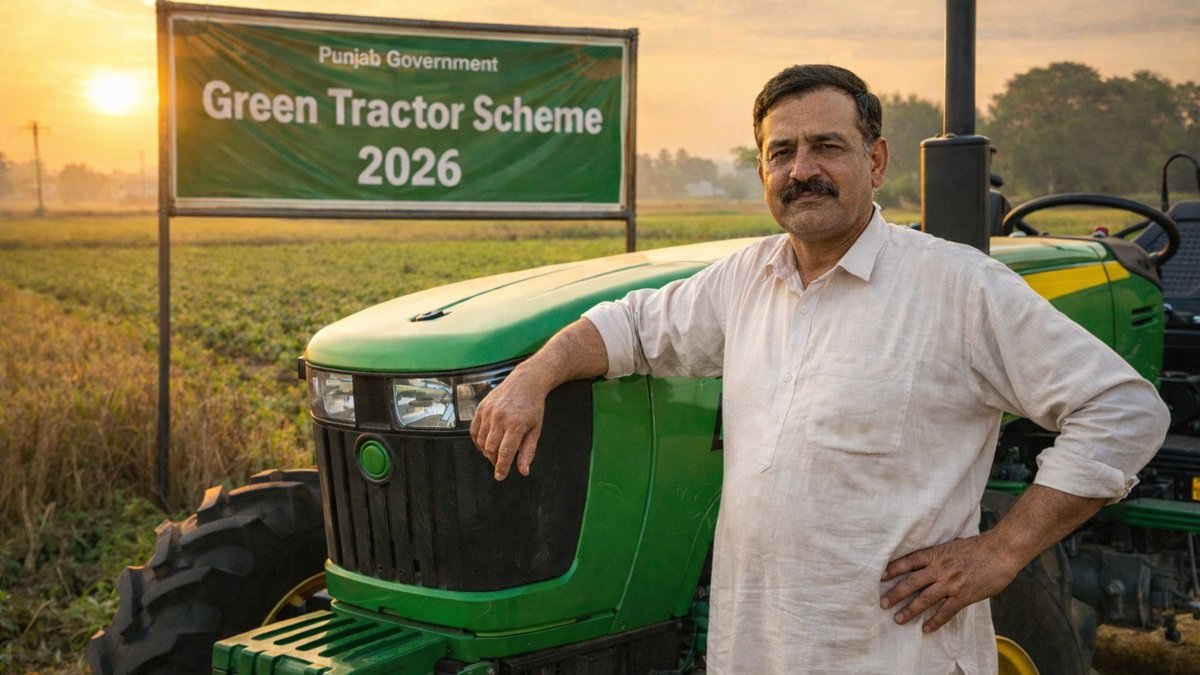
Registration Status and Demand
Registration for Phase 3 was conducted through the official portal: gts.punjab.gov.pk
The registration window remained open from January 6 to January 31, 2026.
Demand was extremely high. According to official portal statistics, more than 2,200 applications were submitted within the first 15 minutes. This highlights both the popularity of the scheme and the financial pressure on farmers.
Although new applications are now closed, farmers can still use the portal to:
- Check balloting results
- Track application status
- Read official announcements
Step-by-Step Application Process
For reference and future phases, the application process included:
- Visit gts.punjab.gov.pk
- Register using CNIC and mobile number
- Verify account through OTP
- Enter land ownership details
- Select tractor model and horsepower
- Upload CNIC and land documents
- Submit and save confirmation number
This fully online system reduced middlemen and improved transparency—an issue often raised in older subsidy schemes. Similar digital transparency is also being implemented in programs like the SkillBridge Apprenticeship Program and Punjab Student Cash Card.
Balloting and Selection Process
After registration, applications went through digital verification between January 21 and 30, 2026.
Next, the government conducts computerized balloting, expected in early February. Results are shared through:
- The official portal
- SMS notifications
- District agriculture offices
Successful applicants receive allotment letters. Subsidy amounts are transferred directly to bank accounts, allowing farmers to purchase tractors from approved dealers listed on the portal.
Subsidy Amount and Approved Tractor Models
Phase 3 supports locally manufactured tractors in the 50–65 HP range.
Approved manufacturers include:
- Millat Tractors (Massey Ferguson)
- Al-Ghazi Tractors (New Holland)
- Orient Tractors
- Bulhar Tractors
Details about approved models are published by the Punjab Agriculture Department.
Local manufacturing ensures better spare parts availability and after-sales support.
What Past Phases Tell Us
| Phase | Tractors Distributed | Focus |
|---|---|---|
| Phase 1 | ~9,500 | Small farmers |
| Phase 2 | ~9,500 | Medium farmers |
| Phase 3 | 10,000 | Wider access |
District-level agriculture reports indicate that beneficiaries from earlier phases experienced faster land preparation and reduced rental costs. These results influenced the design of Phase 3.
Local Impact on Punjab’s Farming Economy
In districts such as Okara, Jhang, and Bahawalnagar, tractor ownership reduces dependence on rental services. This improves planning and lowers per-acre costs.
Beyond farming, the scheme supports:
- Local dealerships and sales networks
- Mechanics and workshops for maintenance
- Rural employment in agriculture and related sectors
This economic ripple effect is often highlighted in provincial agriculture briefings.
Similar rural development initiatives include the Punjab Ration Card Scheme and Apna Khet Apna Rozgar Scheme.
Expert Insight on Farm Mechanization
Agriculture experts consistently point out that mechanization is essential due to climate stress and labor migration. Faster field operations help farmers manage shorter sowing windows.
Policy analysts note that tractor subsidies work best when paired with digital transparency—an area Punjab continues to improve through online portals and verified databases.
According to the Food and Agriculture Organization (FAO) Pakistan, farm mechanization is critical for improving agricultural productivity and ensuring food security in developing countries.
Key Facts at a Glance
| Item | Detail |
|---|---|
| Scheme | Punjab Green Tractor Scheme 2026 |
| Phase | Phase 3 |
| Tractors | 10,000 |
| HP Range | 50–65 |
| Max Subsidy | PKR 1,000,000 |
| Selection | Computerized balloting |
| Portal | gts.punjab.gov.pk |
What Happens Next
- Balloting results announced
- Provisional lists verified
- Allotment letters issued
- Tractors delivered via approved dealers
Farmers not selected may get another opportunity if a new phase is announced in the next provincial budget.
For updates on application status and similar government programs, applicants can also check resources like the PAVE Program application status guide.
Frequently Asked Questions
Is registration still open?
No. Phase 3 registration closed on January 31, 2026.
How can I check my result?
Visit https://gts.punjab.gov.pk and enter your CNIC.
Can previous beneficiaries apply again?
No. Past beneficiaries are not eligible.
Is a Kisan Card required?
It is preferred but not always mandatory.
What is the maximum subsidy amount?
The maximum subsidy is PKR 1,000,000 per tractor.
How many tractors are being distributed?
10,000 tractors will be distributed in Phase 3.
Which tractor brands are approved?
Millat Tractors (Massey Ferguson), Al-Ghazi Tractors (New Holland), Orient Tractors, and Bulhar Tractors are approved manufacturers.
How will winners be selected?
Through computerized balloting conducted by the Punjab Agriculture Department.
When will results be announced?
Results are expected in early February 2026.
Can I apply if I have a small landholding?
Yes, smaller holdings may qualify for lower HP models with proof of cultivation. Generally, landholding requirements start from 7 acres.
Final Analysis: Why This Scheme Matters
The Punjab Green Tractor Scheme Phase 3 stands out because it combines digital transparency, fair selection, and long-term agricultural support. Instead of short-lived relief, it helps farmers invest in productivity and resilience.
For Google Discover and Google News readers, this story matters because it directly affects livelihoods, food security, and Punjab’s rural economy. With consistent implementation, this scheme could become a model for future agriculture reforms.
According to the World Bank Pakistan, agricultural modernization is key to improving rural livelihoods and achieving sustainable development goals in Pakistan.