
Maryam Ka Insaf: Inside Punjab’s New Police Reform Plan and What It Means for Citizens in 2026
Punjab has introduced a new police accountability program called Maryam Ka Insaf. Launched by Chief Minister Maryam Nawaz in February 2026, the initiative focuses on transparency, respectful public dealing, and faster complaint handling. The main goal is clear: restore trust between citizens and the Punjab Police.
Across Pakistan, debates about police reforms in Punjab have continued for years. However, this program stands out because it combines technology, monitoring, and behavioral change into one system. As a result, many observers now see Maryam ka insaf as a serious test of governance and institutional reform in 2026.
Table of Contents
- Launch of Maryam Ka Insaf Program
- Key Reforms Introduced in Punjab Police
- Step-by-Step Implementation Across Districts
- Early Signals From Body Cameras and Monitoring
- Timeline, Budget, and Rollout Plan
- Comparison With Previous Police Reforms in Pakistan
- Public Response and Crime Trends So Far
- Why These Reforms Matter for Ordinary Citizens
- Expert Insights and Policy Analysis
- What Happens Next in 2026
- Frequently Asked Questions
Launch of Maryam Ka Insaf Program
The Maryam ka insaf project formally began around 11 February 2026 as a province-wide accountability drive. Senior police leadership reviewed the rollout at the Central Police Office, while the Chief Minister maintained direct supervision. This level of political ownership is often considered critical for successful Punjab police reforms.

Officials placed the initiative under the vision of “Fast, Fearless, Transparent Justice.” Earlier systems—such as Safe Cities surveillance, women protection services, and emergency complaint helplines—are now merged into a single enforcement framework instead of operating separately.
For official context, readers can review updates from the Punjab Police and the Punjab Government portal, where reform announcements and policing policies are regularly published.
Because of this integration, governance analysts describe the initiative as one of the most comprehensive police reforms 2026 in the province. Similar initiatives have been discussed in relation to Punjab’s student welfare programs, showing the government’s broader reform agenda.
Key Reforms Introduced in Punjab Police
Several structural and behavioral reforms shape Maryam ka Punjab policing strategy.
Technology-Driven Accountability
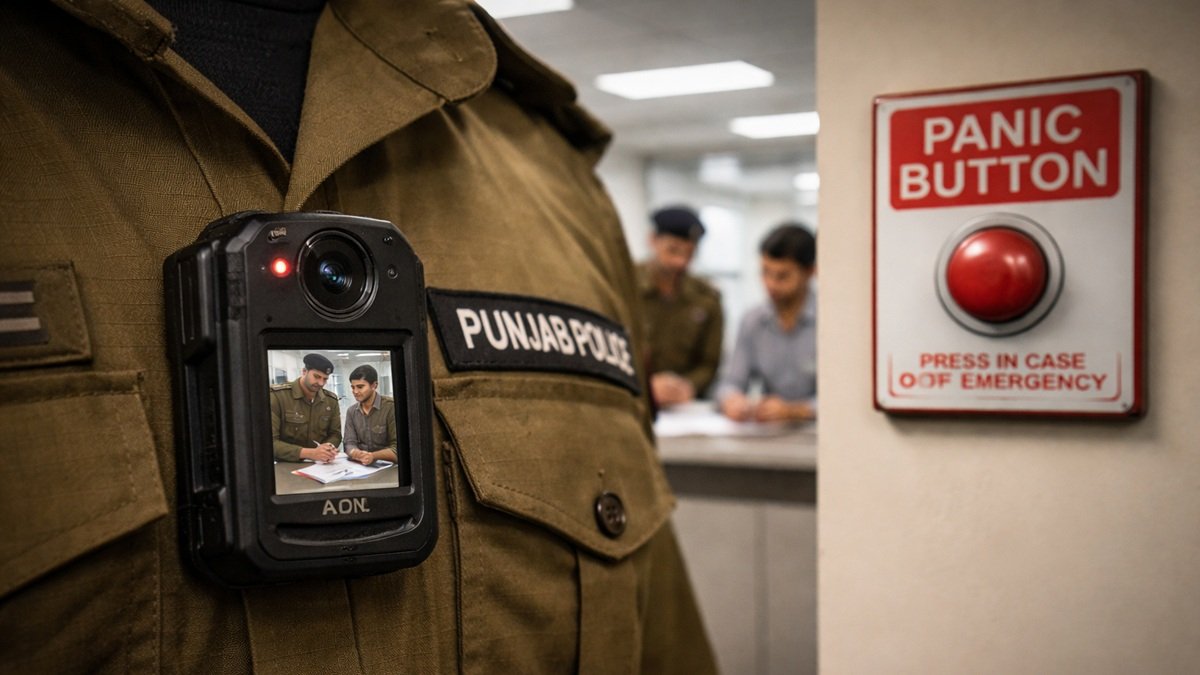
- Province-wide body cameras for police and traffic personnel.
- CCTV monitoring connected with the Punjab Safe Cities Authority.
- Video-recorded procedures for arrests, raids, and investigations.
These tools aim to reduce bribery, prevent misuse of authority, and create verifiable evidence during public interaction.
Citizen-Focused Measures
- Panic buttons outside police stations for instant complaints.
- Priority response for women and children, supported by virtual women police stations.
- Mandatory respectful language during citizen interaction.
Administrative Oversight
- Performance scorecards (KPIs) for officers.
- Open courts conducted by regional police leadership.
- Zero tolerance for corruption, backed by disciplinary action.
Together, these reforms attempt a deep culture shift, not just a surface-level policy update. This comprehensive approach mirrors the structural changes seen in Pakistan’s new net metering policy, where technology and transparency drive reform.
Step-by-Step Implementation Across Districts
Implementation follows a clear administrative structure across Punjab.
- First, Regional Police Officers (RPOs) and District Police Officers (DPOs) design monitoring systems for their areas.
- Next, complaints move through Emergency Helpline 15 and Safe Cities dashboards for tracking and verification.
- Finally, the Inspector General of Punjab Police reviews progress, while the Chief Minister keeps overall supervision.

Operational details about emergency response and policing structure are publicly described on the Punjab Police website. This transparency helps strengthen trust—an essential factor in police reforms in Pakistan.
Supporters believe this centralized monitoring may finally close the gap between policy announcements and real enforcement on the ground.
Early Signals From Body Cameras and Monitoring
Punjab began testing traffic-warden body cameras in Lahore during 2025. Officers needed video proof before issuing fines on major roads such as Mall Road.
Early Observations
- Reduction in wrongful challans because evidence became mandatory.
- Improved behavior from both officers and citizens.
- Better real-time supervision through Safe Cities control rooms.
Province-wide misconduct statistics are still unavailable because full deployment only started in 2026. However, international policing research—frequently cited by organizations like the National Institute of Justice (USA)—shows body cameras can significantly reduce complaints and use-of-force incidents.
Punjab authorities expect similar long-term improvements once all personnel receive cameras.
Timeline, Budget, and Rollout Plan
| Reform Area | Expected Timeline | Funding Status |
|---|---|---|
| Body cameras | Feb–Apr 2026 rollout | About Rs 1.4 billion approved |
| Panic buttons | Immediate installation | Included in modernization budget |
| Monitoring systems | Continuing into mid-2026 | Linked with Safe Cities network |
Provincial development budgets and policing allocations are typically published through the Punjab Finance Department and government budget documents. These financial disclosures are important for public accountability. Just as citizens track Fitrana and Fidya rates for religious compliance, monitoring reform budgets ensures government accountability.
Comparison With Previous Police Reforms in Pakistan
Earlier reforms in Punjab introduced Safe Cities expansion, women safety apps, and specialized policing units. Yet many programs remained limited in scope or partially implemented.
Key Differences in Maryam Ka Insaf
- Province-wide coverage rather than pilot projects.
- Direct accountability through KPIs and CM oversight.
- Integrated technology instead of isolated tools.
Policy researchers often note that sustainable police reforms in Punjab Pakistan require institutional monitoring—not just new equipment. This reform attempts to address that gap.
Public Response and Crime Trends So Far
Since the reforms launched recently, province-wide crime statistics after February 2026 are not yet available.
Early Public Reaction
- Social media shows cautious optimism about body cameras and complaint systems.
- Some citizens report reduced bribery at checkpoints, though evidence remains anecdotal.
- Critics question long-term sustainability, referencing past reform cycles.
Complaint awareness appears to be rising as more people use Helpline 15 and digital reporting channels. Verified crime trends may become clearer by mid-2026, once official police data is released.
Why These Reforms Matter for Ordinary Citizens
Daily interaction with police shapes how people view the state. If implemented effectively, Maryam ka insaf could bring:
- Fair traffic enforcement without arbitrary fines.
- Faster complaint resolution through panic buttons and helplines.
- Safer reporting for women and vulnerable groups.
- Reduced petty corruption due to recorded evidence.
For many families, this reform is not just administrative—it directly affects safety, dignity, and justice in everyday life.

Just as new currency note designs affect daily transactions, police reforms impact how citizens experience governance and security.
Expert Insights and Policy Analysis
Security and governance experts often stress that technology alone cannot fix policing. Training quality, transparent audits, and stable funding remain essential.
Public-policy discussions in Pakistan also highlight the importance of independent oversight to maintain reforms beyond political cycles. Without long-term institutional support, even strong initiatives may weaken over time.
According to research from the Police Foundation UK, successful police reforms require sustained political will, community engagement, and regular performance evaluation.
Therefore, the real test of Punjab police reforms will be consistency after the initial rollout phase.
What Happens Next in 2026
Several milestones will determine the success of police reforms 2026:
- Completion of province-wide body-camera distribution.
- Full activation of panic buttons at police stations.
- Release of verified misconduct and crime statistics.
- Independent public audits or evaluation reports.
Mid-2026 is widely expected to become the decisive evaluation period.
Frequently Asked Questions
What is Maryam Ka Insaf?
It is a Punjab-wide police accountability reform program launched in February 2026 to improve transparency, discipline, and citizen trust.
When will body cameras reach all officers?
Authorities aim for full rollout within a few months, though monitoring systems may take longer.
Are panic buttons already installed?
Some stations had earlier versions. The reform seeks standardized province-wide installation.
Has crime decreased after launch?
No confirmed province-wide data exists yet because the program is still new.
Why is this reform considered different?
Because it combines technology, strict monitoring, and direct accountability in one integrated system.
Final Analysis: Can Maryam Ka Insaf Transform Policing?

Disclaimer: This article is based on publicly available information and official announcements. While every effort has been made to ensure accuracy, readers are advised to verify details through official government sources. The views expressed in this article are for informational purposes and do not constitute legal or professional advice. Crime statistics and reform outcomes mentioned are based on early reports and may change as more data becomes available.