Punjab Taxi Scheme 2026: Eligibility, Monthly Installments, Women Quota & Real Impact on Jobs
The Punjab taxi scheme has officially entered its rollout phase. On February 26, 2026, Chief Minister Maryam Nawaz launched the electric taxi initiative in Lahore. The pilot phase includes 1,100 subsidized electric taxis.
This Maryam Nawaz taxi scheme is not just about cars. It connects employment, clean air, and fuel savings in one policy move. It also gives a dedicated share to women drivers and unemployed youth.
Below is a clear, practical guide to the Punjab taxi scheme 2026. Who can apply. How much the monthly installment is. What documents are required. And what risks applicants should understand before applying.
📋 Table of Contents
- What Is the Punjab e Taxi Scheme
- Why This Scheme Matters Now
- Key Features and Financial Structure
- Who Can Apply
- Women Quota and Extra Relief
- Step by Step Application Process
- Documents Checklist
- Monthly Installments with Example
- Charging Stations and Infrastructure Plan
- How This Scheme Is Different from Past Programs
- Common Reasons for Rejection
- Real Challenges Drivers May Face
- Economic and Environmental Impact
- What Happens Next
- Frequently Asked Questions
What Is the Punjab e Taxi Scheme
The Punjab e Taxi Scheme is a government backed program designed to provide electric vehicles on subsidized and interest free installments.
According to official updates shared through the Government of Punjab portal and managed digitally by the Punjab Information Technology Board, the scheme aims to:
- Promote electric mobility
- Reduce fuel imports
- Create employment opportunities
- Improve urban air quality
The vehicles include electric sedans and hatchbacks with an average range of 200 to 300 kilometers per charge. Initially, the scheme begins in Lahore. Expansion to other cities is expected after review of the pilot phase.
Importantly, the government covers token tax, registration charges, and markup on installments. That significantly lowers the financial burden on drivers.
Why This Scheme Matters Now
Lahore has repeatedly recorded alarming smog levels. Electric vehicles are a key solution.
Punjab faces serious air pollution challenges. Lahore has repeatedly recorded high smog levels during winter seasons. Transport emissions are one major contributor.
The Pakistan Environmental Protection Agency continues to highlight the need for cleaner transport options.
💡 Policy Shift: From Welfare to Earning
Instead of offering direct cash subsidies, the Maryam Nawaz taxi scheme 2026 provides income generating assets. The policy shifts from welfare to earning opportunity. Unemployment among youth remains a concern. This scheme directly addresses that.
Furthermore, Pakistan imports a large portion of its fuel. By promoting electric vehicles, the province hopes to reduce long term fuel dependency. This makes the scheme both economic and environmental in nature.
Key Features and Financial Structure
Here is a simplified breakdown of the pilot phase:
| Feature | Details |
|---|---|
| Total Vehicles | 1,100 |
| Vehicle Type | Electric sedans and hatchbacks |
| Driving Range | 200 to 300 km per charge |
| Estimated Post Subsidy Price | Around Rs 690,000 |
| Down Payment | 30 percent |
| Government Subsidy | 15% general, up to 60% for women |
| Installment Tenure | 5 to 6 years |
| Estimated Monthly Installment | Rs 20,000 to Rs 25,000 |
| Interest | Zero, paid by government |
Who Can Apply
✅ Core Eligibility Criteria
Eligibility rules are strict to ensure fairness. Applicants must:
- Be residents of Punjab
- Hold a valid CNIC
- Possess a valid LTV or PSV driving license
- Have a clean criminal record
- Maintain a clean traffic history
- Fall within approved age limits
Priority categories include unemployed youth, women, and fleet owners with minimum 10 vehicles.
Applicants should verify their license status through the Punjab Police portal before applying. Accuracy matters. Even small data mismatches can cause rejection.
Women Quota and Extra Relief
30% of individual applicant slots are reserved for women under the Punjab taxi scheme.
👩 Women Get Extra Benefits
The scheme includes a confirmed quota for women drivers. Out of 100 taxis reserved for individual applicants, 30 are allocated to women. In addition, women may receive higher subsidy support on down payment, up to 60 percent.
This aligns with broader provincial women empowerment initiatives. Experts in urban transport policy suggest that women drivers can improve safety perception in ride hailing markets. That may increase female passenger confidence as well.
In practical terms, higher subsidy means lower monthly pressure for eligible women applicants.
Step by Step Application Process
Applications are submitted online through the official portal managed by PITB. Follow these steps:
- Visit the official Punjab government website at punjab.gov.pk
- Navigate to the e taxi scheme section
- Register using CNIC and mobile number
- Choose individual or fleet category
- Fill the online form carefully
- Upload required documents
- Submit application and save tracking number
After submission, authorities verify identity and documents. Approved applicants receive an offer letter. Training sessions may be arranged. Vehicle delivery follows completion of formalities.
⚠ Important Warning: Avoid third party agents at all costs. Always rely on official websites only. Scammers target government scheme applicants. Any agent claiming to fast track your application is likely fraudulent.
Documents Checklist
Preparing documents in advance improves approval chances.
📋 Core Documents Required
- Valid CNIC
- Valid LTV or PSV driving license
- Punjab domicile or proof of residence
- Passport size photographs
Additional Documents
- Bank statement for installment setup
- Police character certificate
- Medical fitness certificate
- Affidavit confirming no prior taxi scheme benefit
Fleet applicants must also provide company registration proof from the Securities and Exchange Commission of Pakistan and NTN details from the Federal Board of Revenue.
Clear and readable scanned copies are essential.
Monthly Installments with Example
Installments are structured to remain affordable. The estimated range is Rs 20,000 to Rs 25,000 per month.
| Component | Amount |
|---|---|
| Vehicle Price | Rs 2,500,000 |
| Subsidy 40 percent | Rs 1,000,000 |
| Net Cost | Rs 1,500,000 |
| Down Payment | Rs 200,000 to 250,000 |
| Estimated Monthly Installment | Around Rs 21,500 |
💡 Smart Financial Planning Tip: Officials state that installments are designed so drivers can cover payments through ride earnings within a few working days each month. However, applicants should calculate fuel savings, charging costs, and daily earning potential before committing. Treat this as a business decision.
Charging Stations and Infrastructure Plan
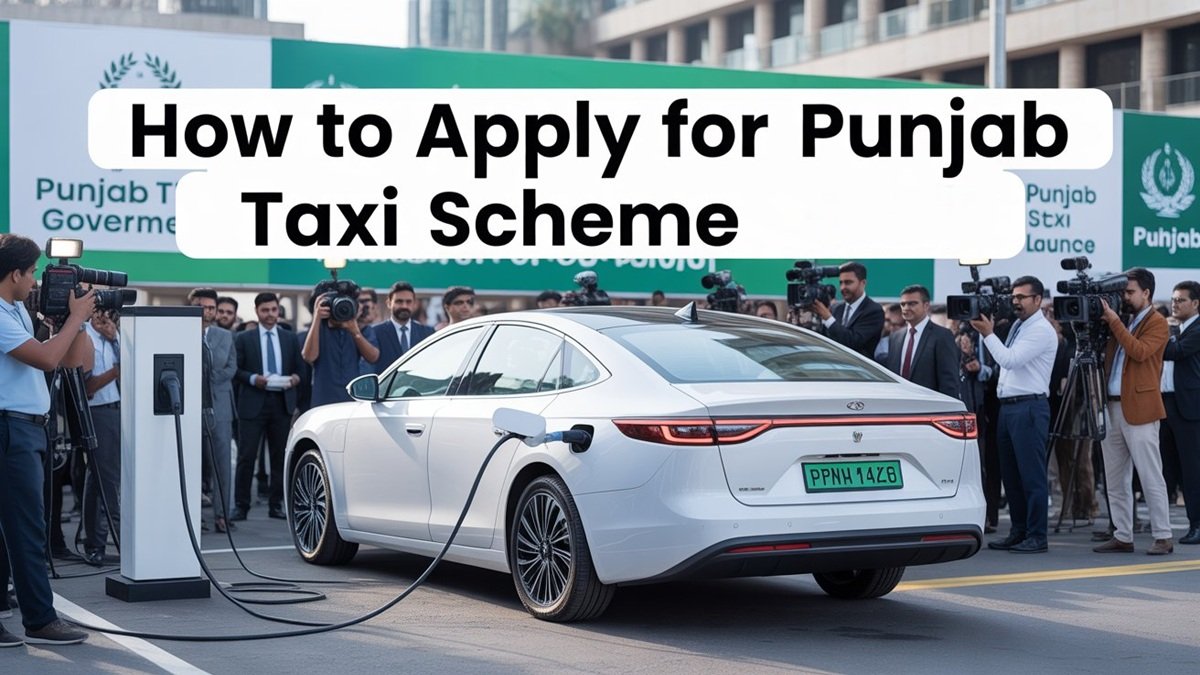
Solar powered charging stations are planned at key urban locations across Lahore.
Electric vehicles require reliable charging networks. Punjab authorities have announced solar powered charging stations starting in Lahore. Gradual expansion to other cities is planned.
- Vendor service centers will support maintenance
- GPS enabled vehicles will integrate with ride hailing apps
- Charging points are planned at key urban locations
Infrastructure success will determine long term performance of the scheme. Without accessible charging, drivers may struggle in peak hours.
How This Scheme Is Different from Past Taxi Programs
Punjab previously launched taxi schemes focused on petrol or hybrid vehicles. The 2026 model differs because it promotes full electric mobility, offers zero interest repayment, includes a structured women quota, and uses digital application and verification.
🔥 What Makes It Different
Earlier programs mainly addressed vehicle distribution. This one connects environmental reform, digital governance, and employment in one framework. That strategic shift makes it more policy driven rather than politically symbolic.
You can also explore how the eBiz Punjab Portal supports business registration for fleet owners applying under this scheme.
Common Reasons for Rejection
❌ Avoid These Mistakes
Based on previous public schemes, common rejection factors include incomplete documents, expired license, incorrect CNIC information, criminal or traffic violations, and bank default history.
Applicants should double check all uploaded documents before submission. Small errors can cause delays or rejection.
Real Challenges Drivers May Face
Electric taxis reduce fuel expenses. Yet some risks remain.
⚠ Risks to Consider
Drivers may face limited charging stations in early months, battery replacement costs after warranty period, competition in ride hailing markets, and traffic congestion reducing daily trips.
Transport economists suggest that long term profitability depends on daily ride volume and disciplined financial management. Applicants should treat this as a business decision, not just a subsidy opportunity.
Economic and Environmental Impact
🌎 Bigger Picture Benefits
Transport is a major contributor to urban air pollution in Punjab. Electric taxis produce no tailpipe emissions. That supports provincial environmental targets.
Economically, 1,100 taxis operating daily can create direct employment for drivers and indirect jobs in maintenance and charging services. Reduced fuel demand may also ease pressure on foreign exchange reserves over time.
Therefore, the scheme carries broader economic implications beyond individual drivers.
What Happens Next
The pilot phase will be monitored closely. Authorities are expected to assess repayment performance, operational efficiency, charging network reliability, and public response.
If results remain positive, expansion to other major cities may follow. Citizens should track updates only through official Punjab government channels and verified press releases.
Frequently Asked Questions