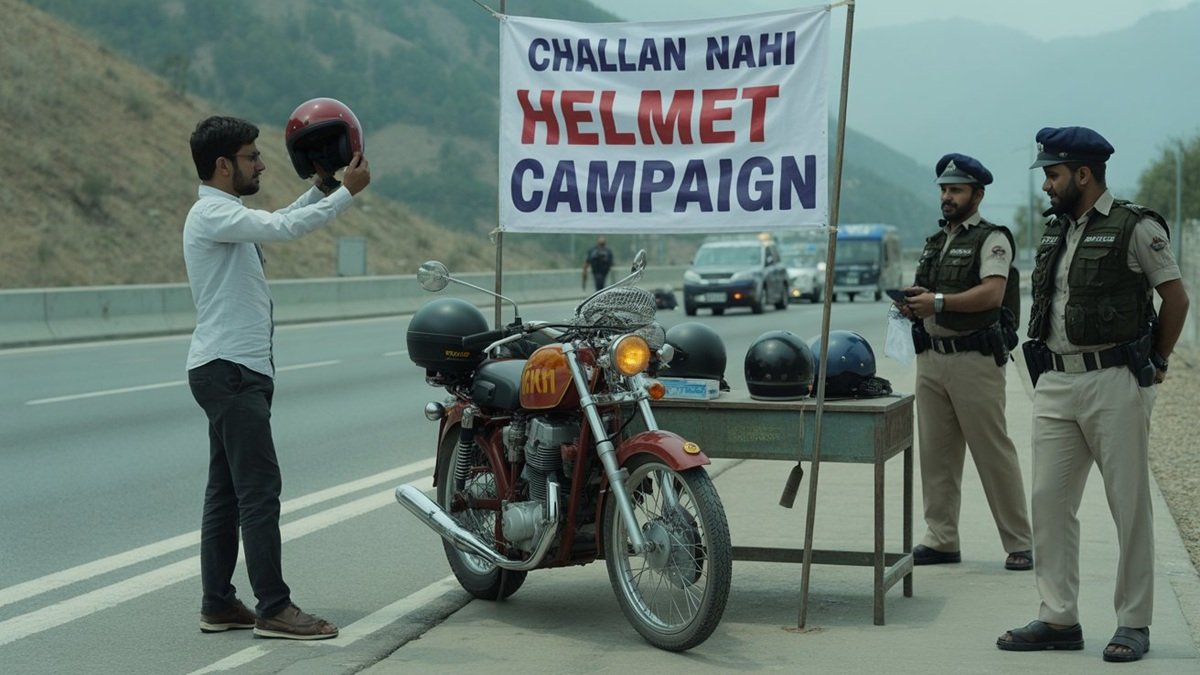
Pakistan has launched a new highway safety campaign called Challan Nahi Helmet. The idea is simple but important. Instead of immediately issuing a challan helmet fine, traffic police ask riders without helmets to buy and wear one on the spot.
The campaign began on March 3 and 4, 2026. It was launched by the National Highways and Motorway Police (NHMP) on major roads around Rawalpindi, including Grand Trunk Road and Murree Expressway.
Many people are searching questions like “Challan nahi bhara to kya hoga”, “Challan helmet price”, and details about the Challan nahi helmet campaign. This article explains the policy, the legal rules, and what it means for everyday riders in Pakistan.
📋 Table of Contents
- What Is the Challan Nahi Helmet Campaign?
- Why Pakistan Launched This Campaign Now
- How the Campaign Works Step by Step
- Helmet Stalls on GT Road and Murree Expressway
- Public Reaction From Riders
- Data on Helmet Safety and Accident Risks
- Legal Rules Behind Helmet Challans in Pakistan
- What Happens If You Do Not Pay a Challan
- How to Check and Pay E-Challan Online
- Comparison With Past Enforcement Drives
- Practical Tips for Motorcycle Riders
- What Happens Next for Road Safety
- Key Facts Summary
- Frequently Asked Questions
What Is the Challan Nahi Helmet Campaign?
The Challan nahi helmet campaign is a road safety initiative designed to increase helmet use on highways.
Normally, if a rider travels without a helmet, police issue a challan immediately. However, this campaign uses a more practical approach.
Officers stop riders without helmets and explain the risks. Instead of giving a fine first, they guide riders to helmet stalls set up near toll plazas and checkpoints. These helmets are sold at prices close to the usual challan helmet price, which generally ranges from Rs 500 to Rs 1000.
The objective is simple: help riders correct their mistake immediately.
According to the National Highways and Motorway Police, the campaign focuses on saving lives rather than collecting fines.
Why Pakistan Launched This Campaign Now
Motorcycles are the most common mode of transport in Pakistan. Millions of people rely on them daily for work, school, and deliveries. Yet helmet compliance has remained inconsistent.
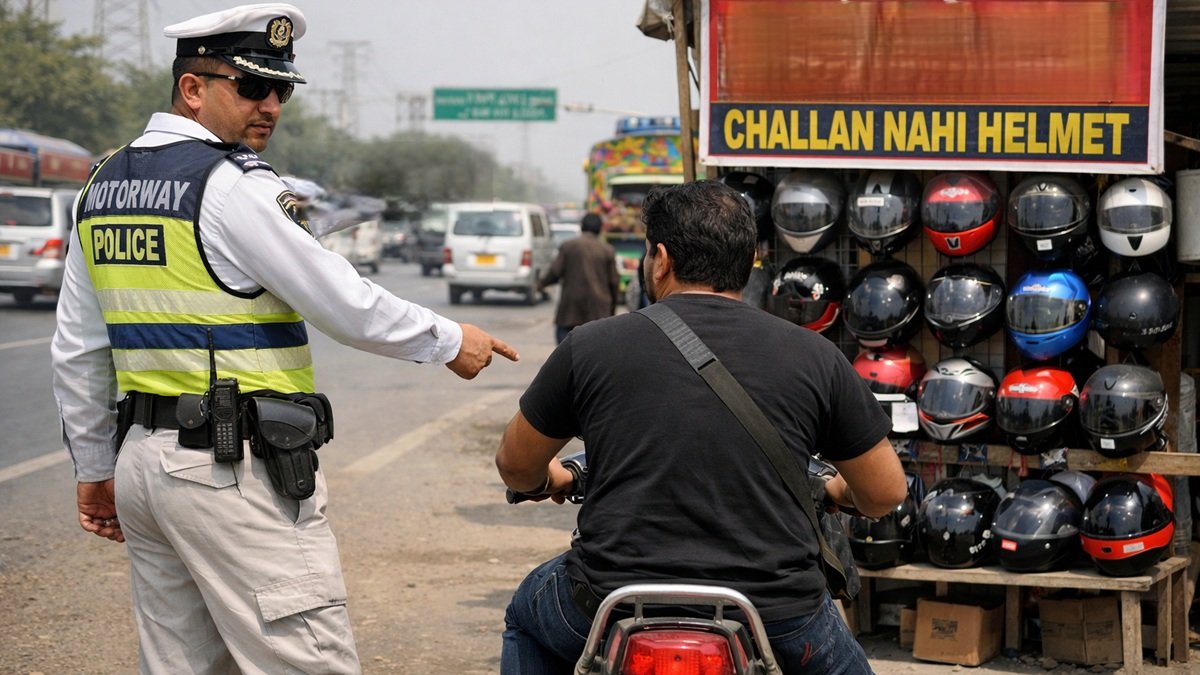
Motorcycles are the most common vehicle on Pakistan’s roads — making helmet compliance a national priority.
Traffic safety experts have repeatedly warned that motorcycle riders face the highest injury risk during road accidents. Several monitoring systems run by the Punjab Safe Cities Authority show frequent traffic violations involving motorcycles.
⚠️ The Real Problem
Fines alone were not solving the problem. Many riders simply paid the fine and continued riding without helmets. The government realized a behavior-focused strategy was needed instead.
The Challan nahi helmet campaign aims to remove the excuse of “not having a helmet” by making helmets available immediately at checkpoints. This approach encourages riders to take action instantly rather than ignoring the rule.
How the Campaign Works Step by Step
The campaign is designed to be simple and practical for riders.
Police Stop Riders
Traffic officers monitor motorcycles on highways. Riders without helmets are stopped at a checkpoint.
Safety Awareness
Officers explain the importance of helmets and the risk of head injuries. Pamphlets may be distributed.
Buy a Helmet
Helmet stalls near the checkpoint offer affordable, safety-standard helmets priced close to the challan amount.
Wear and Go
After purchasing, the rider wears the helmet and continues the journey safely.
Repeat Violations
If the same rider breaks the rule again, police issue a standard challan through the E-Challan system.
Helmet Stalls on GT Road and Murree Expressway
📍 Active Locations
Helmet stalls have been placed near several toll plazas and checkpoints. These stalls are currently operating along:
- Grand Trunk Road (GT Road)
- Murree Expressway — including areas around Satra Meel
The goal is to ensure that riders who forget their helmets do not have to travel far. They can purchase one instantly and continue safely.
Updates about enforcement locations are usually shared through NHMP public announcements and social media channels. Keep an eye on official NHMP channels for the latest updates.
Public Reaction From Riders
Early reaction to the Challan nahi helmet campaign appears encouraging.
Several riders have praised the approach because it focuses on safety rather than punishment. One motorcyclist traveling on Murree Expressway said he preferred buying a helmet instead of paying a challan. Another rider named Aqib described the initiative as a commendable step for road safety.
Public safety campaigns often succeed when people feel they are being helped rather than punished. This campaign seems to follow exactly that philosophy.
Data on Helmet Safety and Accident Risks
Road safety experts strongly support helmet use for a simple reason. Helmets save lives.
The World Health Organization (WHO) has published extensive research on road safety. The numbers are clear:
🔴 Why This Matters
Medical specialists in Pakistan confirm the same pattern. Hospitals frequently report that head injuries are the most dangerous outcome of motorcycle accidents. Campaigns like this could significantly reduce accident fatalities if compliance improves.
Legal Rules Behind Helmet Challans in Pakistan
Helmet use is required by traffic laws across Pakistan. In Punjab, enforcement comes under the Punjab Provincial Motor Vehicles Ordinance 1965 along with updated traffic rules.
| Rule | Explanation |
|---|---|
| Helmet requirement | Motorcycle riders must wear helmets at all times on roads |
| Standard fine | Usually Rs 500 to Rs 1000 |
| Repeat violations | Fine may increase; further penalties may apply |
| Enforcement system | Digital E-Challan and traffic monitoring cameras |
What Happens If You Do Not Pay a Challan
Many riders ask an important question: Challan nahi bhara to kya hoga?
⚠️ Consequences of Unpaid Challans
- Additional fines added over time
- Vehicle impoundment during inspection
- License suspension
- Referral to traffic court
Because digital systems record violations, unpaid challans remain linked to the vehicle registration number. Clearing fines quickly is always the safest option.
How to Check and Pay E-Challan Online
Paying traffic challans has become easier with digital services. The Punjab Safe Cities Authority E-Challan portal allows drivers to check and pay violations easily.
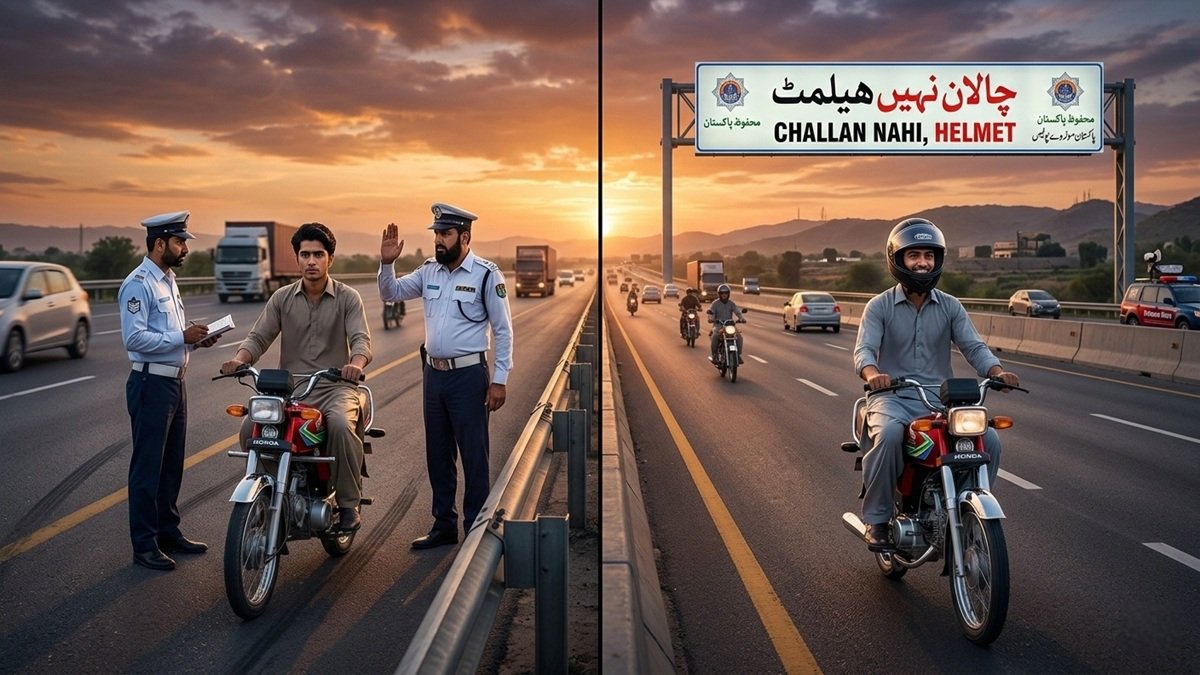
Online payment has made clearing traffic violations faster and more convenient for riders.
✅ Steps to Pay Online
- Visit the official E-Challan portal
- Enter your vehicle registration number
- Provide CNIC if required
- View challan details
- Pay online
Payment methods accepted: Debit/credit cards, online banking, EasyPaisa, JazzCash
Comparison With Past Helmet Enforcement Drives
Pakistan has run helmet enforcement campaigns before. Cities like Lahore and Karachi conducted strict helmet drives in previous years. Those campaigns mainly focused on fines.
| Approach | Past Campaigns | Challan Nahi Helmet (2026) |
|---|---|---|
| Primary method | Immediate fines | Awareness + instant access to helmets |
| Focus | Punishment-first | Behavior change first |
| Helmet access | Not provided | On-site stalls at checkpoints |
| Repeat offenders | Same fine | Standard challan via E-Challan |
| Public reception | Mixed | Largely positive so far |
Experts believe such behavior-focused methods often produce better long-term results. Several road safety programs around the world have combined education and enforcement with strong outcomes.
Practical Tips for Motorcycle Riders
💡 Stay Safe on Pakistan’s Roads
- Always wear a certified helmet before starting your journey
- Make sure the chin strap is tight and properly fastened
- Replace damaged helmets immediately — cracks reduce protection
- Avoid cheap helmets that lack proper safety padding
- Follow speed limits on highways at all times
Even short trips can become dangerous without proper protection. No journey is worth risking your life.
What Happens Next for Road Safety in Pakistan
The Challan nahi helmet campaign is still in its early stage. Authorities have not released official statistics yet about its impact. However, monitoring continues on highways around Rawalpindi.
Officials will likely evaluate:
- Helmet usage rates before and after the campaign
- Accident reports on target highways
- Public compliance levels at checkpoints
Key Facts About the Campaign
| Detail | Information |
|---|---|
| Campaign name | Challan Nahi Helmet |
| Launch date | March 3–4, 2026 |
| Authority | National Highways and Motorway Police (NHMP) |
| Focus region | Rawalpindi highways |
| Major roads | GT Road and Murree Expressway |
| Main idea | Buy helmet instead of paying challan |
| Repeat violations | Standard E-Challan penalties apply |
🚨 Why This News Matters
Road safety policies affect millions of people in Pakistan. The Challan nahi helmet campaign shows a new direction in traffic enforcement. Instead of focusing only on punishment, authorities are encouraging immediate safety behavior. If the campaign succeeds, it could influence future road safety policies across the country.
For riders, the message is clear: A helmet may cost the same as a challan. But wearing it could save a life.
Frequently Asked Questions