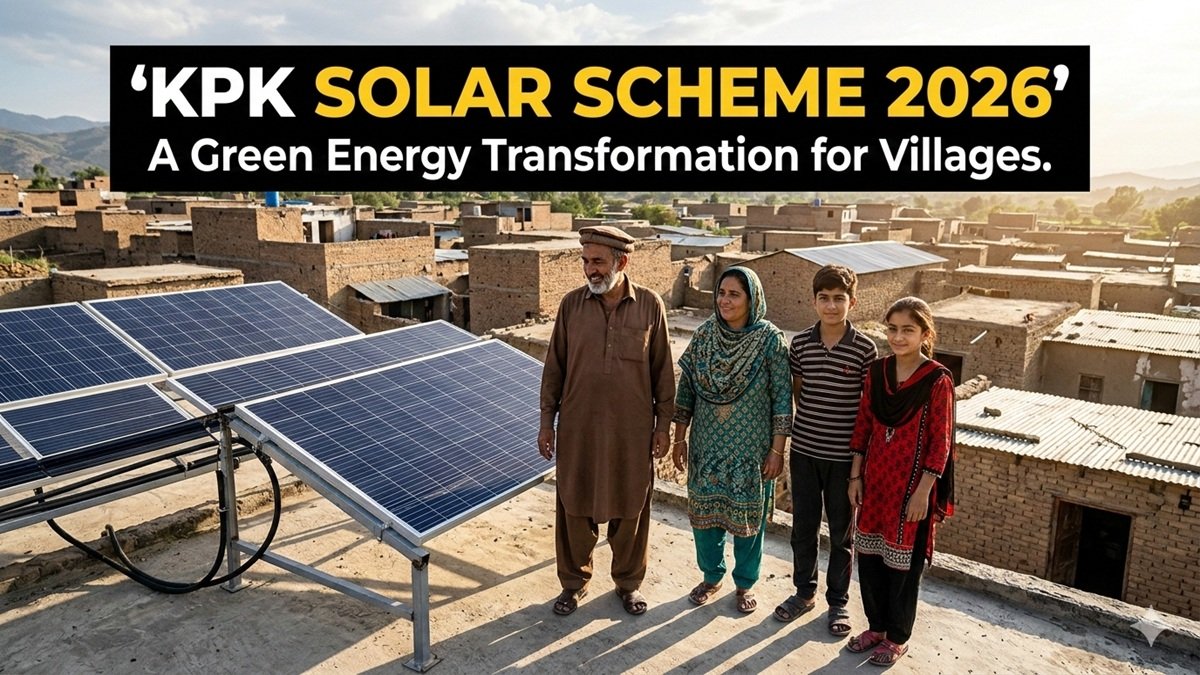
⚡ 130,000 families in Khyber Pakhtunkhwa could soon get solar power — either free or heavily subsidized. The KPK Solar Scheme 2026 is one of the most ambitious provincial energy programs Pakistan has seen. This guide covers every detail you need to apply, check eligibility, and understand your options.
📋 Table of Contents
- Overview of the KP Solar Panel Scheme
- Why the KPK Solar Scheme Matters in 2026
- Key Features of the Solarization Program
- Latest Government Update (March 2026)
- Who Can Apply for the KP Solar Scheme
- Priority Groups for Free Solar Systems
- Free vs Subsidized Solar Categories
- Solar System Specifications Provided
- District Quota Allocation Explained
- Step-by-Step Registration Guide
- Documents Required
- How to Check Eligibility
- How the Balloting System Works
- Common Mistakes Applicants Make
- Past Phase Comparison and Program History
- Expert Views on KP’s Solar Policy
- Public Impact and Local Context
- Key Facts Summary Table
- Frequently Asked Questions
Overview of the KP Solar Panel Scheme
The KPK solar panel scheme 2026 is one of the largest renewable energy welfare programs launched by a provincial government in Pakistan.
Under this project, the government plans to distribute 130,000 household solar systems. These systems help families produce electricity at home instead of relying fully on the national grid.
| Category | Households | Support Type |
|---|---|---|
| Free Solar Systems | 65,000 | Fully funded by government |
| Subsidized Solar Systems | 65,000 | 50% subsidy with easy installments |
Each selected household will receive a 2 kilowatt solar system capable of powering basic household appliances. The project is being implemented by the provincial Energy & Power Department. Official policy updates are available on the government portal: ep.kp.gov.pk
Why the KPK Solar Scheme Matters in 2026

Energy affordability has become one of the biggest challenges for households in Pakistan. Electricity tariffs have increased multiple times in recent years. At the same time, many rural areas still experience long hours of load shedding.
Because of this situation, solar power is becoming an attractive option. Small rooftop systems allow families to run essential appliances even when grid electricity fails. In addition, they can reduce monthly electricity bills significantly.
📊 According to the Alternative Energy Development Board (AEDB), solar power is expected to play a major role in Pakistan’s future energy mix. Visit AEDB official website →
The KPK solar scheme supports both household relief and long-term energy sustainability.
Key Features of the Solarization Program
The KPK solar scheme apply online program includes several important features aimed at low-income communities.
- ✅ Free solar systems for the poorest households
- ✅ 50 percent subsidy for other eligible families
- ✅ Transparent digital balloting system
- ✅ Fair district-wise quota allocation
- ✅ Special priority for vulnerable social groups
In addition, the government is considering another project under the Accelerated Implementation Programme (AIP). This initiative could provide solar systems to 120,000 additional households in merged tribal districts once approved.
More information about development projects in KP is available at: kp.gov.pk
Latest Government Update — March 2026
🔔 Breaking: In early March 2026, the project moved closer to implementation. During a review meeting in Peshawar, Chief Minister Muhammad Sohail Afridi directed officials to speed up project preparation.
The project’s PC-1 planning document has been finalized. It will now be presented to the Provincial Development Working Party for approval. Once approved, registration drives and installation phases are expected to begin.
Planning and development updates for KP projects are regularly published by the Planning & Development Department: pndkp.gov.pk
Who Can Apply for the KP Solar Scheme
The scheme mainly targets low-income households living in Khyber Pakhtunkhwa. Applicants must meet several eligibility conditions before applying.
Basic Requirements
- Permanent resident of KP
- Valid CNIC with local address
- Low electricity consumption
- Proof of financial need
- Suitable roof space for solar installation
Income verification often relies on the Benazir Income Support Programme (BISP) database. Applicants can check eligibility by sending their CNIC number to 8171 or visiting: 8171.bisp.gov.pk
This verification ensures that public funds support families who need assistance the most.
Priority Groups for Free Solar Systems
To improve fairness, the program gives preference to vulnerable groups. These households have a higher chance of receiving fully free solar systems.
🌟 Priority Categories
- Widows
- Persons with disabilities
- Orphans
- Minority communities
- Transgender individuals
- Disaster-affected families
- Temporarily displaced persons
- Off-grid rural households
Many of these groups are already registered in national social protection programs. Their data can be verified easily through government databases. This approach increases transparency and ensures that benefits reach deserving citizens.
Free vs Subsidized Solar Categories
Free Solar Systems
Approximately 65,000 households will receive solar systems completely free of cost. These are mainly reserved for the most vulnerable families.
Subsidized Solar Systems
Another 65,000 households will receive solar systems with 50 percent government subsidy.
| System Cost | Government Share | Household Share | Payment Option |
|---|---|---|---|
| Rs 255,000 – Rs 300,000 | About 50% | Rs 127,000 – Rs 150,000 | Monthly installments 2–5 years |
This approach helps families adopt solar technology without large upfront payments.
Solar System Specifications Provided
What’s Included in the 2kW Package
- High-efficiency solar panels
- Hybrid inverter
- Battery storage unit
- Mounting structure
- Electrical wiring and safety devices
- Professional installation
Solar panels used in the project must meet international safety standards such as IEC 61215 and IEC 61730. These global standards are issued by the International Electrotechnical Commission (IEC): iec.ch
💡 What can a 2kW system power? Ceiling fans, LED lights, mobile charging, and small appliances. For many households, this capacity can significantly reduce reliance on grid electricity.
District Quota Allocation Explained
Solar systems will be distributed across the province according to district population size. This ensures that large districts receive a proportionate share.
🗺️ Districts expected to receive higher allocations:
- Peshawar
- Mardan
- Charsadda
- Nowshera
Merged tribal districts such as Bajaur, Khyber, and South Waziristan are also expected to receive significant allocations due to development priorities.
Final quota lists will likely be announced once the project receives formal approval.
Step-by-Step Guide: KPK Solar Scheme Registration
Applicants can register through the official solar scheme portal. Follow these steps carefully.
Access the solar registration page: freesolar.pedokp.gov.pk
Provide your CNIC number, full name, mobile number, and residential address.
Upload scanned copies of all required documents.
After submission, the system generates a reference number. You receive confirmation through SMS.
Check your application status through the same portal at any time.
Documents Required for Application
Before starting registration, prepare these documents.
Required Documents
- CNIC copy
- Electricity bills from the last six months
- Proof of residence
- Valid mobile number
Additional Documents (if applicable)
- BISP registration confirmation
- Disability certificate
- Widow certificate
- Property ownership proof or landlord consent
💡 Keep both digital and physical copies ready. This can help avoid delays during the verification process.
How to Check Eligibility for KP Solar Scheme
Online Verification
Visit the official solar portal and enter CNIC details.
BISP Verification
Send CNIC to 8171 or check: 8171.bisp.gov.pk
Offline Verification
Visit any of the following offices:
- District Deputy Commissioner offices
- PEDO offices
- Energy department offices
How the Balloting System Works
The solar scheme is expected to receive a very large number of applications. In earlier phases, millions of households applied. Therefore, the government uses a digital balloting system.
Selection Process
- Applications are verified
- Eligible applicants enter the digital pool
- Computerized balloting selects beneficiaries
- Results are published online
Selected applicants receive confirmation messages via SMS.
Common Mistakes Applicants Make
Many applications fail because of simple mistakes. Avoid these common problems.
⚠️ Avoid These Errors
- Entering incorrect CNIC numbers
- Uploading unclear document scans
- Submitting outdated electricity bills
- Using an inactive phone number
- Applying despite not meeting eligibility requirements
Submitting accurate information improves your chances of approval.
Past Phase Comparison and Program History
The current solar initiative builds on earlier programs launched in KP. In 2025, the government implemented an earlier phase of the household solar program.
📌 That earlier phase received more than 2.5 million applications according to provincial officials. Thousands of beneficiaries were selected through electronic balloting. The new phase expands the program significantly by targeting 130,000 households.
Expert Views on KP’s Solar Policy
Energy experts say household solar systems can help reduce pressure on Pakistan’s electricity grid. Distributed solar generation allows households to produce electricity locally. This reduces demand during peak hours.
For broader context on Pakistan’s renewable energy direction, the World Bank publishes research on South Asia’s energy transition: World Bank — Energy Topic
Public Impact and Local Context

Many rural districts in Khyber Pakhtunkhwa still face long hours of power outages. During summer months, some areas experience 10 to 14 hours of load shedding per day.
For such communities, solar systems can provide a reliable backup. Families can run fans, lights, and small appliances even during outages. In addition, households may save money on electricity bills over time.
Development experts believe programs like this can improve living conditions in underserved communities.
Key Facts Summary Table
| Key Detail | Information |
|---|---|
| Total households covered | 130,000 |
| Free solar systems | 65,000 |
| Subsidized systems | 65,000 |
| Solar capacity | 2 kW per household |
| Estimated system cost | Rs 255,000 – Rs 300,000 |
| Implementation authority | KP Energy & Power Department |
| Official registration portal | freesolar.pedokp.gov.pk |
| BISP eligibility check | SMS CNIC to 8171 |
What Happens Next
The project is currently waiting for final administrative approval. Once approved, authorities are expected to begin:
- 🗓️ Registration campaigns across districts
- 📊 District quota announcements
- 💻 Digital balloting
- 🔧 Solar system installation in phases
Implementation will likely start in phases across different districts. Families are encouraged to prepare documents now so they are ready when registration opens.
Frequently Asked Questions
Final Analysis
The KPK solar panel scheme 2026 could become one of the most impactful public energy programs in the province. If implemented effectively, it can help thousands of families reduce electricity bills and gain reliable access to power. For households struggling with rising electricity costs and frequent outages, the program offers a practical solution. As Pakistan continues to expand renewable energy use, initiatives like this may play a key role in building a more sustainable energy future.