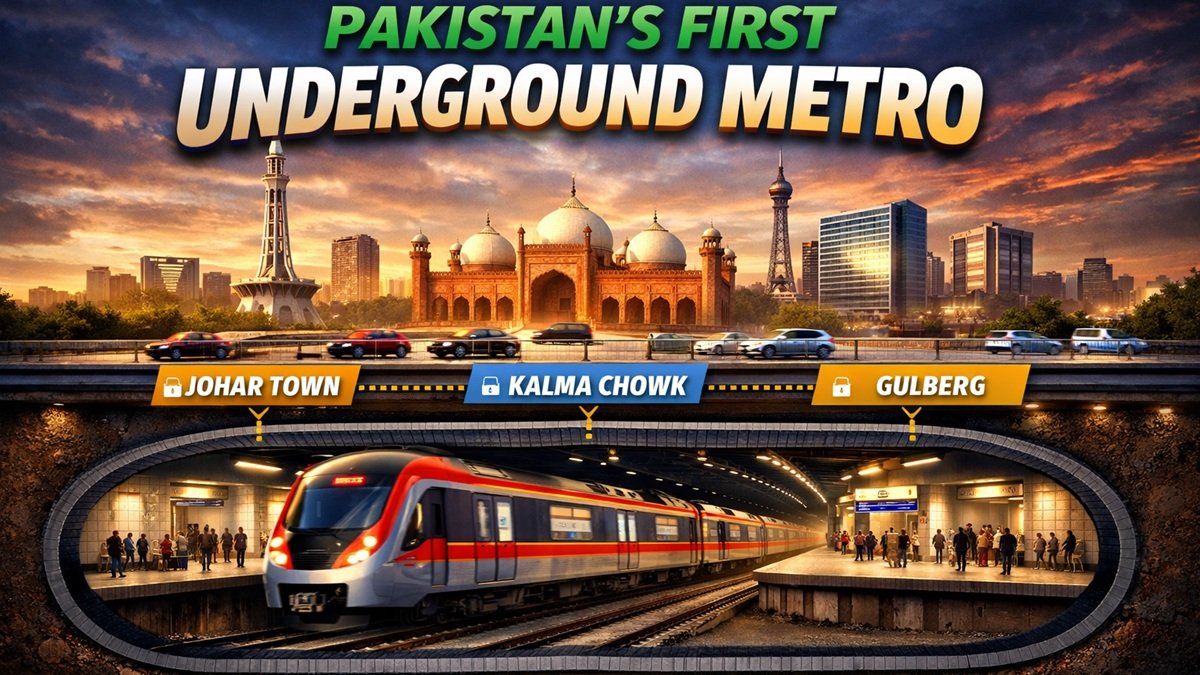
Lahore is about to make history. The Punjab government has approved plans for the Blue Line Metro. It will be Pakistan’s first fully underground metro rail system. The planned line stretches about 27 kilometers from Valencia Town to Babu Sabu Chowk. This project is not just big. It could completely change how millions of people travel across Lahore every single day.
For many residents, this project brings real hope. Lahore already struggles with heavy traffic, long commute times, and thick smog. An underground metro can move thousands of passengers quickly. And it does all this without adding more pressure to already crowded roads.
According to early planning documents and provincial briefings, the line could serve 250,000 to 400,000 passengers daily when it becomes operational.
Right now, the project is in the feasibility and engineering design stage. Officials want to complete studies and funding approvals before construction begins.
Readers can follow verified updates from official sources:
These government portals regularly publish transport planning updates and project announcements.
📋 What You Will Find in This Article
- Project Overview of Lahore Blue Line Metro
- Why Lahore Needs an Underground Metro
- Route, Stations and Key Areas Served
- Passenger Capacity and Economic Impact
- Timeline and Current Status (March 2026)
- Blue Line vs Orange Line vs Green Line
- Expected Fare System and Ticketing
- Step by Step Guide for Future Metro Users
- Environmental and Urban Benefits
- Expert Opinions and Urban Planning Insights
- Lahore’s Public Transport History
- What Happens Next for the Blue Line Project
- Key Facts Summary
- Frequently Asked Questions
Project Overview of Lahore Blue Line Metro
The Blue Line Metro Lahore project is designed as a modern underground rail system. It is similar to metro networks used in many global cities.
Unlike elevated metro lines or bus rapid transit corridors, the Blue Line will operate completely underground. This approach helps reduce road congestion. It also protects busy commercial areas during daily operations.
Key Project Details
| Feature | Details |
|---|---|
| Project | Blue Line Metro Lahore |
| Route | Valencia Town to Babu Sabu Chowk |
| Length | 27 km |
| Stations | Around 28 |
| Estimated Cost | Over Rs600 billion |
| Expected Daily Passengers | 250,000 to 400,000 |
| Status | Feasibility and design stage |
| Target Opening | Around 2029 (subject to approvals) |
Officials say construction will likely use Tunnel Boring Machines (TBMs). These machines dig deep underground tunnels. They cause very little disruption at the surface.
Large metro projects in cities such as Delhi, Istanbul, and Singapore rely on the same technology. Readers can learn more through the International Tunnelling Association.
International financial institutions and engineering firms from China, Japan, and France have shown interest in supporting this project. This brings in global expertise and funding options that were not available before.
Why Lahore Needs an Underground Metro
Traffic congestion is one of Lahore’s biggest daily challenges.
Lahore is one of Pakistan’s fastest growing cities. Over the past decade, vehicle numbers have increased dramatically. Motorcycles alone account for millions of daily trips.
As a result, major roads such as Ferozepur Road, Jail Road, and Kalma Chowk often face heavy congestion during peak hours.
Urban transport planners believe traditional road expansion cannot solve the problem forever. Cities around the world eventually turn to rail based public transport systems.
According to World Bank urban mobility research, metro systems help cities move large populations more efficiently. They also reduce pollution and congestion at the same time.
For Lahore, the underground Blue Line could reduce pressure on some of the city’s busiest roads. This shift may also encourage commuters to switch from private vehicles to public transport.
Route, Stations and Key Areas Served
The Blue Line Metro route focuses on densely populated and commercially active parts of Lahore. By connecting residential neighborhoods with business centers, the metro could reduce daily commute times for thousands of people.
Major Proposed Stations
| Station | Area Importance |
|---|---|
| Valencia Town | Major housing communities |
| Johar Town | Universities and residential areas |
| Faisal Town | Dense population zone |
| Garden Town | Commercial markets |
| Kalma Chowk | Key traffic interchange |
| Gulberg | Major business district |
| Jail Road | Hospitals and government offices |
| Ferozepur Road | Busy trade corridor |
| Wahdat Road | Residential communities |
| Allama Iqbal Town | Large housing area |
| Babu Sabu Chowk | Transport hub |
These stations will likely integrate with existing transport systems in Lahore. Passengers may transfer between the Blue Line and the Orange Line Metro Train at selected interchanges.
More details about Lahore’s existing metro system are available at the Punjab Mass Transit Authority projects page.
Passenger Capacity and Economic Impact
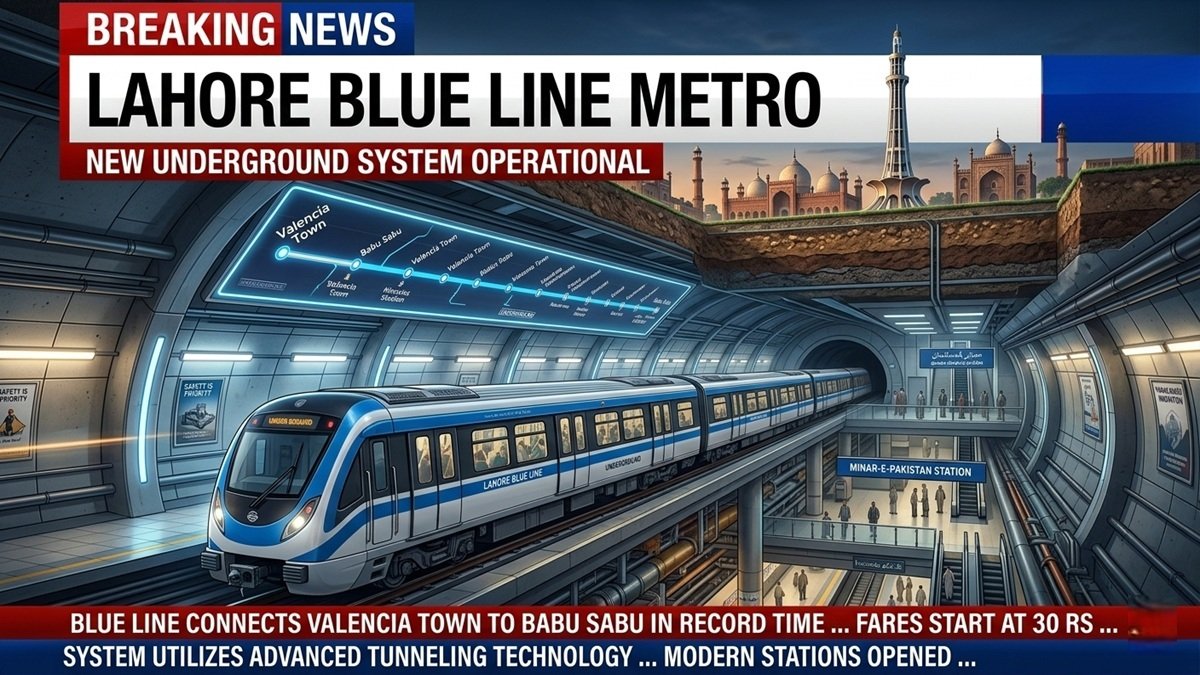
Metro systems can move hundreds of thousands of passengers daily with minimal road impact.
One of the biggest benefits of metro systems is the number of people they can move quickly. The Blue Line Lahore metro is expected to carry up to 400,000 passengers daily.
If this target is achieved, the system could remove thousands of cars and motorcycles from city roads. That change may help reduce congestion and fuel consumption.
Studies from the Asian Development Bank show that property values often increase near metro stations. Accessibility improves. Urban businesses also benefit from increased customer flow. Commercial zones like Gulberg, Johar Town, and Garden Town may see stronger growth once the metro begins operating.
Timeline and Current Status (March 2026)
The Blue Line project has entered an important planning stage. Punjab Chief Minister Maryam Nawaz directed authorities in March 2026 to accelerate project preparation.
At present, several steps remain before construction begins.
Current Development Stage
The Planning Commission of Pakistan must approve the PC-1 document before major infrastructure construction can begin.
If approvals move smoothly, officials expect construction to take around three years. That puts the possible opening window at around 2029. However, timelines can shift depending on funding and approvals.
Blue Line vs Orange Line vs Green Line
Lahore already operates two major public transport systems. Each uses a different technology.
Lahore Transit System Comparison
| Feature | Blue Line | Orange Line | Green Line |
|---|---|---|---|
| Type | Underground rail metro | Elevated rail metro | Bus rapid transit |
| Length | 27 km | 27.1 km | 22.5 km |
| Stations | Around 28 | 26 | 22 |
| Status | Planned | Operational since 2020 | Operational since 2013 |
| Daily Capacity | Up to 400,000 | Around 250,000 | Around 180,000 |
The Orange Line Metro Train runs mainly on elevated tracks across Lahore. The Green Line Metrobus operates buses on dedicated road lanes. The Blue Line will operate fully underground. It avoids road interference entirely.
More information about Orange Line operations is available through Punjab Mass Transit Authority.
Expected Fare System and Ticketing
Authorities have not yet announced final fares for the Blue Line. However, officials expect a structure similar to Lahore’s existing metro services.
Possible Fare Structure
| Distance | Estimated Fare |
|---|---|
| Short trip | Rs20 |
| Medium trip | Rs30 to Rs40 |
| Full route | Rs40 to Rs50 |
Passengers will likely use RFID metro smart cards. These cards are already used in Lahore’s Orange Line system. More information about Lahore metro ticketing is available at Lahore Metro Bus System. Authorities may also introduce discounted fares for students and senior citizens.
Step by Step Guide for Future Metro Users
When the Blue Line opens, passengers will likely follow a simple travel process.
How the System Will Work
Mobile apps may also help commuters track metro schedules. The Lahore Citi App developed by Punjab Information Technology Board already offers transport services information. Visit the official PITB portal for more details.
Environmental and Urban Benefits
Lahore often faces severe air pollution. Especially during winter months. Transport emissions contribute heavily to smog.
Electric metro trains produce far fewer emissions than petrol powered vehicles. According to the World Health Organization, improving urban public transport can reduce air pollution and improve public health.
The Blue Line could support Punjab’s broader Green Punjab environmental goals. Possible benefits include reduced road congestion, lower fuel consumption, less urban noise pollution, and faster city travel for millions of residents.
Expert Opinions and Urban Planning Insights
Urban transport specialists say underground metro systems become necessary once cities reach high population density.
Transport researcher Dr Mansoor Raza explains that underground rail helps cities avoid land acquisition problems. Instead of demolishing buildings for new roads, tunnels can pass beneath crowded neighborhoods.
Transport analyst Ahmed Saeed also notes that reliable metro systems often change travel behavior. When public transport becomes faster and predictable, commuters gradually switch from cars and motorcycles.
Lahore’s Public Transport History
Lahore’s modern public transport system has grown gradually over the past decade.
Major Milestones
| Year | Project |
|---|---|
| 2013 | Lahore Metrobus Green Line launched |
| 2020 | Orange Line Metro Train started operations |
| 2026 | Blue Line Underground Metro approved |
Each project increased the city’s transport capacity. However, the Blue Line introduces Pakistan’s first underground rail concept. That makes it a major step in Pakistan’s urban transport development.
What Happens Next for the Blue Line Project
Several steps must be completed before construction begins.
⚠️ Next Key Milestones
Residents can track reliable updates through official government portals.
Key Facts Summary
| Key Fact | Detail |
|---|---|
| Project | Blue Line Metro Lahore |
| Route | Valencia Town to Babu Sabu Chowk |
| Length | 27 km |
| Stations | Around 28 |
| Cost | Over Rs600 billion |
| Expected Opening | Around 2029 |
| Daily Ridership | Up to 400,000 |
| Design | Fully underground metro |
Frequently Asked Questions
Why This Project Matters for Pakistan
Many large cities invest in underground metro networks once population growth increases traffic pressure. Lahore now faces that reality.
The Blue Line underground metro represents a major step toward modern urban transport in Pakistan. If implemented successfully, this project may also inspire similar underground metro plans in other Pakistani cities. For millions of daily commuters in Lahore, the promise of faster and cleaner transport offers hope for a more efficient urban future.