Pink Button System in Punjab Schools: Why the Government Made It Mandatory and What It Means for Students
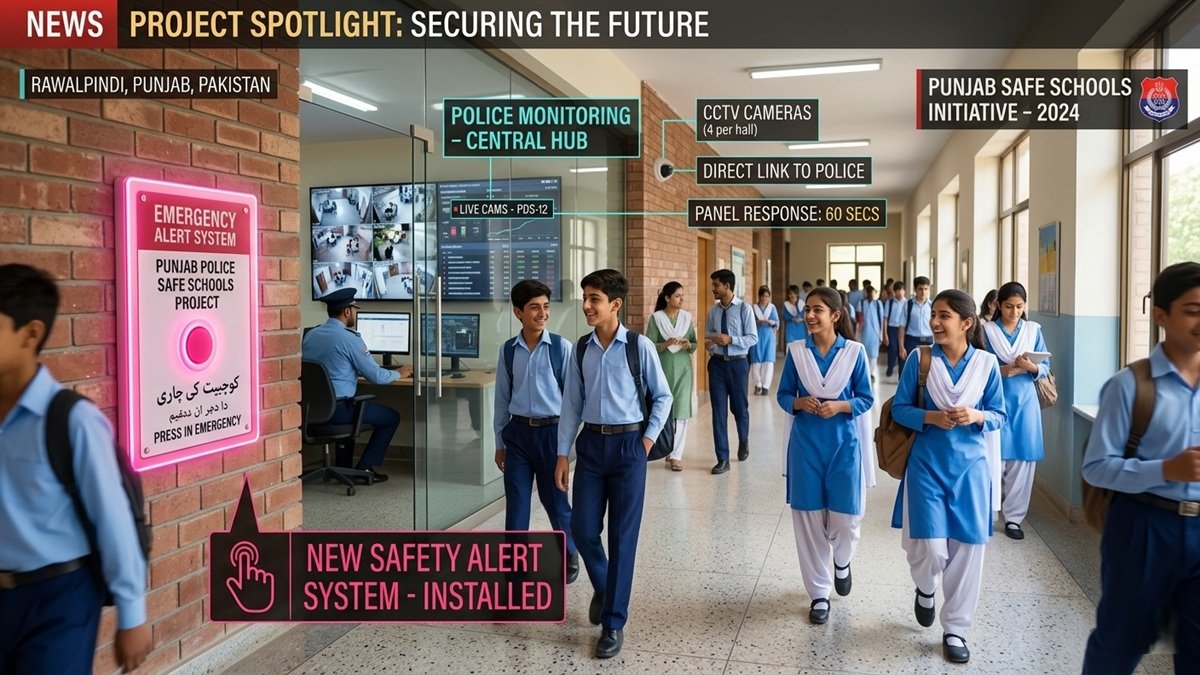
Punjab has started installing a Pink Button emergency alert system in schools. The goal is simple. If something dangerous happens inside a school, help should arrive fast. No delays. No waiting on a phone call. Just one press of a button.
In March 2026, the Punjab School Education Department made this system mandatory. Both public and private schools must install it. This article explains how it works, why it was introduced, and what it means for students, parents, and teachers across Punjab.
📋 Table of Contents
- What Is the Pink Button System
- Why Punjab Introduced It in Schools
- Security Challenges in Schools Today
- How the Pink Button Emergency Alert Works
- Step by Step: What Happens When Pressed
- Training and Awareness Programs
- Expansion Plan Across Punjab Schools
- Responsibilities of Private Schools
- Additional Security Measures
- Expert Views
- Key Facts Summary
- Frequently Asked Questions
What Is the Pink Button System
The Pink Button system is a panic alert device. It is installed inside school buildings. Teachers, staff, or school administrators can use it during emergencies.
When someone presses the button, a digital alert goes straight to the Punjab Safe Cities Authority (PSCA) control room. The alert includes the school’s exact location and the time of the emergency. No phone call is needed. The signal reaches authorities within seconds.
This system works inside the broader Safe Cities surveillance network. That network already monitors public safety in major cities like Lahore. It uses cameras and emergency systems to keep watch.
In simple terms, the Pink Button is a direct emergency line between schools and police services. One press. Instant alert. Fast response.
More information: Punjab Safe Cities Authority
Why Punjab Introduced the Pink Button in Schools
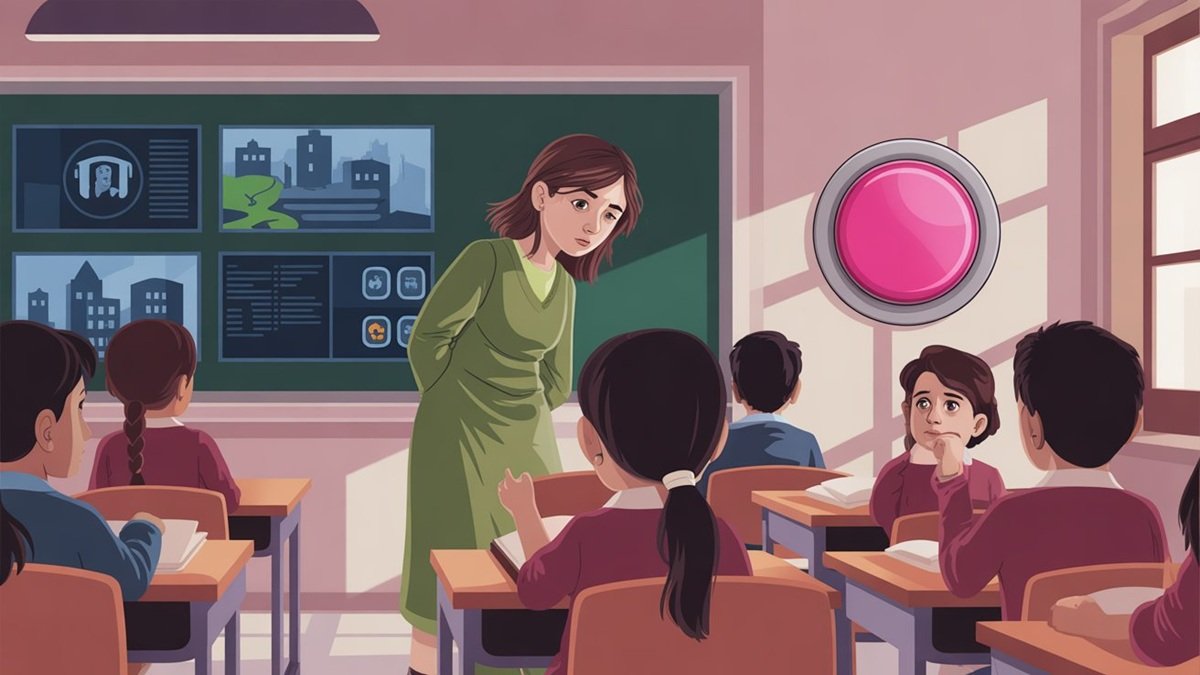
Authorities introduced this system because of growing safety concerns in schools. Over the past few years, several serious issues have been reported.
⚠️ Key Concerns That Triggered This Policy
- Harassment incidents near school gates
- Suspicious individuals entering school areas
- Long delays in reporting emergencies to police
- Lack of fast communication tools inside schools
The Pink Button policy builds on earlier safety initiatives in Punjab. The system first appeared in some women’s educational institutions. After positive results, the government decided to expand it province wide.
Officials say schools should never face an emergency without a fast way to contact law enforcement. This policy tries to fix that gap directly.
Official updates: Punjab Government Portal
Security Challenges in Schools Today
School safety remains a major public concern across Pakistan. After the 2014 Peshawar school tragedy, authorities everywhere introduced new security rules. CCTV cameras, security guards, and stricter entry checks became standard.
But many schools still struggle with basic infrastructure problems.
Common Problems Reported by Education Authorities
- Non working CCTV cameras
- Weak or broken boundary walls
- Not enough security guards
- No fast system to report emergencies
Security experts often say that physical infrastructure alone is not enough. Schools also need fast communication with authorities during a crisis. That is exactly the gap the Pink Button tries to fill.
For background on national education policies, visit the Ministry of Federal Education and Professional Training.
For broader context on school safety worldwide, the UNICEF Safe Schools initiative provides useful international perspectives on protecting students.
How the Pink Button Emergency Alert Works
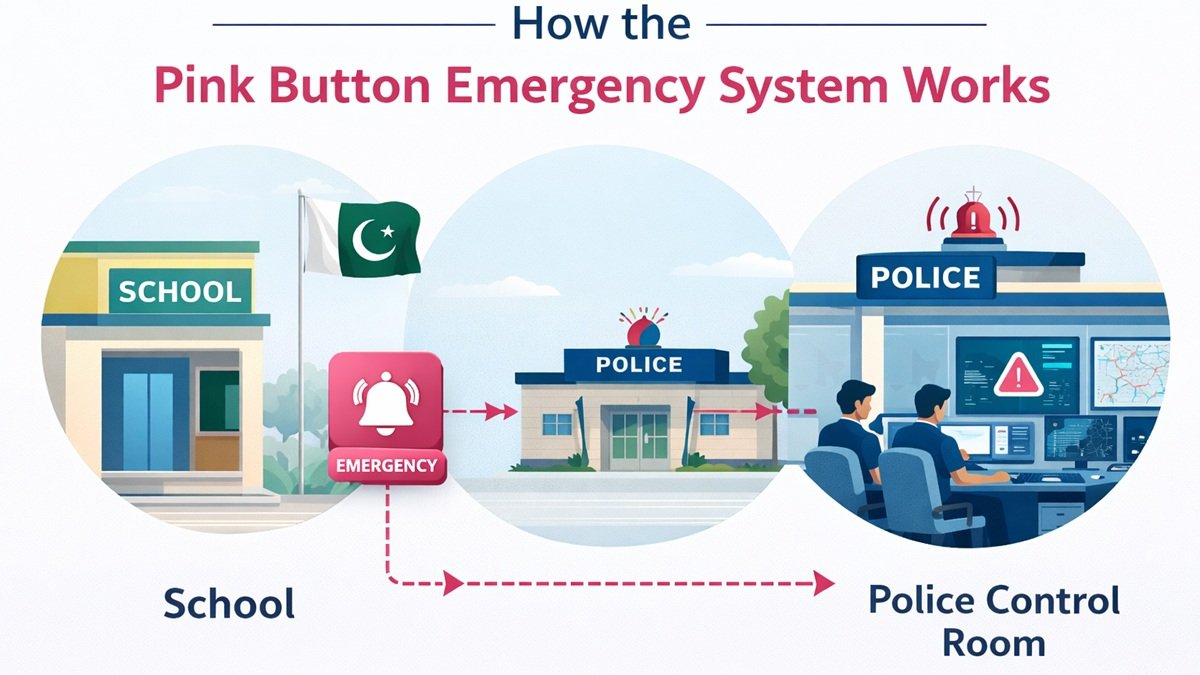
The Pink Button functions as a digital panic alarm. It connects directly to the Safe Cities monitoring system. Here is how it works in detail.
📡 Instant Alert Transmission
The moment someone presses the button, the system sends an emergency signal to the PSCA monitoring center. This alert contains three things.
- School location
- Time of activation
- Emergency notification flag
Because the signal is digital, it reaches the control room almost instantly.
🚔 Emergency Response
After receiving the alert, the control room contacts the nearest police station. If the incident involves harassment or safety issues related to women or children, Punjab’s Virtual Women Police Stations may also be alerted.
More info: Punjab Police
📱 Mobile App Integration
In some institutions, the Pink Button also connects to a mobile application. Registered staff members can add extra details through the app. This helps authorities understand the situation more clearly before arriving.
Step by Step: What Happens When the Button Is Pressed
Here is the exact sequence of events once someone activates the Pink Button.
Because the entire process is digital, it can reduce reporting delays significantly. In an emergency, every second matters. This system removes the need for a phone call and eliminates human delays in the chain.
Training and Awareness Programs in Schools
Technology alone cannot keep students safe. That is why the government has also instructed schools to run training sessions and awareness programs alongside the Pink Button installation.
💡 What Training Activities Include
- Emergency response drills
- Security awareness sessions for all staff
- Instructions on how to use the Pink Button correctly
- Training staff to recognize suspicious behavior
These drills help schools build a real culture of safety. Not just hardware. But people who know what to do.
The Punjab School Education Department shares security guidelines regularly on its official portal at schools.punjab.gov.pk.
Expansion Plan Across Punjab Schools
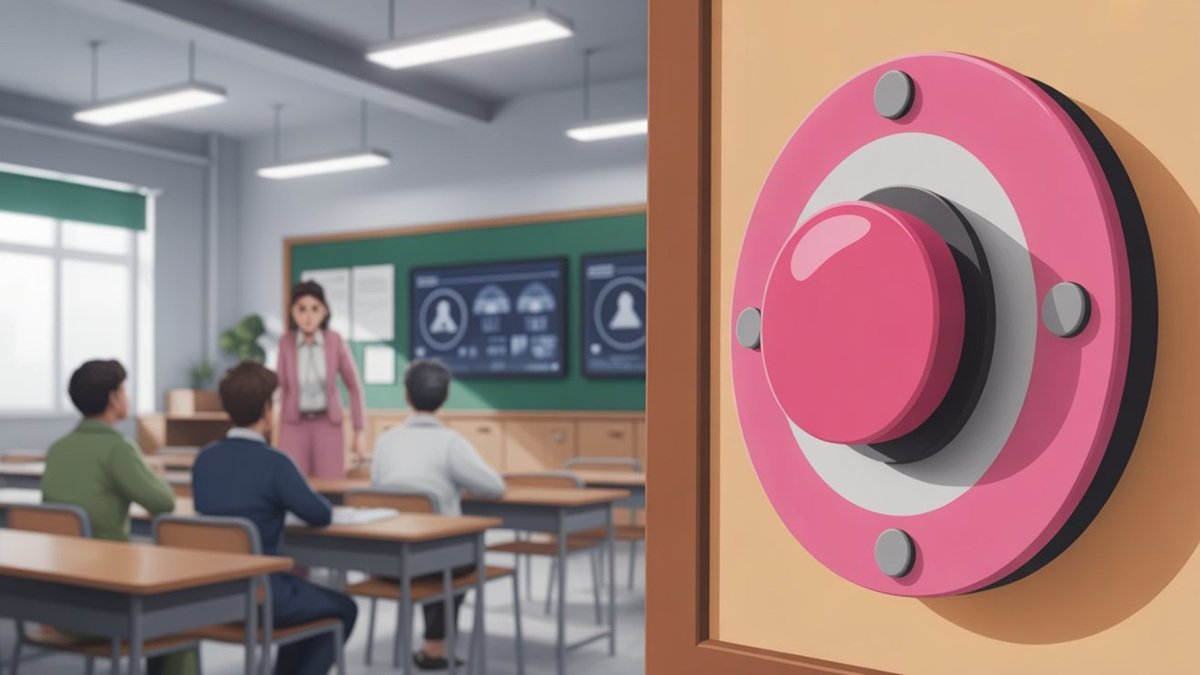
The Pink Button project did not launch everywhere at once. It started small and is now growing fast.
First Phase
The pilot program installed the system in 39 educational institutions in Lahore. Authorities monitored how quickly alerts reached the Safe Cities control room and how well the response worked.
Expansion Phase
After testing, officials announced plans to expand the system to 450 women’s schools and colleges across Punjab.
Current Situation (March 2026)
Following the March 2026 directive, district education officers must now ensure installation across all schools in their area. They must also submit progress reports to the education department.
Responsibilities of Private Schools
Private schools cannot opt out. The government has made that very clear.
What Private Schools Must Do
- Install Pink Buttons in important locations inside campus
- Cover their own installation costs
- Register staff in the monitoring system
- Conduct proper training sessions for staff
- Submit compliance reports to education authorities
Schools that fail to comply may face fines, legal action, or suspension of registration.
Guidelines for private institutions are also available through the Punjab Private Educational Institutions Regulatory Authority (PEIRA).
Additional Security Measures Ordered by the Government
The Pink Button is just one part of Punjab’s bigger school security plan. The government has also ordered physical improvements at every school.
🏫 Physical Security Requirements
- 8 foot boundary walls
- Barbed wire on top of walls
- Strong security gates at entrances
- Metal detectors at entry points
- Emergency drills and written security procedures
These steps create multiple layers of protection inside school campuses. The idea is that no single measure is enough on its own.
Security policy announcements are shared through Punjab Government.
Local Context: Why School Security Matters in Punjab
Punjab has the largest student population in Pakistan. Millions of children go to school every day. In cities, in towns, and in rural areas across the province.
Because of this scale, even small safety risks can affect thousands of families at once. Parents worry about what happens inside school. They worry about who is outside the gates. They worry about how fast help will come if something goes wrong.
The Pink Button system aims to reduce that fear. By linking schools directly with the Safe Cities monitoring network, the government hopes to cut response times during emergencies.
Expert Views on Digital School Safety Systems
Security experts generally support digital emergency alert systems in schools. They believe these systems can improve coordination between schools and law enforcement agencies.
Experts recommend schools focus on three things:
- Regular equipment maintenance schedules
- Staff training programs that run at least twice a year
- Strong security management with clear accountability
For international perspectives on school emergency systems, the World Health Organization’s violence prevention resources and the UNICEF Safe Schools framework offer useful global benchmarks.
Comparison With Earlier School Security Programs
Punjab has tried several school safety programs over the past decade. Earlier programs included CCTV camera installations, security guards at school entrances, Safe Cities surveillance projects, and women police helpline services.
But most of those systems depended on manual reporting or phone calls. Someone had to notice the problem. Then call someone. Then explain the situation. All of that takes time.
The Pink Button is different. It sends an automatic alert the moment the button is pressed. No explanation needed. No waiting on hold. No chance of a wrong number. That small change can make a very big difference during a real emergency.
Data and Statistics About Punjab Schools
Punjab operates tens of thousands of public schools, according to education department reports. The province also has a very large number of private institutions.
Managing safety across such a massive system is a real challenge. Digital monitoring networks like Safe Cities already operate in several urban areas. By linking schools into this network, authorities aim to build a faster emergency response system that can scale across the entire province.
Key Facts About the Pink Button System
| Feature | Details |
|---|---|
| System Type | Emergency panic alert |
| Managed by | Punjab Safe Cities Authority (PSCA) |
| Alert Method | Digital signal to control room |
| Pilot Program | 39 institutions in Lahore |
| Planned Expansion | 450 women’s schools and colleges |
| Who Must Install | Public and private schools |
| Response Authority | Local police stations |
| Policy Issued | March 2026 |
| Monitoring Officer | District Education Officers |
| Official Portal | schools.punjab.gov.pk |
What Happens Next
The focus now shifts to installation and monitoring. District education officers will track progress, register schools with the Safe Cities network, and submit regular reports to the education department.
If the program works well, authorities may expand it further. In the future, school security systems across Punjab could become fully integrated with the province’s digital safety infrastructure. That would mean faster alerts, better tracking, and stronger protection for every student.
Why the Pink Button System Matters
The biggest advantage is faster emergency communication. In a crisis, quick response can save lives. By connecting schools directly with monitoring authorities, the government hopes to improve safety for students and teachers.
Still, experts say the system will only succeed if schools combine it with trained staff, proper infrastructure, and responsible management. If done right, the Pink Button initiative could become one of the most important school safety reforms in Punjab’s education history.
Frequently Asked Questions
Sources and References