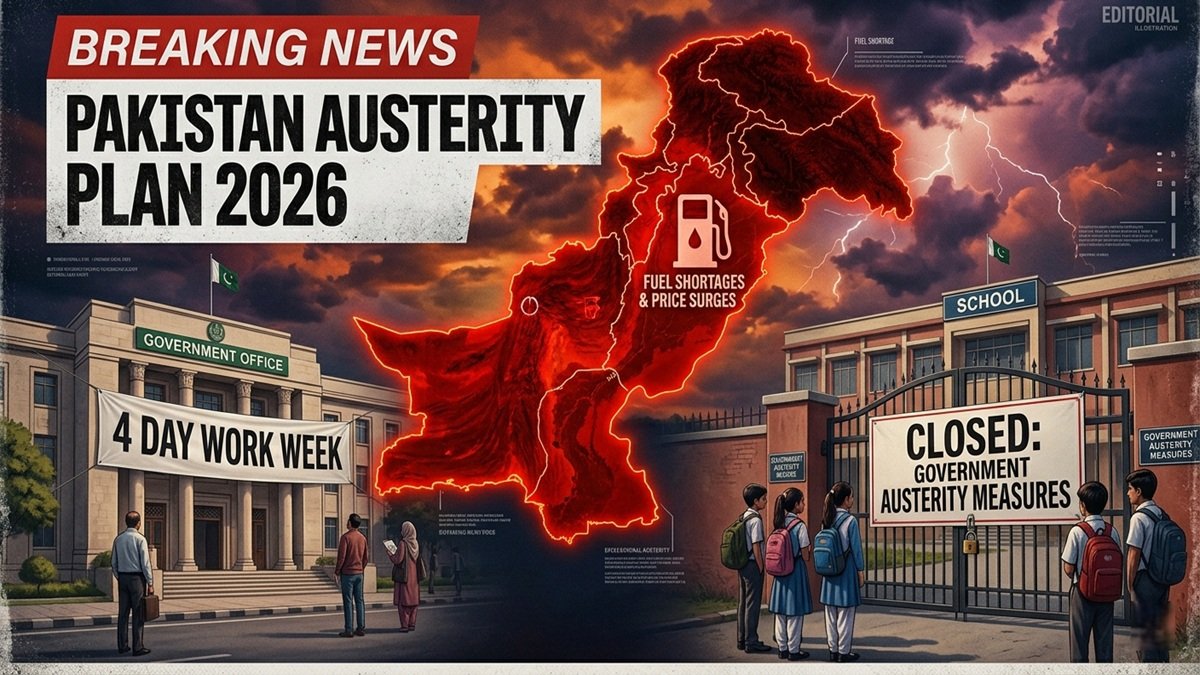
Pakistan’s 2026 Austerity Plan Explained
How the 4-Day Work Week, School Closures, and Fuel Cuts will change daily life for millions of Pakistanis — and what you need to do right now.
Pakistan has introduced an emergency austerity plan in 2026 after global oil prices surged due to rising tensions in the Middle East. Prime Minister Shehbaz Sharif announced the policy as a temporary step to reduce fuel consumption and protect the country’s economy.
Pakistan imports most of its petroleum products. So when international oil prices go up, local petrol and diesel prices follow fast. In early March 2026, petrol prices crossed Rs 321 per litre. That put huge pressure on transport, food prices, and businesses across the country.
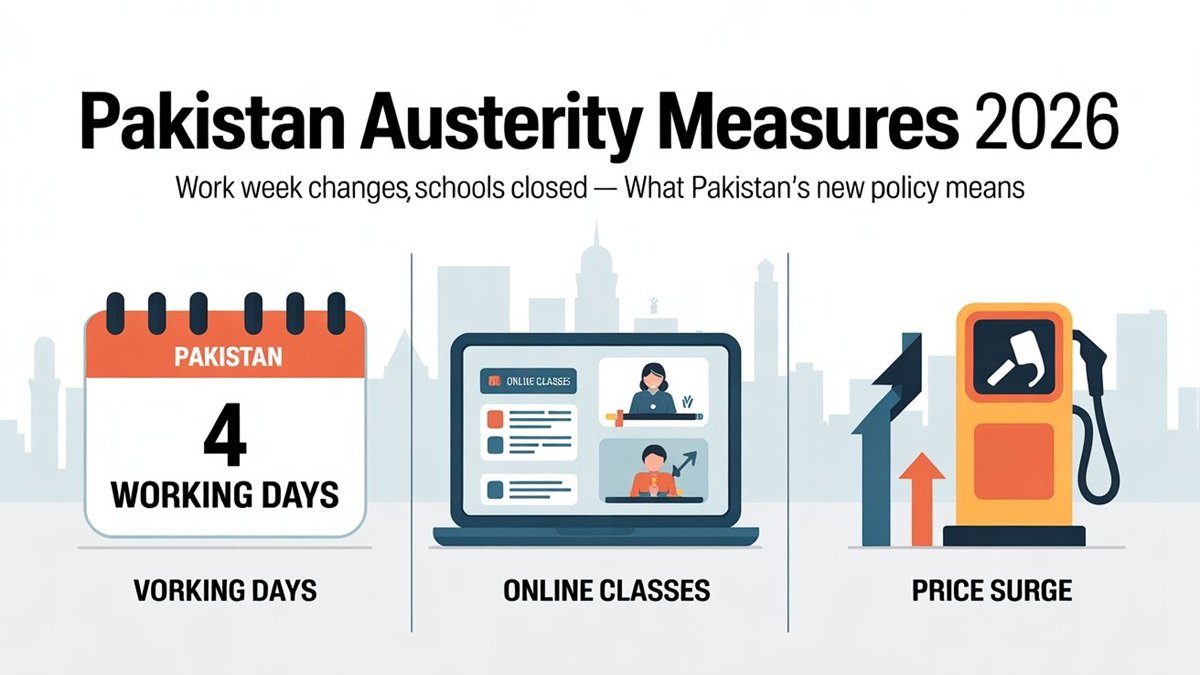
To manage the situation, the government rolled out a series of steps. These include a four-day work week for federal offices, school closures, work-from-home policies, and spending cuts for government officials.
These policies may look simple. But they could change everyday routines across the country. Families, students, employees, and small businesses will all feel the impact.
This guide explains why Pakistan introduced these measures, what changes to expect, and how these decisions may shape the economy in the coming weeks.
Also Read:
Key Facts at a Glance
Why Pakistan Introduced an Austerity Plan
Rising global crude prices above $100 per barrel triggered Pakistan’s emergency response. Photo: Pexels
The Pakistan austerity plan 2026 is mainly a response to rising global oil prices and pressure on the country’s import bill.
Pakistan relies heavily on imported energy. According to the Ministry of Finance Pakistan, petroleum imports make up a major share of Pakistan’s annual trade expenses. When oil prices rise globally, the country must spend more foreign currency to buy fuel.
⚡ Why Oil Got So Expensive
Recent geopolitical tensions in the Middle East pushed global crude prices above $100 per barrel. Much of the world’s oil travels through the Strait of Hormuz. Any conflict in the region increases shipping risk and insurance costs. That pain flows directly into Pakistan’s fuel pumps.
As a result, domestic fuel prices increased sharply. This pushed inflation higher and raised transport costs for millions of citizens. Officials say the austerity plan is designed to reduce fuel demand quickly while global markets remain unstable.
You can track Pakistan’s fiscal data and economic outlook through updates published by the Ministry of Finance Pakistan and monetary policy reports from the State Bank of Pakistan.
How the 4-Day Work Week Will Affect Workers
One of the most noticeable changes is the temporary four-day work week for federal government offices.
What the Policy Covers
- Federal offices will operate four days each week
- Half of government staff will work from home
- Banks and essential services will continue normal operations
The government believes fewer commuting days will reduce fuel consumption in large cities such as Islamabad, Lahore, and Karachi. Authorities have also encouraged private companies to adopt similar arrangements. But the policy is not mandatory for private businesses.
Benefits for Employees
Two real benefits workers may feel quickly:
- Fewer commuting days could reduce fuel expenses and transport fares. Workers who travel long distances daily may see financial relief.
- Remote work may bring greater flexibility. This is especially true for those in administrative or digital roles.
Potential Challenges
But there are real challenges too. Some workers may face longer hours on office days to complete weekly tasks. Others may struggle with unreliable internet or electricity during remote work days.
To help citizens access services online, the National Information Technology Board manages many federal e-government portals.
School Closures and Online Classes Explained
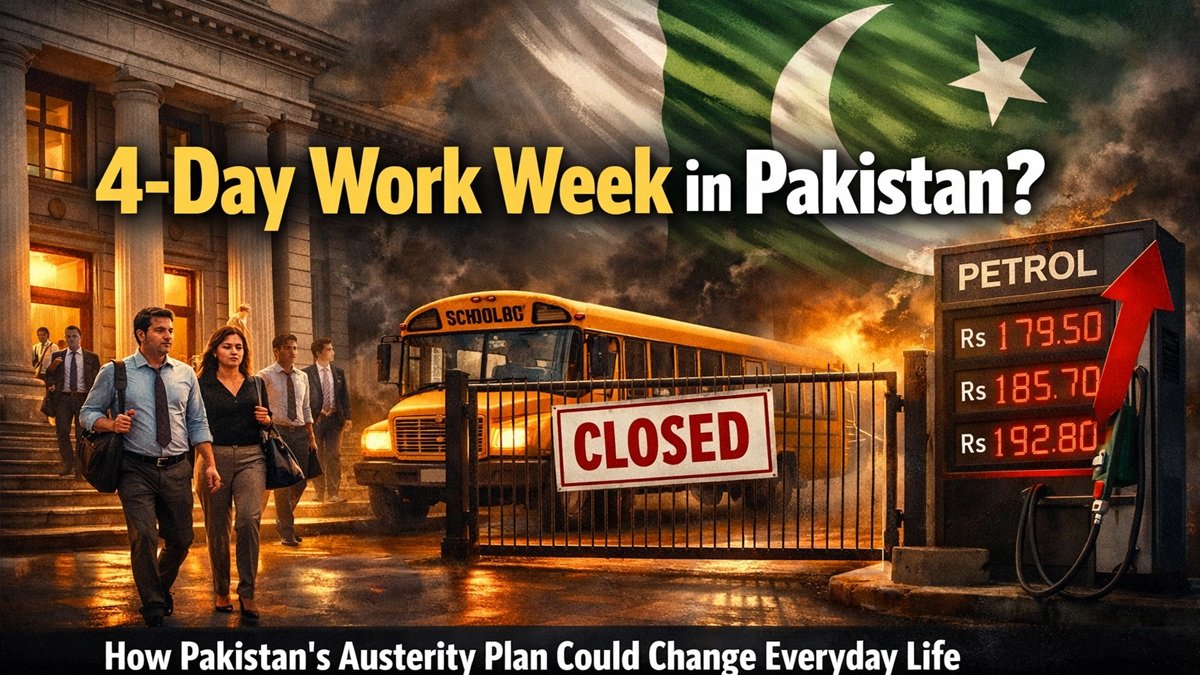
Schools remain closed until March 31 while colleges shift to online classes.
Education is another sector hit by the austerity measures.
Schools across Pakistan are observing spring break from mid-March until March 31, 2026. Physical classes are suspended to reduce fuel consumption from daily school transportation.
What Students Should Expect
- Colleges and universities will conduct online classes
- Board examinations will continue with controlled in-person arrangements
- Teachers will share lessons and assignments through digital platforms
Many institutions are using tools such as Zoom, Google Classroom, or internal learning systems. Guidelines have also been issued by provincial authorities.
Challenges for Families
Online learning works. But it highlights digital inequality.
Students in rural areas may face slow internet connections, lack of laptops or smartphones, and electricity outages. Education experts say these same issues appeared during remote learning in 2020 and 2021.
Salary Cuts for Politicians and Senior Officials
To show financial discipline, the government has introduced temporary salary reductions for senior officials. The goal is to show that political leaders are sharing the economic burden during the fuel crisis.
| Category | Policy |
|---|---|
| Federal ministers and advisers | No salary or allowances for two months |
| Members of Parliament | Around 20 to 25 percent salary reduction |
| Grade-20 and above civil servants | Two days’ salary deduction |
| Lower-grade employees | No direct salary cuts |
Pakistan’s public finance data and budget information are regularly published by the Ministry of Finance Pakistan.
Government Vehicle Restrictions and Fuel Cuts
Another major part of the program focuses on government transport. Officials believe reducing official vehicle usage can quickly cut fuel consumption.
🚗 Key Restrictions Introduced
- 50 percent reduction in fuel allocations for government vehicles
- 60 percent of non-essential official vehicles parked
- Ban on purchasing new government cars and non-essential equipment
Emergency services are exempt. Ambulances and vehicles used by Rescue 1122 will continue normal operations.
Ministers and senior officials must also limit the number of security and protocol vehicles during official movements. This change may also reduce traffic disruptions caused by large government convoys in major cities.
Expected Fuel Savings and Economic Impact
💰 What the Government Expects to Save
Government officials estimate that the austerity measures could save around Rs 4.5 billion in fuel costs at the federal level over the next two months. Most of these savings will come from reduced fuel use in government vehicles.
A 20 percent cut in non-development spending during the final quarter of the fiscal year could save roughly Rs 22 billion more.
However, economists say the larger economic impact depends on global oil markets. Energy experts from organizations such as the International Energy Agency monitor global oil trends that influence fuel prices in importing countries like Pakistan.
If oil prices stay above $100 per barrel, Pakistan could face:
- Higher inflation
- Increased transport costs
- Pressure on foreign exchange reserves
Some analysts estimate that sustained high oil prices could reduce economic growth by 1 to 1.5 percent.
Public Reaction Across Pakistan
Public opinion on the austerity measures is divided.
Some workers support the shorter work week. They say it reduces commuting costs and time spent in traffic. But many parents and teachers have expressed concern about school closures. Education groups argue that disruptions may affect students preparing for important examinations.
On social media, some citizens have also questioned whether short-term austerity policies can address deeper economic challenges. Nevertheless, many people acknowledge that reducing fuel consumption could help stabilize the economy if global oil prices remain volatile.
Comparison With Past Energy Crisis Measures
Pakistan has introduced similar emergency policies during previous crises.
- During the 2013 electricity crisis, commercial activities faced restricted operating hours.
- During the COVID-19 pandemic, schools and offices shifted to remote work and online education.
However, the 2026 austerity plan focuses primarily on reducing fuel demand, not electricity shortages.
Economic researchers at the Pakistan Institute of Development Economics say such measures can help in the short term but must be combined with long-term energy reforms.
Practical Guide for Families, Workers, and Businesses
These policies affect everyday life. Planning ahead can help households adapt quickly.
👨👩👧 For Parents
- Confirm school reopening dates with local authorities
- Ensure children have access to online classes
- Prepare backup internet data if possible
🏛️ For Government Employees
- Check updated office schedules
- Confirm remote work arrangements with your department
- Understand whether salary deductions apply to your grade
💼 For Private Sector Workers
- Ask employers about flexible work policies
- Clarify transport allowance changes
🏪 For Small Businesses
- Adjust business hours if customer traffic drops
- Prepare for fewer walk-in clients on government closure days
What Happens Next for Pakistan’s Economy

Long-term energy reforms including renewable projects are key to reducing Pakistan’s dependence on oil imports. Photo: Pexels
The future of Pakistan’s austerity plan depends largely on global energy prices.
If oil prices fall and regional tensions ease, the government may gradually restore normal working schedules. But if oil prices continue to rise, additional conservation measures may become necessary.
Long-Term Fixes Pakistan Needs
- Expanding renewable energy projects
- Improving public transport systems
- Reducing dependence on imported petroleum
Policy analysis and economic forecasts related to these reforms are regularly published by the State Bank of Pakistan.
Full Summary Table
| Policy | Details |
|---|---|
| Work schedule | Four-day work week for federal offices |
| Remote work | 50 percent staff working from home |
| Schools | Closed until March 31 |
| Universities | Online classes during closure |
| Government vehicles | 50 percent fuel reduction |
| Estimated fuel savings | Around Rs 4.5 billion |
| Non-development spending cut | 20 percent, saving Rs 22 billion |
| Duration | Approximately two months |
Frequently Asked Questions
Final Analysis: Why This Policy Matters