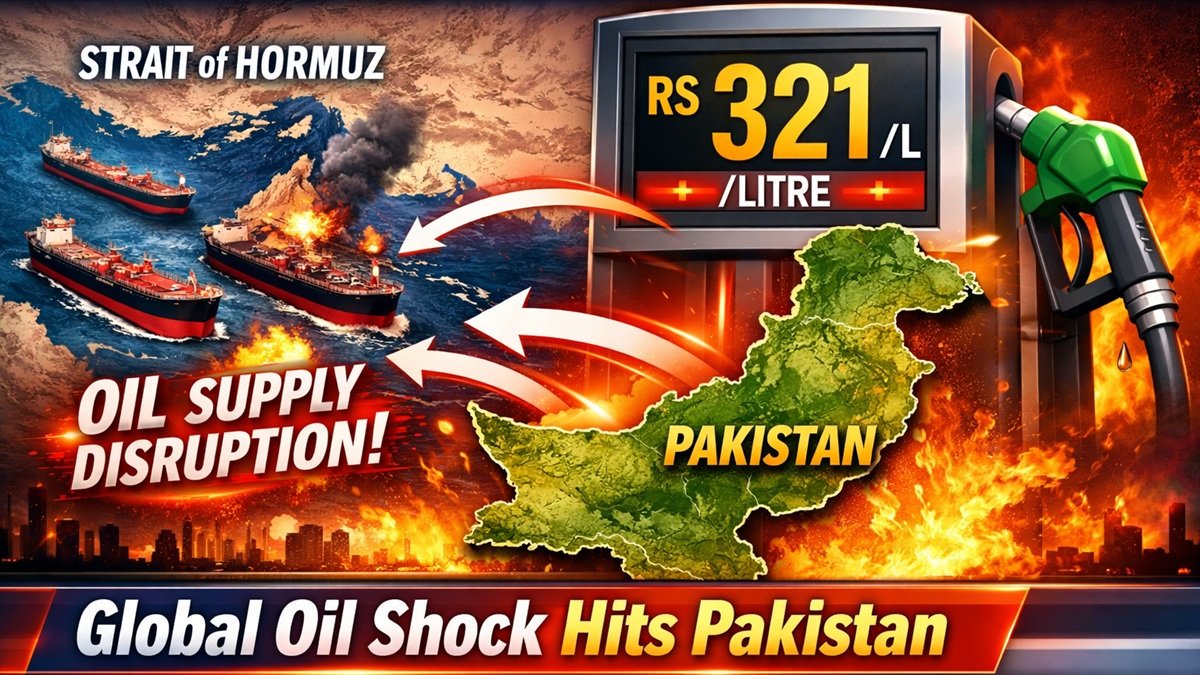
Pakistan Fuel Crisis 2026: Petrol at Rs 321 After Record Rs 55 Hike
Pakistan is facing its biggest fuel price shock in recent history. On March 7, 2026, petrol jumped by Rs 55 per litre. The new price is Rs 321.17. Diesel now costs Rs 335.86. This is the first time petrol has ever crossed the Rs 320 mark. The main reason? A global oil supply crisis near the Strait of Hormuz. This article explains everything. What happened. Why it happened. And what comes next.
📋 Table of Contents
- Pakistan Fuel Crisis 2026 Overview
- Fuel Prices Before and After the March 7 Hike
- War Disrupts Global Oil Flow Through the Strait of Hormuz
- Why Pakistan Is More Vulnerable Than Other Countries
- Direct Impact on Pakistani Households and Transport
- Panic Buying and Supply Fears Across Cities
- Government Emergency Measures and Fuel Conservation Plan
- Impact on Inflation, Food Prices, and Business Costs
- Diesel and Kerosene Price Changes in March 2026
- Comparison With Past Fuel Price Shocks in Pakistan
- Expert Insights and Economic Analysis
- Expected Fuel Prices for Late March and April 2026
- Practical Steps for Citizens to Manage Rising Fuel Costs
- What Happens Next?
- Key Facts Summary
- Frequently Asked Questions
Pakistan Fuel Crisis 2026 Overview
The Pakistan fuel crisis 2026 began when global energy markets reacted to rising geopolitical tensions in the Middle East.
On February 28, 2026, military developments involving the United States, Israel, and Iran created instability around the Strait of Hormuz. This narrow waterway lies between Iran and Oman. It connects the Persian Gulf with global shipping routes.
Energy experts estimate that around one-fifth of the world’s oil supply moves through the Strait of Hormuz every single day. When this route gets disrupted, the whole world feels it.
When shipping risks increased in early March, oil traders reacted quickly. Tanker insurance costs rose sharply. Some shipping companies delayed shipments while waiting for safer routes. As a result, global crude prices climbed within days.
According to analysis by the International Energy Agency (IEA), oil-importing countries often experience rapid domestic price changes during supply disruptions. Pakistan felt the impact almost immediately.
Fuel Prices Before and After the March 7 Hike
The March price adjustment became one of the largest fuel price increases in Pakistan’s recent history.
| Fuel Type | Old Price (Before March 7) | New Price | Increase |
|---|---|---|---|
| Petrol (MS) | ~Rs 266 | Rs 321.17 | Rs 55 |
| Diesel (HSD) | ~Rs 280 | Rs 335.86 | Rs 55 |
Fuel prices in Pakistan follow a fortnightly adjustment system. This is based on global oil prices, exchange rates, and taxes. Price notifications are issued by the Ministry of Finance Pakistan.
- A commuter using 100 litres per month may now spend around Rs 5,500 more than before
- Taxi drivers and ride-hailing operators may see weekly fuel costs increase by Rs 3,000 to Rs 5,000
- This sudden increase explains why transport fares started rising almost immediately
War Disrupts Global Oil Flow Through the Strait of Hormuz
Oil tanker on a global shipping route. Disruptions near Hormuz sent prices surging.
The Strait of Hormuz crisis is the main global factor behind the fuel price surge.
This shipping route is one of the most important energy corridors in the world. Oil exports from Saudi Arabia, Kuwait, Iraq, and the United Arab Emirates all pass through this narrow channel.
According to the U.S. Energy Information Administration (EIA), about 20 percent of global petroleum liquids consumption moves through the strait daily. When tensions increased in early March, shipping insurance premiums rose. Tanker operators demanded higher freight charges too.
These costs quickly pushed global crude prices upward. Oil prices moved from roughly $73 per barrel to above $82 per barrel within days. Because Pakistan imports fuel at international prices, these global increases soon appeared in local petrol and diesel rates.
Why Pakistan Is More Vulnerable Than Other Countries
Pakistan’s economy depends heavily on imported energy. Estimates show that more than 80 percent of petroleum used in Pakistan is imported. Mainly from Gulf countries such as Saudi Arabia and the UAE.
According to reports from the State Bank of Pakistan (SBP), petroleum imports form a major portion of the country’s annual import bill. When global oil prices increase, Pakistan must spend more foreign currency to purchase fuel. This puts pressure on the rupee and increases inflation.
Countries that produce their own oil can absorb shocks more easily. Pakistan currently has very limited domestic oil production.
This is why a conflict thousands of miles away in the Middle East can push petrol prices to Rs 321 here in Pakistan. We are directly connected to those global price swings.
Direct Impact on Pakistani Households and Transport
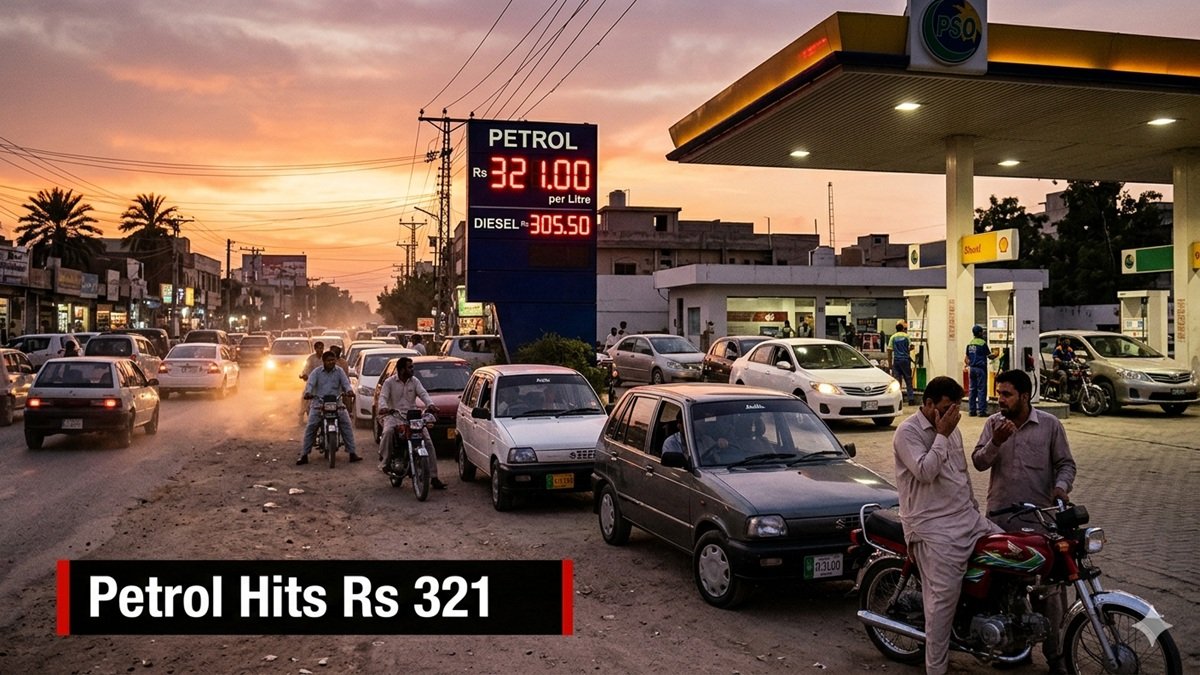
Road transport in Pakistan heavily depends on petrol and diesel. Rising prices hit everyone.
The most immediate effect of the Rs 321 petrol price appears in transportation costs. Road transport consumes a large share of Pakistan’s fuel. Buses, trucks, motorcycles, and ride-hailing vehicles all depend on petrol or diesel.
Within hours of the price increase, many transport operators announced fare adjustments.
- Bus fares increased by Rs 20 to Rs 50 per trip
- Ride-hailing fares increased by around 15 to 25 percent
- Freight costs for trucks increased significantly
Higher freight costs eventually affect food prices. According to economic analysis from the Asian Development Bank (ADB), fuel costs strongly influence food inflation in developing economies. As a result, consumers may see gradual price increases in vegetables, wheat products, and groceries.
Panic Buying and Supply Fears Across Cities
Soon after the announcement, many petrol stations reported heavy demand. Drivers rushed to fill their tanks before prices increased further.
Long queues appeared at petrol pumps in Karachi, Lahore, and Islamabad. Videos circulating online showed traffic lines stretching outside filling stations.
Oil companies later reassured the public that Pakistan still had several weeks of fuel reserves. The Petroleum Division of Pakistan regularly monitors national fuel stocks and supply chains. Despite public concern, supplies remained stable.
Government Emergency Measures and Fuel Conservation Plan
In response to the crisis, Prime Minister Shehbaz Sharif announced emergency energy conservation steps. The government’s goal is to reduce fuel consumption while global markets remain unstable.
- Four-day workweek for government offices
- Two-week closure of schools nationwide
- 50 percent reduction in fuel quotas for official vehicles
- 20 percent reduction in government operational spending
Officials also confirmed that the government used about Rs 23 billion in subsidies to reduce the immediate impact on consumers. Policy updates on energy conservation are released by the Ministry of Energy Pakistan.
Authorities are also exploring alternate oil supply routes through Saudi Arabia and the Red Sea.
Impact on Inflation, Food Prices, and Business Costs
Fuel prices affect almost every sector of the economy. When petrol and diesel become expensive, transport and production costs increase. Economists expect inflation to rise modestly in the coming months if fuel prices remain high.
| Sector | Cost Increase | Example Impact |
|---|---|---|
| Public Transport | 20–30% | Bus fares increase |
| Food Supply Chain | 5–10% | Grocery prices rise |
| Export Logistics | 25–30% | Textile transport costs increase |
According to data from the Pakistan Bureau of Statistics (PBS), transportation costs strongly influence the country’s inflation index. Fuel price increases often lead to higher food prices within weeks.
Also check our report on Pakistan rain and thunderstorm weather alerts for March 2026. Severe weather alongside fuel costs is adding further pressure on transport and agriculture this month.
Diesel and Kerosene Price Changes in March 2026
The crisis has also affected other fuels used across Pakistan.
| Date | Diesel (HSD) Rs/L | Kerosene Rs/L |
|---|---|---|
| Before March 1 | 275.70 | 192.86 |
| March 1–6 | 280.86 | 192.86 |
| March 7 onward | 335.86 | 176.81–318.81 |
Diesel is widely used in agriculture, trucking, and industry. Its price increase affects production costs across the board. Kerosene is still used by some rural households for cooking and heating. Changes in its price can affect low-income communities who have no alternatives.
Comparison With Past Fuel Price Shocks in Pakistan
Pakistan has faced fuel price increases before. However, the 2026 surge stands out for its size and global cause.
- 2022: Petrol crossed Rs 240 during global energy inflation
- 2023: Prices approached Rs 290 due to rupee depreciation
- 2026: Petrol crossed Rs 320 for the first time ever
Unlike earlier increases, the current crisis comes mainly from global supply disruptions rather than domestic policy changes. This makes it harder for the government to control prices directly.
Expert Insights and Economic Analysis
Energy economists say Pakistan’s dependence on imported oil creates structural vulnerability.
Researchers from the Brookings Institution and other global policy groups have warned that oil-importing economies often face serious inflation during shipping disruptions.
Another key factor is shipping insurance. During geopolitical conflicts, tanker insurance costs can increase dramatically. These costs eventually appear in retail fuel prices. Experts also note that diversifying energy sources and increasing renewable energy investment could reduce Pakistan’s vulnerability to future oil shocks.
Expected Fuel Prices for Late March and April 2026
Fuel price forecasts remain uncertain because global oil markets remain volatile. However, analysts suggest several possible scenarios.
| Fuel | Current Price | Late March Estimate | April Estimate |
|---|---|---|---|
| Petrol | Rs 321.17 | Rs 340–360 | Rs 330–350 |
| Diesel | Rs 335.86 | Rs 350–370 | Rs 340–360 |
| Kerosene | Rs 176–319 | Rs 320+ | Rs 300–330 |
These projections depend on global oil prices and geopolitical developments. Market outlooks are often published by OPEC. If tensions ease and shipping routes stabilize, prices could fall gradually.
Practical Steps for Citizens to Manage Rising Fuel Costs
During fuel price spikes, small lifestyle adjustments can help households reduce expenses. Experts recommend simple fuel-saving habits.
- Use carpooling for work commutes
- Prefer public transport when possible
- Combine errands into a single trip
- Maintain vehicles properly to improve fuel efficiency
- Consider hybrid vehicles for long-term savings
Even minor changes can reduce daily fuel expenses by Rs 20 to Rs 50. Over a month, that adds up.
For more context on Pakistan’s broader economic landscape, read our article on Eid ul Fitr 2026 moon sighting and date in Pakistan. With Eid approaching during a fuel crisis, household budgets will need extra planning this year.
What Happens Next?
Several factors will determine how the Pakistan fuel crisis 2026 develops.
- Stability of shipping routes in the Strait of Hormuz
- Global crude oil price trends
- Government subsidy policies
- Currency movements of the Pakistani rupee
Fuel prices in Pakistan are usually reviewed every two weeks based on international market data. Upcoming announcements from OGRA and the Ministry of Finance will be closely watched.
Key Facts Summary
Frequently Asked Questions