⛽ Pakistan Petrol Price Update — April 2026
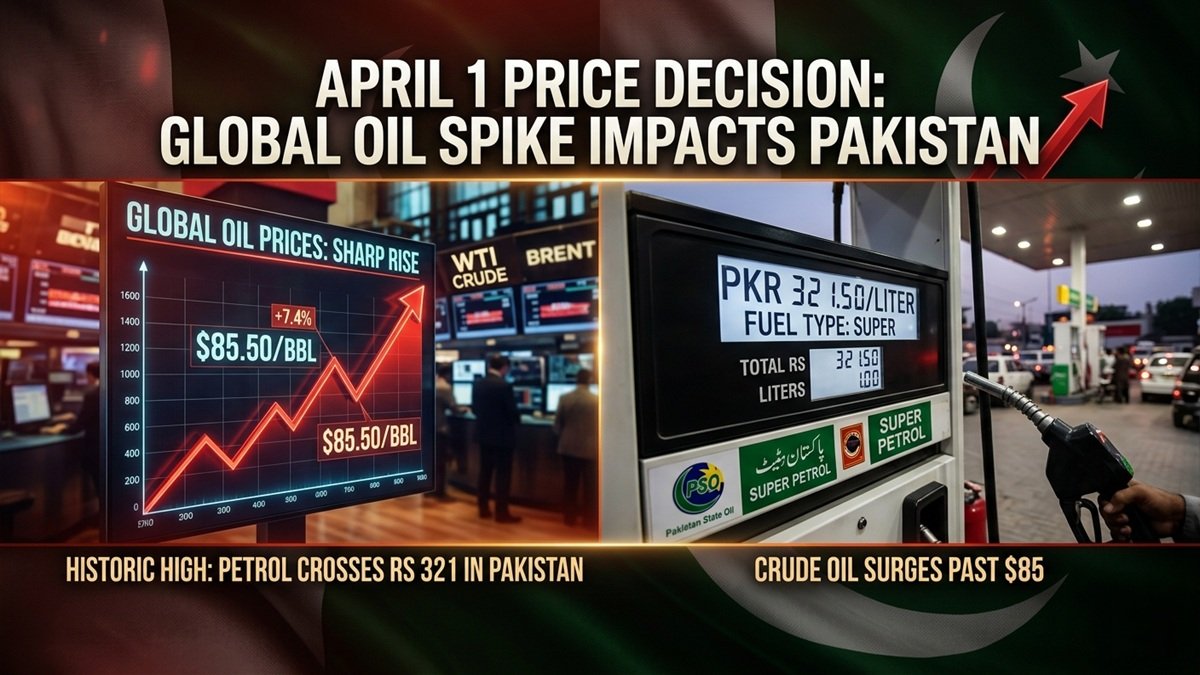
Petrol now costs Rs 321.17 per liter. The March 2026 hike shocked millions. Now all eyes are on April 1. Will prices rise again? Or finally give some relief?
Here are the clear facts, expert views, and a simple guide to stay prepared.
Current Petrol Price in Pakistan
As of mid-March 2026, the Ministry of Energy (Petroleum Division) officially set fuel rates at:
| Fuel Type | Price (PKR per liter) |
|---|---|
| Petrol | Rs 321.17 |
| High-Speed Diesel | Rs 335.86 |
These are officially notified rates by the government. This increase came after a Rs 55 per liter jump that left consumers stunned. It was one of the sharpest single-round increases in recent months. You can read more about how this affected household budgets in our earlier coverage of the Rs 321 fuel crisis.
Why Prices Increased in March 2026
The main reason was a surge in global oil prices. According to the U.S. Energy Information Administration, crude oil crossed $118 per barrel due to tensions in West Asia.
⚠️ What Drove the Spike?
- Supply disruptions increased market uncertainty
- Shipping and freight costs rose sharply
- Global demand stayed strong despite high prices
Pakistan imports most of its fuel. So global shocks hit local prices fast.
Simple takeaway: when global oil rises, Pakistan’s petrol follows. There is very little buffer in the system.
OGRA Review Schedule Explained
Fuel prices in Pakistan are revised by the Oil and Gas Regulatory Authority (OGRA) every 15 days. Here is how the process works:
- OGRA reviews prices based on global benchmarks
- A summary is prepared and sent to the government
- Government gives final approval
- New prices apply on the 1st or 16th of each month
The next expected update is April 1, 2026.
How Petrol Prices Are Calculated
Pakistan uses an import parity pricing formula. This means prices directly reflect global costs. See the full breakdown on the OGRA pricing mechanism page.
| Component | Details |
|---|---|
| Global Benchmark | Arab Gulf petrol price |
| Exchange Rate | USD to PKR conversion |
| Freight | Shipping and insurance |
| OMC Margin | Rs 2.97 per liter |
| Dealer Margin | Rs 3.91 per liter |
| Taxes | Petroleum levy + GST |
Around 70 to 80 percent of the price depends on international markets. This limits what the local government can control on its own.
Key Factors for April 1 Price Decision
1. Global Oil Prices
If crude stays above $110 per barrel, pressure will continue. A sustained drop below $90 would signal relief.
2. Exchange Rate
The State Bank of Pakistan data shows the rupee hovering near 279 to 280 per dollar. A weaker rupee makes imports more expensive.
3. Government Policy
The government can absorb some cost. But limited fiscal space means this is not always possible. Pakistan’s recent austerity measures highlight how tight budgets currently are.
4. Regional Tensions
Ongoing instability in West Asia remains the biggest wildcard. Any escalation can push oil higher within days.
Global Oil Impact on Pakistan
Pakistan imports about 85 percent of its fuel. This makes it highly exposed to international price swings.
📊 Key Numbers to Watch
- A $10 rise in oil adds roughly Rs 25 to 30 per liter locally
- Monthly import bill may reach $600 million
- Pakistan has little room to absorb shocks without passing them on
You can track live global oil trends on the U.S. Energy Information Administration website. This is why local prices change quickly even when domestic demand stays the same.
Local Impact on Inflation and Daily Life
Fuel prices affect daily expenses almost immediately. According to the Pakistan Bureau of Statistics, fuel is a major inflation driver.
🏠 How This Hits Your Household
- Transport fares go up right away
- Food prices rise because delivery costs increase
- Electricity bills climb as generation costs rise
- Airfares rose by Rs 2,800 to Rs 5,000 recently
Petrol prices directly reduce purchasing power. Families with fixed incomes feel it the most.
Comparison With Past Trends
| Period | Price Movement |
|---|---|
| Late February 2026 | Small increase |
| Early March 2026 | Gradual rise |
| Mid-March 2026 | Rs 55 sudden jump |
Earlier increases were slow and gradual. Now, prices react much faster to global events. Pakistan’s pricing system has become quicker at passing global shocks directly to consumers.
Expert Insights and Predictions
Market analysts at S&P Global Platts are watching two possible outcomes for April 1.
Scenario 1: Price Increase
If oil stays above $110, petrol may rise by Rs 20 to 50 per liter. This is the more likely outcome given current global conditions.
Scenario 2: Stable Prices
If global tensions ease and crude drops, prices may stay unchanged. A slight decrease is possible but less probable.
What Happens Next?
In the final days of March, here is what to expect:
- OGRA will finalize its price summary report
- Government will review and approve the new rates
- Official announcement will follow on or before April 1
Possible outcomes: Slight increase, no change, or a small decrease (least likely).
The situation stays uncertain. But it is tightly linked to where global oil moves in the coming days.
Step-by-Step Guide for Citizens
✅ How to Stay Prepared
- Follow Official Updates — Check announcements from the Petroleum Division
- Track Oil Prices — Watch global crude trends for early signals
- Plan Your Budget — Keep room for higher fuel costs in coming months
- Reduce Fuel Use — Use carpooling or public transport when possible
Key Facts Summary
| Factor | Current Status |
|---|---|
| Petrol Price | Rs 321.17 per liter |
| Diesel Price | Rs 335.86 per liter |
| Global Oil | ~$118 per barrel |
| Exchange Rate | ~279 PKR per USD |
| Next Review | April 1, 2026 |
Why This News Matters
Fuel prices touch every corner of the economy. They influence daily expenses, business operating costs, and national inflation. For Pakistan specifically, they also affect foreign exchange reserves and long-term economic stability.
That is why every fuel price revision is national news — not just for drivers, but for every household in the country.
Frequently Asked Questions
It depends on global oil prices and exchange rate trends. Current signals suggest either a rise or stability. If crude stays above $110 per barrel, another hike is possible.
Pakistan imports about 85 percent of its fuel. So global prices directly affect local rates. When crude oil rises globally, consumers feel it quickly.
Every 15 days. Usually on the 1st and 16th of each month. OGRA prepares the report and the government gives final approval.
Yes, but only if global oil prices fall significantly. A drop below $90 per barrel would ease pressure on local rates.
Visit petroleum.gov.pk or ogra.org.pk for official announcements.
In mid-March 2026, petrol jumped by Rs 55 per liter to reach Rs 321.17. High-speed diesel now stands at Rs 335.86 per liter.
The government can absorb some costs through subsidies or tax cuts. But limited fiscal space makes this hard to sustain for long periods.
Final Insight
Pakistan’s fuel pricing tells a clear story. Global markets drive local prices. Even small international changes hit daily life here. The government can manage short-term pressure, but long-term relief depends on global stability.
For now, the best approach is simple. Stay informed. Plan expenses carefully. And watch the April 1 announcement closely.