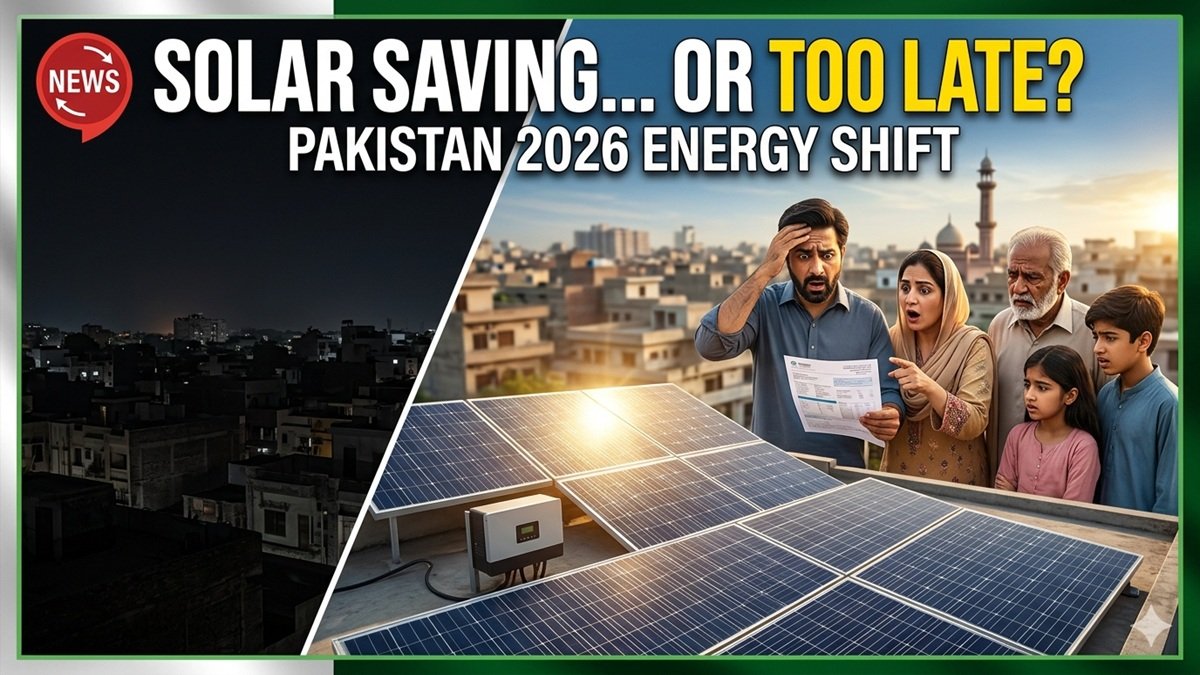
Electricity bills are climbing every month. Power cuts are still common. But something big has changed. Solar panels in Pakistan are now cheaper than ever. Millions of households are making the switch. This article tells you exactly what is happening and how you can take advantage of it right now.
Pakistan’s Solar Takeover in 2026
Pakistan’s solar market is expanding at record speed. Rooftop solar capacity has crossed 20 GW. This includes homes, shops, and small industries across the country.
According to the Alternative Energy Development Board (AEDB), falling global panel prices and rising local demand are driving this growth together.
Why this boom is happening
- Power cuts still affect many cities
- Electricity prices increase regularly
- Fuel costs for generators are very high
- Solar equipment is now much more affordable
Earlier, solar was seen as a luxury item. Now it is becoming a basic need for middle-class households. Think of how mobile phones spread across Pakistan in less than a decade. Solar is following the same path.
Why Millions Are Switching Now
The main reason is simple. People want to save money and gain control over their electricity supply.
A typical 3 to 5 kW system can recover its full cost within a few years. After that, users enjoy very low electricity costs for the next 20 to 25 years.
Real savings for users
- 5 kW system can reduce bills by 60 to 80 percent
- Solar tubewells can save farmers up to PKR 200,000 per year
- Businesses reduce generator fuel costs significantly
According to World Bank energy reports, rooftop solar helps reduce pressure on national grids and lowers household expenses at the same time. Solar is now both a financial decision and a practical one.
If you are also curious about how Pakistan’s digital infrastructure is growing alongside energy, read our coverage of the Pakistan 5G rollout and which cities are going live first.
Latest Solar Panel Prices in Pakistan (March 2026)
Prices have dropped significantly in the last two years. This is the single biggest reason behind the fast adoption we are seeing right now.
Price per watt (PKR)
| Panel Type | Price Range (PKR/Watt) | Efficiency |
|---|---|---|
| Polycrystalline | 33 to 38 | Lower |
| Mono P-type | 38 to 42 | Medium |
| N-type / Bifacial | 42 to 46 | High |
Average system cost
| System Size | Estimated Cost |
|---|---|
| 3 kW | PKR 400,000 to 500,000 |
| 5 kW | PKR 550,000 to 700,000 |
For updated tariffs and energy policies, check the National Electric Power Regulatory Authority (NEPRA) website directly.
Net Metering Guide 2026: What Changed
Net metering is still available in Pakistan. However, rules are stricter now. According to NEPRA, new policies focus on fair billing and grid stability.
Key changes in 2026
- Exported units are paid at lower rates than before
- System size must match your actual usage
- Approval process is stricter and takes more time
Earlier, people earned money from exporting surplus electricity to the grid. Now, savings mainly come from using your own solar power during the day instead.
Practical advice for 2026
- Use heavy appliances like washing machines during daytime
- Avoid oversized systems that generate more than you use
- Consider battery backup if you have frequent evening power cuts
This shift makes solar more about personal savings than earning from exports.

Government Solar Schemes in 2026
Punjab CM Solar Scheme
The Government of Punjab has launched a major scheme for low-income households. This is one of the biggest solar initiatives in Pakistan’s recent history.
Key features
- Free or subsidized 1 to 2 kW systems
- Priority for low electricity users
- Online application system available
How to apply
- Visit the official portal at punjab.gov.pk
- Enter your CNIC and electricity bill details
- Submit the form online
- Wait for SMS confirmation on your registered number
You can also apply via SMS. Send your bill reference number and CNIC to 8800.
Solar Tubewell Scheme
This program supports farmers in areas like Faisalabad and Multan. These are areas where diesel costs have been crushing farm income for years.
- Up to 80 percent subsidy on solar tubewell systems
- Major savings on diesel costs for irrigation
- Better and more reliable water access for crops
Step-by-Step Guide to Get Cheap Solar Panels
This section is for everyday users who want to make the move but do not know where to start.
- Step 1: Check your usage. Download your last 12 months of electricity bills. This tells you your average monthly units consumed.
- Step 2: Choose system size. Small home needs 3 to 4 kW. Medium home needs 5 kW.
- Step 3: Compare installers. Get at least 2 to 3 quotes before deciding anything.
- Step 4: Verify net metering. Check with your local DISCO for current connection rules.
- Step 5: Apply for subsidies. Look for Punjab schemes or bank financing options near you.
- Step 6: Avoid scams. Only choose trusted brands and verified local installers with physical offices.
Best Solar Panel Brands in Pakistan 2026
Reliable Tier 1 solar brands available in Pakistan right now include:
- Longi Solar — Best overall performance in local market
- Jinko Solar — Widely available and proven reliable
- Canadian Solar — Strong warranty and after-sales record
- JA Solar — Good value for money option
- Trina Solar — Well tested in Pakistan’s hot climate
These brands perform well in Pakistan’s hot and dusty weather conditions. Always check certifications and warranty documents before purchase. And if you are comparing tech purchases in general, also see our guide to the best 5G smartphones in Pakistan with full price guide for smart home compatibility.
Impact of 2026 Policy Changes on ROI
Solar is still a good investment. However, the returns have changed compared to two years ago. Here is the honest picture.
| Period | Export Rate | Payback Period |
|---|---|---|
| Before 2026 | Equal value for exported units | Faster (3 to 4 years) |
| After 2026 | Lower export rates apply | Slightly longer (4 to 5 years) |
Provincial Solar Incentives
Sindh
In Karachi, net metering is expanding. Financing options through local banks are improving for middle-income households who cannot afford full upfront payment.
Khyber Pakhtunkhwa
New solar programs are expected for farmers and rural areas. The provincial government has signalled support for off-grid solar solutions in remote communities.
Balochistan
Focus is on solar mini-grids and basic electrification. Many villages still lack grid access and solar is the fastest and most practical fix available.
According to projects supported by the World Bank in Pakistan, these provincial initiatives aim to improve energy access for underserved communities in all four provinces.
What Changed From Last Year
| Year | Trend |
|---|---|
| 2023 | High prices, low adoption |
| 2024 | Prices started falling |
| 2025 | Rapid solar growth begins |
| 2026 | Policy tightening, continued strong adoption |
Earlier, people installed solar to earn from exports. Now they install it to save money on their own bills. That is a fundamental change in motivation and it changes how you should plan your system.
Expert Insights and Market Analysis
Experts believe solar demand in Pakistan will continue to grow strongly through the rest of this decade regardless of policy changes.
- Battery storage systems will become more common in homes
- Small cities and towns will adopt solar faster than cities
- Smart energy management systems will become a standard feature
The International Renewable Energy Agency (IRENA) has consistently highlighted Pakistan’s strong solar potential due to its high levels of daily sunlight year-round. The conditions here are actually better than in most countries where solar is already mainstream.
What Happens Next
- Policies may become stricter as more users connect to the grid
- Battery prices are expected to fall sharply by 2027
- Solar adoption will spread to smaller cities and rural towns
For many people, the decision is no longer “if”. It is now “when”. The longer you wait, the more you pay on bills you simply did not need to pay.
Frequently Asked Questions