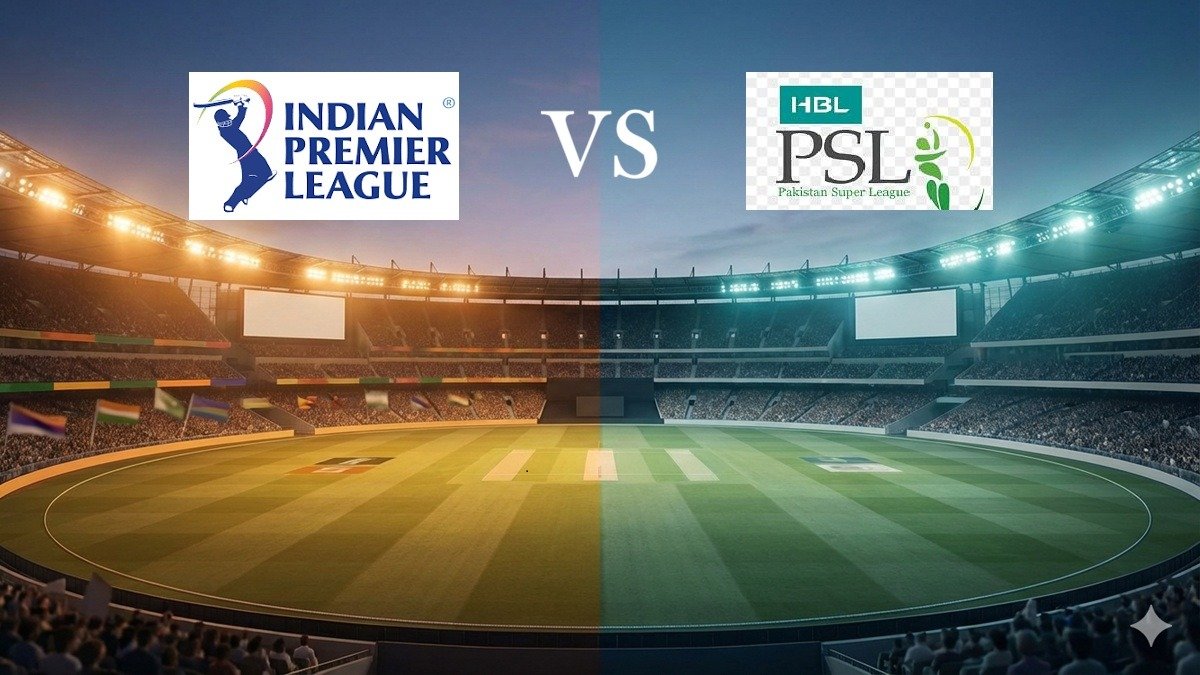
For the second year in a row, the global T20 calendar is facing a major overlap as IPL 2026 and PSL 2026 are scheduled to run at the same time. Both leagues will operate during the busy March–May window, once again creating a direct clash between two of the world’s most popular franchise tournaments.
The IPL 2026 vs PSL 2026 schedule clash reflects growing pressure on the international T20 cricket schedule, where expanding leagues, fixed windows, and commercial priorities are making overlaps increasingly common.
⚡ Quick Summary: Both IPL 2026 and PSL 2026 will run simultaneously from late March through early May. This means overlapping matches, split audiences, and tough choices for players and fans alike. This article explores the complete picture — from schedules to history, prize money to impact.
📅 The Schedule That’s Causing All The Buzz
Let’s get straight to the facts. The dates tell the whole story.
The Indian Premier League 2026 kicks off on March 26 and runs all the way until May 31. That’s more than two months of non-stop cricket action. Meanwhile, the Pakistan Super League 2026 starts on the exact same day — March 26 — and wraps up on May 3.
This creates over five weeks of direct overlap. Consequently, fans and players face difficult decisions throughout this period. You can check the full Pakistan cricket team fixtures for 2026 to see how national commitments add another layer to this busy calendar.
| League | Start Date | End Date | Total Duration | Overlap Period |
|---|---|---|---|---|
| IPL 2026 | March 26, 2026 | May 31, 2026 | 67 days | March 26 – May 3 (39 days) |
| PSL 2026 | March 26, 2026 | May 3, 2026 | 39 days |
T20 cricket has become a year-round spectacle, but overlapping leagues create new challenges
🏆 Understanding IPL and PSL: A Brief History
Before we dive deeper into the clash, let’s understand what makes these leagues so significant. Both have fascinating origin stories and have grown into cricket powerhouses.
🇮🇳 Indian Premier League (IPL)
Founded: 2008
Teams: 10 franchises
Seasons Completed: 17 (as of 2024)
Inception Story: The IPL was launched by the Board of Control for Cricket in India (BCCI) following India’s T20 World Cup victory in 2007. It revolutionized cricket by introducing city-based franchises, player auctions, and entertainment-focused cricket.
Format: Double round-robin followed by playoffs and final
Most Successful Team: Mumbai Indians (5 titles)
Global Impact: The IPL transformed cricket economics and became the richest cricket league globally. It attracted international stars and set new standards for T20 cricket worldwide.
🇵🇰 Pakistan Super League (PSL)
Founded: 2016
Teams: 6 franchises
Seasons Completed: 9 (as of 2024)
Inception Story: The Pakistan Cricket Board (PCB) established the PSL to revive international cricket in Pakistan and provide a platform for Pakistani talent. Initially, matches were held in the UAE due to security concerns, gradually moving back to Pakistan.
Format: Double round-robin followed by playoffs and final
Most Successful Team: Islamabad United (3 titles)
Global Impact: The PSL successfully brought international cricket back to Pakistan and showcased Pakistani cricket talent to the world. It helped restore confidence in Pakistan as a cricket-playing nation.
💰 Prize Money and Team Valuations: The Numbers Game
Money drives modern cricket. Understanding the financial scale of these leagues helps explain why scheduling conflicts persist. Let’s look at the numbers.
IPL Financial Overview
| Category | Amount (USD) | Details |
|---|---|---|
| Winner Prize Money | $3.4 million | Champion team reward |
| Runner-up Prize | $1.7 million | Second place reward |
| League Brand Value | $16.4 billion | Estimated 2024 valuation |
| Most Valuable Franchise | $1.3 billion | Mumbai Indians valuation |
| Highest Player Salary | $2.4 million+ | Top auction picks annually |
| Broadcasting Rights | $6.2 billion | 5-year deal (2023–2027) |
PSL Financial Overview
| Category | Amount (USD) | Details |
|---|---|---|
| Winner Prize Money | $500,000 | Champion team reward |
| Runner-up Prize | $200,000 | Second place reward |
| League Brand Value | $300 million | Estimated current valuation |
| Average Franchise Value | $50–80 million | Per team estimation |
| Highest Player Salary | $170,000 | Platinum category players |
| Broadcasting Rights | $36 million | Annual media rights |
💡 Financial Comparison Insight
The IPL operates on a vastly different financial scale compared to the PSL. The IPL winner’s prize money alone exceeds the PSL’s entire prize pool. Moreover, IPL broadcasting rights dwarf PSL’s total league valuation.
This financial disparity explains why international players often prioritize IPL contracts when schedules conflict. However, the PSL offers competitive compensation within its market and provides valuable exposure for emerging players.
Financial rewards in franchise cricket have reached unprecedented levels
🤔 Why IPL and PSL Are Overlapping Again in 2026
This isn’t happening by accident. Several factors contribute to this scheduling conflict. Let’s break them down.
Crowded Global T20 Calendar
One of the main reasons behind the clash is T20 league calendar congestion. With international tours, ICC events, and domestic leagues all competing for fixed windows, boards have limited flexibility.
Think of it like rush hour traffic. Everyone needs to use the same roads at the same time. Similarly, multiple cricket leagues want the same prime months.
Strategic Timing by Both Leagues
The March–May period offers ideal playing conditions, high television ratings, and maximum sponsor interest. For PSL, maintaining this slot helps ensure consistency and league growth, even if it means clashing with the IPL.
Additionally, this window avoids extreme summer heat in both countries. It also fits before the monsoon season in India and before Ramadan typically occurs.
Growing Franchise Cricket Season
As franchise cricket continues to expand, the traditional separation between leagues is shrinking. The franchise cricket season is no longer staggered, making clashes increasingly common.
Other T20 leagues like The Hundred, Caribbean Premier League, and Big Bash League also compete for calendar space. Consequently, finding non-overlapping windows becomes nearly impossible. You can follow live updates via ESPNcricinfo and Cricbuzz as both leagues get underway.
🎯 Key Insight: The overlap isn’t a mistake — it’s the result of deliberate strategic choices by both leagues prioritizing their commercial interests. Neither wants to move to a less favorable time slot, even if it means competing directly with the other.
👥 Impact of IPL 2026 and PSL 2026 on Players
One of the biggest consequences of the IPL 2026 and PSL 2026 overlap is its effect on international cricket players.
The Contract Dilemma
Since players cannot participate in both leagues at the same time, many overseas cricketers must choose between contracts. Imagine being a top player from England, Australia, or South Africa. You receive offers from both leagues. However, you can only pick one.
Historically, the IPL attracts a larger pool due to higher financial rewards and global exposure. This can limit PSL’s access to top-tier foreign talent. Nevertheless, some players prefer the PSL for various reasons — shorter duration, different cricket experience, or personal connections.
Player Fatigue Concerns
This also raises concerns about player fatigue due to overlapping T20 leagues, particularly for those balancing international commitments alongside franchise cricket.
Even players participating in just one league face challenges. Back-to-back T20 tournaments drain physical and mental energy. Furthermore, many have international duties sandwiched between franchise commitments.
⚠️ Important Note: Player health and workload management have become critical topics in modern cricket. Several cricket boards now mandate rest periods for their players between tournaments to prevent burnout and injuries.
🎭 What the Schedule Clash Means for Cricket Fans
For fans, the effects of the IPL and PSL 2026 clash are mixed. Let’s explore both sides of this coin.
The Positive Side: Non-Stop Cricket
On one hand, viewers have access to nonstop T20 action across two leagues. Cricket enthusiasts can watch matches almost every single day during the overlap period. Additionally, streaming services offer packages covering both leagues.
For neutral fans who don’t have strong allegiances to either league, this abundance of cricket provides entertainment options. Moreover, different match timings can allow watching both leagues on the same day.
The Challenge: Divided Attention
On the other hand, simultaneous matches force a difficult choice, especially in regions where both leagues have strong followings. Broadcast timings, match overlaps, and divided attention may reduce the ability to follow entire seasons closely.
Furthermore, when two high-profile matches occur simultaneously, fans must prioritize. This fragmentation affects overall engagement with each league. Social media conversations also get divided across different matches and leagues.
📺 Broadcasting and Commercial Challenges
The IPL 2026 and PSL 2026 broadcasting conflicts present significant challenges for media partners and advertisers.
Fragmented Audiences
Competing match slots fragment audiences, affecting ratings and advertising strategies across different regions. Broadcasters who invested heavily in rights for one league see their viewership diluted when the other league runs simultaneously.
Television networks must decide whether to acquire rights to one or both tournaments. This decision involves complex calculations about viewership overlap, regional preferences, and advertising revenue potential.
Sponsor Dilemmas
Sponsors must decide how to allocate budgets between two major leagues operating at the same time, rather than benefiting from a staggered global cricket calendar.
Brands seeking maximum cricket exposure might sponsor both leagues. However, this doubles costs while potentially reaching the same audience twice. Alternatively, sponsors might choose one league based on their target market.
| Broadcasting Aspect | IPL | PSL |
|---|---|---|
| Primary Markets | India, global Indian diaspora | Pakistan, Middle East, UK Pakistani community |
| Match Timings | Afternoon & evening IST | Evening & night PKT (similar to IST) |
| Streaming Platforms | JioCinema, Hotstar (regional) | ARY ZAP, various regional platforms |
| Global Reach | 200+ countries | 50+ countries |
📜 Historical Context: A Growing Pattern
In earlier years, the PSL generally avoided a direct clash with the IPL. However, recent seasons suggest that historical schedule conflicts between IPL and PSL are becoming more frequent rather than exceptional.
How It Used to Work
Initially, the PSL scheduled itself carefully to avoid IPL dates. From 2016 to 2019, the PSL typically ran in February and early March, finishing before the IPL began. This arrangement benefited both leagues and allowed players to participate in both tournaments.
This “gentleman’s agreement” served everyone well. Players maximized earnings by participating in multiple leagues. Fans enjoyed sequential tournaments without overlap. Broadcasters could focus marketing efforts on one league at a time.
The Shift Begins
The pattern started changing around 2020–2021. Several factors contributed to this shift:
- COVID-19 disrupted the entire cricket calendar, forcing leagues to reschedule
- The IPL expanded from 60 to 74 matches, requiring a longer window
- International cricket schedules became more packed
- The PSL sought to establish a consistent annual window
By 2025, the overlap became unavoidable. And now, in 2026, it’s happening again. Pakistan’s own home venues are also being expanded — including the much-anticipated Islamabad Cricket Stadium, which is set to reshape how Pakistan hosts big cricket events.
📊 Historical Timeline: From cooperative scheduling (2016–2019) to occasional overlaps (2020–2024) to persistent clashes (2025–2026), the trend shows leagues prioritizing their own interests over coordination.
🔮 Is This the New Normal for T20 Cricket?
The presence of franchise T20 leagues running simultaneously appears to be an emerging norm rather than a temporary issue. With more leagues expanding and extending their seasons, overlaps may become unavoidable unless global scheduling coordination improves.
The Multi-League Ecosystem
Cricket is evolving into something similar to football (soccer). Multiple leagues run simultaneously across different continents. Fans pick their favorites. Players navigate complex contract landscapes. This is simply how modern sports operate in a globalized world.
The International Cricket Council (ICC) lacks the authority to mandate coordinated scheduling. Consequently, overlaps will likely increase rather than decrease.
What Could Change This?
In theory, cricket could adopt a more structured approach. Some potential solutions include:
- Designated windows: Creating exclusive time slots for different leagues
- Player release policies: Coordinated systems allowing players to participate in multiple leagues
- Centralized scheduling: A global cricket calendar committee with enforcement powers
- Revenue sharing: Agreements that incentivize cooperation over competition
However, implementing these solutions requires unprecedented cooperation. Each cricket board operates independently. National interests trump global coordination. And frankly, money overrides everything else.
💭 What Can Cricket Do Better?
Despite the challenges, some improvements are possible. Let me share realistic solutions that could ease the situation.
Better Communication Between Leagues
While complete coordination seems unlikely, basic communication would help tremendously. Sharing draft schedules earlier allows better planning for broadcasters, sponsors, and fans. Even small adjustments to match timings could reduce direct clashes.
Player Welfare Initiatives
Cricket boards should mandate rest periods. Players need recovery time between franchise stints and international commitments. Otherwise, injury rates will continue climbing. Some countries have already implemented workload management protocols — others should follow suit.
Fan-First Scheduling
Leagues could coordinate match timings to minimize direct clashes during key matches. For instance, scheduling playoff matches at different times would allow fans to watch both leagues’ crucial games. This benefits everyone without requiring major schedule changes.
✅ The Bottom Line
The IPL 2026 and PSL 2026 clash represents more than just a scheduling conflict. It’s a symptom of cricket’s transformation into a global franchise-driven industry.
For better or worse, simultaneous leagues are becoming the norm. Players must choose between contracts. Fans navigate competing priorities. Broadcasters compete for fragmented audiences. Yet cricket survives — and even thrives — amid this chaos.
The sport’s popularity continues growing. New markets emerge. Investment pours in. Revenue streams expand. Perhaps that’s the most important lesson here.
Cricket is remarkably resilient. Even when the scheduling makes no sense, fans find ways to watch. Players adapt to grueling calendars. The game goes on.
🎯 Final Thought: The 2026 overlap isn’t an accident or mistake — it’s a deliberate choice by two powerful leagues prioritizing their own interests. Whether this benefits cricket long-term remains an open question. But for now, get ready for two months of non-stop T20 action. The cricket calendar is packed, the stakes are high, and the show must go on.
❓ Frequently Asked Questions