📋 Table of Contents
Why Pakistan’s 2026 Holiday Calendar Actually Matters
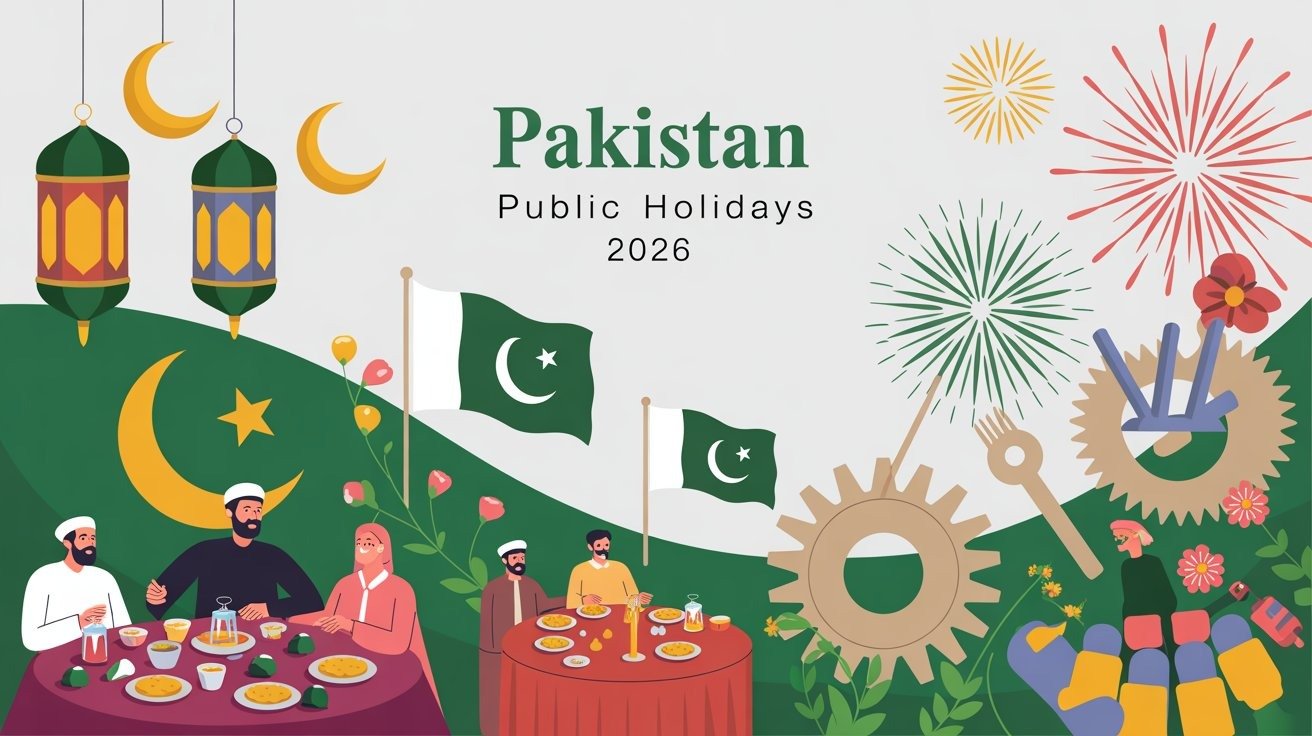
Planning your time off? You’re not alone. While most of us glance at the calendar just to see when we can take a break, the public holidays in Pakistan 2026 offer so much more than a day off work.
Each holiday tells a story. From honoring national heroes and celebrating cultural milestones to observing important religious festivals, these dates shape the rhythm of life for over 220 million people. Understanding the public holidays 2026 in advance can help you make the most of long weekends, plan family gatherings, and even manage work schedules more effectively.
What makes 2026 truly special? Several holidays align to create natural long weekends, while the unique mix of fixed Gregorian dates and the lunar Islamic calendar adds a sense of anticipation that’s distinctly Pakistani. Knowing the public holidays in Pakistan 2026 helps you stay ahead, whether you’re scheduling vacations, events, or simply enjoying quality time with loved ones.

Pakistan’s green and white flag — a symbol of national pride observed across all holidays
The Official Public Holidays 2026 Schedule
According to government notifications and verified sources, here’s your comprehensive breakdown of public holidays in Pakistan 2026. Keep in mind that Islamic festival dates depend on moon sightings, so slight variations may occur.
| Date | Day | Holiday Name | Type |
|---|---|---|---|
| February 5 | Thursday | Kashmir Solidarity Day | National |
| March 21–23* | Sat–Mon | Eid-ul-Fitr | Religious |
| March 23 | Monday | Pakistan Day | National |
| May 1 | Friday | Labour Day | National |
| May 27–28* | Wed–Thu | Eid-ul-Azha | Religious |
| May 28 | Thursday | Youm-e-Takbeer | National |
| June 25–26* | Thu–Fri | Ashura | Religious |
| August 14 | Friday | Independence Day | National |
| August 25 | Tuesday | Eid Milad-un-Nabi | Religious |
| November 9 | Monday | Allama Iqbal Day | National |
| December 25 | Friday | Quaid-e-Azam Day / Christmas | National / Christian |
| December 26 | Saturday | Second Day of Christmas | Christian |
*Dates marked with asterisks are tentative and subject to moon sighting confirmation by the Ruet-e-Hilal Committee.
Banking vs. General Public Holidays
Here’s something many people overlook. Not all holidays are created equal. Banking holidays specifically affect financial institutions and may include dates like January 1 (New Year) that aren’t necessarily full public holidays.
This distinction matters if you’re planning financial transactions. Banks close on these dates, affecting everything from check clearing to international transfers.
Beyond Days Off: Cultural and Economic Ripples
The Long Weekend Economy
Notice how several holidays fall on Thursdays or Fridays? That’s not coincidence. It’s economic opportunity. When holidays align with weekends, something interesting happens across Pakistan.
Domestic tourism spikes. Hotels in northern areas like Murree, Nathia Gali, and Swat see booking surges. Railways and airlines experience increased passenger loads. Even local restaurants and shopping centers benefit from people having extended time with families.
The Retail Rhythm
Religious holidays particularly drive consumer spending patterns. Before Eid-ul-Fitr and Eid-ul-Azha, markets buzz with activity. Clothing stores, jewelry shops, and food vendors see their busiest periods.
This isn’t just about commerce. It’s about cultural practice. Preparing for Eid includes buying new clothes, gifts for children, and special food items. Consequently, businesses plan inventory and staffing around these predictable surges.
The Moon Sighting Factor: Planning with Uncertainty
Here’s where things get uniquely Pakistani. While dates like Independence Day (August 14) are fixed, Islamic holidays depend on lunar calendar observations. The Ruet-e-Hilal Committee meets to sight the new moon, and only then are dates officially confirmed.
Sounds complicated? It can be. Schools might announce tentative exam schedules, only to adjust them later. Businesses prepare for closure but must stay flexible. Travel plans sometimes require last-minute changes.
Why This System Persists
Despite the planning challenges, moon sighting holds deep religious significance. It connects modern practice with centuries of Islamic tradition. Many Pakistanis appreciate this link to historical observance methods, even if it means occasional scheduling headaches.
Furthermore, technology helps. Nowadays, astronomical calculations provide highly accurate predictions. So while official confirmation depends on sighting, businesses and individuals can plan with reasonable confidence.
— Dr. Amina Farooq, Labor Economist, Islamabad Policy Research Institute
What Experts Are Saying About 2026’s Calendar
The Strategic Clustering Effect
Policy researchers have noted something interesting about 2026’s calendar. March sees a concentration of holidays. Potentially Eid-ul-Fitr plus Pakistan Day. May brings another cluster with Eid-ul-Azha and Youm-e-Takbeer.
This clustering isn’t random. It creates natural “festival seasons” that could be strategically marketed for economic benefit. Imagine a coordinated national tourism campaign during these periods, similar to how other countries brand their holiday seasons.
Workplace Flexibility Trends
Human resource professionals are increasingly discussing how public holidays in 2026 might influence remote work policies. With several Thursday-Friday combinations, some companies may offer flexible arrangements allowing employees to create longer breaks while maintaining productivity.
This approach acknowledges modern work-life balance needs while respecting traditional holiday observances. A win-win scenario that’s gaining traction in Pakistan’s evolving corporate culture.

Families across Pakistan plan gatherings and travel around major public holidays
Key Dates Timeline: Month-by-Month Breakdown
Kashmir Solidarity Day (Feb 5): Marks Pakistan’s support for Kashmir. Government buildings display special decorations, and various awareness programs are organized across the country.
Eid-ul-Fitr (March 21–23*): Concludes Ramadan with three days of celebration. Expect major shopping activity beforehand and family gatherings during the holiday.
Pakistan Day (March 23): Commemorates the 1940 Lahore Resolution. Typically features military parades in Islamabad and cultural programs nationwide.
Labour Day (May 1): International Workers’ Day, observed with rallies and programs highlighting workers’ rights and contributions.
Eid-ul-Azha (May 27–28*): The “Festival of Sacrifice” commemorates Ibrahim’s willingness to sacrifice his son. Involves animal sacrifice and meat distribution.
Youm-e-Takbeer (May 28): National pride day marking Pakistan’s 1998 nuclear tests, demonstrating the nation’s defense capabilities.
Ashura (June 25–26*): Commemorates the martyrdom of Imam Hussain. Processions are held, particularly in areas with significant Shia populations, with heightened security measures.
Independence Day (August 14): Pakistan’s most celebrated national holiday. Expect flag hoisting ceremonies, fireworks, and patriotic programs throughout the country.
Eid Milad-un-Nabi (August 25): Celebrates Prophet Muhammad’s (PBUH) birth. Mosques are illuminated, and religious gatherings are held.
Allama Iqbal Day (November 9): Honors the national poet-philosopher. Educational institutions hold special programs celebrating his poetry and philosophy.
Quaid-e-Azam Day / Christmas (December 25): Dual celebration honoring Pakistan’s founder Muhammad Ali Jinnah and Christmas. Shows Pakistan’s respect for religious minorities.
Second Day of Christmas (December 26): Continued Christian celebration, observed particularly in Christian communities.
What Happens Next? Planning for 2026
For Individuals and Families
- Book travel early: Hotels and transportation fill quickly around long weekends. Early bookings ensure better rates and availability.
- Financial planning: Religious holidays often involve charitable giving (Zakat, Sadaqah) and additional expenses. Budget accordingly throughout the year.
- Watch for moon sighting announcements: Follow official channels in the days before Islamic holidays for confirmed dates.
- Plan celebrations: Whether hosting gatherings or attending them, advance planning makes celebrations smoother and more enjoyable.
For Businesses and Employers
- Staff scheduling: Plan workforce allocation around holidays, especially for industries requiring continuous operations.
- Inventory management: Retail businesses should stock up before major holidays when consumer demand peaks.
- Communication protocols: Establish clear policies about holiday observance, especially for mixed religious workforce teams.
- Flexible work arrangements: Consider remote work options during holiday clusters to improve employee satisfaction.
For Educational Institutions
Schools and universities need particular attention to holiday planning. Exam schedules must account for religious observances. Academic calendars should build in buffer periods around lunar-dependent holidays.
Additionally, many institutions use holiday periods for facility maintenance or teacher training programs. Activities best planned well in advance.

Businesses and HR teams need to plan staff schedules around Pakistan’s holiday clusters
Frequently Asked Questions
Final Thoughts: Making the Most of 2026’s Holidays
Pakistan’s public holidays in 2026 offer more than just time away from work or school. They represent a carefully woven tapestry of national identity, religious devotion, and cultural celebration.
What makes this year particularly noteworthy? The strategic alignment of holidays creates opportunities for family connection, economic activity, and national reflection. The challenge of lunar calendar uncertainties, rather than being merely inconvenient, connects modern Pakistan to centuries of Islamic tradition.
Whether you’re planning family vacations, managing business operations, or simply looking forward to well-deserved breaks, understanding this holiday landscape helps you navigate 2026 more effectively.
As we move through 2026, these holidays will punctuate our year with moments of celebration, reflection, and togetherness. They remind us who we are as a nation. Diverse, faithful, and proud of our heritage.
So mark your calendars, but stay flexible. Plan ahead, but remain open to adjustments. And most importantly, use these holidays not just to rest, but to reconnect with what matters most — family, faith, and the collective spirit that makes Pakistan unique.
• Government of Pakistan official holiday notifications
• Pave.pk – Public Holiday Calendar
• PublicHolidays.pk – Holiday Verification
• UrduPoint – Banking Holiday Information
• Islamabad Policy Research Institute – Economic Analysis