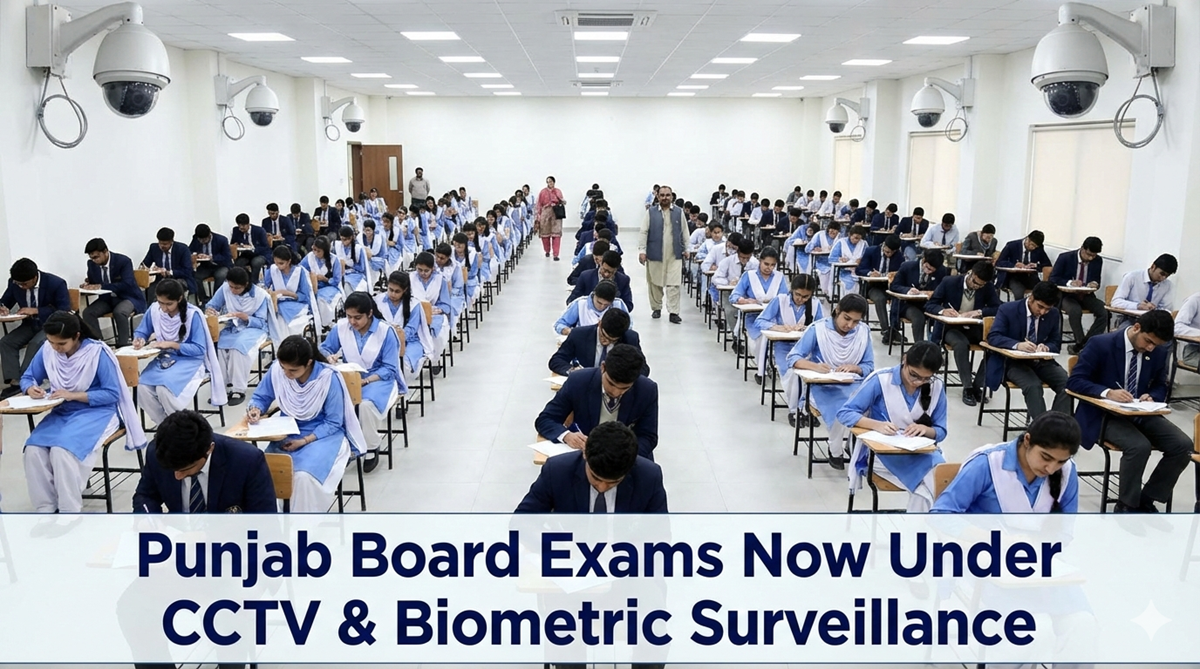
Punjab Board Exams Go High-Tech: Everything You Need to Know About CCTV & Biometric Surveillance
A comprehensive guide for students, parents, and educators navigating the new exam system
🚀 A Revolutionary Change is Here
Picture this. You walk into your exam hall, and instead of just a supervisor with a clipboard, there are cameras watching every corner. Moreover, you can’t even enter without scanning your fingerprint first.
Sounds like something from a sci-fi movie? Well, it’s happening right now in Punjab.
For the very first time, the Punjab Board of Education has made CCTV cameras and biometric verification mandatory in all examination centers. Consequently, this marks a massive shift from traditional exam monitoring to a fully digital surveillance system.
But here’s the thing. This change is sparking heated conversations. Some students feel nervous about constant monitoring. Meanwhile, parents see it as a much-needed step toward fairness. Additionally, educators are trying to understand how this will actually work on exam day.
So let’s break it all down. Furthermore, I’ll share practical tips on how to adapt to this new system without stress.
📹 What’s Actually Changing in Exam Centers?
1. CCTV Monitoring in Every Single Hall
Forget about one camera in the corner. Now, multiple CCTV cameras will be strategically placed throughout every classroom. In addition, these cameras aren’t just recording. They’re allowing supervisors to monitor suspicious activities in real-time.
Here’s How It Works:
- Cameras are positioned to cover every desk and aisle
- Continuous recording throughout the entire exam duration
- Footage is stored for later verification if needed
- Remote monitoring allows multiple supervisors to watch simultaneously
2. Biometric Verification Before Entry
Now, this is where things get really interesting. You simply cannot enter the examination hall without biometric authentication. In other words, your fingerprint or facial recognition becomes your exam pass.
Punjab’s push for secure digital systems in education is part of a wider pattern. Just earlier, the government also introduced a Pink Button emergency alert system for Punjab schools, showing a clear commitment to making educational spaces both safe and accountable.
Why Biometrics Matter: Identity fraud becomes virtually impossible. Therefore, students can’t swap seats with someone else. Plus, attendance gets recorded automatically. No more manual roll calls that eat into exam time.
3. Additional Security Protocols
Beyond cameras and fingerprints, several other changes are coming:
| Protocol | What It Means for You |
|---|---|
| Entry/Exit Checks | You’ll need your ID card and may pass through security scans |
| Seating Arrangements | Wider spacing between desks to prevent collaboration |
| Device Ban | Phones, smartwatches, earbuds strictly prohibited |
| Emergency Backup | Alternative verification if technology fails |
⚖️ The Good, The Bad, and The Reality
Benefits That Actually Matter
Let’s be honest. If you’ve ever studied hard while watching others cheat their way through exams, this change is for you. Here’s what’s genuinely improving:
Fairness for Everyone: Students who burn the midnight oil studying will no longer compete against cheaters. In fact, your hard work will finally count for what it’s worth.
Transparency: Parents can now trust that exams are professionally monitored. Similarly, educators have proof that the system works.
Efficiency: Digital records mean quicker verification. As a result, attendance disputes and irregularities get resolved faster.
Challenges We Need to Talk About
However, it’s not all sunshine and rainbows. There are legitimate concerns:
Technical Glitches: What happens if the biometric scanner stops working? Or if cameras fail during the exam? These are real possibilities that need backup plans.
Privacy Worries: Continuous surveillance can feel intrusive. Moreover, some students might feel uncomfortable being recorded for hours.
Exam Day Anxiety: The added layer of technology checks could make already nervous students even more stressed.
💡 My Personal Take on This
Look, I’ll be straight with you. After thinking about this from every angle, I believe these steps are necessary. But they need refinement.
On one hand, the system signals a modern, accountable approach to education. Consequently, this is essential for maintaining credibility. On the other hand, implementation matters just as much as intention.
The success of this system depends on how smoothly it runs. Therefore, I’d recommend a phased rollout with continuous feedback loops. Additionally, student mental health support should be built into the process.
Bottom Line: This change is inevitable and ultimately beneficial. However, success depends on execution, not just policy. Furthermore, students, parents, and educators need proper training before exam day.
📚 How Students Can Adapt Successfully
Before Exam Day
Preparation isn’t just about studying anymore. Instead, you need to understand the system too:
- Familiarize yourself with biometrics: Visit your exam center beforehand if possible. Meanwhile, understand how fingerprint scanning works.
- Test your documents: Make sure your ID card is clear and valid. Additionally, carry a backup copy.
- Arrive extra early: Biometric verification takes time. Therefore, plan to reach at least 30 minutes before the exam starts.
- Leave banned items at home: Don’t even bring your phone to the center. Similarly, leave smartwatches and earbuds behind.

Preparation and planning lead to exam success
During the Exam
Stay Calm: CCTV monitoring is standard procedure now. In fact, it doesn’t single out anyone. Everyone is being recorded equally.
Focus on Your Paper: Instead of worrying about cameras, concentrate on answering questions. Moreover, the surveillance is there to help, not harm you.
Follow Instructions: Listen carefully to supervisors. Additionally, ask questions if something is unclear.
Mental Preparation Strategy
Here’s what I recommend based on experience:
First, treat surveillance as part of the environment. Like desks and chairs. Next, remind yourself that cameras protect your hard work from being devalued by cheaters. Finally, practice deep breathing if you feel anxious about being recorded.
Remember: Mental readiness is just as crucial as academic preparation. Therefore, work on both equally.
👨👩👧 Guidance for Parents and Teachers
For Parents
Your role in this transition is crucial. Here’s how you can help:
Reassure, Don’t Alarm: Explain that surveillance protects fairness rather than punishes anyone. Furthermore, frame it as a positive step toward credibility.
Encourage Proper Prep: Help your child manage time effectively. Additionally, ensure they understand new protocols.
Stay Reachable: Keep your contact information updated with the exam center. Moreover, be available for emergencies on exam day.
For Teachers & Supervisors
You’re on the front lines of implementation. Therefore, your preparation matters most:
- Learn monitoring technology thoroughly before exam day
- Conduct mock drills with biometric systems to identify issues
- Balance vigilance with empathy. Don’t over-police
- Have backup plans ready for technical failures
- Monitor student stress levels alongside academic integrity
If you’re an educator looking to build skills in digital systems, the CM Punjab IT Internship Program Phase 2 is a great opportunity to gain hands-on tech experience that’s increasingly relevant in schools and exam centers.
🌍 The Bigger Picture: Why This Matters
Punjab isn’t inventing something new here. In fact, countries worldwide have already implemented similar systems. For instance, India, China, and several European nations use biometric and CCTV monitoring extensively.
Let me draw a comparison that makes this clearer:
| Technology/System | Initial Resistance | Current Status |
|---|---|---|
| Internet Banking | People feared online fraud | Now the standard worldwide |
| Online Shopping | “Never trust websites with money” | Trillion-dollar industry |
| Digital Payments | Cash was considered safer | Universal acceptance today |
| Exam Surveillance | Current concerns about privacy | Likely to become global standard |
Similarly, the adoption of digital exam monitoring follows the same pattern as other technological shifts. Initially, there’s resistance. Subsequently, people adapt. Finally, it becomes the norm.

Technology integration in education is the global trend
Global Comparison: How Others Did It
Countries that implemented similar systems saw interesting results:
China: Facial recognition and AI monitoring reduced exam fraud by over 80%. However, it took three years of refinement.
India: Biometric systems in engineering entrance exams eliminated proxy test-takers completely. Nevertheless, initial technical issues caused delays.
UAE: CCTV monitoring increased parent confidence in the education system. Moreover, student complaints about unfair grading dropped significantly.
🔮 Future Prospects: What Comes Next?
If I’m being honest, this is just the beginning. Based on global trends, here’s what I predict for Punjab’s exam system:
Short-Term (1-2 Years)
- AI-powered analysis of exam footage to detect suspicious patterns
- Integration with digital answer sheets and online submission
- Real-time alerts for supervisors about potential malpractice
- Mobile apps for parents to track exam attendance
Long-Term (3-5 Years)
- Complete shift to online proctored exams for theory papers
- Blockchain-verified digital certificates
- AI tutors that adapt to individual learning patterns
- Virtual reality exam simulations for practical subjects
Sounds futuristic? Remember that online banking sounded impossible 20 years ago. Similarly, these changes will gradually become standard practice.
🎯 My Honest Opinion on the Road Ahead
After analyzing this from every angle, here’s what I genuinely believe:
First, this is a necessary step forward. The old system had too many loopholes. Moreover, maintaining educational credibility requires modernization.
Second, execution will determine success. Technology alone won’t fix problems if implementation is poor. Therefore, continuous feedback and improvement are essential.
Third, student welfare must remain central. Fairness shouldn’t come at the cost of mental health. Consequently, support systems need to grow alongside surveillance systems.
The Bottom Line
Punjab’s education system is evolving. Students who adapt quickly and maintain discipline will benefit most. Meanwhile, those who resist change might struggle unnecessarily.
The choice is yours: embrace the future or struggle against it.
✅ Final Checklist for Success
Let me leave you with a practical checklist. Print this out or save it on your phone:
| Task | When | Why It Matters |
|---|---|---|
| Verify ID card validity | 2 weeks before exam | Prevents last-minute issues |
| Visit exam center | 1 week before exam | Familiarize with location and setup |
| Practice biometric scan | 3 days before exam | Reduces anxiety on exam day |
| Prepare allowed items only | Night before exam | Avoid bringing banned items |
| Leave home extra early | Exam day morning | Account for verification delays |
❓ Frequently Asked Questions
Is CCTV monitoring now mandatory in all Punjab Board exam centers?
Yes. The Punjab Board of Education has made CCTV cameras and biometric verification mandatory in all examination centers for the first time.
How does biometric verification work at the exam center?
Students cannot enter the examination hall without biometric authentication. Your fingerprint or facial recognition acts as your exam pass, making identity fraud virtually impossible.
What items are banned in the examination hall under the new system?
Mobile phones, smartwatches, and earbuds are strictly prohibited. Students should not even bring these items to the examination center.
What happens if the biometric scanner fails on exam day?
Authorities have planned alternative verification methods as backup if biometric technology fails. Students should also carry valid ID cards and follow their center’s emergency protocols.
How early should students arrive on exam day due to biometric verification?
Students should plan to arrive at least 30 minutes before the exam starts, as biometric verification takes additional time compared to traditional entry checks.
Will CCTV footage be stored after the exam?
Yes, footage is stored for later verification if needed. It should be used solely for examination purposes as per Punjab Board regulations.
Can parents trust the new exam system to be fair?
Yes. The combination of CCTV and biometric systems significantly reduces opportunities for cheating, making the system more transparent and trustworthy for parents and educators alike.
Is this system being used in other countries too?
Yes. Countries like China, India, and UAE have already implemented similar systems. Results show a major reduction in exam fraud, though initial technical challenges were common during rollout.
⚠️ Disclaimer
This article is for educational and informational purposes only. The views expressed are based on professional analysis and public announcements. This is not official guidance from the Punjab Board of Education. Exam policies may change. Always verify current requirements with your examination center before exam day.