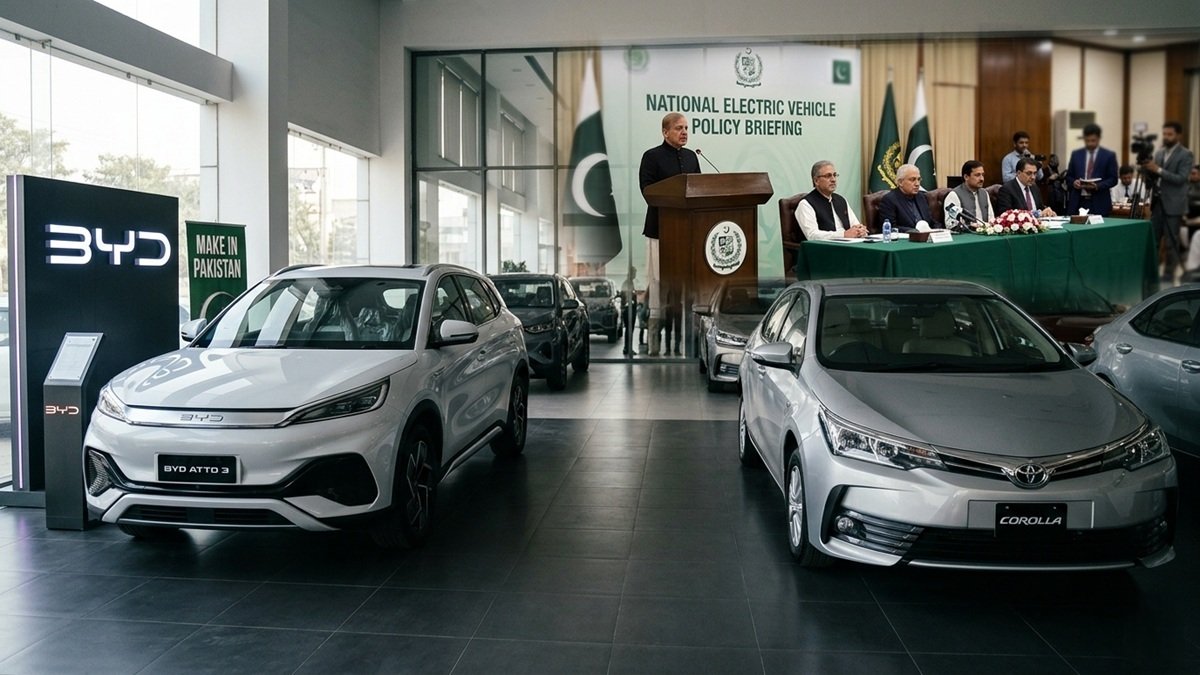
Pakistan’s car market is shifting. For decades, Japanese brands like Toyota, Honda, and Suzuki owned the road. Buyers trusted them for reliability, spare parts, and strong resale. Now, Chinese brands like BYD, MG, Changan, and Haval are forcing a real conversation. They bring electric vehicles, advanced safety tech, and feature-packed SUVs at prices that are hard to ignore.
This is no longer a fringe debate. With petrol costs climbing and Pakistan’s EV policy targeting 30% adoption by 2030, buyers are rethinking everything. The question is simple: stay with Japanese reliability or move toward Chinese EV technology?
Why This Auto Battle Matters Right Now
Driving in Pakistan has become expensive. Fuel prices keep squeezing household budgets. Buyers want better mileage, lower running costs, and real long-term value.
Most families still ask the same practical questions before buying a car. Can it handle rough roads? Are spare parts easy to find? Will the resale stay strong? Can a local mechanic fix it quickly?
That is exactly why Japanese brands still dominate. But younger buyers are now weighing technology, safety features, and fuel savings more than ever. That is where Chinese brands are winning attention fast.
According to Pakistan’s official EV policy, the government is actively supporting electric vehicle adoption through incentives and local assembly agreements. That creates a real opening for Chinese manufacturers who already lead global EV production.
Pakistan’s 2026 Car Sales Snapshot
The numbers tell a clear story. Japanese brands lead. Chinese brands grow faster.
According to PAMA (Pakistan Automotive Manufacturers Association), March 2026 vehicle sales hit 15,531 units, nearly 40% higher than the same month last year. That reflects stronger consumer confidence and improving market demand.
| Brand / Type | March 2026 Units | Market Position |
|---|---|---|
| Suzuki | 6,250 | Volume Leader |
| Toyota | 3,873 | Premium Leader |
| Honda | 2,324 | Strong Contender |
| Haval | 1,733 (+84% YoY) | Fast-Growing Challenger |
| EV Segment | +61% MoM | Rapid Urban Growth |
The Haval H6 has become one of the strongest-selling SUVs in the country, while Suzuki Alto holds the overall volume lead. Japanese brands still control the market. But Chinese brands are no longer afterthoughts.
For a deeper look at how one Chinese brand entered the premium segment, read: Chery Tiggo 7 PHEV Price in Pakistan — another Chinese SUV making serious noise in 2026.
Chinese EV Brands vs Japanese Cars: Key Comparison
The market split is simple. Japanese brands sell trust. Chinese brands sell technology.
| Brand | Strengths | Weaknesses | Price Range (PKR) |
|---|---|---|---|
| MG | Affordable EVs, modern design | Resale concerns | 4.4M – 6.9M |
| BYD | Premium EVs, long range | Expensive, limited stock | 10M+ |
| Changan / Haval | Feature-rich SUVs | Long-term durability questions | 7M – 8M |
| Toyota | Reliability, hybrids, resale | Higher prices | 5M+ |
| Honda | Smooth drive, strong resale | Slow EV shift | 4.5M+ |
For a direct comparison that many buyers in Rawalpindi and Lahore are currently weighing, see: Honda Civic vs Toyota Corolla Pakistan Comparison.
BYD Seal vs Toyota Corolla Hybrid
This is the most searched car comparison in Pakistan right now. Buyers are weighing a premium EV against a trusted hybrid. Both are strong choices but for very different buyers.
| Feature | BYD Seal | Toyota Corolla Hybrid |
|---|---|---|
| Price | Rs 16.9M – 22.2M | Around Rs 7.7M |
| Powertrain | Full Electric | Petrol / Hybrid |
| Range / Mileage | 580–650 km | 12–14 km/L |
| Safety | ADAS, 7 airbags | Standard safety |
| Resale | Still uncertain | Very strong |
| Charging | Needs home/station setup | No charging needed |
Bottom line: BYD wins on innovation and performance. Toyota wins on practicality and peace of mind. For most Pakistani families in 2026, the Corolla is still the smarter daily choice.
Want to know more about the BYD entry into Pakistan? Read: BYD Atto 2 Pakistan: EV Market Price Question.
The Trust vs Technology Debate
Why Japanese Cars Still Win
- Spare parts available nationwide, even in smaller cities
- Local mechanics know these platforms inside out
- Resale value stays strong after years of use
- Decades of proven reliability in Pakistan’s road conditions
- Established service networks in Rawalpindi, Lahore, Karachi, and beyond
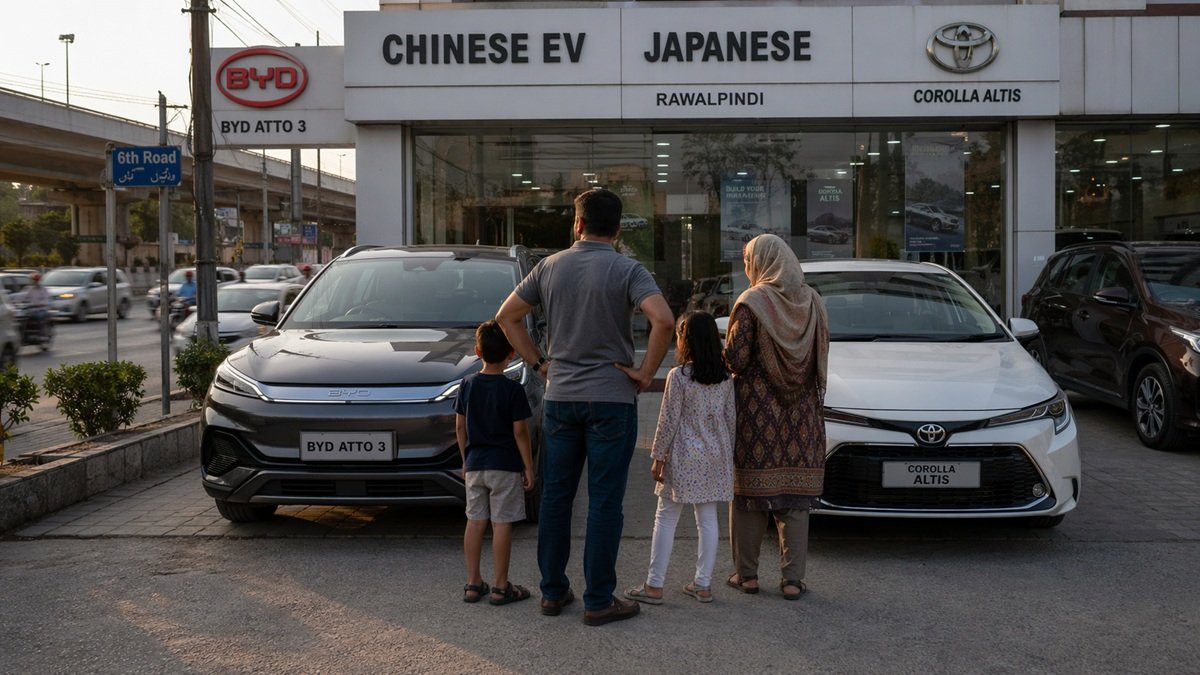
In cities like Rawalpindi, Toyota workshops are available almost on every major street. That support system is worth more than a bigger touchscreen.
Why Chinese Brands Are Rising Fast
- More features for the same price point
- Advanced ADAS safety systems now standard in many models
- Lower EV running costs — electricity beats petrol on cost per km
- Faster EV innovation globally
- Strong appeal for younger, tech-focused buyers in urban areas
Chinese brands are not budget-only options anymore. According to PakWheels market data, buyer interest in Chinese SUVs and EVs has grown consistently through early 2026.
Pakistan’s EV Challenges
EV interest is real. But adoption still hits hard walls.
Key Challenges Facing EV Buyers
- Charging infrastructure: Stations remain limited outside Lahore, Karachi, and Islamabad. Long-distance travel is still risky without planning.
- Loadshedding: Frequent power cuts create real concerns for home charging reliability.
- Resale uncertainty: Many buyers worry Chinese EVs may lose value faster. That worry affects decisions heavily.
- Import costs: Even with policy support, imported EVs remain out of reach for middle-class families.
NEPRA data shows electricity supply improvements are underway but uneven across provinces. That directly shapes how confident buyers feel about going fully electric.
Pakistan’s First Local EV Is Coming
The most significant 2026 development may not be an imported Chinese EV at all.
Pakistan’s first fully local electric car is expected to launch in June or July 2026. Expected price: under Rs 10 lakh. Range: 180 to 250 km for city driving. Production base: Lahore. Target audience: daily urban commuters.
If this launches on time and delivers on specs, it could disrupt both the Japanese entry-level segment and imported Chinese EVs in one move. Affordability decides the Pakistani market. Always has.
What Changed From 2025 to 2026
| Situation in 2025 | Reality in 2026 |
|---|---|
| Chinese brands seen as risky | Chinese brands seen as practical alternatives |
| EVs mostly discussed online | EVs now part of real buying decisions |
| BYD mainly importing units | Local assembly plans now active |
| Japanese brands faced little pressure | Real, growing competition is visible |
This shift is happening because fuel costs are not going down. Once local EV assembly expands, pricing could improve sharply. That may be the real turning point that changes which brand Pakistanis choose in 2027 and 2028.
What Happens Next?
Short-Term: 2026
Japanese brands will remain ahead. Most families still trust reliability more than new technology. That does not change overnight.
Mid-Term: 2027–2028
Chinese EV brands could gain serious market share if charging networks expand, local assembly grows, prices fall further, and resale confidence builds. All four need to happen together.
The Real Winner
The winner may not be “Chinese vs Japanese” at all. The winner will be the brand that solves Pakistan’s real problems: affordability, fuel savings, easy maintenance, and local support. That is what buyers truly care about.
Final Verdict
Japanese brands win today. Reliability and resale matter most for Pakistani families, and that trust has been built over decades.
Chinese EVs may win tomorrow. If charging infrastructure improves and local assembly grows, Chinese brands could take a much larger urban market share before the end of 2026.
Pakistan’s auto future is becoming electric, more competitive, and better for buyers overall.
Frequently Asked Questions