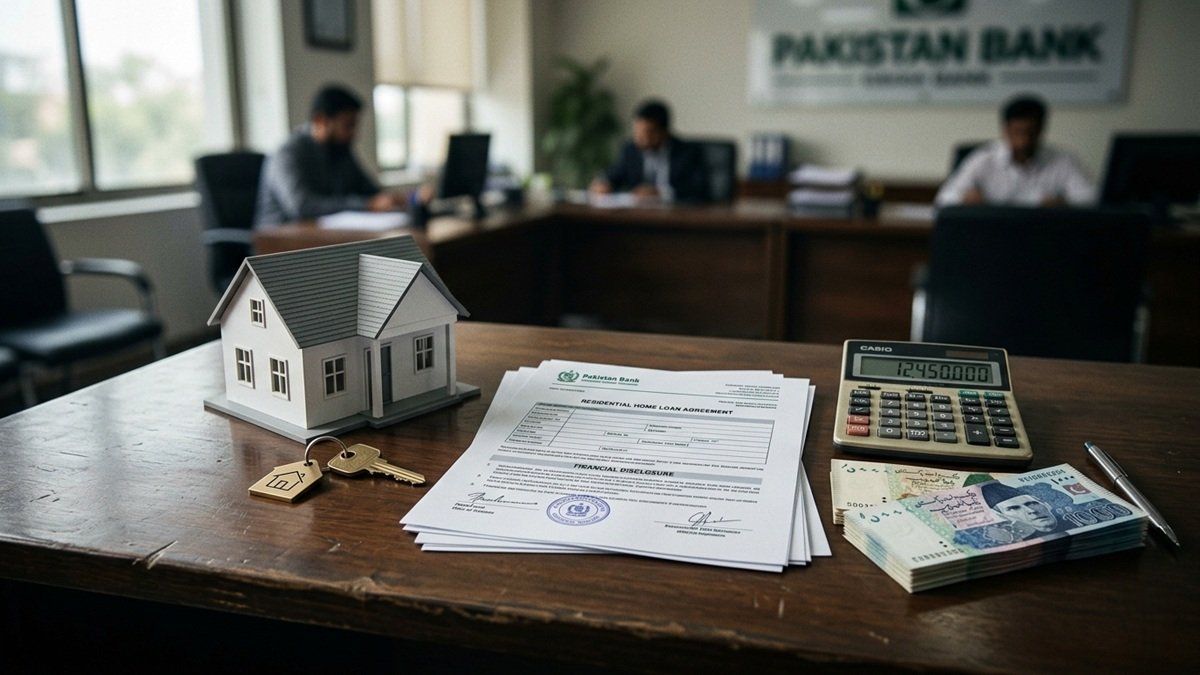
Apna Ghar Update: SBP Makes Home Loans Easier for First-Time Buyers in 2026
I have been watching Pakistan’s housing market for years. And honestly, this is one of the most meaningful changes I have seen for middle-class families. The State Bank of Pakistan just updated mortgage rules under the Wazir-e-Azam Apna Ghar Program. Faster approvals. Better eligibility. Less paperwork.
In my experience, the biggest barrier for buyers in cities like Rawalpindi was never the EMI. It was the loan getting rejected. That problem just got smaller.

What Changed in the Apna Ghar Program
In April 2026, the State Bank of Pakistan issued fresh instructions to banks to improve affordable housing finance under the Apna Ghar Program — Ghar Ho Tu Apna.
Three biggest updates:
- Debt burden ratio increased to 65 percent
- Loan approval time reduced to 15 working days
- Property valuation simplified for homes under Rs5 million
According to the official SBP circular, the goal is to improve access to housing finance for first-time buyers. Many families were not rejected because of low income. They were rejected because of slow approvals and strict lending rules. That is now changing.
You can also explore the complete registration guide for Apni Chhat Apna Ghar on our site for a broader picture of available schemes.
Key Rule Changes Explained
1. Higher Debt Burden Ratio
Earlier, banks used a repayment cap near 50 percent of monthly disposable income. Now, SBP allows total monthly repayments up to 65 percent of net disposable income. This includes home loans, car financing, personal loans, and other consumer financing.
A family already paying rent and a car installment may now still qualify for a housing loan. That was not possible before for many applicants in the Rs40,000 to Rs60,000 monthly income range.
2. Faster Loan Approval
Banks and HBFCL must now complete approvals within 15 working days after receiving complete documents. Previously, many applicants waited more than 30 days. Deals were lost. Families went back to renting. That delay is now a mandatory violation if banks cross it.
3. Easier Property Valuation
For homes worth up to Rs5 million, banks can now use internal valuation. For higher-value properties, only one approved evaluator report is needed instead of multiple checks. This lowers costs and cuts delays, especially for buyers purchasing small houses or flats.
Who Can Apply
The scheme mainly supports first-time home buyers in Pakistan. Here is what the basic eligibility looks like.
Basic Requirements:
- Pakistani citizen with valid CNIC
- Must NOT already own a residential house
- Regular income proof required
- Must meet the bank’s minimum income threshold
Age and Income Requirements
| Requirement | Salaried | Self-Employed |
|---|---|---|
| Minimum Age | 25 years | 21–25 years |
| Maximum Age at Maturity | 60 years | 65 years |
| Minimum Monthly Income | Rs25,000–Rs37,000 | Rs25,000–Rs37,000 |
Tip: Adding a spouse as co-applicant often improves approval chances significantly. Combined income helps meet bank requirements. In my experience, joint applications get processed faster and face fewer documentation follow-ups.
Loan Limit, Markup and EMI
Financing Structure:
- Up to Rs10 million financing
- Up to 90 percent financing of property value
- Only 10 percent down payment required
- Repayment period up to 20 years
Covers 10-marla houses, plot plus construction, and apartments up to 1,500 square feet.
Markup Rate
The biggest attraction: 5 percent fixed markup for the first 10 years. After that, the loan shifts to market-based rates. This is where careful planning matters most.
For example, a Rs4.5 million loan at 5 percent may create an EMI close to Rs28,000 monthly in the early years. That feels manageable today. But future EMIs can rise sharply after the fixed-rate period ends.
Why This Matters in Rawalpindi
Rawalpindi’s housing pressure is increasing every year. Family rent in many areas ranges between Rs20,000 and Rs35,000 monthly. Plot prices in Adiala Road, Chaklala, and Bahria Town continue to climb.
Most families are not stuck because they cannot afford an EMI. They are stuck because loan rejections keep sending them back to the rental market. The new 15-day approval rule and 65 percent debt ratio directly attack that problem.
A practical strategy: combine an Apna Ghar loan with Punjab solar subsidy programs to reduce monthly utility costs in a newly built home. That brings overall housing expenses down even further.
Before vs After: SBP Update at a Glance
| Aspect | Before | After SBP Update |
|---|---|---|
| Debt Ratio | Around 50% | Up to 65% |
| Approval Time | 30+ days | 15 working days |
| Property Valuation ≤ Rs5M | Multiple checks | Internal bank valuation allowed |
| Mortgage Access | Limited eligibility | Wider eligibility |
Apna Ghar vs Mera Ghar Mera Aashiyana
Many people still confuse these two schemes. Apna Ghar is the updated 2026 version with relaxed mortgage rules. Check our detailed breakdown of the Mera Ghar Mera Aashiyana scheme to compare both options side by side.
| Feature | Apna Ghar Program | Mera Ghar Mera Aashiyana |
|---|---|---|
| Debt Ratio | 65% | Around 50% |
| Approval Time | 15 days | 30+ days |
| Income Entry | Lower threshold | Higher threshold |
| Markup | 5% fixed (10 yrs) | Older tier-based model |
For most buyers today, especially in Punjab, Apna Ghar offers easier access and faster approvals.
How to Apply
Where to Apply
Applications are accepted through commercial banks, Islamic banks, microfinance banks, and HBFCL. Participating banks include Allied Bank, Meezan Bank, HBL, and HBFCL, among others.
Required Documents
- Valid CNIC
- Passport-size photos
- Salary slip or income proof
- Bank statements (last 6 months)
- NTN for business owners
- Property documents
- First-time ownership declaration
Applying jointly with a spouse often improves approval chances. This is one of the most useful but frequently ignored tips. Combined income helps meet bank requirements and reduces the chance of rejection.

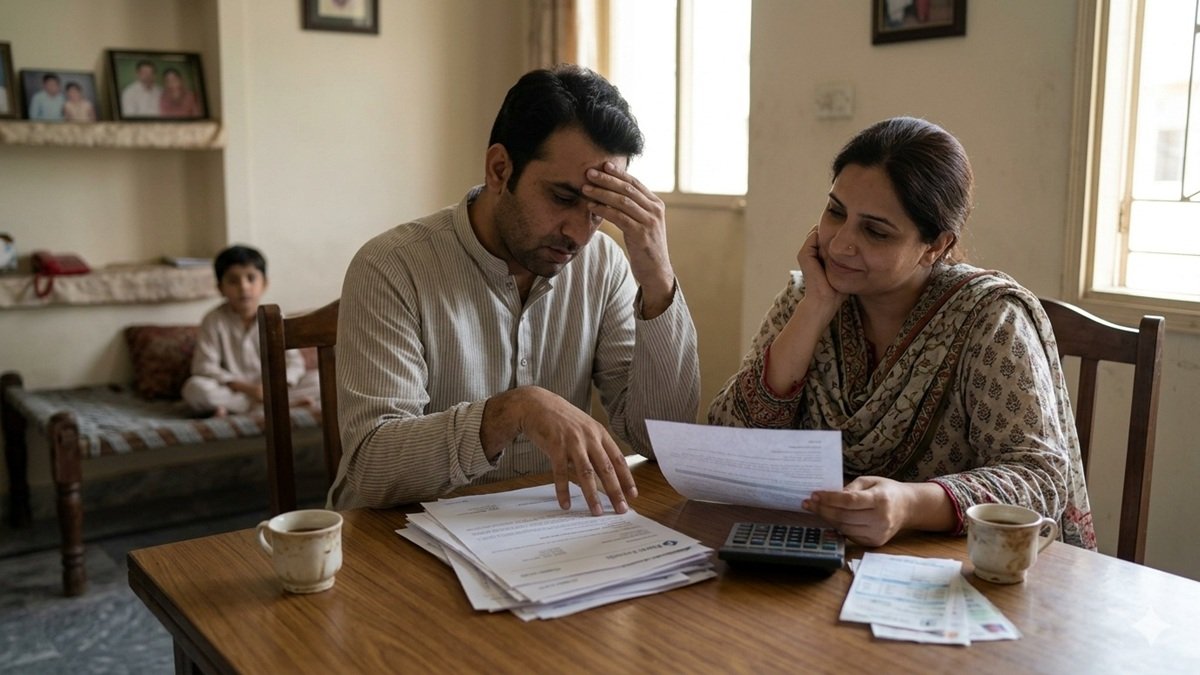
For many middle-class families, the path to home ownership is now more realistic. Photo: Pexels
The Hidden Catch After 10 Years
Do not miss this. The first 10 years are fixed at 5 percent markup. After that, the loan moves to market rates. If policy rates rise, monthly installments can increase significantly. Buyers should plan for the full 20 years — not just the first 10.
Many financial planners suggest early partial repayments during the fixed-rate period. This reduces future pressure considerably.
You can track rate updates directly through the SBP Monetary Policy page. This is the most important long-term risk of the scheme and it deserves more attention than it gets.
Market Impact and What Happens Next
Pakistan’s mortgage market remains very small compared to regional economies. Formal housing finance still reaches a limited number of households. This policy can help change that.
If approvals rise at scale, the wider impact may include more construction jobs, lower rental pressure, stronger formal mortgage financing, and more first-time home ownership across Punjab.
However, there is also a risk. If demand rises too quickly, property prices may increase further in urban areas. Affordable loans alone are not enough. Supply of reasonably priced homes also matters. Success depends on real approvals — not just announcements.
Frequently Asked Questions