
Pakistan’s Nursing Shortage: Why Trained Healthcare Workers Are Leaving
A nurse in Lahore or Karachi completes a demanding hospital shift and returns home with a monthly salary that barely covers rent, utilities, and household expenses. Meanwhile, recruiters from Gulf countries and Europe offer packages worth PKR 500,000 or more, plus accommodation, annual tickets home, and health insurance.
That stark difference explains why Pakistan’s nursing brain drain has moved beyond a staffing challenge into a national healthcare crisis. The country trains nurses regularly, but thousands choose to build their careers overseas almost immediately after gaining clinical experience and recognized credentials.
Healthcare administrators, policymakers, and medical colleges across Pakistan are now confronting a difficult reality: nursing shortages are no longer a training problem. They have become a retention problem.
Why Pakistani Nurses Are Moving Abroad
The reasons Pakistani nurses seek international opportunities extend far beyond salary alone. Heavy workloads, limited career progression, staff shortages, and difficult working environments often combine to push experienced professionals toward overseas opportunities.
Several major factors continue to drive migration from Pakistan:
- Salaries significantly lower than international markets
- High patient loads and demanding shifts in many hospitals
- Limited promotion opportunities within the healthcare system
- Better professional training and specialization opportunities abroad
- Housing, transport, and annual ticket benefits offered by overseas employers
- Safer working conditions in developed healthcare systems
For many Pakistani families, overseas employment represents financial stability that local positions cannot match. The combination of higher earnings and benefits creates an opportunity that becomes difficult to refuse.
The Salary Gap: How Much Are Nurses Earning Overseas?
The earnings difference remains the strongest factor driving Pakistan’s nursing brain drain. Understanding these figures helps explain why retention has become such a critical challenge for Pakistani hospitals.
| Country | Typical Monthly Salary Range |
|---|---|
| Pakistan | PKR 50,000 to PKR 120,000 |
| Saudi Arabia | Equivalent of PKR 350,000 to PKR 650,000 |
| UAE (Dubai, Abu Dhabi) | Equivalent of PKR 400,000 to PKR 700,000 |
| United Kingdom | Equivalent of PKR 600,000 to PKR 900,000 |
| Qatar | Equivalent of PKR 400,000 to PKR 700,000 |
These figures vary depending on specialty, employer, years of experience, and licensing requirements. However, the difference is large enough to influence long-term career planning for thousands of nurses across Pakistan.
When a nurse earning PKR 80,000 locally learns they can earn PKR 500,000 or more abroad, the choice becomes clear. Add housing, transport allowances, annual air tickets, and health insurance, and the total value of overseas packages often exceeds PKR 600,000 monthly.
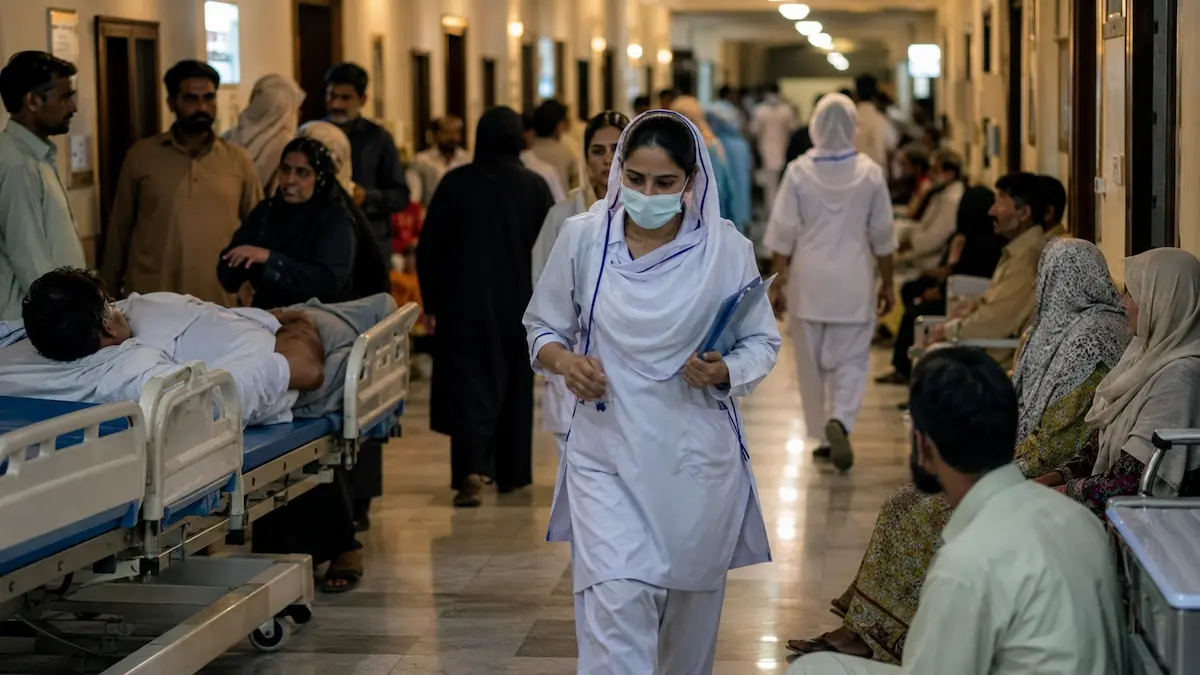
Pakistan’s Nursing Workforce Shortage by the Numbers
Pakistan’s healthcare system has struggled with nursing shortages for years, and the situation shows no signs of improvement. Current healthcare reports indicate the country requires a significantly larger nursing workforce to meet existing healthcare demand.
The shortage in 2026 presents two simultaneous challenges:
- Producing more qualified nurses through expanded training programs
- Retaining experienced nurses already working in Pakistan
Without progress in both areas, shortages will likely continue growing. International recruitment campaigns from Gulf countries and the United Kingdom have intensified, making it easier for qualified Pakistani nurses to secure overseas positions quickly.
The nurse-to-patient ratio in Pakistan remains below internationally recommended levels. Countries with stronger healthcare outcomes generally maintain larger nursing workforces relative to population size and provide more opportunities for specialization and professional growth.
How Healthcare Shortages Affect Hospitals and Patients
The Pakistan healthcare staffing crisis has direct and immediate effects on patient care quality. When hospitals operate with fewer nurses than required, several problems emerge quickly.
Patients may wait longer for assistance. Medication rounds become delayed. Monitoring of critically ill patients becomes more difficult. Doctors often carry additional responsibilities normally shared with nursing staff. Hospital administrators have repeatedly highlighted staffing pressure in emergency departments and high dependency units.
The issue becomes more serious during disease outbreaks or seasonal increases in admissions. Healthcare systems rely heavily on nursing staff because nurses provide continuous patient care throughout the day and night.
A shortage in this workforce affects the entire hospital system. According to World Health Organization data, countries with better nurse-to-patient ratios consistently report improved patient outcomes and lower hospital-related complications.
Why Gulf Countries and the UK Attract Pakistani Nurses
Several countries continue to actively recruit healthcare workers from overseas. The Gulf region remains particularly attractive because of tax-free salaries and comprehensive benefit packages. The United Kingdom has also expanded international healthcare recruitment in recent years.
Popular destinations for Pakistani nurses include Saudi Arabia, the UAE, Qatar, Oman, the United Kingdom, and Ireland. Many of these countries provide structured career pathways and internationally recognized training opportunities, making them attractive destinations for nurses looking for long-term professional growth.
Gulf employers often provide housing at no cost, annual air tickets home, comprehensive health insurance, and educational allowances for family members. These benefits, combined with high salaries, create total compensation packages that are difficult to match locally.
What Changed Since 2020 for Pakistan’s Nursing Sector
Several developments increased migration pressure after 2020. Global healthcare systems faced major staff shortages following the pandemic period. Countries experiencing shortages intensified international recruitment campaigns significantly.
Meanwhile, inflation and economic pressures reduced purchasing power for many healthcare workers in Pakistan. The value of PKR 80,000 has declined considerably over the past few years relative to living costs.
As overseas demand for nurses rose, migration became easier for qualified nurses with recognized credentials and English language qualifications. Professional licensing became more streamlined in destination countries, and recruitment agencies became more active in recruiting from Pakistan.
The difference between local and international opportunities widened further, making overseas employment increasingly attractive to qualified professionals at all career stages.
The Hidden Cost for Pakistan’s Healthcare System
Pakistan invests considerable resources in nursing education and clinical training through colleges, universities, and hospital-based programs. When experienced nurses leave permanently, hospitals lose more than workforce numbers.
They also lose clinical experience, mentorship for younger nurses, institutional knowledge, and leadership capacity. Replacing experienced staff takes significant time and resources. Training new graduates cannot immediately replace years of practical hospital experience.
This explains why nursing brain drain in Pakistan remains a major public policy issue for healthcare administrators, medical educators, and government officials. The loss of experienced professionals weakens the entire healthcare system.
Pakistan’s Nursing Jobs and Career Pathways
Many Pakistani nurses seeking employment abroad first gain experience in local hospitals and clinics. This experience forms the foundation for international applications. However, the challenge lies in retaining these experienced professionals within Pakistan’s healthcare system.
The nursing profession in Pakistan offers employment across public hospitals, private healthcare facilities, clinics, and community health services. However, salary and working condition differences mean talented professionals often view these positions as stepping stones rather than long-term careers.
Nursing career development opportunities include specialty certifications, advanced practice roles, management positions, and teaching positions. However, these pathways remain limited compared to opportunities available in developed healthcare systems abroad.
What Policymakers Are Discussing
Healthcare discussions in recent years have focused on several possible responses to the nursing shortage. These include expanding nursing colleges, increasing training capacity, improving workplace safety, creating specialist career pathways, reviewing salary structures, and improving retention incentives.
Some provinces have already announced recruitment drives and expansion plans for healthcare staffing. The challenge lies in addressing retention simultaneously. Long-term retention remains more difficult than addressing initial training capacity.
Government officials and healthcare administrators understand that higher salaries alone may not solve the problem if working conditions, career progression, and professional respect remain unchanged. A comprehensive approach addressing multiple factors is necessary.
What Happens Next for Pakistan’s Healthcare System
Pakistan’s population continues to grow while healthcare needs become increasingly complex. Demand for nurses is expected to increase across public hospitals, private healthcare facilities, and community health services significantly.
International demand for healthcare workers also remains strong. Future policy discussions are likely to focus on balancing two goals: supporting overseas employment opportunities that generate valuable remittances while ensuring hospitals inside Pakistan retain enough skilled professionals to meet domestic healthcare needs.
How successfully that balance is managed may shape the future of Pakistan’s healthcare system and patient care quality for years to come.
Pakistan Nurses Abroad: Employment Trends and Statistics
The trend of Pakistani nurses working abroad shows no signs of slowing. Recruitment agencies report increasing inquiries from qualified nurses across the country. Online job portals show continuous listings for healthcare positions in the Gulf and UK targeting Pakistani nationals.
Many nurses use their overseas earnings to support families in Pakistan, contributing significantly to the country’s remittance economy. However, this benefit comes at the cost of reduced domestic healthcare capacity. Related job opportunities in Pakistan include positions with healthcare policy and healthcare technology sectors that could potentially create new career pathways for nursing professionals.
Some nursing professionals explore remote work opportunities in healthcare consulting and telemedicine, though these remain limited compared to traditional nursing positions.
The Comparison: Working as a Nurse in Pakistan versus Saudi Arabia
Understanding specific comparisons between local and overseas opportunities helps explain current migration trends clearly.
| Factor | Pakistan | Saudi Arabia |
|---|---|---|
| Average monthly salary | Around PKR 80,000 | Equivalent of PKR 500,000 or more |
| Housing support | Limited or none | Often included in package |
| Annual air tickets | Rare benefit | Common benefit provided |
| Career progression | Slower advancement | Structured pathways |
| Specialist training | Limited availability | More opportunities offered |
This comparison demonstrates why the choice for Pakistani nurses is often clear. The total compensation difference, combined with career development opportunities, makes overseas employment significantly more attractive.
Healthcare Job Opportunities and Related Fields
Beyond direct nursing positions, the healthcare sector in Pakistan offers related employment opportunities. The Pakistan National Job Portal lists healthcare sector positions including healthcare administration, medical technology, laboratory technician, and community health worker roles.
These positions may not attract nurses with advanced training, but they represent part of the broader healthcare employment landscape in Pakistan.
Frequently Asked Questions
Why are Pakistani nurses moving abroad to work?
Higher salaries, better benefits, safer workplaces, and stronger career progression opportunities remain the main reasons. A nurse earning PKR 80,000 in Pakistan may receive an overseas package worth PKR 500,000 or more after currency conversion and allowances, plus housing and other benefits.
What is the average nurse salary in Pakistan in 2026?
Monthly salaries vary by province, hospital type, and experience level. Many staff nurses earn between PKR 50,000 and PKR 120,000 per month. Senior nurses and those in private hospitals may earn higher amounts, but salaries remain significantly lower than overseas positions.
Which countries are hiring Pakistani nurses the most?
Saudi Arabia, the UAE, Qatar, Oman, the United Kingdom, and Ireland remain among the leading destinations for Pakistani nurses. These countries have established healthcare recruitment programs and offer competitive packages to international nurses.
Is Pakistan currently experiencing a nursing shortage?
Yes, healthcare reports and workforce studies continue to identify significant shortages in several parts of the country. The shortage affects both public and private hospitals and has worsened due to international migration of trained professionals.
How does Pakistan’s nursing shortage impact patient care?
Lower staffing levels increase workloads, reduce time available per patient, delay medication rounds, complicate monitoring of critically ill patients, and place additional pressure on hospitals during emergencies and disease outbreaks.
Can increasing nursing colleges alone solve Pakistan’s nursing shortage?
Training more nurses may help, but retention and working conditions remain equally important factors. Without addressing workplace environment, salary concerns, and career progression, trained nurses will continue leaving for overseas opportunities despite increased college capacity.