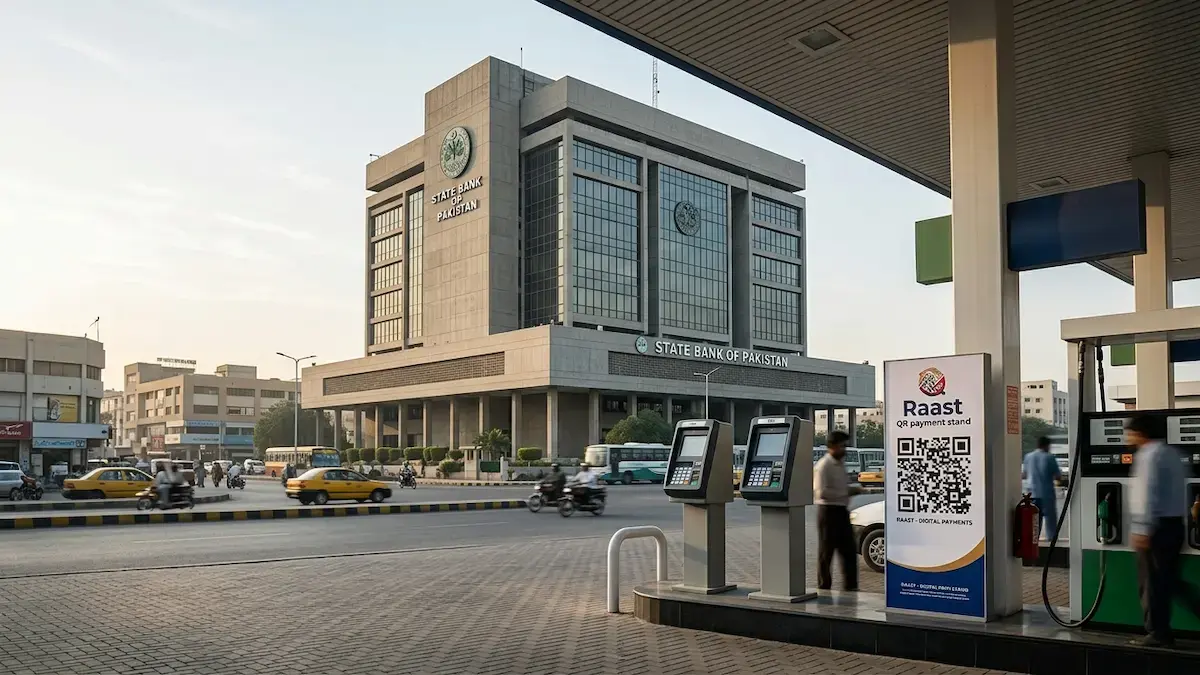
SBP Fuel Card Fee Cut: What Changed at Petrol Pumps
The State Bank of Pakistan (SBP) has rolled out a new pricing rule for fuel purchases made with payment cards. It caps two key charges that banks used to collect from petrol pump owners.
The Merchant Discount Rate is now capped at Rs 1 per litre. The Interchange Reimbursement Fee is capped at Rs 0.20 per litre. Both apply to payment cards issued inside Pakistan.
Why the SBP Raast QR and Fuel Card Fee Policy Matters
Petrol pumps in Pakistan handle thousands of transactions every single day. Yet most of that money still moves as cash.
Before this rule, dealers paid close to 0.8 percent of every transaction in bank charges. On today’s fuel prices, that worked out to nearly Rs 2.40 per litre.
For a business that earns a small margin on every litre, that charge ate into profit. Many pumps simply refused cards because of it.
Old Charges Versus the New SBP Framework
| Feature | Earlier System | New SBP Framework |
|---|---|---|
| Merchant charges | Around 0.8% of transaction | Max Rs 1 per litre |
| Interchange fee | Percentage based | Max Rs 0.20 per litre |
| QR expansion | Limited focus | Nationwide rollout ordered |
| Policy duration | Standard pricing | Effective till 31 Jan 2027 |
What Changes for Drivers at the Pump
For most drivers, filling up will still feel the same at first glance. The real shift happens behind the counter.
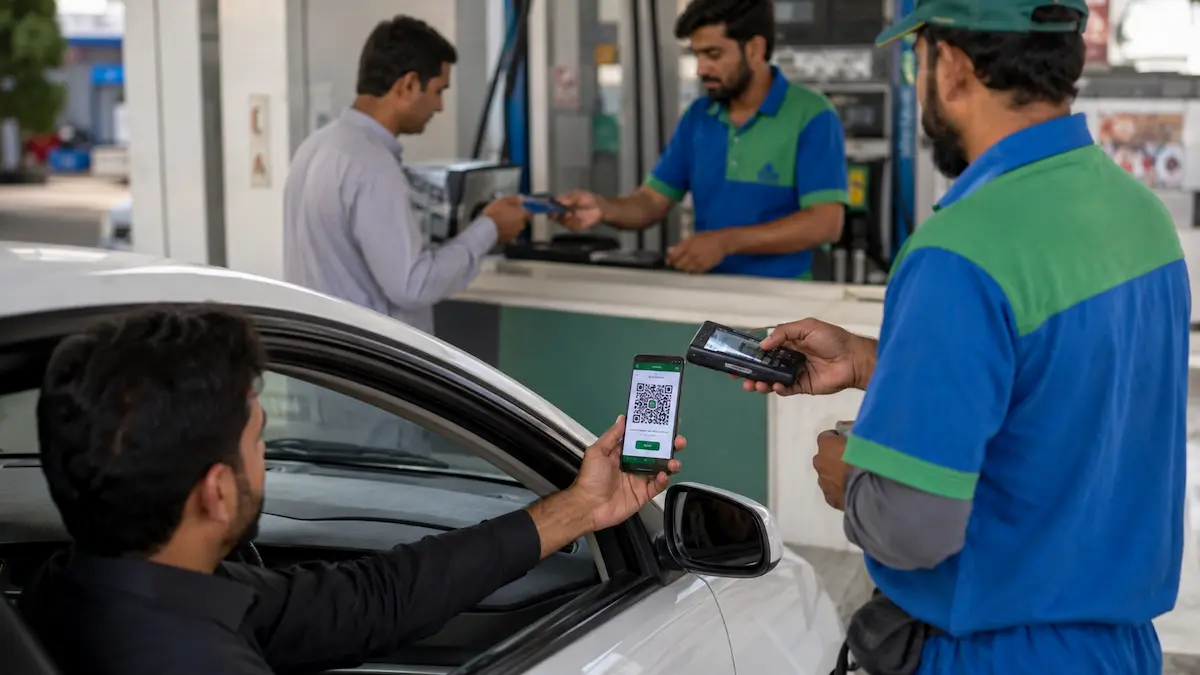
More stations are expected to install card machines and display Raast QR codes as banks roll out the new pricing. That means fewer pumps turning away card or QR payments because the fees were too high.
If you also track running costs on the road, our guide on the fuel average of popular bikes in Punjab can help you plan fuel spending better.
Raast QR Payments Get a Nationwide Push
SBP has told commercial banks, microfinance banks, electronic money institutions, and payment service providers to widen Raast QR acceptance at fuel stations across Pakistan.
Raast is Pakistan’s own instant payment system. Instead of a card machine, customers can simply scan a QR code through their banking app to pay.
According to official sources, this move supports the country’s wider push toward a cashless economy, a goal outlined on the State Bank of Pakistan’s official website.
Pakistan’s Digital Payment Numbers So Far
Pakistan already has close to 68.3 million payment cards in circulation. There are around 248,000 point of sale terminals and nearly 2.5 million QR enabled merchants nationwide.
Even with those numbers, fuel retail has stayed one of the most cash heavy sectors in the country. This policy is aimed directly at closing that gap.
Digital habits are spreading into other services too. Readers who recently used the new NADRA online services or the e-passport home delivery service will recognise this same shift toward digital convenience.
What Fuel Dealers and Banks Must Do Next
The Pakistan Petroleum Dealers Association welcomed the cap but said it had originally asked for zero transaction charges. Even so, the association called the move a step in the right direction.
Banks and payment service providers now carry the job of installing more card machines, keeping QR codes visible, and training staff at fuel stations. Success will depend on how fast that rollout happens.
Frequently Asked Questions
What is the new SBP fuel station payment policy?
It caps the Merchant Discount Rate at Rs 1 per litre and the Interchange Reimbursement Fee at Rs 0.20 per litre for fuel bought with payment cards issued in Pakistan, effective until 31 January 2027.
Does this policy reduce petrol prices?
No. It only lowers the cost banks charge for processing digital payments. Petrol prices are set separately by the government.
What is Raast QR?
Raast QR is part of Pakistan’s instant payment system. It lets customers pay by scanning a code through their bank’s app instead of using cash or a card.
Why did SBP focus on fuel stations?
Fuel stations process very high transaction volumes daily and remain one of the country’s biggest cash based sectors, making them a priority for digital payment growth.
Will every petrol pump accept cards and QR right away?
Not immediately. Banks and payment providers still need to expand infrastructure, and some stations will need new equipment or staff training first.
What happens after 31 January 2027?
The framework is temporary. SBP will review how well it worked before deciding whether to extend or revise it.