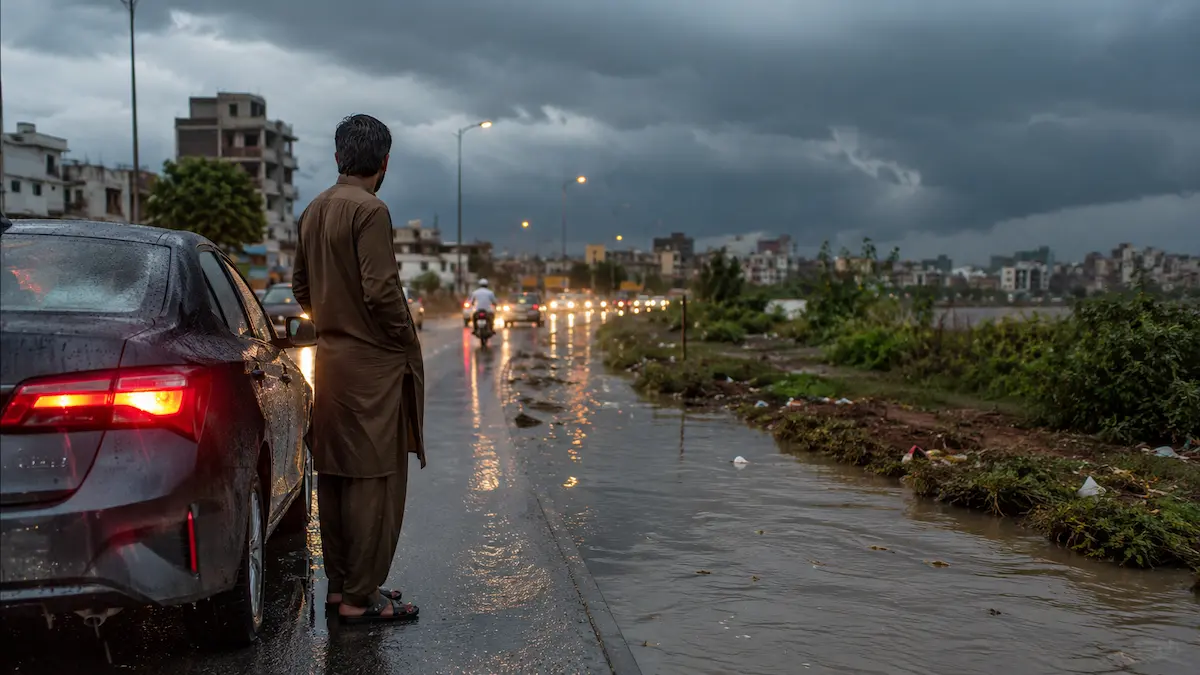
Pakistan Heavy Rain Alert: What the August 17 to 21 Forecast Means
The Pakistan Meteorological Department has issued a fresh Pakistan heavy rain alert covering August 17 to 21, 2026. Rain, wind and thunderstorms are expected across upper and central Pakistan, with a break here and there.
Islamabad, Rawalpindi and Lahore sit at the center of this warning. So do the hill roads leading toward Murree, Swat and Gilgit Baltistan, where the danger is landslides rather than flooded streets.
According to official sources, a westerly wave will enter northern Pakistan from August 17 and combine with active monsoon currents already sitting over the region. That mix is what worries forecasters the most.
This does not mean nonstop rain for five days straight. It means short, intense bursts are likely, and those bursts are usually what overwhelm drains fastest.
Areas at Risk: Cities and Mountains Face Different Threats
The PMD has named specific cities for urban flooding risk between August 17 and 20. These include Islamabad, Rawalpindi, Lahore, Gujranwala, Gujrat, Sialkot, Mardan and Swabi.
In Khyber Pakhtunkhwa, the alert stretches to Peshawar, Nowshera, Abbottabad, Mansehra, Swat, Dir and Chitral. Kashmir and Gilgit Baltistan are also included in the wider forecast window.
| Region | Main Expected Weather Risk |
|---|---|
| Islamabad and Rawalpindi | Heavy rain and urban flooding |
| Lahore and upper Punjab | Heavy rain and water accumulation |
| Gujranwala, Gujrat and Sialkot | Urban flooding risk |
| KP districts | Heavy rain, flash floods and landslides |
| Murree and Galiyat | Landslides and sudden flooding |
| AJK | Heavy rain and landslide risk |
| Gilgit Baltistan | Heavy rain and mountain hazards |
| Southern Punjab | Rain mainly during August 20 and 21 |
Why Rawalpindi, Islamabad and Lahore Flood So Fast
Urban flooding is not just about how much rain falls. It is about how fast it falls. When heavy rain lands in a short window, storm drains cannot clear the water in time.
Rawalpindi carries an extra risk because of Nullah Lai, the drainage channel that cuts through crowded parts of the city. A quick rise in this channel puts pressure on nearby homes and roads.
Islamabad has its own streams and channels near the hills that can swell fast during intense rain. Lahore’s problem is different. Its risk comes mostly from surface water pooling on roads, underpasses and low lying neighborhoods.
NDMA’s 2026 Monsoon Infrastructure Advisory points out that localized intense rainfall can overwhelm city drains and threaten homes, communication lines and industrial areas, and it calls for drainage checks and early preparedness before the rain arrives.

Landslide Risk in the North: Murree, Swat, Gilgit Baltistan and AJK
Mountain areas face a different kind of danger. Heavy rain soaks the soil and weakens slopes. Streams and seasonal channels also rise fast, which puts roads at risk of landslides, falling rocks and flash floods.
Routes worth watching closely include the roads around Murree and Galiyat, Abbottabad and Mansehra, Kaghan, Swat, Dir and Chitral. Conditions on these roads can change within hours during heavy spells.
Families planning a weekend trip to hill stations should hold off until conditions clear. If a trip is unavoidable, it helps to check road status before leaving rather than after getting stuck. Anyone who was hoping to combine this trip with a stop at a public space like the recently reopened Shah Shams Park lake should also plan around the forecast, since outdoor spots tend to close quickly once heavy rain hits.
Ground Conditions Already Stacked Against the Country
This spell arrives on top of a season that has already tested the country’s drainage and disaster response. NDMA has issued several flood and weather advisories through 2026, including warnings for flash floods in KP and Gilgit Baltistan.
Repeated rain over the same months raises soil moisture and weakens slopes further, which is exactly why officials are treating this five day window seriously instead of as routine weather.
That comparison does not mean this spell will match 2025. It shows why officials keep pushing early warnings and preparedness instead of waiting to react.
What Changed From Past Monsoon Seasons
NDMA called the 2025 monsoon one of the most intense and unpredictable in recent memory, with rainfall about 23 percent above the long term average and widespread flash floods, urban flooding and landslides.
Weather patterns shifting around the monsoon are not new to Punjab. Even cultural events have had to adjust around them, which is part of why Basant 2027 in Punjab was shifted to January instead of its usual spring slot.
The takeaway from official reviews is simple. A forecast tells you where rain may fall. How much damage it causes depends on drainage, soil conditions and how ready the infrastructure actually is.
Safety Steps for Residents Before the Rain Hits
Basic precautions from official disaster guidance can make a real difference. Residents in flood prone areas should follow these steps.
Move vehicles away from low lying parking spots. Avoid flooded roads, underpasses or fast moving water. Keep documents and valuables in waterproof storage. Stay away from exposed electrical wiring during heavy rain.
Keep phones charged so official alerts come through. Clear nearby drains where it is safe to do so. Follow evacuation orders from local authorities without delay. Farmers should move livestock, machinery and stored crops to higher ground.
Students and families in Azad Kashmir facing school disruptions during this spell can also check ongoing support programs, including the AJK laptop scheme eligibility details for students, since several education related announcements continue during the monsoon period.
What Authorities Are Watching Closely
Coordination between weather agencies, district administrations and rescue services matters most during this window. Officials are focused on monitoring Nullah Lai and other urban waterways, checking drains before the heaviest rain, and keeping pumps ready.
Flood prone roads, underpasses and landslide prone mountain routes are also under watch. NDMA held a national monsoon coordination meeting in June 2026 with federal and provincial agencies to plan early warnings and emergency response.
The Prime Minister was briefed on monsoon preparedness in July, with a focus on activating the early warning system and coordinating with provincial disaster management bodies. Full advisories are published by the National Disaster Management Authority.
Timeline: What to Expect Day by Day
August 16: Rain begins in some areas from the evening. PMD flags the approaching spell.
August 17: The main window opens. Upper Punjab, Islamabad, Rawalpindi and several KP districts see rain and thunderstorms.
August 18 to 19: Rain spreads across northern areas, KP, Kashmir and parts of Punjab. Gilgit Baltistan enters the forecast.
August 20 to 21: More districts across Punjab and southern KP get included, while northern and mountain areas keep getting rain.
Forecasts can shift as the system develops. The latest PMD update always takes priority over anything published earlier.
Frequently Asked Questions
When will the Pakistan heavy rain spell begin?
The PMD has forecast an extended spell from August 17 to August 21, 2026, with occasional breaks. Some areas may get rain from the evening of August 16.
Which cities face the highest urban flooding risk?
The PMD has warned about urban flooding in low lying parts of Islamabad, Rawalpindi, Mardan, Swabi, Gujranwala, Gujrat, Sialkot and Lahore between August 17 and 20.
Which mountain areas face landslide risks?
The main areas include mountainous parts of Khyber Pakhtunkhwa, Gilgit Baltistan, Murree, Galiyat and Kashmir.
Will it rain continuously for five days?
Not necessarily. The forecast includes occasional breaks. The main concern is isolated heavy rainfall during the wider spell.
Why can heavy rain cause flooding so quickly in Pakistani cities?
Intense rainfall can send large amounts of water into drains, streams and low lying areas within a short time. Limited drainage capacity raises the risk of water accumulation in cities.
Where can official weather updates be checked?
The PMD publishes forecasts on its official website and the Pak Weather app. NDMA also issues national weather and disaster advisories.