NHMP QR Code Traffic Violations Reporting: How It Works
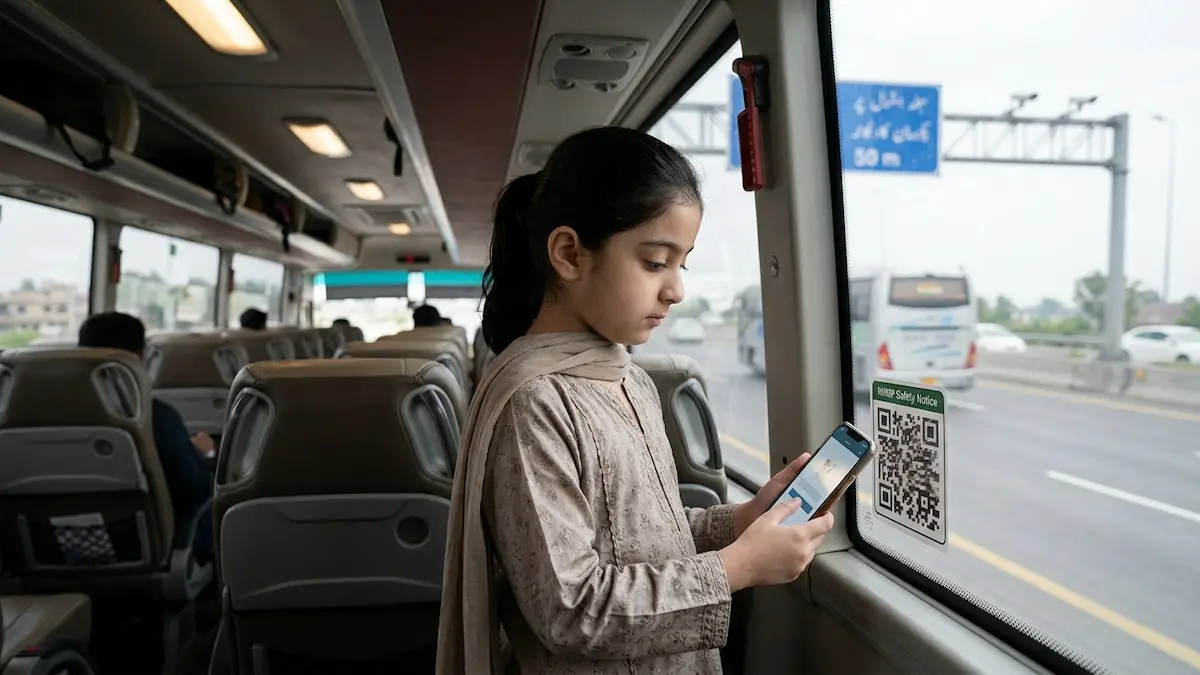
The National Highways and Motorway Police (NHMP) has introduced a new QR code complaint system under its Be Our Eyes campaign. Stickers with a scannable QR code are now placed on public transport vehicles across Pakistan’s motorways and national highways.
Passengers travelling by bus, van or coach can scan the code with a phone camera and reach the NHMP complaint platform directly. This gives ordinary travellers a fast way to flag problems that were once hard to report on the go.
The system does not replace older complaint channels. The NHMP helpline 130 still works for emergencies, roadside help and travel guidance. The QR code simply adds a quicker, digital entry point for passengers already on the road.
What Passengers Can Report Through the QR System
NHMP has clearly listed the issues this system covers. It is meant for real problems that affect passenger safety and fair travel, not minor complaints.
Travellers can report overloading, fares above the notified rate, dangerous or reckless driving, and misbehaviour by drivers or staff. Any other relevant traffic violation can also be flagged through the same code.
| Problem | What a Passenger Can Record |
|---|---|
| Overloading | Excess passengers or unsafe capacity |
| Overcharging | Fare higher than the notified amount |
| Dangerous driving | Reckless or unsafe driving behaviour |
| Misbehaviour | Serious misconduct by driver or staff |
| Other violations | Any other traffic or passenger safety issue |
How to Scan and Submit an NHMP Complaint
The process has four simple steps. First, look for the NHMP sticker with the QR code, usually near the entrance or on the windshield of the vehicle. Stickers are also placed at passenger vehicle terminals.
Second, open the phone camera or a QR scanner app and scan the code. This opens the official complaint page directly, with no app download needed.
Third, fill in the details. Useful information includes the vehicle number, route, location, time and the type of violation. Fourth, submit the form so NHMP can review it.
Passengers should never use a phone in a way that risks their safety while the vehicle is still moving. A written note of the vehicle number and route is often enough.
Why NHMP Enforcement Numbers Matter for This Campaign
This QR system is not appearing out of nowhere. NHMP has already run several enforcement drives against public service vehicles in 2026, and the numbers explain why passenger reporting is being added now.
Between March 15 and March 28, NHMP recovered and refunded more than Rs7.8 million in excess fares. In the same period, 908 vehicles faced action for overloading and 382 for overcharging, according to official NHMP data.
These figures show that passenger complaints can feed directly into ongoing enforcement, rather than sitting in a separate system with no follow-up.
NHMP QR Code vs Older Complaint Methods
Before this campaign, a passenger with a complaint had to contact an officer directly, call the 130 helpline, or search for the right social media page. Each route took time and was not always convenient mid-journey.
| Earlier Approach | New QR Approach |
|---|---|
| Contact an officer | Scan the vehicle QR code |
| Call 130 | Access a digital complaint platform |
| Use official social channels | Report directly from the vehicle |
| Find the right channel first | QR gives a direct entry point |
The real change here is access. A passenger no longer needs to search for the correct number or page. The QR code takes them straight to the complaint form while the issue is still fresh.
The Bigger Digital Push Behind Motorway Safety
NHMP already runs the Public Service Vehicle Management Information System, which tracks routes, speed limits and harsh braking across registered vehicles. According to the department’s 2024-25 yearbook, the system covers 23,712 registered drivers and 20,687 registered vehicles, backed by 6,226 dash cameras and 14,091 trackers.
The same report notes that the 130 helpline handled more than 911,000 calls in a single year, averaging about 75,945 calls a month. The QR campaign connects passenger reports with this wider monitoring network, rather than standing alone as an isolated tool.
For readers following broader transport upgrades, the shift also fits into Pakistan’s growing use of technology on the road, from the Lahore Blue Line underground metro project to camera-based enforcement such as the Hyderabad mobile robo camera e-challan system.
QR Panic Buttons in Lahore: A Different but Related System
A separate QR initiative has also appeared in Lahore. More than 40,000 QR panic buttons were reported in August 2026 across public transport, rickshaws and ride hailing vehicles. That system focuses on emergency response and passenger safety, not motorway traffic violations.
The NHMP system, by contrast, is built specifically for reporting overloading, overcharging and reckless driving on highways and motorways. Both point to the same trend: QR codes becoming a standard link between passengers and public authorities across Pakistan.
What Passengers Should Record Safely
A useful complaint needs clear details. Where it is safe, passengers can note the vehicle registration number, route, approximate location, time and the fare charged if the issue is overcharging.
Passengers should never put themselves at risk to gather evidence. Trying to film a driver from the front of a moving bus can create a new safety problem. A simple written note of the vehicle number is often more useful than a rushed video.
Travellers planning long trips can also read more on leisure travel options such as hot air balloon rides in Pakistan for a change of pace once the journey ends safely.
What Happens After You Submit a Complaint
NHMP describes the QR system as a direct way for passenger concerns to reach the right officials quickly. However, there is no fixed public timeline for how long a review takes.
Not every complaint results in a fine or refund. Each report still goes through verification before any enforcement action is taken. The QR code is a reporting tool, not an automatic penalty system.
Timeline of Recent NHMP Enforcement Action
In March 2026, NHMP ran a special enforcement drive against overcharging and overloading during the Eid travel period, refunding more than Rs7.8 million to passengers by March 29.
In June 2026, during Eid ul Azha enforcement, NHMP refunded more than Rs5.3 million and issued over 20,000 challans against public service vehicles.
In August 2026, NHMP launched the Be Our Eyes campaign, placing QR complaint stickers on public transport vehicles nationwide.
What This Means for Pakistani Travellers
For daily commuters and long distance travellers, the practical change is simple. When an NHMP sticker with a QR code is visible on a bus, van or coach, a quick scan opens a direct path to report overloading, overcharging, dangerous driving or misbehaviour.
The system works alongside the existing 130 helpline and NHMP’s vehicle monitoring network, rather than replacing them. According to the official NHMP website, passengers are encouraged to report violations in a timely and responsible manner so genuine complaints can be acted on faster.
Frequently Asked Questions
What is the NHMP Be Our Eyes campaign?
It is a public participation campaign by the National Highways and Motorway Police that lets citizens report traffic violations through QR codes placed on public transport vehicles.
What violations can be reported through the NHMP QR code?
Passengers can report overloading, overcharging, dangerous or reckless driving, misbehaviour by staff, and other traffic violations on public service vehicles.
Can passengers still call Motorway Police directly?
Yes. The NHMP helpline 130 remains active for complaints, roadside assistance and travel guidance alongside the new QR system.
Is the NHMP QR complaint system only for buses?
The campaign covers public service and public transport vehicles broadly, with complaint stickers also placed at passenger vehicle terminals.
Does every QR complaint lead to a fine?
No. NHMP has not stated that every complaint automatically results in a penalty. Each report still goes through verification and enforcement review.
Can a passenger report overcharging on a motorway bus?
Yes. Overcharging is one of the specific violations listed under the QR complaint system, and NHMP has previously refunded excess fares to passengers during enforcement drives.