
Tonight, history launches from Florida. NASA’s Artemis II is set to lift off on April 1, 2026 from Kennedy Space Center. Four astronauts will travel toward the Moon. It will be the first time humans have gone that far since 1972. For viewers in Pakistan, liftoff is early morning April 2. A perfect time to stay up and witness something unforgettable.
What Is Artemis II?
NASA’s Artemis program has one goal. Return humans to the Moon. Artemis II is the first crewed mission in that plan. It uses the Space Launch System rocket and the Orion spacecraft.
This is not a landing mission. Think of it as a dress rehearsal. The crew will fly around the Moon and come back. Every system gets tested before a future crew actually lands.
What This Mission Will Do
- Carry four astronauts beyond low Earth orbit
- Travel around the Moon using a free-return trajectory
- Return safely to Earth after 10 days
- Test all critical systems for future Moon landings
Pakistan’s own tech journey is expanding fast. Pakistan’s 5G rollout is already reshaping connectivity across major cities. Space exploration fits into that same growing appetite for science and technology.
Artemis II Crew Profiles and Roles
Four astronauts. Two countries. One historic flight.
| Name | Role | Agency |
|---|---|---|
| Reid Wiseman | Commander | NASA |
| Victor Glover | Pilot | NASA |
| Christina Koch | Mission Specialist | NASA |
| Jeremy Hansen | Mission Specialist | Canadian Space Agency |
Two historic firsts happen on this single flight. Christina Koch becomes the first woman to travel beyond low Earth orbit. Jeremy Hansen becomes the first Canadian on a lunar mission. These are firsts for all of humanity, not just NASA.
Launch Timeline and Latest Status
The countdown is underway. Here is what the schedule looks like in Pakistan Standard Time.
| Event | Pakistan Time |
|---|---|
| Tanking Starts | 4:45 PM (April 1) |
| Broadcast Begins | 9:50 PM (April 1) |
| Liftoff | 1:24 AM (April 2) |
Current Status
- Weather is 80% favorable for launch
- Fueling operations are running on schedule
- Earlier helium system issues have been resolved and confirmed by NASA
The Pink Moon Coincidence Explained

The April Pink Moon is a seasonal full moon. It is called pink not because of color but because of pink wildflowers that bloom in April across North America.
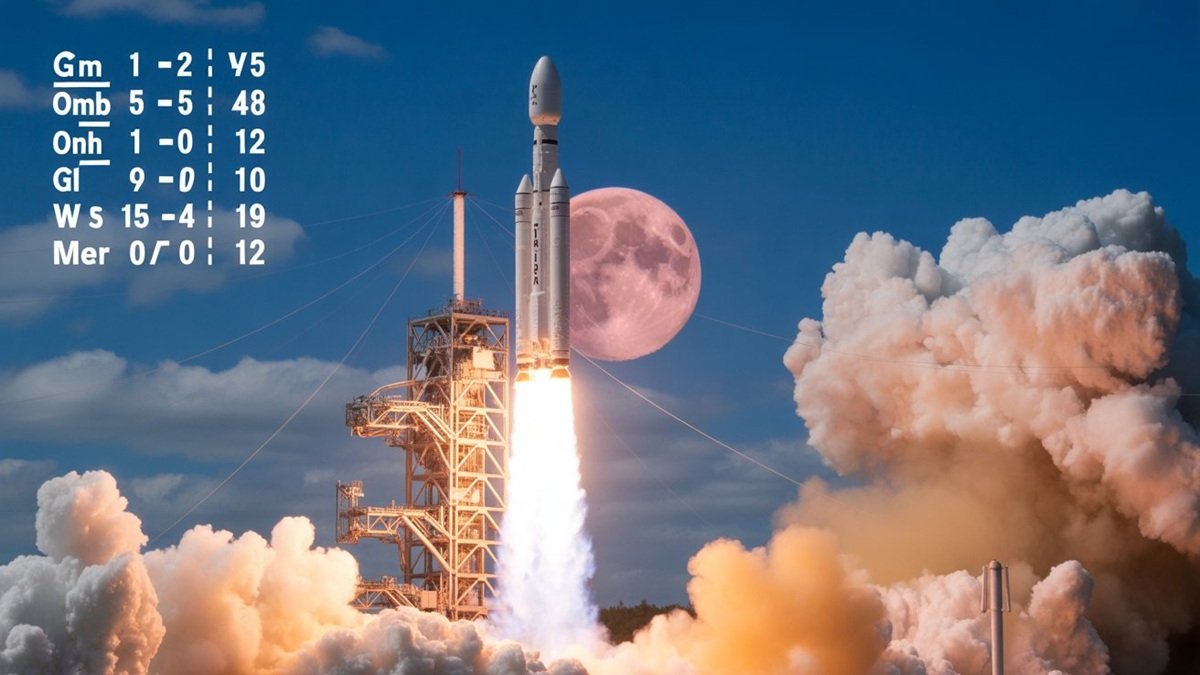
The Moon will appear brighter than usual on this night. A rocket launches. The Moon glows. That combination is rare. Millions will remember it.
For viewers in Pakistan, the Moon will be visible in the early morning hours of April 2. That timing lines up almost perfectly with liftoff. Step outside after the stream. Look up. The Pink Moon will be right there.
Mission Path and Main Objectives
Artemis II will follow a free-return trajectory. This is a safety-first path. If something goes wrong, gravity pulls the spacecraft back to Earth automatically. No extra engine burns needed.
Step-by-Step Journey
- Rocket launches into Earth orbit
- Orion spacecraft heads toward the Moon
- Spacecraft flies around the Moon at close range
- Gravity slingshots it back toward Earth
- Crew splashes down in the Pacific Ocean
Main Goals
- Test life support systems in deep space
- Check navigation and communication hardware
- Study astronaut health beyond Earth orbit
- Practice manual spacecraft control
Why This Mission Matters for Pakistan
This mission may feel far away. But the connection is real.
SUPARCO, Pakistan’s space agency, is expanding its satellite and research programs. A new generation of scientists and engineers is watching tonight. Every successful space mission pushes more students toward STEM fields.
Pakistan is already engaging with transformative technology at a policy level. The Virtual Asset Act shows how the country is thinking ahead. Space is the next frontier in that same forward-looking story.
Search trends in Pakistan show growing interest in space exploration. Teachers. Engineering students. Tech professionals. They are all watching tonight. Use this launch to start a conversation in your school, office, or family group.
Artemis vs Apollo: What Has Changed?
| Feature | Apollo Missions | Artemis II |
|---|---|---|
| Era | 1960s to 1970s | 2026 |
| Technology | Limited computing power | Advanced digital systems |
| Crew | Less diverse | More inclusive |
| Goal | Reach the Moon first | Stay longer, build a base |
The last Moon mission was Apollo 17 in December 1972. That is 54 years ago. Artemis II marks a new beginning. The technology is stronger. The mission is bigger. The crew represents more of the world.
How to Watch Artemis II Live
Watching is free. Watching is easy.
Where to Watch
- NASA official website — nasa.gov/live
- NASA+ app on iOS and Android
- NASA YouTube channel (search “NASA Live”)
Quick Tips
- Join the stream early. Big launches attract millions of viewers at once
- Use a strong internet connection for HD quality
- Keep two browser tabs open as backup
- Coverage begins hours before the 1:24 AM liftoff
What Happens Next?
Artemis II is not the end. It is the beginning of something much larger.
Upcoming Missions
- Artemis III — will attempt the first Moon landing since 1972
- Plans for a long-term lunar base called the Lunar Gateway
- Multi-year preparation toward eventual crewed Mars missions
NASA confirmed that Artemis II will test everything needed before returning humans to the Moon’s surface. If this mission succeeds, the Moon landing comes next. This is not symbolic. It is a real technical checkpoint for the next era of space travel.
Key Facts Summary
| Item | Detail |
|---|---|
| Launch Date | April 1, 2026 |
| Pakistan Liftoff Time | April 2, 1:24 AM |
| Mission Duration | 10 days |
| Crew | 4 astronauts |
| Rocket | Space Launch System |
| Spacecraft | Orion |
| Mission Type | Lunar flyby, no landing |
FAQs
When will Artemis II launch in Pakistan time?
Liftoff is expected at 1:24 AM on April 2, 2026, Pakistan Standard Time.
Why is Artemis II important?
It prepares for future Moon landings and marks the return of humans to deep space for the first time since Apollo 17 in 1972.
Will astronauts land on the Moon?
No. This mission is a lunar flyby only. The crew will travel around the Moon and return to Earth. Artemis III will attempt the actual landing.
How can I watch the launch live?
Watch free at nasa.gov/live, on the NASA+ app, or on the NASA YouTube channel. Coverage starts hours before liftoff.
Why is it linked with the Pink Moon?
The launch timing coincides with the April full moon. It creates a rare visual moment where a rocket heads toward the Moon while the full Moon itself glows brightly in the sky.
Who is in the Artemis II crew?
Reid Wiseman (Commander), Victor Glover (Pilot), Christina Koch (Mission Specialist), and Jeremy Hansen (Mission Specialist, Canadian Space Agency).