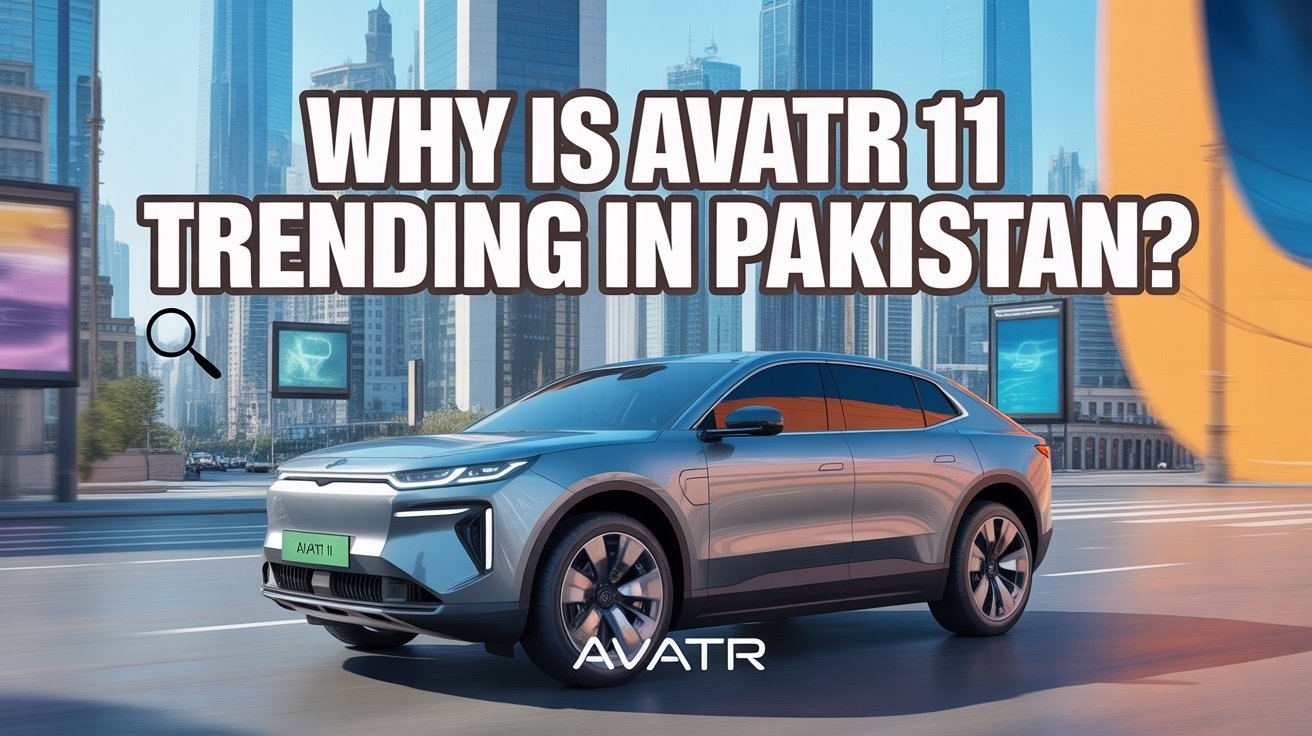
Avatr 11 Price in Pakistan 2025: What This Electric SUV Really Means for Your Wallet
📋 Table of Contents
Why Everyone’s Suddenly Googling “Avatr 11 Price in Pakistan”

Step into any café in Lahore or visit a car dealership in Karachi, and you’ll often hear conversations buzzing about electric SUVs. The Changan Avatr 11 keeps coming up, even though it hasn’t officially arrived in Pakistan yet.
Curious, right?
Not really. Pakistan’s car buyers are at a turning point. For years, most people settled for whatever was available—primarily under 1300cc sedans or older SUVs. Now, they’re asking bigger questions: What if my next car was electric? What if it had smarter tech than my phone? Searches for “Avatr 11 price in Pakistan”, along with interest in “Avatr 11 specs and review”, reflect this growing curiosity, as do detailed inquiries about Changan Avatr 11.
And that’s exactly what makes the Changan Avatr 11 story so compelling. It’s not just about cost—it’s about aspiration meeting technology. While discussions about Avatr 11 price in Pakistan might feel premature since the vehicle hasn’t hit local showrooms, the surge in interest for Avatr 11 specs and review shows that Pakistani buyers are already educating themselves, preparing for a future where electric and tech-forward vehicles could be the new norm.
What Makes Avatr 11 Different from Every Other Electric SUV

Let’s cut through the marketing fluff. Avatr isn’t some startup trying to reinvent the wheel with a skateboard factory in Shenzhen.
It’s a joint venture between three heavyweights:
- Changan Automobile handles the actual car-making part (they’ve been building vehicles since 1862, no joke)
- CATL provides the batteries (they supply Tesla, BMW, and basically everyone else)
- Huawei brings the smart tech and software brain
Think of it as the automotive equivalent of a supergroup. Each member brings something real to the table, not just branding rights.
Most EVs in Pakistan’s conversation right now are either repurposed petrol platforms or budget-focused models prioritizing range over everything else. Avatr 11 takes a different approach: it’s software-first, connected, and treats the car like a tech product that happens to have wheels.
Avatr Spec Sheet: What You’re Actually Getting
Here’s where things get technical, but stick with me—this matters for understanding the Changan Avatr 11 price in Pakistan logic.
| Feature | Details |
|---|---|
| Platform | Dedicated EV architecture (not converted from petrol) |
| Motor Options | Single-motor RWD and dual-motor AWD configurations |
| Battery Supplier | CATL high-capacity lithium packs |
| Smart Systems | Huawei’s HarmonyOS-based cockpit and ADAS |
| Interior Focus | Large integrated displays, luxury-tech hybrid feel |
| Noise Levels | Exceptionally quiet, even by EV standards |
What the Tech Actually Means for Daily Driving

The dual-motor setup isn’t about drag racing (though it’s quick). It’s about all-wheel traction during Lahore’s monsoon floods or navigating Islamabad’s hills in winter.
Huawei’s driver-assistance tech? That’s adaptive cruise control that actually works, lane-keeping that doesn’t fight you, and parking assist that might actually be useful in tight Karachi spaces.
The battery from CATL matters because it’s proven tech, not experimental cells from a no-name supplier. That affects longevity, safety, and resale value—three things Pakistani buyers obsess over.
The Avatr 11 Price in Pakistan Question: Let’s Be Honest

Alright, let’s address the elephant in the room. You came here looking for a number. Here’s the truth bomb:
But let’s do some smart guessing based on how the market actually works.
Why Pricing This Is Complicated
Unlike a phone that costs roughly the same globally (plus taxes), car pricing in Pakistan is a wild ride involving:
- Import duties: EVs sometimes get concessions, but policies change faster than Karachi weather
- Exchange rate chaos: The rupee’s stability matters hugely when you’re importing a vehicle
- Government EV incentives: These exist, sort of, but implementation is spotty
- Distribution model: CBU (completely built unit) vs local assembly changes everything
For context, premium EVs currently imported to Pakistan (like certain Tesla models or higher-end Chinese EVs) range from PKR 2 crore to 4 crore when you account for all duties and clearance costs. The Avatr 11, if it arrives as a CBU with full features, would likely sit somewhere in that range.
That’s not a price prediction. That’s understanding market positioning. Big difference.
Avatr Reviews: What Global Experts Are Actually Saying

International automotive journalists have spent time with the Avatr 11, and their feedback is surprisingly consistent. Not universally positive, not dismissive—just honest.
The Good Stuff
- Build quality exceeds expectations: Solid on the road, none of the creaks or rattles you sometimes get from newer EV brands
- Ride refinement is exceptional: The suspension tuning feels genuinely premium, not harsh like some performance EVs
- Tech integration works: Huawei’s system isn’t just flashy screens—it’s actually intuitive and responsive
- Quietness is next-level: Even compared to other EVs (which are already quiet), this one stands out
The Cautionary Notes
That last point hits different in Pakistan. We’re a market where resale value can make or break a purchase decision. Toyota and Honda dominate partly because everyone knows they can sell them later.
For Pakistani buyers specifically, Avatr reviews would need to address:
- Parts availability (where do you get a replacement door handle?)
- Service network (is there a workshop in your city?)
- Charging infrastructure (can you actually use this daily?)
- Software updates (will Huawei’s system work with Pakistani networks?)
These aren’t sexy tech specs, but they’re what determines if a car survives in Pakistan’s market beyond the initial hype.
Why Pakistan’s Car Market Is Finally Ready (Sort Of) for Avatr 11

Something shifted in Pakistan’s automotive landscape during 2024 and 2025. It wasn’t just one thing—it was a combination of economic recovery, changing buyer priorities, and delayed demand finally being released.
The Recovery Nobody Expected
After the 2022-2023 disaster years (record inflation, currency collapse, interest rates touching the sky), Pakistan’s auto sector bounced back surprisingly strong in 2024.
| Market Segment | 2024-2025 Trend |
|---|---|
| Budget Cars (800-1000cc) | Strong recovery—buyers seeking affordability |
| Mid-Range Sedans | Still under pressure—squeezed from both ends |
| Premium SUVs | Surprising growth—aspirational buyers returning |
| Electric Vehicles | Rising curiosity but limited actual sales |
Notice that split? The market is polarizing. Budget buyers want cheap. Premium buyers want features and status. The traditional middle is getting squeezed.
The Middle-Class Dilemma

Here’s where it gets complicated for vehicles like the Avatr 11.
Pakistan’s middle class isn’t one thing—it’s a spectrum. You’ve got:
- Lower-middle: Just achieved car ownership, focused purely on affordability and fuel economy
- Core middle: Wants to upgrade but stuck between rising car prices and stagnant incomes
- Upper-middle: Actively seeking premium features, tech, and status markers
The Changan Avatr 11 would appeal to that last group—the upwardly mobile professionals, successful business owners, and dual-income households who want their car to reflect their tech-forward lifestyle.
So yes, most Pakistanis can’t afford an Avatr 11. But that’s not the point. The question is: does a viable market exist for premium, tech-forward EVs? Based on 2024-2025 trends, the answer is cautiously yes.
What Happens Next: The Real Significance of Avatr 11

Whether or not the Avatr 11 actually launches in Pakistan (still a big “if”), its growing search interest tells us something important about where the market is heading.
Three Trends Worth Watching

1. Chinese Brands Are Gaining Credibility
Ten years ago, “Chinese car” was almost an insult in Pakistan. Today? Changan, MG, and others are legitimate options. The Avatr brand, backed by proven tech partners, benefits from that credibility shift.
2. Software Is Becoming a Dealbreaker
Pakistani buyers increasingly expect their cars to have smartphone-level software. Basic infotainment doesn’t cut it anymore. Huawei’s involvement in Avatr 11 speaks directly to that demand.
3. EV Interest Is Evolving
Early EV curiosity in Pakistan was all about “petrol savings.” Now buyers are asking about acceleration, tech features, and overall experience. That’s a mature market developing.
What This Means for Other Brands
Even if Avatr 11 never officially arrives, its buzz is already pushing other brands to think differently. Toyota and Honda can’t just coast on brand loyalty anymore. Hyundai and Kia are watching. Local assemblers are wondering if they should partner with EV-focused Chinese brands.
Competition breeds innovation, and consumer interest in vehicles like Avatr 11 signals to the entire industry that Pakistani buyers are ready for the next generation of vehicles.
Timeline Speculation (Take with Salt)
If Avatr were to enter Pakistan, here’s a realistic timeline:
- 2025-2026: Test market response, gauge import feasibility
- 2026: Possible official distributor announcement
- 2027: Earliest realistic launch date for limited CBU imports
- Beyond 2027: Depends entirely on sales success and policy environment
That’s assuming everything goes well, which in Pakistan’s automotive sector is a generous assumption.
Frequently Asked Questions About Avatr 11