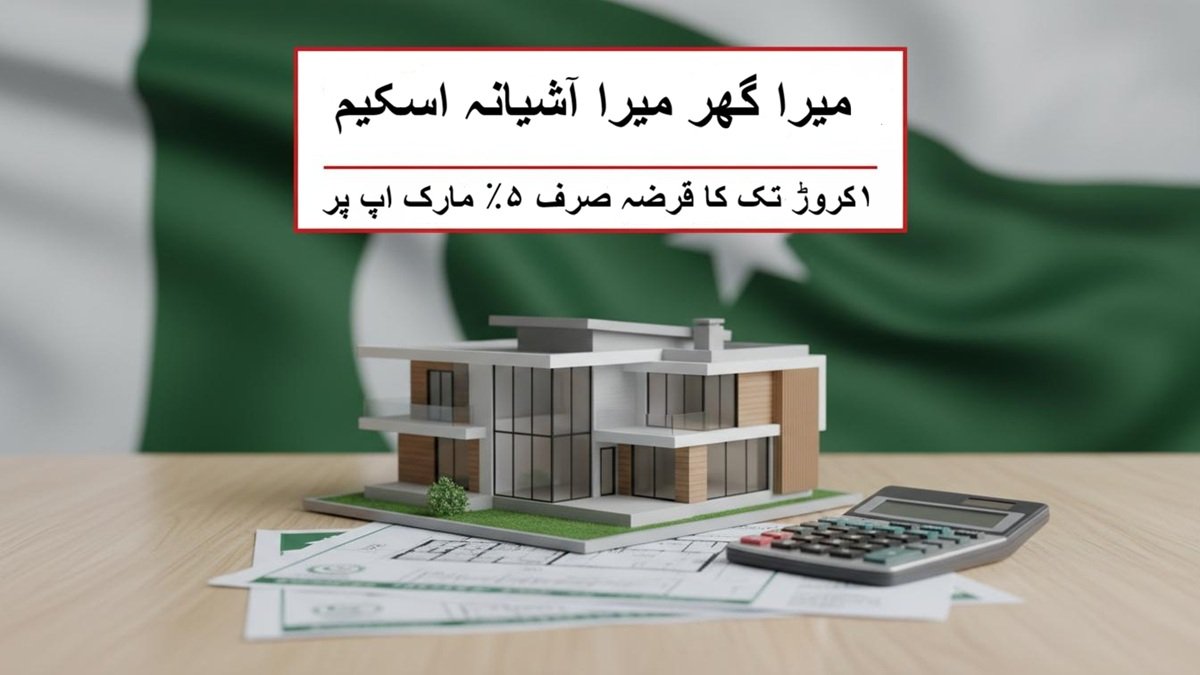
Big Relief for Homebuyers: Mera Ghar Mera Aashiana Loan Limit Raised to Rs10 Million
Pakistan has taken a major step to support middle and lower income families. The government has increased the Mera Ghar Mera Aashiana 10 million loan limit to Rs10 million. At the same time, it fixed the markup rate at 5 percent for the first 10 years.
This decision was approved by the Economic Coordination Committee in February 2026. According to official updates shared by the Ministry of Finance, the aim is to finance around 500,000 housing units in four years.
For families struggling with rising rents, this is not just a policy update. It could change long term financial security.
📋 Table of Contents
- What Exactly Has Changed
- Why This Decision Matters Now
- Loan Structure and Installment Plan Explained
- Who Qualifies for the Rs10 Million Loan
- Step by Step Application Process
- Eligible Property Sizes Under New Rules
- Real Installment Comparison and Affordability
- What Happens After 10 Years
- Economic and Market Impact
- Past vs Present Comparison
- What Borrowers Should Carefully Consider
- FAQs
What Exactly Has Changed
Previously, loan caps ranged between Rs2 million and Rs3.5 million. Many urban homes cost far more than that. As a result, families still depended heavily on personal savings.
Now, under the expanded scheme regulated by the State Bank of Pakistan, the maximum financing is Rs10 million. The markup has been reduced to a fixed 5 percent for the first decade.
Here is a simple comparison between the old and new structure:
| Feature | Old Structure | New Structure |
|---|---|---|
| Maximum Loan | Rs2 to 3.5 million | Rs10 million |
| Markup | Around 8% | Fixed 5% (10 years) |
| House Size | Up to 5 marlas | Up to 10 marlas |
| Flat Size | 1,360 sq ft | 1,500 sq ft |
| Financing | Up to 90% | Up to 90% |
According to SBP housing finance guidelines, participating banks follow strict verification rules. This means higher limits but controlled lending.
Why This Decision Matters Now
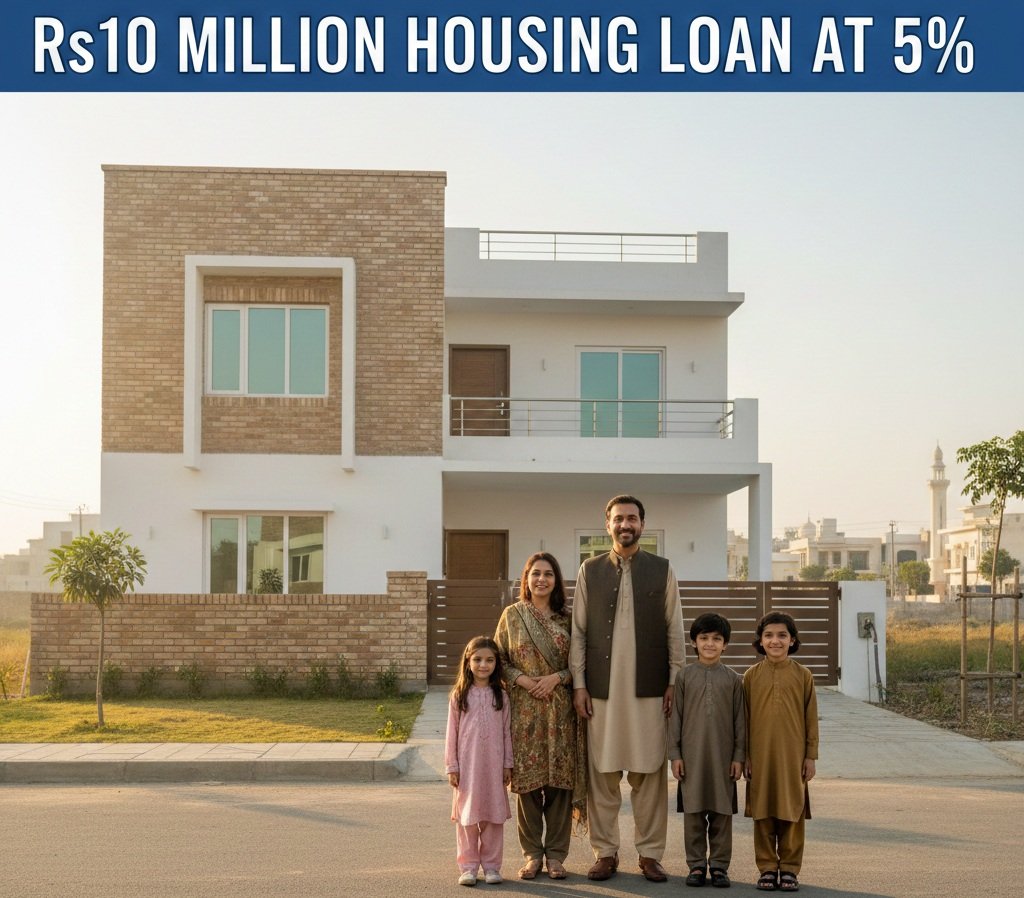
Housing shortages in Pakistani cities have pushed rents to record highs.
Pakistan faces a serious housing shortage. Past policy documents from the Planning Commission of Pakistan have highlighted a multi million unit gap.
Meanwhile, inflation has increased construction costs. Steel and cement prices rose sharply after 2022. Consequently, property prices in major cities have climbed.
In cities like Rawalpindi and Lahore, rent for a 5 marla house has become difficult for many salaried families. The updated Mera Ghar Mera Aashiana scheme directly targets urban affordability.
Moreover, the new Rs10 million cap matches real market listings in middle class areas. Earlier limits often fell short by a large margin.
In simple words, the scheme now reflects ground reality better than before.
Loan Structure and Mera Ghar Mera Aashiana Installment Plan Explained
The key attraction is the 5 percent fixed markup for 10 years. During this period, the government covers the difference between subsidized and market rates.
After 10 years, the loan shifts to a market linked rate, usually based on KIBOR plus spread.
Here is an estimated monthly installment comparison based on standard banking EMI formulas:
| Loan Amount | EMI at 5% (Subsidized) | EMI at 22% (Market Example) |
|---|---|---|
| Rs2 million | ~Rs13,000 | ~Rs37,000 |
| Rs5 million | ~Rs33,000 | ~Rs92,000 |
| Rs10 million | ~Rs66,000 | ~Rs185,000 |
Clearly, the difference is substantial. Many banks offer an online Mera Ghar Mera Aashiana installment calculator. However, applicants should always verify final figures directly from their bank branch.
Who Qualifies for the Rs10 Million Loan
Eligibility remains focused on first time homeowners.
Basic requirements include:
- Pakistani citizen with valid CNIC
- No ownership of house or plot anywhere in Pakistan
- Age 21 to 60 for salaried persons
- Age 25 to 70 for self employed
- Stable monthly income meeting debt burden rules
Banks assess the debt burden ratio, usually between 33 to 50 percent depending on policy tier.
Income can be combined with spouse or immediate family to qualify for larger financing.
Importantly, applicants must have a clean repayment record. Banks follow SBP prudential regulations while reviewing applications.
Step by Step Application Process

Owning a home just got more possible for Pakistani families. Photo
There is no central government online portal. Applications are processed through participating banks supervised by SBP.
Visit the State Bank of Pakistan website for the latest housing finance circulars.
CNIC copies, salary slips or business income proof, six month bank statements, property ownership or purchase documents, utility bill and photographs.
Participating institutions include Habib Bank Limited, Meezan Bank, and Allied Bank Limited.
The bank verifies income, property documents, and credit history. Property valuation is also conducted.
Funds are transferred directly to seller or builder. Repayment begins through auto debit. Approval usually takes two to four weeks if documentation is complete.
Eligible Property Sizes Under New Rules
Under the expanded tier:
- Houses up to 10 marlas qualify
- Flats up to 1,500 square feet qualify
Earlier, many 7 or 10 marla homes were outside financing limits. Now, more mid sized urban homes fall within the scheme.
However, properties must meet legal verification standards. Clear title and approved layout plans are necessary.
This is important because incomplete documentation often causes delays.
Real Installment Comparison and Affordability
For a Rs10 million loan:
EMI during subsidy period is around Rs66,000
After subsidy, EMI may rise depending on market rates
To remain safe, financial advisors suggest:
- Keep EMI below 40 percent of household income
- Save emergency funds equal to six months of expenses
- Consider partial prepayment before year 10
Although the scheme reduces initial burden, long term planning remains essential.
What Happens After 10 Years
After the first decade, the 5 percent subsidy ends. The remaining principal is recalculated at market linked rate.
If interest rates remain high, installments could increase significantly.
Therefore, borrowers should treat the first 10 years as a window to reduce principal aggressively.
SBP guidelines also mention that subsidy stops if the loan becomes non performing. Planning early avoids future stress.
Economic and Market Impact
Expanded housing finance typically boosts construction and creates jobs. Photo: Pexels
Housing finance expansion usually boosts construction activity. Cement producers, steel manufacturers, and labor markets benefit from increased demand.
In addition, mortgage growth strengthens formal banking channels.
However, economists caution that supply must increase alongside demand. Otherwise, property prices may rise.
Balanced growth will determine whether the policy truly improves affordability. According to the International Monetary Fund, housing finance expansion works best when paired with policies that increase housing supply.
Past vs Present Comparison
Earlier housing initiatives offered smaller loans with slightly higher markup.
As a result:
- Many families qualified but could not find suitable homes
- Urban coverage remained limited
- Awareness gaps slowed uptake
Now, the higher cap aligns better with actual city property sizes. Compared to last year, the policy looks more realistic and market aligned.
What Borrowers Should Carefully Consider
Before applying, families should:
- Compare fixed and post subsidy rates
- Confirm total repayment amount
- Verify property legal status
- Avoid over stretching income
A home loan is a long term commitment. While the Mera Ghar Mera Aashiana installment plan offers relief, careful budgeting remains critical.
Frequently Asked Questions
Final Insight: Opportunity With Responsibility