
New Net Metering Policy Pakistan 2026 Explained: What NEPRA’s Solar Net Billing Really Means for Your Bill
Pakistan’s energy landscape is shifting. The net metering policy Pakistan 2026 introduces a new net billing mechanism that changes how solar users are compensated for excess electricity. Here’s what you need to know about NEPRA’s latest regulations and how they affect your solar investment.
Understanding the New Net Metering Policy Pakistan 2026
The National Electric Power Regulatory Authority (NEPRA) has officially transitioned from the traditional net metering system to a net billing mechanism. This change fundamentally alters how residential and commercial solar users are compensated for the electricity they export back to the grid.
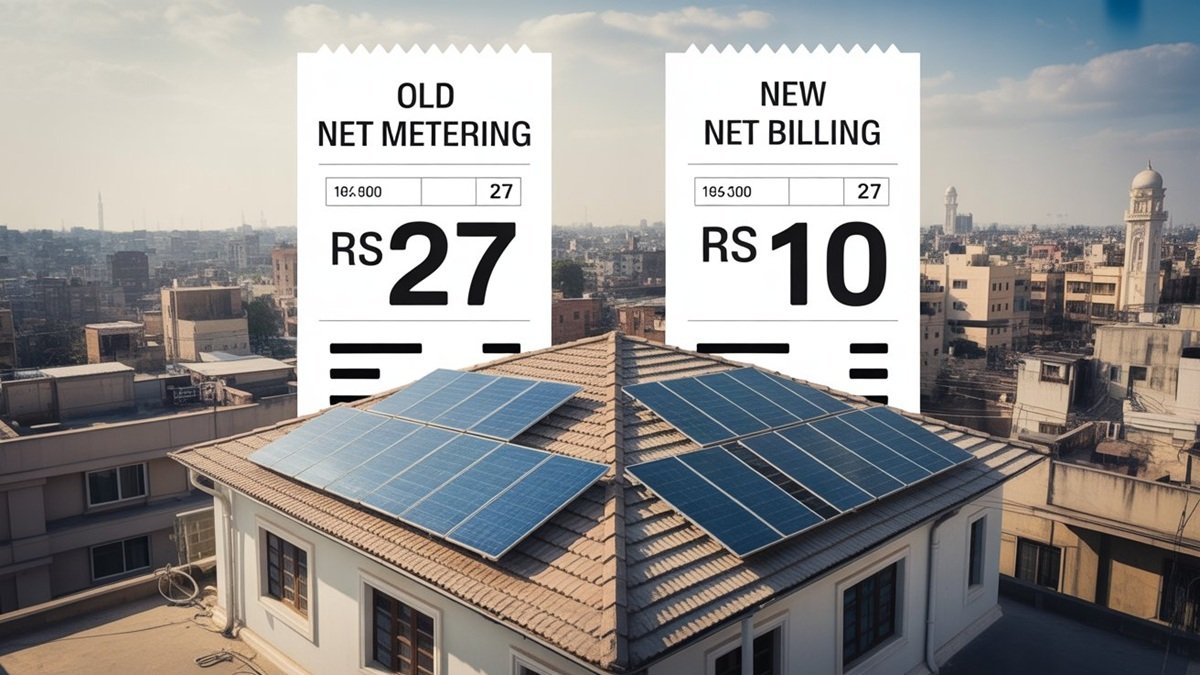
Under the previous net metering system, consumers received credit at the retail electricity rate for excess solar generation. The new policy, however, compensates users at a significantly lower rate—approximately Rs9–11 per unit, based on the national average purchase price.
Key Changes at a Glance
The transition from net metering to net billing represents a fundamental shift in Pakistan’s renewable energy policy. Instead of receiving full retail price credits for exported electricity, solar users now receive compensation based on wholesale power purchase rates. This change is designed to reduce the financial burden on distribution companies (DISCOs) while still promoting solar adoption.
What is Net Billing vs. Net Metering?
Understanding the difference between these two systems is crucial for anyone considering or already using solar power in Pakistan.
| Aspect | Net Metering (Old) | Net Billing (New) |
|---|---|---|
| Export Rate | Retail rate (Rs25–35/unit) | Average purchase price (Rs9–11/unit) |
| Billing Cycle | Monthly credit adjustment | Real-time export tracking |
| Savings Potential | High for low consumption | Favors high self-consumption |
| Grid Impact | Higher subsidy burden on DISCOs | Reduced financial strain |
Who is Affected by the New Policy?
Important Distinction
Existing Net Metering Users: If you installed your solar system before the policy change and have an active net metering agreement, your contract remains valid until its expiry. You will continue to receive benefits under the old system for the duration of your agreement.
New Applicants: Anyone applying for solar net metering after the policy implementation must comply with the new net billing rules. This includes both residential and commercial installations.
Export Rate Under New Net Metering Policy Pakistan 2026
The export rate is perhaps the most significant change. Under the new net metering policy Pakistan 2026, excess electricity exported to the grid is compensated at the national average purchase price, which currently ranges between Rs9 and Rs11 per unit.
This is substantially lower than the retail electricity rate that consumers pay, which can be Rs25–35 per unit or higher depending on consumption slabs and DISCO rates. For more context on Pakistan’s energy pricing, you can read about the complete solar net metering policy breakdown.
Why the Lower Export Rate?
The reduced export rate reflects the actual cost at which DISCOs purchase power from generation companies. The retail rate includes transmission, distribution, taxes, and other charges. By compensating solar users at the purchase price, the policy aims to prevent cross-subsidization where non-solar consumers effectively subsidize solar users.
Impact on Your Electricity Bill
The practical impact of the new policy varies significantly based on your consumption patterns and solar system design.
Scenario 1: High Self-Consumption (Ideal)
If your solar system is sized correctly and you consume most of the electricity you generate during daylight hours, the impact is minimal. You still save money by reducing grid electricity purchases. The lower export rate only affects the surplus you send back to the grid.
Example: A household that consumes 600 kWh monthly and generates 550 kWh from solar, with only 50 kWh exported, will see limited impact from the reduced export rate while still enjoying substantial savings on avoided grid purchases.
Scenario 2: Low Self-Consumption (Challenging)
If you work away from home during the day and export significant solar generation while purchasing grid electricity at night, the new policy significantly reduces your financial benefits. Your exported units earn Rs9–11 while you purchase grid electricity at Rs25–35+.
Example: A household generating 800 kWh but only consuming 300 kWh during solar hours exports 500 kWh at low rates while buying 500 kWh at high rates—resulting in much lower net savings.
Is Hybrid Solar Better Under New Rules?
Yes. Hybrid solar systems with battery storage have become significantly more attractive under the new net billing policy. Here’s why:
- Maximize Self-Consumption: Store excess daytime generation for evening use instead of exporting at low rates
- Reduce Grid Dependency: Use stored power during peak evening hours when grid electricity is most expensive
- Load Shedding Protection: Continue operations during power outages
- Better ROI: While initial costs are higher, long-term savings improve significantly
Battery technology costs are decreasing, making hybrid systems more economically viable. For those interested in alternative power solutions, exploring satellite internet options like Starlink shows how technology is transforming Pakistan’s infrastructure landscape.
Application Process for New Net Metering
Despite the policy changes, applications for solar net metering continue. The process remains largely similar:
Step-by-Step Application
- System Design: Work with a NEPRA-certified installer to design an appropriately sized system
- Documentation: Prepare required documents including CNIC, property ownership proof, and electricity bill
- DISCO Application: Submit application to your local distribution company (LESCO, K-Electric, IESCO, etc.)
- Technical Inspection: DISCO conducts site inspection and feasibility assessment
- Agreement Signing: Sign the net billing agreement under new policy terms
- Installation & Testing: Install system with certified equipment and pass DISCO inspection
- Meter Installation: DISCO installs bidirectional smart meter for net billing
- Connection: System is connected and activated under the new net billing mechanism
For other utility connections, the process is similar to applying for services like Sui gas new connections through SNGPL, requiring proper documentation and technical approval.
Official Sources for Policy Updates
To stay informed about the latest developments in Pakistan’s solar policy, rely on these authoritative sources:
- NEPRA Official Website: nepra.org.pk – Primary regulatory authority for all power sector policies
- Ministry of Energy: power.gov.pk – Government policy announcements and updates
- Your Local DISCO: Contact your distribution company directly for area-specific guidelines (LESCO, K-Electric, IESCO, MEPCO, GEPCO, FESCO, PESCO, HESCO, SEPCO, QESCO)
- Alternative Energy Development Board: aedb.org – Renewable energy development initiatives
Strategic Recommendations for Solar Users
For Prospective Solar Buyers
- Size your system based on daytime consumption patterns, not total monthly usage
- Consider hybrid systems with battery storage for better self-consumption
- Conduct detailed ROI calculations using the new Rs9–11 export rate
- Evaluate energy-efficient appliances that can run during solar hours
- Work with NEPRA-certified installers who understand the new policy implications
For Existing Net Metering Users
- Your current agreement remains valid—no immediate changes to your benefits
- Start planning for contract expiry and potential transition to net billing
- Consider adding battery storage before agreement renewal
- Monitor official NEPRA announcements for grandfathering policies or extensions
- Keep all agreement documentation for reference during transition period
Why This Policy Change Matters
The shift from net metering to net billing is part of Pakistan’s broader energy sector reforms. Understanding the underlying reasons helps contextualize the change:
Circular Debt Mitigation
Pakistan’s power sector faces a chronic circular debt crisis exceeding Rs2.5 trillion. The previous net metering system, while encouraging solar adoption, created financial pressures on DISCOs who compensated solar users at retail rates while purchasing their exported power at much lower costs. This contributed to cross-subsidization issues.
Grid Stability
Unpredictable solar exports during peak generation hours can create grid management challenges. The new policy encourages self-consumption and battery storage, which reduces sudden power injections into the distribution network and improves overall grid stability.
Sustainable Growth
While the old policy drove rapid solar adoption, it was financially unsustainable for the power sector. The new mechanism aims to balance renewable energy growth with fiscal responsibility, ensuring long-term viability of Pakistan’s solar program.
Frequently Asked Questions
Is solar net metering open now in Pakistan?
Yes. Applications continue under the new net billing mechanism.
What is the export rate under the new net metering policy Pakistan 2026?
Around Rs9–11 per unit, based on the national average purchase price.
Will existing users lose benefits immediately?
No. Existing contracts remain valid until expiry.
Is hybrid solar better under new rules?
Yes. Higher self-consumption improves savings significantly.
Where can I check official policy updates?
Visit NEPRA (nepra.org.pk) and Ministry of Energy (power.gov.pk).

Disclaimer
This article is based on publicly available regulatory notifications and official government sources. Readers should always verify updates directly through NEPRA and their respective DISCO portals. Energy policies are subject to change, and individual circumstances may vary. Consult with certified solar installers and your local distribution company for personalized advice before making solar investment decisions.