Pakistan’s $7 Trillion Mineral Wealth Claim, Explained
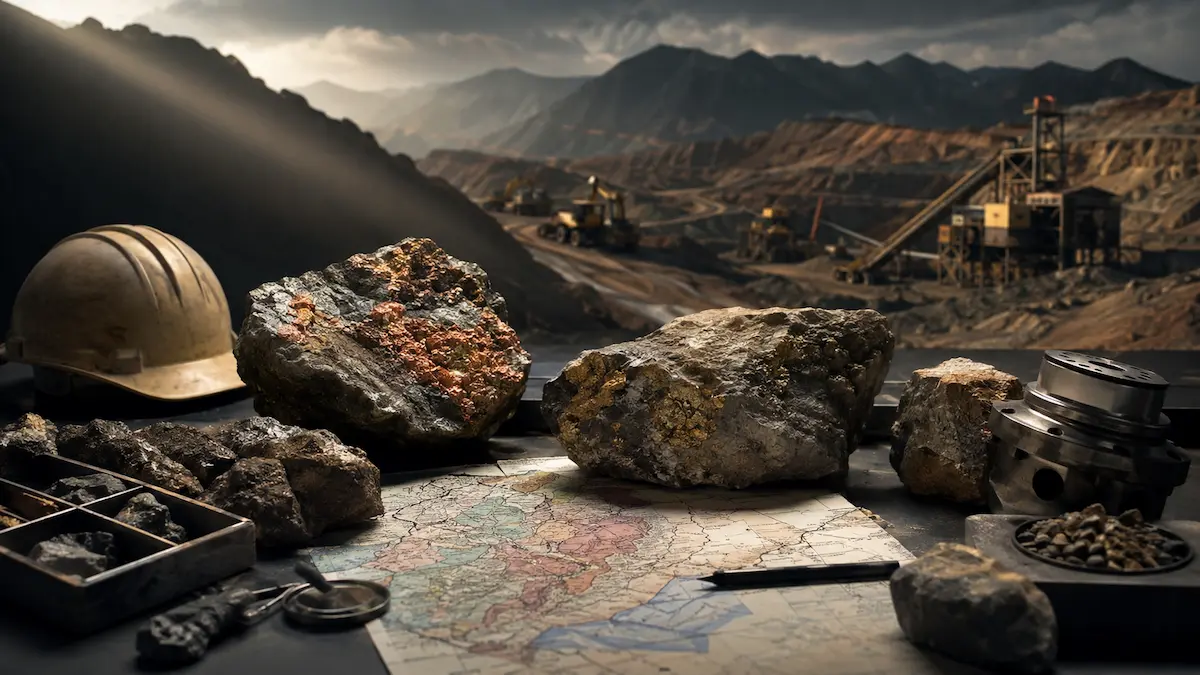
Planning Minister Ahsan Iqbal told the Asia Society Policy Institute on August 25, 2026 that Pakistan’s mineral endowment is estimated at more than $7 trillion. The figure describes potential value locked underground, not cash sitting in a bank.
Resource Is Not the Same as Reserve
Finding a mineral deposit is only step one. Before it earns a single rupee, it needs exploration, feasibility studies, environmental approval, roads, power and financing. Copper or gold sitting untouched in the ground has no market value until someone can dig it out safely and sell it at a profit.
Why the $7 Trillion Figure Is Not New
This is not a fresh discovery. Pakistan’s Planning Commission cited a similar $6 trillion to $7 trillion range back in January 2026. What changed in August is the political push, not the geology.
Iqbal tied the number to a bigger goal, pulling long term foreign capital into Pakistan’s mining sector while keeping ties with both Washington and Beijing intact.
What Has Actually Changed Since 2025
Real movement is visible. In September 2025, US Strategic Metals signed an MoU with Pakistan’s Frontier Works Organisation worth about $500 million for critical minerals development and processing. A shipment of Pakistani critical mineral material reportedly reached the United States in October 2025.
An MoU is a framework, not proof the full amount has been spent. But it moved the conversation from talk to paperwork with dollar figures attached.
The US Connection and Reko Diq
The clearest sign of American interest is Reko Diq, the copper and gold project in Balochistan. The US Export Import Bank authorized $1.25 billion in financing for the project, listed in its official transaction database under Pakistan’s mining sector, according to US EXIM Bank’s transaction records.
That financing is expected to support American equipment and services, tying Pakistani mineral output directly to US industry. Pakistan’s real opportunity is not just selling raw ore. It is building the refining and processing capacity around it, similar to how the country is trying to grow its own local high power infrastructure around new tech sectors.
Why Reko Diq Is the Real Test
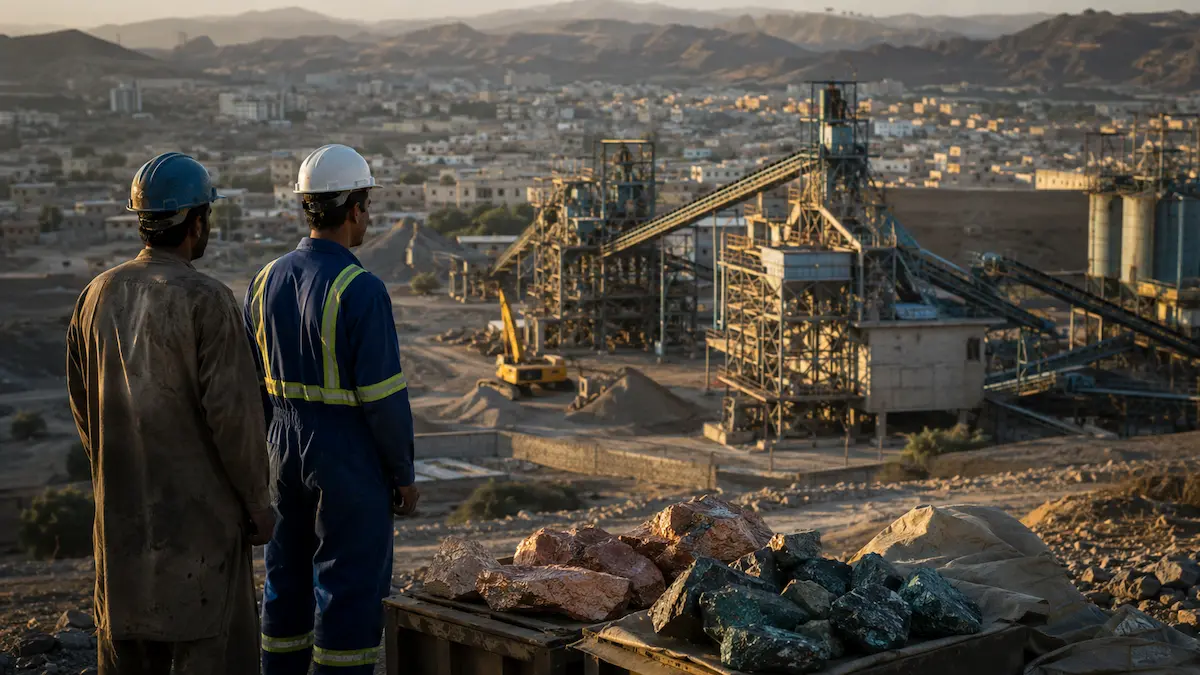
Reko Diq is owned 50 percent by Barrick, 25 percent by Pakistani federal state owned enterprises, and 25 percent by the Government of Balochistan. Barrick’s updated feasibility study puts the total capital requirement for both project phases at about $8.83 billion on a full project basis.
First production was once targeted for late 2028. In April 2026, Barrick said it had slowed development because of rising security risks and extended its review until mid 2027. The project shows both sides of Pakistan’s mineral story. Huge potential, and real practical obstacles.
Pakistan’s Biggest Mining Challenges
Security
Barrick directly linked its slower pace at Reko Diq to security conditions in Balochistan. Mining projects need years of construction and billions in investment, so investors need confidence that sites and workers stay safe over the long run.
Policy Stability
Licensing, leasing, royalties and taxation involve both federal and provincial governments. Sindh’s Mines and Mineral Development Department, for example, handles its own licensing and royalty collection. Coordination between Islamabad and the provinces matters as much as the geology itself.
Infrastructure
Many mineral sites sit far from cities. Without roads, electricity, water and processing plants nearby, even a rich deposit can stay economically out of reach.
The China Factor
Iqbal said closer ties with the United States would not come at China’s expense, calling Beijing a trusted partner. China remains deeply involved in Pakistan through CPEC and infrastructure investment, while Washington is pushing for stronger access to critical mineral supply chains.
Pakistan’s challenge going forward is balancing investment from both sides while keeping ownership, processing and export rules clear, a balancing act that echoes broader questions raised when firms like Apple weigh expanding operations inside Pakistan.
What Mineral Development Could Mean for Pakistanis
Potential gains include more jobs, higher exports, government royalties, new roads, stronger local suppliers, and demand for technical skills. None of this happens automatically.
The biggest long term gain would come from processing and manufacturing inside Pakistan rather than exporting raw ore. Copper, for instance, feeds into cables, electrical equipment and wider industrial chains, the kind of value addition Pakistan is also chasing in its energy storage and battery incentive plans.
Key Facts at a Glance
| Question | What the Evidence Shows |
|---|---|
| Is the $7 trillion figure new? | No, similar $6 to $7 trillion estimates were cited earlier in 2026 |
| Is it cash or proven reserves? | No, it is an estimate of mineral endowment |
| Is US investment already happening? | Yes, a $500 million MoU with US Strategic Metals was signed in 2025 |
| Has financing reached a major mine? | Yes, US EXIM authorized $1.25 billion for Reko Diq |
| What is the flagship project? | Reko Diq copper and gold project in Balochistan |
| What is the main concern? | Security, financing, infrastructure and policy stability |
What Needs to Happen Next
Progress should be judged by measurable steps, not the headline number. Watch for more geological exploration, independent feasibility studies, financing that actually closes, new processing capacity, supporting infrastructure, predictable licensing rules, and visible benefits for communities near mining sites.
The $7 trillion figure describes potential. What matters to Pakistan is the part that can actually be explored, financed, extracted, processed and sold.
Frequently Asked Questions
Is Pakistan really sitting on $7 trillion in minerals?
The Planning Ministry says Pakistan’s mineral endowment is estimated at more than $7 trillion. It should not be read as proven reserves or cash in hand.
Which minerals matter most for Pakistan?
Copper, gold, chromite, coal, salt and other industrial minerals form the core of Pakistan’s resource base, with copper and antimony drawing the most recent investor attention.
What is Reko Diq?
Reko Diq is a major copper and gold mining project in Balochistan, owned 50 percent by Barrick, 25 percent by Pakistani federal state owned enterprises, and 25 percent by the Government of Balochistan.
How much US financing has been approved for Reko Diq?
The US Export Import Bank has authorized $1.25 billion for the project, according to its official transaction database.
Why has Reko Diq faced delays?
Barrick said in April 2026 that rising security risks led it to slow development and extend its project review until mid 2027.
Will ordinary Pakistanis benefit if minerals are extracted?
Potential benefits include jobs, exports, royalties, taxes and infrastructure. The real payoff depends on how much processing and manufacturing happens inside Pakistan.