
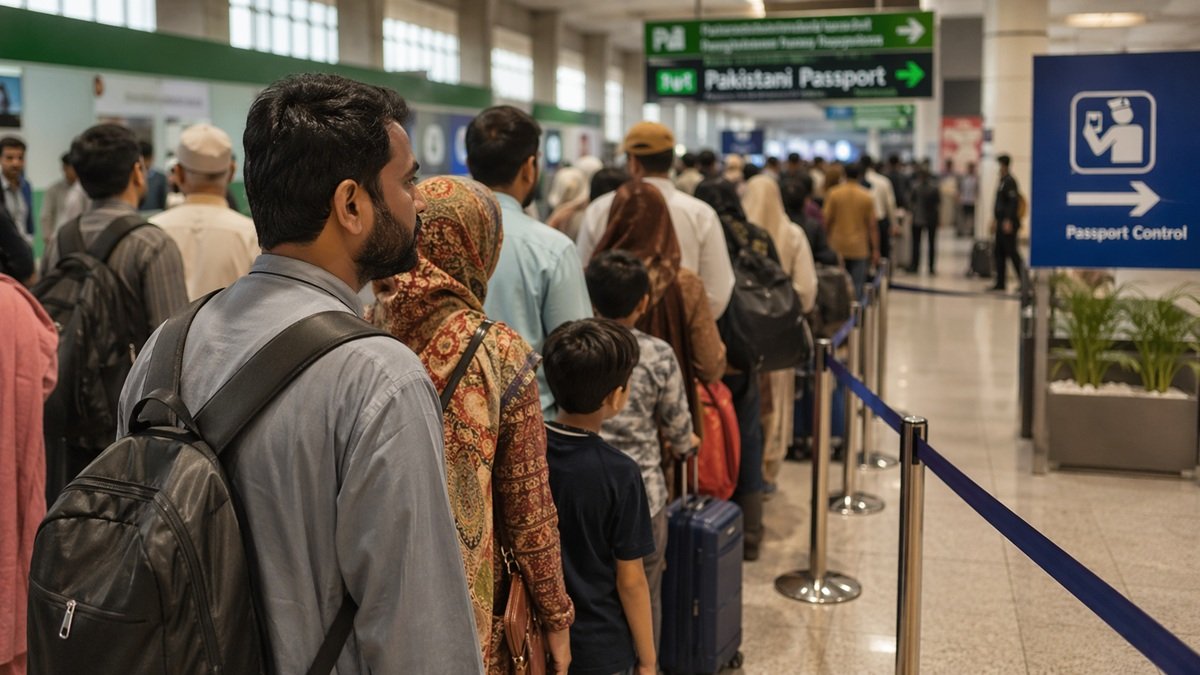
Pakistan is making a major change at its biggest airports. Starting with Islamabad, the government has approved a single-point checking system that merges security, immigration, and customs into one fast checkpoint. The goal is clearance in under 45 seconds. For millions of travelers from cities like Rawalpindi, Lahore, and Karachi, this could change everything about how airport travel feels.
What Is the Single-Point Checking System?
Right now, passengers at Pakistani airports move through multiple separate counters. Security checks at one point. Immigration at another. Customs somewhere else. Each step adds waiting time.
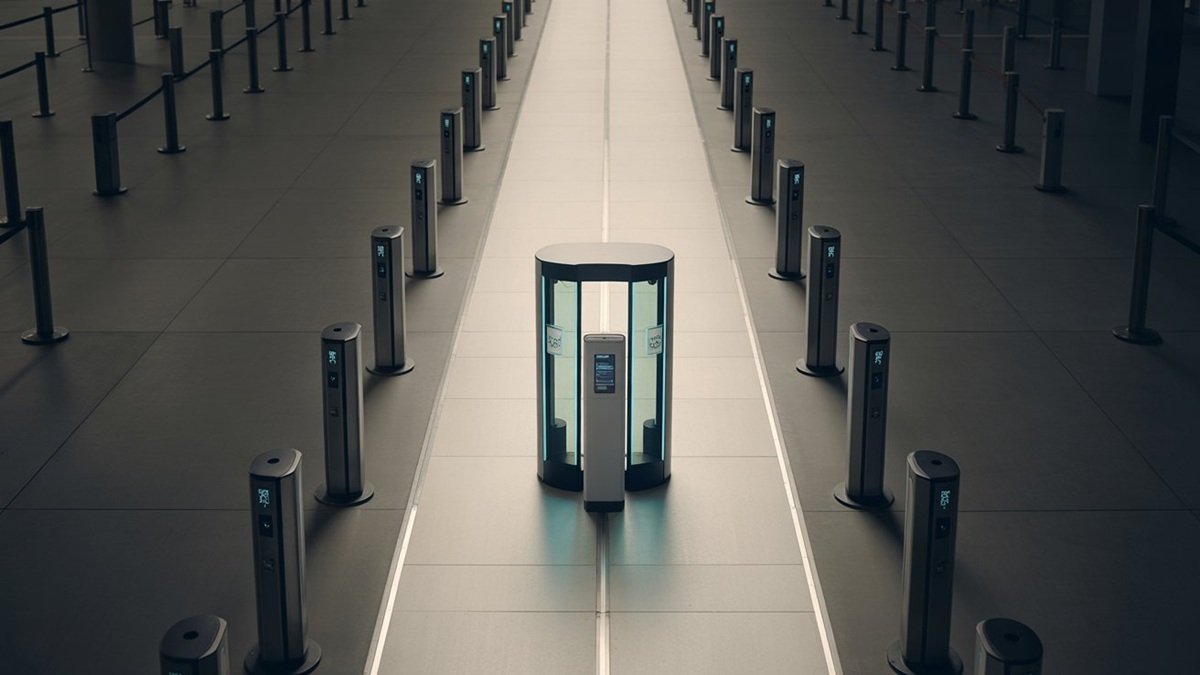
The new system changes that. All three checks happen at one unified checkpoint. You walk up, scan your passport, confirm your identity biometrically, pass through a scanner. Done.
This follows a model already used at top airports worldwide. Many travelers from Pakistan who have passed through Dubai or Singapore know how fast the process can be. Now Pakistan is moving in that direction.
Key Decisions from the April 2026 Meeting
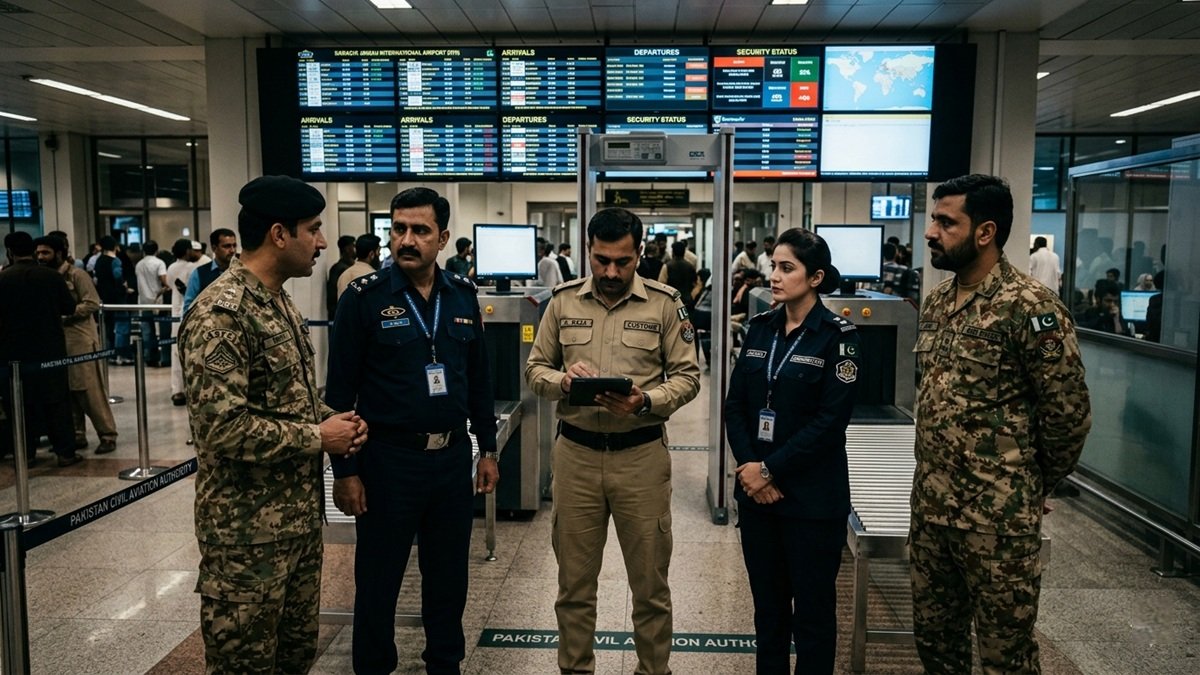
On April 21, 2026, a high-level government meeting formally approved this system. Interior Minister Mohsin Naqvi chaired the session.
Who was in the room: Officials from the Federal Investigation Agency, Airport Security Force, and Anti-Narcotics Force all joined the decision. This was not a one-agency call. It was a coordinated commitment across the entire security structure.
Key outcomes from the meeting included joint counters for all agencies, advanced scanning systems, biometric e-gate installation, and a clearance target of under 45 seconds per passenger.
Why Pakistan Needs This Change Now
Anyone who has traveled through Jinnah International or Allama Iqbal International knows what long queues feel like. Security checks alone can take 20 to 30 minutes at peak hours. Add immigration. Add customs. A traveler can easily lose an hour before even reaching the gate.
The pressure is real. Pakistan’s air travel demand has increased sharply. According to the Pakistan Civil Aviation Authority, passenger traffic continues to grow year on year. The existing manual system was not built for this volume.
The upgrade is not just about comfort. It is about economic efficiency. Faster airports mean better trade, stronger tourism, and improved international reputation.
Step-by-Step: How the New System Works
The process has been designed to be simple. Here is what a traveler can expect:
- Passenger reaches the unified checkpoint
- Passport is scanned at the counter
- Biometric verification begins instantly
- Security scan runs at the same point
- System checks national and international databases in real time
- Clearance granted within seconds
If the system flags anything, the passenger goes for manual review. That process remains available as a backup.
Multiple queues collapse into one. No more moving between counters. No more waiting for one agency while another is idle.
Technologies Behind the Upgrade
The system runs on tools that are already proven at international airports. These include:
- Biometric e-gates for fast passport holders
- Facial recognition for identity confirmation
- AI-powered X-ray scanners that flag items automatically
- Full-body scanners to reduce manual pat-downs
According to the International Civil Aviation Organization (ICAO), biometric systems speed up border control significantly while maintaining security standards. Pakistan is now aligning with those guidelines.
Integration with NADRA and Security Databases
The real strength of this system is the database network behind it. When a passport is scanned, it does not just read the chip. It pulls data from multiple sources at once.
Connected databases include:
- NADRA (National Database and Registration Authority)
- Interpol international watchlist
- FIA’s Exit Control List
- Anti-Narcotics Force records
NADRA’s digital identity system ensures accurate biometric matching. Fraud risk drops. Security tightens. And it all happens before the passenger finishes blinking.
Airports in the First Phase
The rollout starts with the three busiest international airports in Pakistan:
- Islamabad International Airport (pilot launch)
- Allama Iqbal International Airport, Lahore
- Jinnah International Airport, Karachi
Sialkot International Airport may also be added in a later expansion phase.
These three airports handle the bulk of Pakistan’s international passenger traffic. Starting here makes practical sense and allows for real-world testing before any nationwide rollout.
Global Comparison: Where Pakistan Stands
This upgrade brings Pakistan into closer alignment with leading airports worldwide. The gap right now is significant, but the direction is right.
| Airport | System Used | Average Clearance Time |
|---|---|---|
| Singapore Changi | Full biometric | Under 20 seconds |
| Dubai International | Smart gates | 9 to 15 seconds |
| Heathrow, London | Risk-based system | Around 5 minutes |
| Pakistan (current) | Manual multi-counter | 20 to 30 minutes |
| Pakistan (new target) | Single-point biometric | Under 45 seconds |
According to the International Air Transport Association (IATA), digital systems can improve passenger flow by up to 50 percent. Pakistan’s target is within that realistic range.
Travelers planning international trips from Pakistan can also check this guide on Sri Lanka ETA for Pakistani citizens for destination-specific travel updates.
Local Impact on Pakistani Travelers
For frequent travelers, this change is significant. During peak travel hours, particularly for Hajj and Umrah departures, Pakistani airports become extremely crowded. For those traveling for religious purposes, the Makkah crowd tracker for Hajj has become a useful planning tool alongside airport timing.
What frequent travelers can expect: Reduced waiting time by up to one hour during peak periods. Less crowding near immigration. Faster baggage access because passengers clear faster overall. Better security without longer queues.
Challenges and Expert Concerns
Aviation experts and officials linked with the Pakistan Civil Aviation Authority widely support this as a necessary upgrade. However, challenges remain before it delivers on its promise.
Key concerns to watch:
- Staff retraining across multiple agencies
- Coordination between FIA, ASF, and ANF at shared counters
- Technical reliability of integrated systems
- Handling edge cases where biometrics fail to match
Early pilot testing at Islamabad will help identify weak points. How the government responds to early failures will determine whether the nationwide rollout succeeds or stalls.
Old System vs New System
| Feature | Old System | New System |
|---|---|---|
| Checkpoints | Multiple separate counters | Single unified point |
| Verification method | Manual document check | Biometric and AI-powered |
| Database check | Slow or manual lookup | Real-time automated |
| Average clearance | 20 to 30 minutes | Target under 45 seconds |
| Queue management | Separate queues per agency | Single combined queue |
What Happens Next
The rollout follows a phased approach. According to official government announcements, the expected sequence is:
- Pilot launch at Islamabad International Airport
- Expansion to Allama Iqbal International, Lahore
- Rollout to Jinnah International, Karachi
- Performance evaluation across all three
- Nationwide rollout to remaining airports
Official timelines will be confirmed through government channels and the Civil Aviation Authority. No firm date has been set for completion beyond the initial pilot.
Key Facts at a Glance
| Feature | Details |
|---|---|
| System type | Single-point checking |
| Technology used | Biometric e-gates, facial recognition, AI scanners |
| Clearance target | Under 45 seconds |
| First airport | Islamabad International |
| Agencies involved | FIA, ASF, ANF |
| Database integration | NADRA, Interpol, ECL |
| Approved on | April 21, 2026 |
Frequently Asked Questions
Conclusion
Pakistan’s airport single-point checking system is a structural upgrade, not a minor adjustment. It reduces wait times, tightens security, and aligns the country with global airport standards used in Singapore, Dubai, and London.
The April 21, 2026 approval puts the system officially on track. The pilot at Islamabad will be the real test. If it works as planned, Pakistani travelers could soon experience airport clearance in under a minute. That would be a meaningful change for millions of passengers every year.

Pakistan is making a major change at its biggest airports. Starting with Islamabad, the government has approved a single-point checking system that merges security, immigration, and customs into one fast checkpoint. The goal is clearance in under 45 seconds. For millions of travelers from cities like Rawalpindi, Lahore, and Karachi, this could change everything about how airport travel feels.
What Is the Single-Point Checking System?
Right now, passengers at Pakistani airports move through multiple separate counters. Security checks at one point. Immigration at another. Customs somewhere else. Each step adds waiting time.
The new system changes that. All three checks happen at one unified checkpoint. You walk up, scan your passport, confirm your identity biometrically, pass through a scanner. Done.
This follows a model already used at top airports worldwide. Many travelers from Pakistan who have passed through Dubai or Singapore know how fast the process can be. Now Pakistan is moving in that direction.

Key Decisions from the April 2026 Meeting
On April 21, 2026, a high-level government meeting formally approved this system. Interior Minister Mohsin Naqvi chaired the session.
Who was in the room: Officials from the Federal Investigation Agency, Airport Security Force, and Anti-Narcotics Force all joined the decision. This was not a one-agency call. It was a coordinated commitment across the entire security structure.
Key outcomes from the meeting included joint counters for all agencies, advanced scanning systems, biometric e-gate installation, and a clearance target of under 45 seconds per passenger.
Why Pakistan Needs This Change Now
Anyone who has traveled through Jinnah International or Allama Iqbal International knows what long queues feel like. Security checks alone can take 20 to 30 minutes at peak hours. Add immigration. Add customs. A traveler can easily lose an hour before even reaching the gate.
The pressure is real. Pakistan’s air travel demand has increased sharply. According to the Pakistan Civil Aviation Authority, passenger traffic continues to grow year on year. The existing manual system was not built for this volume.
The upgrade is not just about comfort. It is about economic efficiency. Faster airports mean better trade, stronger tourism, and improved international reputation.
Step-by-Step: How the New System Works
The process has been designed to be simple. Here is what a traveler can expect:
- Passenger reaches the unified checkpoint
- Passport is scanned at the counter
- Biometric verification begins instantly
- Security scan runs at the same point
- System checks national and international databases in real time
- Clearance granted within seconds
If the system flags anything, the passenger goes for manual review. That process remains available as a backup.
Multiple queues collapse into one. No more moving between counters. No more waiting for one agency while another is idle.

Technologies Behind the Upgrade
The system runs on tools that are already proven at international airports. These include:
- Biometric e-gates for fast passport holders
- Facial recognition for identity confirmation
- AI-powered X-ray scanners that flag items automatically
- Full-body scanners to reduce manual pat-downs
According to the International Civil Aviation Organization (ICAO), biometric systems speed up border control significantly while maintaining security standards. Pakistan is now aligning with those guidelines.
Integration with NADRA and Security Databases
The real strength of this system is the database network behind it. When a passport is scanned, it does not just read the chip. It pulls data from multiple sources at once.
Connected databases include:
- NADRA (National Database and Registration Authority)
- Interpol international watchlist
- FIA’s Exit Control List
- Anti-Narcotics Force records
NADRA’s digital identity system ensures accurate biometric matching. Fraud risk drops. Security tightens. And it all happens before the passenger finishes blinking.
Airports in the First Phase
The rollout starts with the three busiest international airports in Pakistan:
- Islamabad International Airport (pilot launch)
- Allama Iqbal International Airport, Lahore
- Jinnah International Airport, Karachi
Sialkot International Airport may also be added in a later expansion phase.
These three airports handle the bulk of Pakistan’s international passenger traffic. Starting here makes practical sense and allows for real-world testing before any nationwide rollout.
Global Comparison: Where Pakistan Stands
This upgrade brings Pakistan into closer alignment with leading airports worldwide. The gap right now is significant, but the direction is right.
| Airport | System Used | Average Clearance Time |
|---|---|---|
| Singapore Changi | Full biometric | Under 20 seconds |
| Dubai International | Smart gates | 9 to 15 seconds |
| Heathrow, London | Risk-based system | Around 5 minutes |
| Pakistan (current) | Manual multi-counter | 20 to 30 minutes |
| Pakistan (new target) | Single-point biometric | Under 45 seconds |
According to the International Air Transport Association (IATA), digital systems can improve passenger flow by up to 50 percent. Pakistan’s target is within that realistic range.
Travelers planning international trips from Pakistan can also check this guide on Sri Lanka ETA for Pakistani citizens for destination-specific travel updates.
Local Impact on Pakistani Travelers
For frequent travelers, this change is significant. During peak travel hours, particularly for Hajj and Umrah departures, Pakistani airports become extremely crowded. For those traveling for religious purposes, the Makkah crowd tracker for Hajj has become a useful planning tool alongside airport timing.
What frequent travelers can expect: Reduced waiting time by up to one hour during peak periods. Less crowding near immigration. Faster baggage access because passengers clear faster overall. Better security without longer queues.

Challenges and Expert Concerns
Aviation experts and officials linked with the Pakistan Civil Aviation Authority widely support this as a necessary upgrade. However, challenges remain before it delivers on its promise.
Key concerns to watch:
- Staff retraining across multiple agencies
- Coordination between FIA, ASF, and ANF at shared counters
- Technical reliability of integrated systems
- Handling edge cases where biometrics fail to match
Early pilot testing at Islamabad will help identify weak points. How the government responds to early failures will determine whether the nationwide rollout succeeds or stalls.
Old System vs New System
| Feature | Old System | New System |
|---|---|---|
| Checkpoints | Multiple separate counters | Single unified point |
| Verification method | Manual document check | Biometric and AI-powered |
| Database check | Slow or manual lookup | Real-time automated |
| Average clearance | 20 to 30 minutes | Target under 45 seconds |
| Queue management | Separate queues per agency | Single combined queue |
What Happens Next
The rollout follows a phased approach. According to official government announcements, the expected sequence is:
- Pilot launch at Islamabad International Airport
- Expansion to Allama Iqbal International, Lahore
- Rollout to Jinnah International, Karachi
- Performance evaluation across all three
- Nationwide rollout to remaining airports
Official timelines will be confirmed through government channels and the Civil Aviation Authority. No firm date has been set for completion beyond the initial pilot.
Key Facts at a Glance
| Feature | Details |
|---|---|
| System type | Single-point checking |
| Technology used | Biometric e-gates, facial recognition, AI scanners |
| Clearance target | Under 45 seconds |
| First airport | Islamabad International |
| Agencies involved | FIA, ASF, ANF |
| Database integration | NADRA, Interpol, ECL |
| Approved on | April 21, 2026 |
Frequently Asked Questions
Conclusion
Pakistan’s airport single-point checking system is a structural upgrade, not a minor adjustment. It reduces wait times, tightens security, and aligns the country with global airport standards used in Singapore, Dubai, and London.
The April 21, 2026 approval puts the system officially on track. The pilot at Islamabad will be the real test. If it works as planned, Pakistani travelers could soon experience airport clearance in under a minute. That would be a meaningful change for millions of passengers every year.