Home › Auto › Electric Bike Boom
AUTO April 10, 2026 | By Sheraz Ahmed | 7 min read
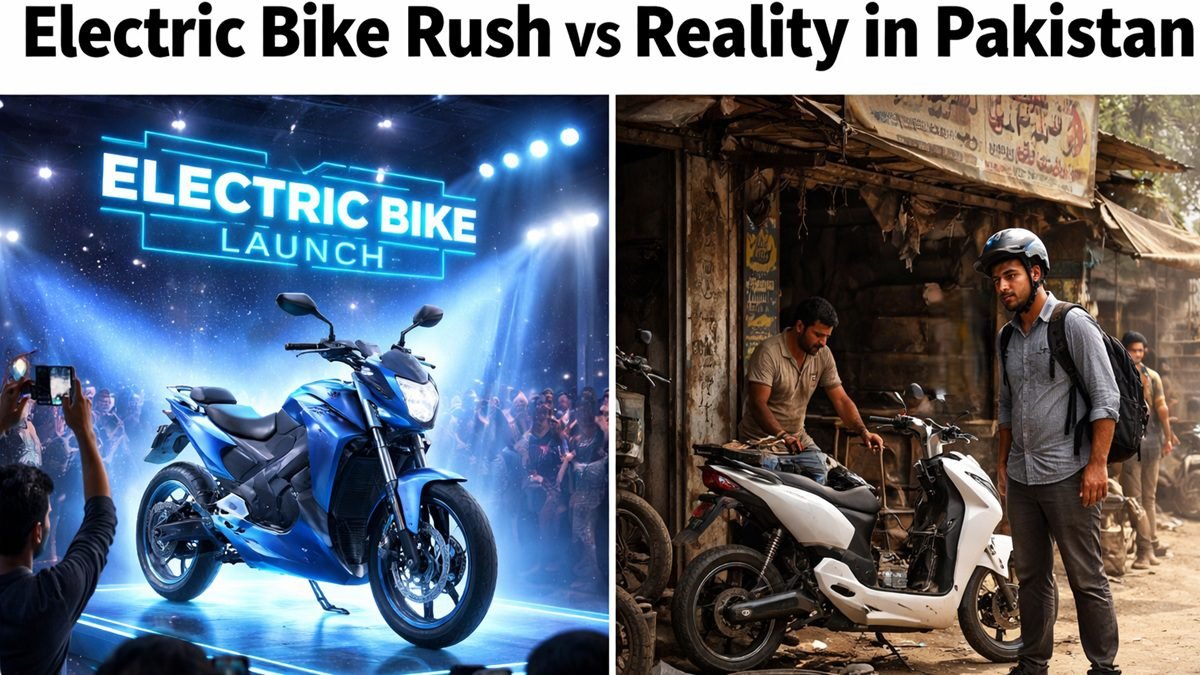
Pakistan’s electric bike boom is real. Sales are surging. Government schemes are active. And 30 million riders are looking for a way out of petrol dependency.
But a harder truth is surfacing. Battery costs, loadshedding, and weak after-sales support are quietly reshaping the savings story. The first year looks great. Year two is where things get complicated.
Here is what every buyer needs to know before they sign on the dotted line.
Why Pakistanis Are Suddenly Switching to Electric Bikes
The biggest trigger is simple: fuel stress.
Pakistan relies heavily on imported oil. Recent disruptions near the Strait of Hormuz have pushed both prices and anxiety higher. Petrol crossed Rs320 per litre in early 2026. About 40% of all petrol consumed in Pakistan goes to two- and three-wheelers. That means over 30 million riders are directly affected.
People are not just reacting to price. They are reacting to uncertainty. Electric bikes look like the exit door.
For official context, the Oil and Gas Regulatory Authority (OGRA) tracks Pakistan’s fuel pricing. Reuters has also covered the broader impact of global oil route disruptions on import-dependent economies.
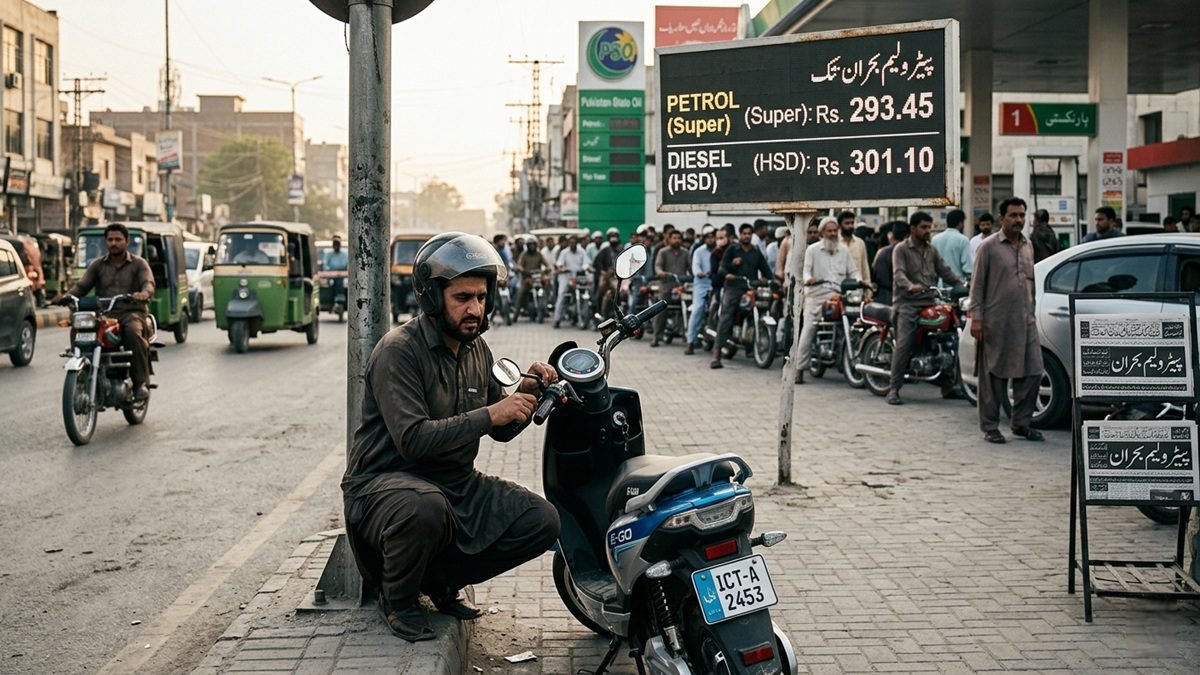
Electric bikes are moving from novelty to necessity for Pakistan’s urban commuters.
What Changed in 2026 — And Why It Matters
This shift did not happen randomly. Three major forces aligned at the same time.
1. Fuel Anxiety Became Real
Prices are high. But the bigger fear is unpredictability. Riders no longer know what next month’s petrol bill will look like. That emotional pressure is pushing decisions faster than logic.
2. Policy Became Visible
The government is actively pushing EV adoption. The NEV Policy 2025-2030 sets a long-term roadmap. The Ministry of Industries and Production has outlined formal targets. The State Bank of Pakistan’s EV Financing Scheme is making bikes accessible to buyers who could not afford them upfront.
3. Financing Lowered Entry Barriers
Subsidies and interest-free loans have made EV bikes reachable for middle-income households. Around 270,000 applications were reported under active EV schemes. The five-year target is two million EVs on Pakistan’s roads.
If you are eligible for the Punjab scheme, this complete Punjab Electric Bike Scheme registration guide walks you through every step. For the broader subsidy picture, see how the fuel quota app and CNIC registration subsidy works alongside EV incentives.
Why EV Bikes Look Cheaper — At First
On paper, the numbers make sense.
- No petrol cost at all
- Lower daily running expenses for urban commutes
- Solar charging can reduce costs even further
- Less maintenance needed in year one
For city commuters with predictable daily routes, the math often works — especially in the first 6 to 12 months.
But many buyers make one critical mistake. They compare today’s fuel bill with today’s charging cost — not the full ownership lifecycle. That is where the story starts to change.
The Hidden Costs Most Buyers Ignore
1. Battery Replacement Risk
This is the biggest financial wildcard. Battery health can degrade faster than expected in Pakistan because of a set of local conditions that no one warns buyers about:
- Extreme summer heat exceeding 45°C in many areas
- Dust accumulation on roads and in battery components
- Unstable charging cycles from voltage fluctuations
- Long power outages breaking regular charging routines
- Low-quality imports with no real warranty backing
If a replacement is needed early, it can wipe out two years of running-cost savings in one payment.
2. Electricity Is Not Always Cheap
Charging costs depend on your tariff slab, how much tax applies, and whether you have reliable power or not. The National Electric Power Regulatory Authority (NEPRA) sets and updates electricity tariffs regularly — and they are not always low. Without solar, savings can be much smaller than buyers expect.
3. Weak Service Infrastructure
A petrol bike can be repaired at almost any roadside workshop across Pakistan. An EV bike needs specialised support — and those service centres are still limited. Spare parts for many imported models are simply not available locally.
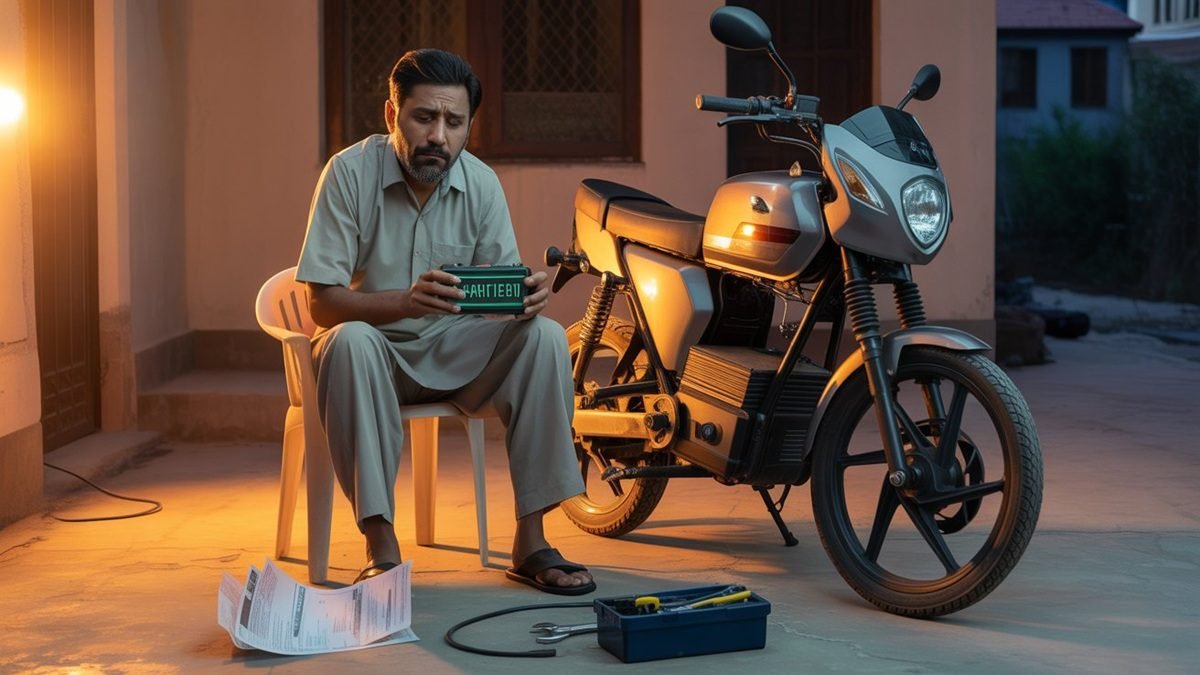
Service infrastructure for electric bikes remains thin across Pakistan, especially outside major cities.
EV vs Petrol Bike: Real 12-Month Comparison
| Factor | EV Bike | Petrol Bike |
|---|---|---|
| Upfront Cost | Rs150,000 to Rs250,000+ | Rs160,000 to Rs190,000 |
| Running Cost | Lower (urban use) | Higher |
| Maintenance (Year 1) | Lower initially | Predictable |
| Battery Risk | Hidden, emerges later | None |
| Service Access | Limited, urban only | Nationwide |
| Resale Value | Uncertain | Stronger |
The key insight: Year one often favours the EV bike. Year two onwards depends entirely on battery performance and service access. Plan for both before you buy.
See our full motorcycle vs electric bike commute comparison for Pakistan for a deeper head-to-head breakdown.
Why Battery Failure Could Be the Turning Point
Pakistan’s environment is tough on EV batteries in ways that developed markets do not face. The combination of heat, dust, grid instability, and loadshedding creates compounding damage to battery health.
Five conditions hitting EV batteries hard in Pakistan:
- Summer temperatures frequently exceeding 45°C
- Dusty and unpaved roads across large parts of the country
- Stop-start traffic in congested urban centres
- Voltage fluctuations from an unstable national grid
- Extended loadshedding disrupting consistent charging cycles
If real-world performance drops faster than expected across a large number of bikes, buyer trust in EVs could fall quickly — and that would damage the entire market.
The International Energy Agency’s Global EV Outlook highlights battery durability in extreme climates as one of the most critical challenges for EV adoption in developing markets. Pakistan fits that profile exactly.
Local Risks That Could Burst the EV Bike Boom
1. Weak Charging Infrastructure
Public charging networks are still very limited. This directly affects renters, delivery riders, and anyone travelling between cities or towns.
2. Loadshedding Reality
Without a backup power source or solar system, EV ownership becomes genuinely inconvenient. Charging is not guaranteed in many parts of the country.
3. Demand Is Partly Fear-Driven
If petrol prices stabilise, urgency may drop. Sales could slow. Resale values may decline for buyers who purchased during peak panic-buying.
4. Risk of Low-Quality Imports
Fast demand attracts weak products. Industry experts warn that poor after-sales support from low-quality imported brands could damage long-term EV trust across the market.
What Government Policy Is Doing Right
Pakistan is not ignoring this transition. Several moves are genuinely positive.
- NEV Policy 2025-2030 provides a clear long-term roadmap
- SBP financing schemes lower the upfront cost barrier
- Subsidy-backed adoption targets give industry direction
- Reducing fuel imports is a stated national economic priority
The real challenge is execution. Policy is strong on paper. But service networks, battery quality standards, spare parts availability, and warranty enforcement are all still catching up. Without these, growth becomes fragile.
2025 vs 2026: What Actually Changed
In 2025
- EV bikes seen as optional
- Limited urgency
- Mostly early adopters
- Weak emotional trigger
In 2026
- Fuel anxiety is high
- Policy is visible
- Financing is easier
- Mainstream conversation
Who Should Buy an EV Bike Right Now?
Good Fit
- City commuters with predictable daily routes
- Home charging setup confirmed
- Solar users with stable power supply
- Buyers near verified service centres
Higher Risk
- Long-distance or intercity riders
- Areas with heavy loadshedding
- Renters without dedicated charging access
- Buyers choosing unknown imported brands
- Those who need strong resale value
Step-by-Step Buying Guide
- Calculate your actual daily distance. Avoid pushing battery limits on your regular commute. Know your real range need before you set foot in a showroom.
- Confirm your charging setup first. Can you charge daily at home? What happens during outages? No charging plan means no EV plan.
- Ask these five questions at every dealership: battery type and chemistry, full warranty terms, replacement cost estimate, local parts availability, and the location of the nearest service centre.
- Test on real roads. Not showroom floors. Test on your actual daily route, in actual traffic conditions.
- Plan for year two. Budget for possible battery wear, repairs, and the likely impact on resale value. If the numbers still work, you are a real buyer.
What Happens Next — Two Possible Paths
Scenario 1: Strong Growth
If fuel stays expensive, infrastructure improves, battery technology matures, and solar adoption rises — Pakistan’s EV market could hit its targets and deliver a genuine long-term mobility shift.
Scenario 2: Market Correction
If battery complaints increase, weak imported brands dominate, resale values drop, and petrol stabilises — early enthusiasm could turn into buyer regret and long-term loss of trust in the EV category.
Key Takeaways
- EV demand is real — but partly driven by fear, not just logic
- Short-term savings are attractive — long-term costs vary widely
- Battery trust will define the next phase of this market
- Government policy is strong — but execution gaps remain serious
- Smart buyers will plan beyond the first year before committing
Final Verdict
Pakistan is entering its biggest EV bike boom — and its first real stress test — at exactly the same time.
Electric bikes are not a bad decision. But they are not a simple one either. The savings are real. So are the risks.
The winners will not be the fastest buyers. They will be the most informed buyers — the ones who asked the right questions before they handed over their money.
Frequently Asked Questions