A possible mini budget in April 2026 is raising alarms across Pakistan. New IMF conditions are reshaping taxes, salaries, and utility bills. If you earn a salary, pay electricity bills, or fill up fuel — this affects you directly. Here is the full picture in plain language.
What the IMF Deal Means for Pakistan in 2026
Pakistan is under a long-term IMF program aimed at stabilizing the economy. The core focus is reducing fiscal deficits and growing revenue. Pakistan is close to receiving a $1.2 billion tranche after a staff-level agreement with the International Monetary Fund.
But this support is not free. It comes with strict conditions tied to how Pakistan manages its taxes and public spending. According to the International Monetary Fund’s Pakistan page, the government must:
- Increase taxes across the board
- Reduce subsidies on fuel and utilities
- Ensure prices reflect real market costs
The Federal Board of Revenue must meet ambitious targets. You can check official tax updates at the FBR website.
| Fiscal Year | Revenue Target |
|---|---|
| FY26 | Around Rs 13.4 trillion |
| FY27 | Close to Rs 15 trillion |
If the government misses these targets, it must either raise taxes or cut spending. Both options hurt the public.
Pakistan’s fiscal targets are tightly linked to IMF program conditions in 2026.
Is a Mini Budget Coming in April?
There is no official mini budget announcement yet. But the risk is real. Pakistan has used supplementary finance bills before to quietly introduce new taxes mid-year.
- IMF allows mid-year fiscal corrections
- Revenue targets are tight and may be missed
- Supplementary budgets have been used before
In practice, this means new taxes may appear through finance circulars. Withholding rates may increase quietly. Even without a formal budget, your pocket still feels it.
Salary Impact — FY26 Tax Slabs Explained
The current tax system for salaried individuals is managed by the FBR. On paper, the slabs may seem manageable. But the real story is more complex.
| Annual Income (PKR) | Tax Rule |
|---|---|
| Up to 600,000 | 0% |
| 600,001 – 1.2M | 1% above 600k |
| 1.2M – 2.2M | Rs 6,000 + 11% |
| 2.2M – 3.2M | Rs 116,000 + 23% |
| 3.2M – 4.1M | Rs 346,000 + 30% |
| Above 4.1M | Rs 616,000 + 35% |
- Employers may increase withholding tax deductions
- Bonuses and allowances may be taxed more
- Inflation erodes what your salary actually buys
Most salaried people do not lose income through direct tax hikes alone. They lose value — because expenses rise while salaries stay flat. This is the hidden tax that hurts most.
If you are exploring ways to reduce household costs, our guide on Pakistan’s solar energy options shows how switching to solar can cut electricity bills long-term.
Electricity, Gas, Fuel and Phone Bills
This is where the biggest impact lands for most families.
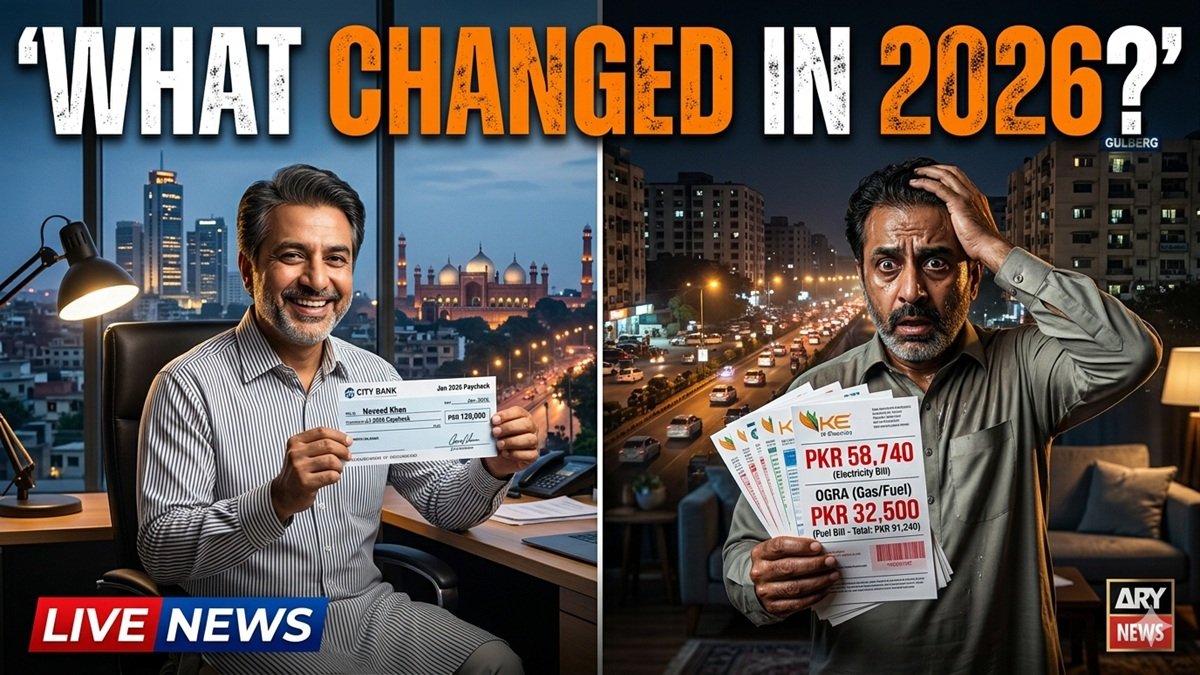
Utility bills now include multiple layers of taxes and surcharges.
Electricity Bills
The National Electric Power Regulatory Authority (NEPRA) sets electricity tariffs. Your bill already includes GST of around 17%, fuel price adjustments, and various surcharges. As market-based pricing reforms continue under IMF conditions, per-unit prices will likely increase further.
Gas and Fuel
Petrol pricing is linked to global oil markets and reviewed every two weeks. Check our April 2026 petrol price prediction for the latest expected changes. Higher fuel costs feed into transport, food delivery, and daily commuting.
Telecom and Internet
Taxes on telecom services are already among the highest in the region. Future policy changes may push mobile bills and internet costs higher — especially for data-heavy users.
Local Reality in Major Cities
In cities like Rawalpindi, Lahore, and Karachi, the pressure is already visible. Families are not just dealing with one rising cost — they are dealing with several at once.
- 15 to 25 percent of income going to utilities
- A large share on food and rent
- Very little left for savings or emergencies
Savings are shrinking fast. Many families are now dipping into reserves just to manage routine monthly expenses.
Past vs Now — What Has Changed
| Factor | Last Year | This Year |
|---|---|---|
| Subsidies | Some available | Largely reduced |
| Petrol pricing | Partially controlled | Market-based |
| Salary relief | Some relief introduced | Tax pressure rising |
The key shift is simple. Earlier, the government absorbed some cost to protect consumers. Now, consumers are paying the full or near-full market rate directly. This is the core change that makes 2026 harder than 2025.
Expert Insights and Key Risks
Analysis from leading Pakistani media outlets including Dawn Business and Geo News Business consistently highlights a troubling pattern.
- The tax base is expanding too slowly
- Salaried workers carry a disproportionate burden
- Utility reforms always reach households first
The key risk: if tax collection from high-income sectors and traders does not improve, the government will rely more heavily on indirect taxes. Indirect taxes hit everyone — including those already squeezed by inflation.
What Happens Next in April
Here is the expected sequence of events:
- March 2026: Staff-level agreement confirmed
- April 2026: IMF Board review scheduled
- After approval: $1.2 billion funds released to Pakistan
- Post-approval: Policy changes and price adjustments may follow
April is the month to watch. New revenue measures, tariff adjustments, and withholding tax changes could all arrive quickly after Board approval.
Step-by-Step Guide for Families
You cannot control IMF policy. But you can control your response to it. Here are practical steps:
1. Reduce Electricity Usage
- Use heavy appliances during off-peak hours
- Switch all bulbs to LED immediately
- Limit air conditioning use to essential hours
2. Control Fuel Expenses
- Combine multiple errands into one trip
- Use carpooling with family or colleagues
- Avoid unnecessary vehicle idling
3. Optimize Mobile and Internet Usage
- Choose the most cost-effective monthly package
- Monitor background data usage on your phone
4. Track Salary Deductions
- Review your payslip every month
- Confirm that tax is calculated on the correct slab
- Report any unusual deductions to your HR department
Key Facts Summary
| Area | Likely Impact |
|---|---|
| Salary | Stable but weaker real purchasing value |
| Electricity | Gradual upward increase |
| Gas | Higher tariffs expected |
| Fuel | Market-linked, frequent changes |
| Internet / Mobile | Possible slight increase |
Frequently Asked Questions
Final Analysis
Pakistan is walking a difficult path to economic stability. The IMF program is part of that journey. But stability at the macro level does not automatically mean relief at the household level.