Pakistan’s EV Market Is Changing Fast in 2026
Only a few years ago, most Pakistani buyers stuck to Japanese petrol cars for one reason: trust. Resale value was predictable. Spare parts were easy to find. Repair shops were everywhere.
That picture is now changing quickly. Fuel prices remain high for middle-income families. Chinese automakers are entering Pakistan more aggressively. And government policy now openly supports electric mobility. According to the International Energy Agency, Pakistan aims for 30% of all new vehicle sales to become electric by 2030.
The government has also reduced EV charging tariffs to attract investment in local manufacturing and charging stations. Buyers are watching these signals carefully.
Local Pakistani EV vs Chinese Imports: The 2026 Comparison
The biggest attention right now is on the upcoming local EV expected near Rs1 million. If that price holds, it could completely change entry-level mobility in Pakistan.
At the same time, Chinese vehicles like BYD and Jaecoo are targeting buyers who want better technology and modern features. Readers following why Pakistanis are choosing BYD, MG, and Haval over Toyota and Honda will recognize this shift is already happening.
| Vehicle | Estimated Price | Best Advantage | Main Concern |
|---|---|---|---|
| Local Pakistani EV | Around Rs1 million | Lowest cost | Limited range |
| Jaecoo J5 HEV | Rs6.699m to Rs7.699m | Hybrid flexibility | Higher price |
| BYD Sealion 6 | Premium segment | Technology and features | Expensive |
Price alone does not decide value in Pakistan. Road conditions, charging access, electricity reliability, and resale confidence matter just as much.
Why BYD’s Pakistan Plans Matter
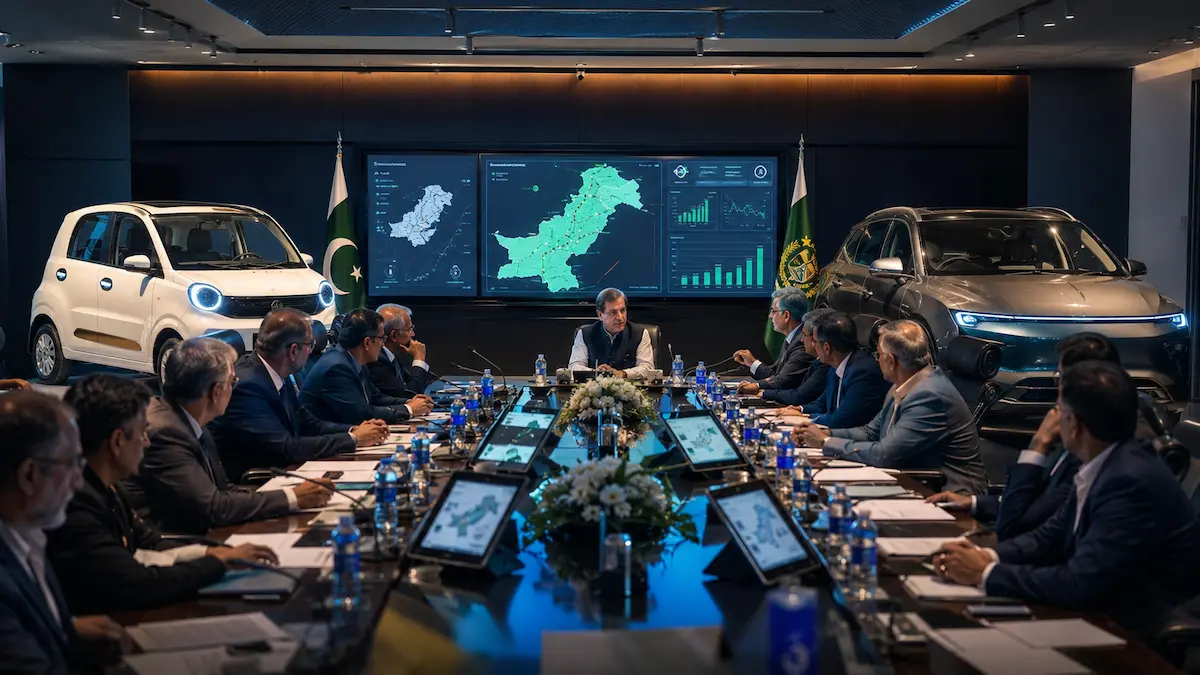
BYD is moving fast. The company plans local assembly through Mega Motors, which could gradually reduce prices and improve spare parts availability. Reuters confirmed BYD expects electric and hybrid vehicles to capture a major share of Pakistan’s market by 2030.
Chinese brands are also changing buyer perceptions. Newer EVs now offer better infotainment screens, advanced driver assistance systems, longer battery range, and competitive warranties. Our earlier coverage of the 8 cars from China’s auto show set to launch in Pakistan shows just how many options are entering the market.
Still, after-sales service remains a real concern. Many buyers continue comparing Chinese brands against Japanese reliability standards. That challenge will likely continue for the next few years.
Jaecoo J5 HEV: The Most Practical Option Right Now
The Jaecoo J5 HEV sits between petrol and full EVs. Its hybrid system combines both power sources to improve efficiency without creating range anxiety.
Its expected combined range near 900 to 1,000 km suits Pakistan’s intercity travel needs. Families driving between Lahore and Islamabad, or travelling for Eid, need that kind of confidence. You can also check the full BYD Denza B8 Pakistan tech breakdown for a comparison of what premium EVs now offer.
Charging Infrastructure: The Honest Picture
This remains the biggest practical issue. Charging stations exist mainly in Karachi, Lahore, Islamabad, and selected motorway corridors. Outside these areas, coverage becomes uncertain.
That is why experts believe Pakistan’s EV growth will happen in stages. Small city EVs will expand first. Hybrids will remain stronger for family and intercity travel. The local Rs1 million EV fits best in short daily city commuting.
Running Costs: What You Actually Save
The strongest argument for EVs remains operating cost. Home charging is cheaper than petrol for everyday commuting. But buyers should also think beyond fuel savings.
| Ownership Factor | Petrol Car | Hybrid | EV |
|---|---|---|---|
| Daily Running Cost | Highest | Moderate | Lowest |
| Maintenance Need | Higher | Moderate | Lower |
| City Efficiency | Moderate | High | Very High |
| Long-Distance Use | Strong | Strong | Depends on charging |
Battery replacement costs, resale value, and electricity reliability still affect long-term decisions. That is why many buyers are currently leaning toward hybrids.
Which Option Fits Which Buyer
The local Pakistani EV is best for city drivers who want the lowest possible commuting cost on short daily routes. The Jaecoo J5 HEV is the most practical overall choice for families, long-distance users, and mixed city and motorway driving. The BYD Sealion 6 targets premium buyers who want advanced technology and modern features.
Frequently Asked Questions
Is Pakistan really getting a Rs1 million EV?
Industry discussions suggest a locally developed EV is targeting a price near Rs1 million, although final official pricing has not yet been confirmed publicly.
Is BYD assembling vehicles in Pakistan?
Yes. Reuters reported that BYD plans local assembly operations in partnership with Mega Motors.
Are EV charging stations available across Pakistan?
Charging stations mainly exist in major cities and selected motorway routes. Nationwide coverage is still limited.
Is a hybrid better than a full EV in Pakistan right now?
For many families, hybrids currently feel more practical because they avoid complete dependence on charging infrastructure.
Will EV prices become cheaper in Pakistan?
Local assembly and government incentives could gradually reduce prices over the next few years.
What is Pakistan’s EV target for 2030?
Pakistan aims for 30% of all new vehicle sales to become electric by 2030, according to the International Energy Agency.