
A strong weather system is heading toward Pakistan this week. The Pakistan Meteorological Department (PMD) has issued an alert for rain, thunderstorms, hail, and winds reaching 70 km/h from April 6 to April 10. The peak risk days are April 7, 8, and 9. This is not routine spring weather. Cities, farms, and roads face real disruption. Here is what you need to know right now.
What Is Happening Right Now
A westerly wave is moving into Pakistan from the west. It pulls cold air down from Afghanistan and mixes it with moisture rising from the Arabian Sea. That combination creates unstable, aggressive weather.
Expect this across the country:
- Sudden, heavy rain showers
- Thunderstorms with lightning
- Winds up to 60 to 70 km/h
- Hailstorms in vulnerable areas
Unlike monsoon rain, these storms hit fast and hard. Damage can happen within minutes of the sky turning dark.
Live tracking is available at Windy.com for real-time storm movement.
Why This Storm Is Different
Three things make this system stand out from typical April weather.
First, April storms are usually weaker. This one is stronger and covers a wider area than normal for the season.
Second, cities like Lahore and Islamabad are hotter than they used to be. When cold air from a westerly wave crashes into urban heat, storms intensify fast.
Third, rapid construction has buried natural drainage. Water now builds up quickly on roads and in low areas.
Even moderate rain can now trigger flooding and power outages in cities that never used to flood. You can check Pakistan’s climate trend data from PMD to see how patterns have shifted.
Want to understand the full forecast for the month? Read our earlier breakdown: PMD 14-Day Weather Forecast for Pakistan — April.
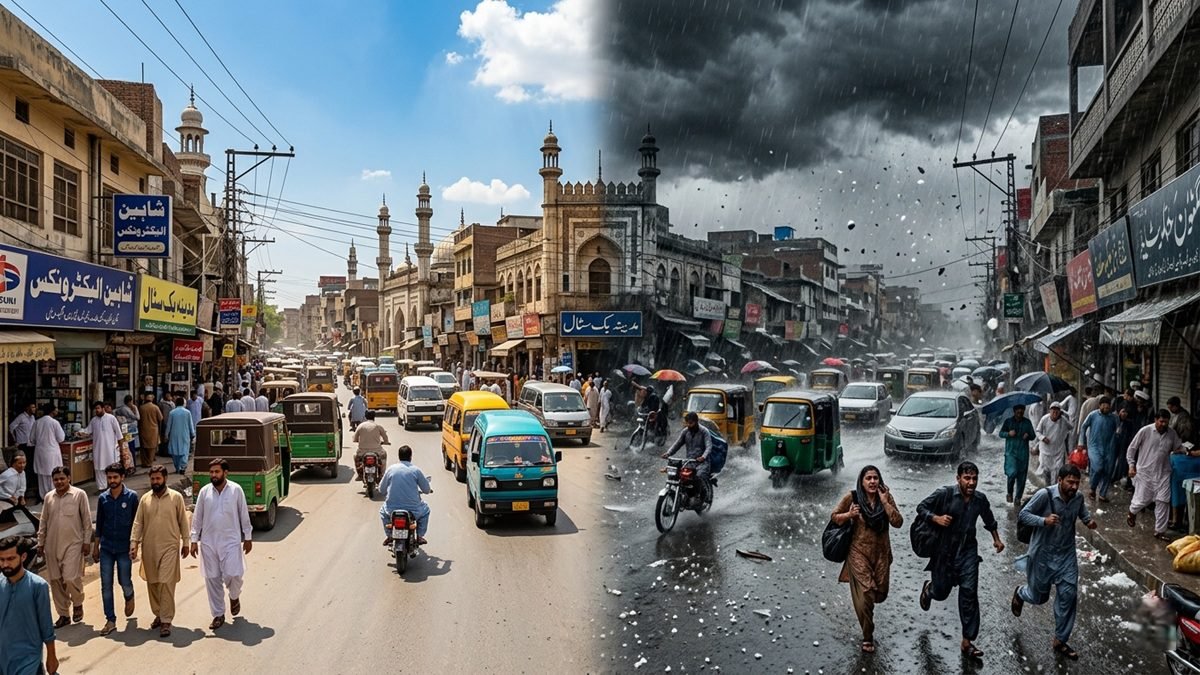
Timeline: Peak Impact Days
The system does not arrive all at once. It builds up step by step over five days.
| Date | Weather Pattern |
|---|---|
| April 6 | Light rain begins in northern areas |
| April 7 | Heavy rain, hail, strong winds start |
| April 8 | Peak intensity — worst conditions expected |
| April 9 | Continued storms, gradual slowdown begins |
| April 10 | System weakens, conditions improve |
Evening and night hours carry higher risk. Be extra careful after sunset on April 7 and 8.
City-by-City Impact
Islamabad and Rawalpindi
Expected rainfall: 40 to 60 mm. Landslide risk is high near the Margalla Hills. Residents in hillside areas should stay alert. 👉 ICT Administration updates
Lahore
Heavy rain bursts expected. Low-lying areas like Bund Road are vulnerable to flooding. Avoid these areas during peak rain hours. 👉 Lahore Punjab Government
Karachi
Lighter rain but strong winds. Dust storms are possible. Outdoor activities should be avoided during windy periods. 👉 Karachi Metropolitan Corporation
Peshawar
High hailstorm risk. Power outages are possible. Charge devices early and keep emergency supplies ready. 👉 Khyber Pakhtunkhwa Government

Public Impact Across Pakistan
This storm can hit daily life hard in several ways:
- Electricity outages when strong winds damage power lines
- Damage to solar panels and weak rooftops
- Traffic jams and road accidents during rain
- Possible temporary closure of roads or highways
Urban flooding is the biggest concern. Many Pakistani cities still run on old drainage systems that cannot handle sudden heavy rain.
Stay updated through the National Disaster Management Authority (NDMA) for official alerts and relief updates.
Wheat Crop Risk Explained
This weather comes at the worst possible time for Pakistan’s farmers.
Here is why it matters: Wheat harvest is almost ready. A single hailstorm can destroy an entire field in under ten minutes. Even a partial crop loss will push up flour prices across the country. Farmers in Punjab and KP need to act now — not wait and hope.
Contact the Punjab Agriculture Department or visit KCARD Punjab for guidance on protecting crops.
Climate Pattern Behind This
This storm is part of a bigger picture. Pakistan is seeing more off-season storms, sharper temperature swings, and stronger weather systems overall. A global Climate Risk Index places Pakistan among the most affected countries in the world.
We covered the broader April forecast in detail here: Pakistan Weather April — Heatwave and PMD Forecast.
2022 Storm Comparison
A similar westerly wave hit Pakistan in April 2022. The results were severe — lives were lost, flash floods swept through urban areas, and crops failed across multiple districts. Full disaster records are available at ReliefWeb.
Since 2022, Pakistan’s cities have grown larger. But infrastructure has not kept pace. That means the same amount of rain today can cause more damage than it did four years ago. The risk is higher — not lower.

What You Should Do Now
For Home and Family
- Secure loose items on rooftops — chairs, water tanks, solar panels
- Charge phones, power banks, and backup lighting now
- Store clean water and dry food for at least two days
- Keep a list of emergency contacts in an easy-to-find place
For Farmers
- Cover or protect crops in areas with high hail risk
- Call your local agriculture office today for advice
- Monitor PMD forecasts every morning and evening
Travel Advisory
Avoid all non-essential travel during peak storm days. If you must drive, go slowly and stay off highways during rain. Low visibility and wet roads make accidents far more likely. Check NHMP motorway updates before any long journey.
Key Facts at a Glance
| Factor | Detail |
|---|---|
| Duration | April 6 to April 10, 2026 |
| Peak Days | April 7, 8, and 9 |
| Wind Speed | Up to 70 km/h |
| Main Risks | Flooding, hail, power outages, road accidents |
| Most Affected | Punjab, KP, northern regions |
| Crop at Risk | Wheat — near harvest season |
| Official Source | Pakistan Meteorological Department (PMD) |
What Happens Next
The system should weaken after April 10. But weather is not going back to normal just yet. Experts expect continued instability, possible early heatwaves, and ongoing climate pressure through the rest of April.
The pattern is clear: stronger storms, less warning, more damage. Staying informed and prepared is no longer optional. It is what protects your family, your crops, and your property.
Frequently Asked Questions
Will all cities be affected?
Most regions will see some impact. Northern areas — particularly Punjab and Khyber Pakhtunkhwa — will be hit hardest between April 7 and April 9.
Can hail damage property?
Yes. Hail damages crops, cars, solar panels, and weak rooftops quickly. Even a few minutes of hail can destroy an entire season’s wheat yield.
Is flooding expected?
Yes, especially in low-lying urban areas. Old drainage systems in many cities cannot handle sudden heavy rain.
How can I track updates?
Use the PMD website or trusted weather apps like Windy. Check every morning during the April 7 to 9 window.
Should farmers act now?
Yes. Early steps can prevent major losses. Protect crops, contact local agriculture offices, and monitor updates closely.
When will the system weaken?
The weather system is expected to ease after April 10. However, some instability may continue through mid-April.