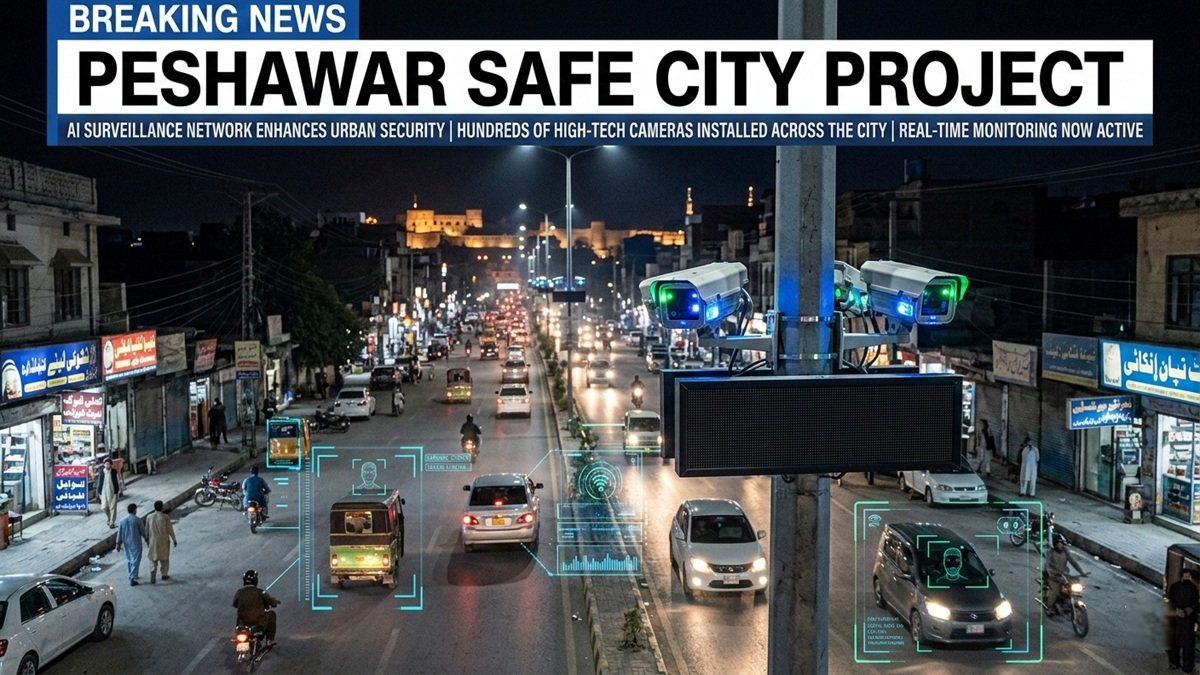
After nearly 18 years of delays, Peshawar finally has a modern AI-powered surveillance system. Launched on March 3–4, 2026, the Safe City Peshawar project now monitors the city around the clock. It uses over 700 smart cameras, facial recognition, and a central command center. This is a big moment for public safety in Khyber Pakhtunkhwa.
📋 Table of Contents
- Overview of the Peshawar Safe City Project
- Why the Project Took 18 Years to Complete
- Key Features of Safe City Peshawar
- AI Technology Used in the Cameras
- Command and Control Center Explained
- Comparison with Lahore Safe City System
- Expansion Plans Across KP
- Progress in DI Khan, Bannu and Lakki Marwat
- Why This Project Matters for Public Safety
- Expert Views on Digital Policing
- Timeline of the Safe City Project
- What Happens Next
- Frequently Asked Questions
Overview of the Peshawar Safe City Project
The Peshawar Safe City Project is a modern urban surveillance network. It helps police monitor city activity in real time. The project cost about Rs 2.23 billion and includes advanced monitoring tools connected to a central command center.
According to the Khyber Pakhtunkhwa Police, the system focuses on crime prevention, traffic enforcement, and faster emergency response.
Key Project Facts
| Feature | Details |
|---|---|
| Project cost | Rs 2.23 billion |
| Cameras installed | 700 to 750 |
| Monitoring locations | Around 130 to 133 sites |
| Camera quality | Up to 12 megapixels |
| Control center | Police Lines Peshawar |
| System operation | 24 hours daily |
These cameras cover major roads, intersections, markets, and entry points of the city. For official information on police initiatives in KP, readers can visit the Government of Khyber Pakhtunkhwa portal.
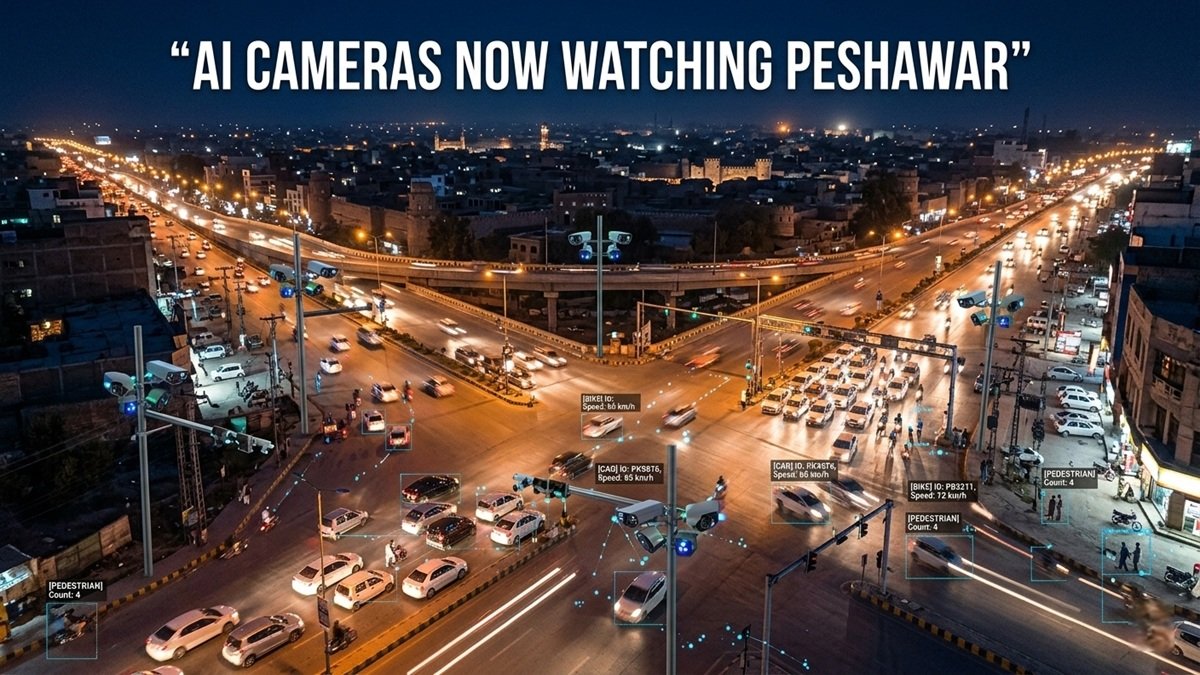
Over 700 cameras now cover major roads, markets and entry points across Peshawar.
Why the Project Took 18 Years to Complete
The safe city project was first proposed in 2008. Progress moved slowly for many years. Several factors contributed to the delay.
⚠️ Main Reasons Behind the Delay
- Changes in security priorities in the province
- Funding approvals across different governments
- Procurement and technical planning issues
- Upgrades in surveillance technology over time
Over time, authorities also decided to include more advanced AI capabilities. This required additional technical planning. Eventually, the project moved forward when provincial authorities approved final funding and infrastructure work.
The success of similar projects in cities like Lahore also encouraged policymakers to accelerate things.
Key Features of Safe City Peshawar
The Safe City Peshawar system combines several digital security tools. These tools help police monitor activity and detect violations more quickly.
🔍 Major Capabilities of the System
- Facial recognition technology for suspect identification
- Automatic number plate recognition (ANPR) for vehicles
- Real-time alerts for suspicious activity
- Electronic traffic challans for violations
- Integration with BRT surveillance cameras
- Emergency panic buttons and drone monitoring
These features allow authorities to track vehicles involved in crimes, stolen cars, and traffic violations automatically. Traffic enforcement will also become more automated. This could reduce manual policing on busy roads.
AI Technology Used in the Cameras
Artificial intelligence plays a central role in the Peshawar safe city system. Each camera can analyze video footage and identify unusual patterns. This helps authorities react quickly when suspicious activity occurs.
🤖 Core AI Capabilities
- Facial recognition to identify suspects
- Automatic number plate recognition for vehicles
- Real-time vehicle tracking across roads
- Video analytics for unusual behavior detection
- Automated traffic violation detection
In many cases, facial recognition systems may also cross-check identity data with national databases maintained by National Database and Registration Authority (NADRA). According to security analysts, such integrations help law enforcement verify identities quickly during investigations.
Command and Control Center Explained
At the heart of the project is a modern command and control center located at Police Lines Peshawar. The center operates 24 hours a day. It acts as the central hub for surveillance.
Main Responsibilities of the Control Center
- Monitoring live camera feeds across the city
- Coordinating police patrol units
- Managing traffic enforcement alerts
- Handling emergency calls and panic button signals
- Studying crime trends using collected data
Officials say this system helps different departments work together more effectively. Similar control rooms operate in other Pakistani cities, particularly those managed by the Punjab Safe Cities Authority, which oversees digital policing systems in Punjab.
Comparison with Lahore Safe City System
The Peshawar safe city project launch has drawn comparisons with the much larger surveillance system in Lahore. The Lahore system has been operating for several years and includes thousands of cameras across the city.
| Feature | Peshawar Safe City | Lahore Safe City |
|---|---|---|
| Launch | March 2026 | Operational for several years |
| Cameras | 700 to 750 | Around 8,000 |
| Technology | AI cameras with ANPR and facial recognition | Advanced analytics and traffic detection |
| Coverage | Peshawar city | Entire Lahore metropolitan area |
Reports from the Punjab Safe Cities Authority suggest that digital surveillance helped reduce several crimes in Lahore over time. Authorities in KP hope the Safe City Peshawar system will produce similar results.
Expansion Plans Across KP
The launch of the Peshawar safe city project is only the first step. Provincial officials have announced plans to extend similar systems across Khyber Pakhtunkhwa.
📍 Future Installations May Include
- Karak
- Tank
- North Waziristan
- Other divisional headquarters
Authorities also plan to create a province-wide digital surveillance network. This network would allow police stations in different districts to share security data in real time. Policy discussions about such systems are often updated on the Government of Khyber Pakhtunkhwa website.
Progress in DI Khan, Bannu and Lakki Marwat
Several high-risk districts in southern KP are also receiving Safe City systems. These projects began in June 2025. They aim to strengthen security monitoring in sensitive regions.
Planned Installations
| District | Sites | Cameras |
|---|---|---|
| DI Khan | 86 locations | 400+ cameras |
| Bannu | 69 locations | 300+ cameras |
| Lakki Marwat | 41 locations | 250+ cameras |
Authorities say installations are currently in the final phase. Once operational, these systems will allow police to monitor high-risk roads, markets, and entry points into each district.
Why This Project Matters for Public Safety
For residents of Peshawar, the safe city project could change how law enforcement handles security. Many citizens have long requested better monitoring of busy roads, markets, and public areas.
✅ Possible Benefits for the Public
- Faster police response during emergencies
- Better monitoring of crime hotspots
- Improved traffic management
- Digital records of incidents for investigations
Security analysts say surveillance systems do not eliminate crime completely. However, they often help police respond faster and investigate incidents more effectively.

A modern control room like this allows police to monitor dozens of camera feeds at once. | Photo: Pexels
Expert Views on Digital Policing
Security experts say digital monitoring systems are becoming common in cities worldwide. A senior official from Khyber Pakhtunkhwa Police explained during the launch ceremony that modern technology helps police monitor large areas that officers cannot physically patrol all the time.
Public trust often increases when authorities clearly explain how surveillance data will be stored and protected. For more on surveillance regulations globally, Interpol’s cybercrime resources and research from UNODC provide useful context on responsible policing technology.
Timeline of the Safe City Project
This timeline highlights how long it took to move from initial proposal to final operation. Nearly two decades of work led to this moment.
What Happens Next
Authorities say the next phase will focus on expanding surveillance infrastructure across the province.
🔭 Expected Developments
- Completion of safe city projects in southern KP districts
- Integration of multiple surveillance networks
- Expansion to more divisional headquarters
- Creation of a provincial Safe Cities Authority
If these plans move forward, Khyber Pakhtunkhwa could develop a province-wide digital policing network within the next two years.
Why This News Matters
The launch of the Peshawar safe city project reflects a broader shift toward technology-based policing in Pakistan. Cities such as Lahore, Islamabad, and Karachi have already invested in similar surveillance systems. Now, Peshawar is joining that trend.
For residents, the biggest question is whether these systems will actually reduce crime and improve response times. Experts say the answer depends on how effectively authorities use the technology and maintain the system in the long term.
Frequently Asked Questions