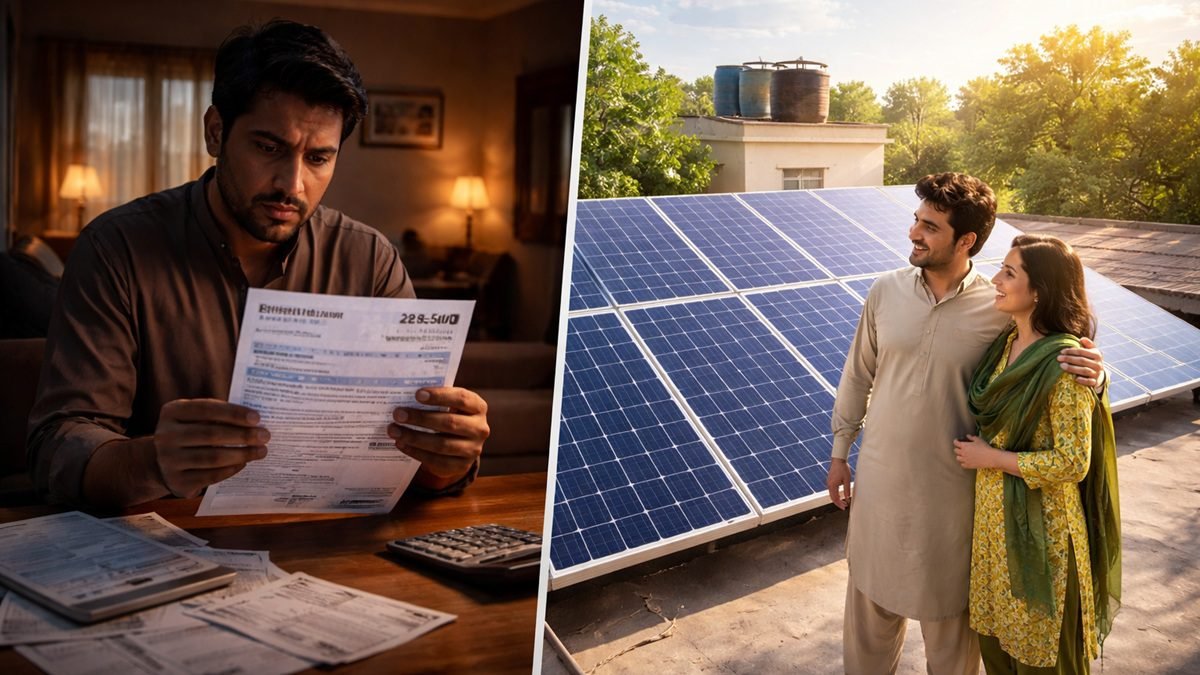
Electricity bills are rising again. Many families in Punjab are feeling the pressure. I noticed this firsthand while helping a neighbor in Rawalpindi check his monthly bill. That is why this update matters.
The Punjab Government has extended the CM Free Solar Panel Scheme deadline under the Roshan Gharana Program into mid-2026. More households now have a fresh chance to reduce their electricity costs significantly.
What’s Inside This Article
What is the CM Free Solar Scheme
The Punjab Free Solar Panel Scheme is part of the Roshan Gharana Program. It helps households install small solar systems at home. The government covers the cost so families can generate electricity during the day and rely less on expensive grid power.
Official Portal: cmsolarscheme.punjab.gov.pk
Three main goals:
- Reduce electricity bills for ordinary families
- Support low and middle-income households
- Promote clean, renewable energy across Punjab

If you want a broader picture of how solar is reshaping energy costs across the country, my earlier guide on Pakistan’s solar energy boom and cheap solar panel options covers the full picture well.
2026 Deadline Extension Explained
The application deadline has been extended into mid-2026. Earlier, it was expected to close in early 2025. This change reflects strong public demand. The response was simply higher than the government anticipated.
Key Updates in 2026:
- Eligibility expanded to 500 units/month
- More households now included
- Fresh application window officially opened
- Target increased to 100,000+ installations
Official energy updates: energy.punjab.gov.pk
Who is Eligible
The eligibility rules are simple but strict. Many people get rejected because of small errors. Check carefully before you apply.
You can apply if you meet ALL of these:
- You are a Punjab resident
- Monthly electricity usage is between 50 and 500 units
- Your load is below 2kW
- You have no unpaid electricity bills
- No history of electricity theft on your connection
Priority is given to families registered under BISP. Check your registration at bisp.gov.pk. If you live in a rented house, you must provide a No Objection Certificate (NOC) from the property owner.
Required Documents
Before applying, keep these documents ready. Missing even one can delay or reject your application.
| Document | Purpose |
|---|---|
| CNIC | Identity verification |
| Electricity Bill | Usage proof |
| Residence Proof | Punjab eligibility confirmation |
| Owner NOC | Required for tenants only |
| BISP/NSER Proof | Priority category eligibility |
| Bank IBAN | Subsidy transfer |
Important: I have seen applications rejected due to incorrect bill details or unpaid dues. Always double-check your electricity data at pitc.com.pk before submitting.
How to Apply (Step-by-Step)
The process is now simple and faster than before. You have two methods.
Method 1: SMS (Quickest)
- Open your SMS app
- Type: Bill Reference Number + CNIC
- Send to 8800
- Get an instant eligibility reply
Method 2: Online Portal
Apply at: cmsolarscheme.punjab.gov.pk
- Create your account
- Upload all required documents
- Submit your application
- Wait for the ballot result
The portal is managed by PITB.
My tip: I tested this portal myself and completed one application in under 10 minutes. The system is noticeably smoother now. Apply early. Quotas fill fast in urban areas like Rawalpindi and Lahore.
Solar System Categories
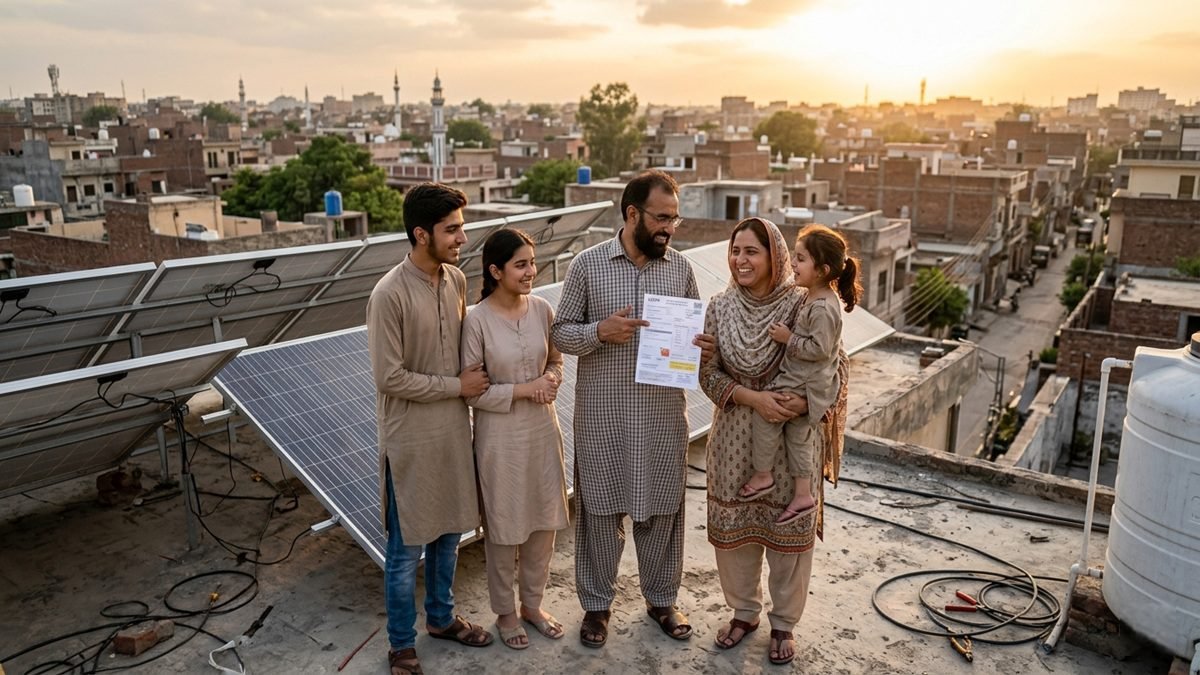
The system you receive depends on your monthly electricity usage. Here is how the tiers break down.
| Category | Monthly Units | System | Cost |
|---|---|---|---|
| Low | 0 to 100 units | 550W System | Free |
| Medium | 101 to 200 units | 1100W System | Free |
| Extended | 201 to 500 units | Larger System | 90% Subsidy |
Pakistan has among the highest solar potential in the region due to long, sunny days. Even a 550W system can cut your monthly bill noticeably. Learn more at aedb.org. From my observation, families using 100 units or less see the biggest proportional savings.
How to Check Application Status
Quick Check
- Visit the official portal
- Enter your bill reference number
Full Tracking
- Login using your CNIC
- View complete application progress
Other Options
- SMS to 8800
- Call helpline: 0800-88007
- Official support: punjab.gov.pk
Note: Status updates usually appear within 7 to 10 days after balloting. If you do not see an update, try calling the helpline rather than re-submitting.
Installation Timeline 2026
The rollout is happening in phases. Here is the current schedule.
| Phase | Application Window | Installation Period |
|---|---|---|
| Phase 2 | April to June 2026 | May to September 2026 |
| Phase 3 | July to December 2026 | August to December 2026 |
After your approval, the process goes like this:
- Verification visit from a government team
- Approval confirmation sent to you
- Installation completed within 30 to 45 days
In Rawalpindi, I have seen installations completed quickly once approved. Teams typically finish setup within a few hours.
Why This Scheme Matters in Pakistan
Electricity costs are rising across Pakistan. Urban and rural households both feel it. According to NEPRA, tariff adjustments and fuel charges continue to push bills higher.
Ground Reality in 2026:
- Bills increased sharply over recent years
- Many households struggle to pay on time
- Demand for solar solutions is growing fast
- Load shedding remains a real issue in many districts
This scheme directly reduces dependence on expensive grid electricity. It also supports Pakistan’s clean energy goals. If you are comparing options across provinces, the KPK Solar Scheme runs a similar program worth looking at too.

What Changed in 2026
Before 2026
- Eligibility limit was up to 200 units only
- Fewer households covered overall
- Smaller installation rollout target
Now in 2026
- Limit increased to 500 units monthly
- Many more families now included
- Larger installation target of 100,000+
This expansion shows a clear shift towards broader public relief. Middle-income families who were previously excluded are now covered. For the latest policy changes around solar, my detailed breakdown of Pakistan’s new solar net metering policy in 2026 is worth reading alongside this.
Frequently Asked Questions