Why This Project Matters More Than It Appears
The new cricket stadium in Islamabad has finally moved from long-standing plans to a concrete phase of execution. With the official tender now issued, the Islamabad cricket stadium project has entered its most critical stage, marking a rare moment of progress for Pakistan’s capital. This new cricket stadium in Pakistan is being developed under direct oversight from senior government and cricket authorities, signaling stronger accountability in public infrastructure delivery.
The Islamabad cricket stadium construction plan not only addresses the city’s decades-old absence of an international venue but also introduces a modern Islamabad cricket stadium design aligned with global standards. From the finalized new Islamabad cricket stadium location in Sector D-12 to the approved Islamabad cricket stadium capacity and long-term completion date targets, the project reflects a shift toward structured planning rather than symbolic announcements.
As Islamabad cricket stadium construction news gains momentum, attention is also growing around the stadium model, map layout, and expected under-construction progress. Beyond sports, this Islamabad cricket stadium plan carries broader implications for urban traffic management, land use policy, and the future of major public projects in the federal capital.
📋 Table of Contents
- A Capital Without a Stadium
- Why Earlier Stadium Plans Failed
- The D-12 Decision: Location and Strategy
- Design Philosophy and Capacity
- Traffic Relief as Core Objective
- Timeline: From Tender to Completion
- Why This Is Strategic for Pakistan Cricket
- Market and Urban Impact
- Why This News Matters
- Frequently Asked Questions
Unlike earlier announcements that stalled at proposal stages, this development marks a formal, irreversible step. The project now carries a defined location, revised cost structure, approved capacity, and a government-endorsed revenue model—elements that were missing in past attempts.
For Islamabad, a city that has existed for over six decades without its own international cricket stadium, this is not merely a sports story. It represents an urban governance correction.
A Capital Without a Stadium: The Problem This Project Is Trying to Fix
Since Pakistan’s independence, international cricket infrastructure has evolved unevenly. Lahore, Karachi, Multan, and Rawalpindi all host major venues. Islamabad—the country’s capital and diplomatic hub—does not.
The Dependency Problem: For years, international matches branded as “Islamabad fixtures” were played at Rawalpindi Cricket Stadium, approximately 20 kilometers away. This created persistent challenges that affected both cities.
This dependency created several problems:
- Severe traffic congestion on Murree Road during match days
- Security lockdowns affecting businesses, hospitals, and daily commuters
- Commercial losses for Rawalpindi’s traders due to road closures
- Logistical strain on law enforcement repeatedly securing the same corridors
According to cricket analyst Kashif Abbasi, as quoted by Arab News, “People of Rawalpindi and Islamabad face a lot of problems during match days because of traffic blockade and road closures.”
Local residents and traders have long argued that Rawalpindi effectively subsidized Islamabad’s lack of sports planning. According to past civic planning records, Islamabad was never designed with a high-capacity sports arena—a gap that became more visible as Pakistan returned to hosting international cricket after 2019.
Why Earlier Stadium Plans Failed
The Islamabad cricket stadium idea is not new. What is new is institutional alignment.
Earlier proposals—most notably the I-12 sector plan—collapsed after legal and environmental objections. The Supreme Court nullified that project due to encroachment concerns involving protected land near the national park. That decision effectively froze the idea for years and became a cautionary example of planning without environmental due diligence.
The Corrective Planning Shift
According to Capital Development Authority (CDA) planning briefings, the stadium site was deliberately shifted to Sector D-12, at the foothills of the Margalla Hills but outside protected zones, following inter-departmental scrutiny.
This relocation reflects a policy lesson learned the hard way: infrastructure projects in Islamabad must survive legal, environmental, and urban planning tests simultaneously.
The D-12 Decision: Location, Land, and Long-Term Strategy
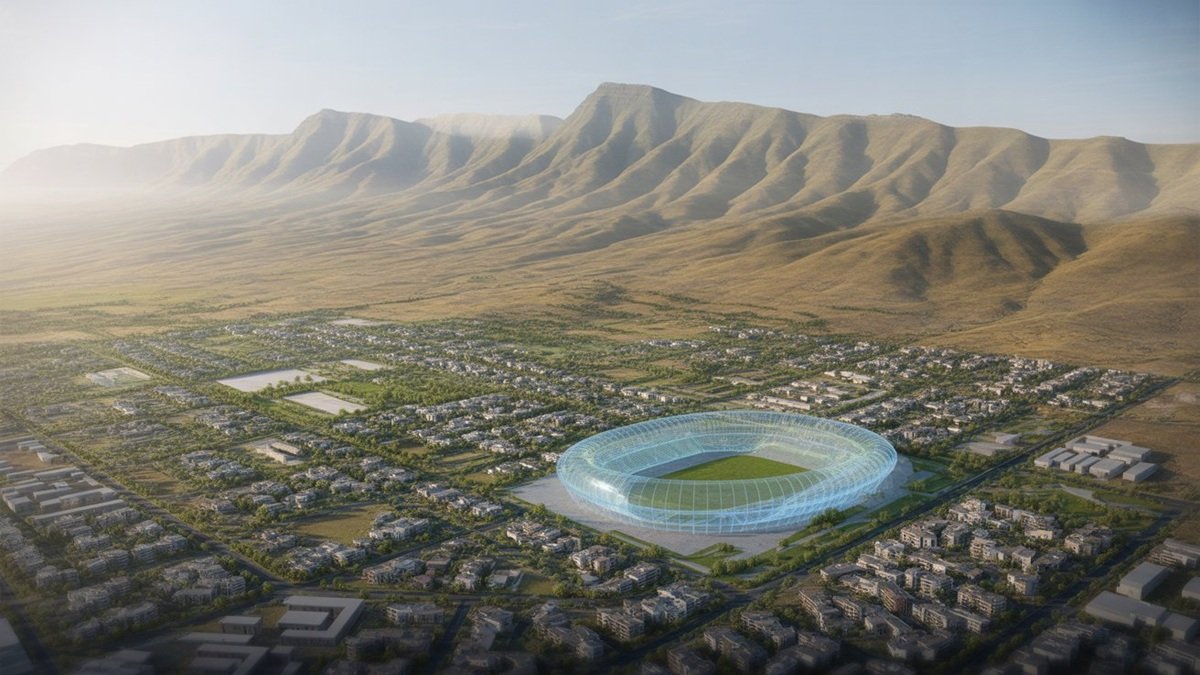
The finalized Islamabad cricket stadium location lies along Iran Avenue in Sector D-12, covering 280 kanals (approximately 35 acres). The land is owned by the CDA and has been leased to the Pakistan Cricket Board (PCB) for 99 years.
Revenue-Sharing Model
The land is being provided rent-free, but not without return. Instead, the government opted for a revenue-sharing model:
- PCB receives 70% of operational revenue
- CDA receives 30% as a long-term income stream
This structure reduces upfront fiscal pressure on the government while ensuring that the public authority benefits from future commercial activity. It also places construction and operational responsibility squarely on PCB, minimizing bureaucratic diffusion.
From a policy perspective, this model reflects a shift toward self-sustaining public infrastructure, rather than one-time development grants.
Design Philosophy: Why Capacity Was Reduced—and Why That Matters
Initial cost estimates for the stadium reportedly exceeded Rs12 billion, raising concerns amid Pakistan’s broader fiscal constraints. Following design revisions approved in December 2025, the projected cost was reduced to Rs. 8 billion, without compromising international standards.
Stadium Capacity: 32,000 Spectators
This number is significant. Most international venues in Pakistan fall within the 25,000–35,000 range. By choosing 32,000 seats, planners avoided the trap of over-building—an issue that has burdened older stadiums with high maintenance costs and underutilized stands.
Design Highlights (As Reviewed by Authorities)
- Triple-tier seating with unobstructed views
- Orientation toward Margalla Hills, positioning the stadium as a visual landmark
- Floodlit, multi-purpose layout suitable for day-night matches
- Dedicated high-performance training facilities
- Team accommodations integrated with controlled-access hospitality zones
- 7-star hotel facility adjacent to the venue
According to officials present in the December 2025 review meeting, the conceptual inspiration draws from modern international stadiums such as Dubai’s cricket venue, particularly in crowd flow and security zoning.
CDA Chairman Muhammad Ali Randhawa told Arab News: “It’s basically a very beautiful site and it’s at the foothills of the Margalla Hills, with the view of the Margalla, which is the crown of Islamabad, at the backside of this cricket stadium.”
Traffic Relief as a Core Design Objective

One of the most distinctive aspects of this project is its explicit focus on traffic management—a direct response to Rawalpindi’s match-day crises.
Smart Traffic Management Plan
The approved plan includes:
- A separate parking facility for approximately 10,000 vehicles, located about one kilometer from the stadium
- Controlled shuttle and pedestrian access routes
- Limited direct vehicle access near the stadium perimeter
- Strategic location connected to motorway and Islamabad airport
This is not an aesthetic choice; it is an urban necessity. According to Islamabad traffic planning assessments, Murree Road gridlocks during international matches can paralyze entire sectors. By decentralizing parking and dispersing traffic loads, the new Islamabad cricket stadium aims to prevent replication of that chaos.
Timeline: From Tender to Completion
| Date | Milestone | Details |
|---|---|---|
| April 2025 | Site Agreement | CDA and PCB reach preliminary agreement on D-12 site |
| December 3, 2025 | Design Approval | Revised Rs. 8 billion design approved, capacity set at 32,000 |
| Late December 2025 | Tender Issued | Construction tender issued by PCB |
| January 1, 2026 | Fast-Track Directive | PCB Chairman Mohsin Naqvi directs final design submission within 10 days |
| Mid-January 2026 | Groundbreaking (Projected) | Construction expected to begin following tender evaluation |
| 2028 | Completion (Target) | Project completion within two years of construction start |
This timeline is ambitious by Pakistani public-sector standards. Its success depends on uninterrupted coordination between CDA, PCB, and contractors—something that has historically proven difficult but not impossible under centralized oversight.
What Happens Next?
Immediate Next Steps:
- Tender evaluation and contractor selection (January 2026)
- Site leveling and foundation work (Early 2026)
- Grey structure completion (6-8 months from start)
- Finishing work and facility integration (2026-2028)
Why This Stadium Is a Strategic Move for Pakistan Cricket
From a cricketing standpoint, Islamabad cricket stadium addresses several structural gaps:
1. Venue Distribution
Pakistan’s international matches are heavily concentrated in Lahore and Karachi. Islamabad adds geographic balance to the cricket map.
2. Hosting Capacity
With modern facilities, the stadium can host PSL matches, bilateral series, and potentially neutral-venue tournaments.
3. Operational Efficiency
PCB gains a centrally located, purpose-built venue near government institutions, simplifying security and logistics.
4. Talent Development
Proximity to federal academies and sports boards creates opportunities for high-performance training centers.
According to PCB infrastructure roadmaps discussed in official forums, Islamabad is expected to become a regular international hosting venue, not an occasional alternative.
Market and Urban Impact: What Changes for Islamabad
Large sports infrastructure projects inevitably reshape their surroundings. Urban planners anticipate:
- Increased property demand in D-12 and adjacent sectors
- Growth in hospitality and retail activity around the venue
- Seasonal employment linked to events and maintenance
- Enhanced city profile for international sports tourism
Historical precedent from cities like Peshawar and Multan suggests that stadium projects, when executed properly, act as localized economic multipliers rather than isolated structures. However, planners also caution that unmanaged commercialization could strain residential infrastructure—a risk that Islamabad authorities claim to be mitigating through zoning controls.
⚠️ Risks and Considerations
Despite progress, challenges remain:
- Environmental scrutiny around the Margalla foothills will intensify as construction begins
- Tender disputes or delays could derail timelines
- Cost overruns remain a possibility despite revisions
- Legal challenges could emerge if procedural requirements are not met
Experts note that public confidence hinges on transparency. Any deviation from approved plans could invite legal challenges reminiscent of the I-12 episode.
Why This News Matters Now
🎯 Beyond Sports: What This Really Represents
This project matters because it represents more than a stadium. It signals:
- A shift toward policy-driven infrastructure planning rather than reactive decisions
- Recognition of urban relief as a design priority, not an afterthought
- A corrective response to past planning failures with environmental safeguards
- An attempt to balance fiscal realism with national ambition
For ordinary cricket fans, it promises matches without chaos.
For Islamabad, it fills a decades-old civic gap that has been part of the city’s master plan since the 1960s.
For Pakistan cricket, it adds a strategically vital venue that enhances hosting capabilities.
For urban planners, it demonstrates that corrective planning—learning from past failures—can yield sustainable solutions.
Frequently Asked Questions
Where is the new Islamabad cricket stadium located?
The stadium will be constructed in Sector D-12, along Iran Avenue, near the foothills of the Margalla Hills. The 280-kanal (approximately 35-acre) site is owned by the Capital Development Authority (CDA) and has been leased to the Pakistan Cricket Board (PCB) for 99 years.
What is the seating capacity of the Islamabad cricket stadium?
The revised design fixes seating capacity at approximately 32,000 spectators. This number aligns with most international venues in Pakistan, which typically accommodate between 25,000 to 35,000 fans.
Has construction started on the Islamabad stadium?
Not yet. The construction tender was issued in late December 2025. According to reports, groundbreaking is expected in mid-January 2026 following tender evaluation and final design approval.
When will the Islamabad cricket stadium be completed?
The target completion date is around 2028, assuming uninterrupted construction progress. The project timeline estimates approximately two years from the start of construction. CDA officials have indicated they aim to complete the project within one financial year for the grey structure.
How much will the Islamabad cricket stadium cost?
Following design revisions approved in December 2025, the projected cost was reduced from Rs. 12 billion to Rs. 8 billion (Rs. 800 crore), without compromising international standards.
Will the stadium host international matches?
Yes. The stadium is being designed to meet international hosting standards and is expected to become a regular venue for international matches, Pakistan Super League (PSL) games, and bilateral series.
What makes this stadium different from the Rawalpindi Cricket Stadium?
Unlike Rawalpindi Cricket Stadium, the new Islamabad venue features purpose-built infrastructure with modern crowd management, dedicated parking for 10,000 vehicles located away from the main stadium, integrated hotel facilities for visiting teams, and strategic connectivity to the motorway and airport to minimize traffic disruption.
Why was the previous I-12 location rejected?
The Supreme Court nullified the I-12 sector plan due to encroachment concerns involving protected land near Margalla Hills National Park. The D-12 location was selected after environmental and legal scrutiny to avoid similar issues.
Will there be parking facilities at the stadium?
Yes. A major parking facility for approximately 10,000 vehicles will be built about one kilometer from the venue, with shuttle services planned for match days to keep heavy traffic away from the stadium area.
What is the revenue model for the stadium?
The CDA has leased the land to PCB for 99 years under a revenue-sharing model where PCB receives 70% of operational revenue and CDA receives 30% as a long-term income stream. The land is provided rent-free, but the public authority benefits from future commercial activity.
Related Coverage
For more cricket and sports infrastructure news:
Final Analysis
Islamabad’s cricket stadium is not a symbolic announcement—it is a structural correction. Whether it becomes a success story or another cautionary tale will depend on execution discipline. But for the first time in years, the project has moved beyond intent into action.
The combination of revised cost estimates, strategic location selection, traffic-conscious design, and institutional alignment suggests that this iteration has learned from past failures. The revenue-sharing model demonstrates fiscal prudence, while the environmental positioning shows legal awareness.
That alone makes this development worth serious attention.