
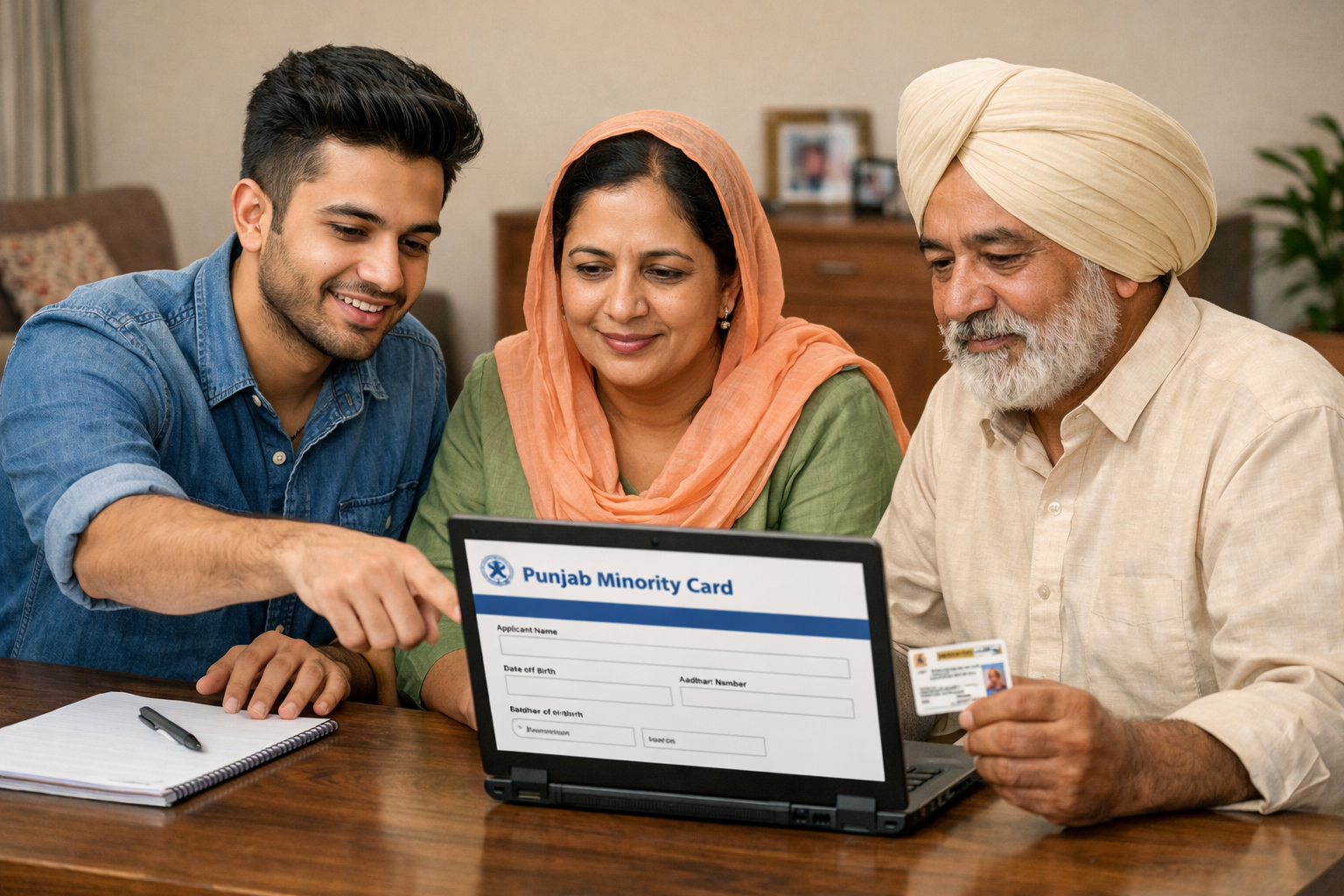
Introduction: Real Support for Minority Households
The Punjab Minority Card registration 2026 is a major welfare program in Punjab, Pakistan. It offers direct financial assistance to underprivileged minority families every three months. These payments, worth Rs. 10,500 per family, aim to help with basic expenses like food, schooling, and medicines. According to the official Punjab government portal, the initiative targets 75,000 minority families, verified through national databases like NADRA and BISP.

This guide explains how the scheme works, who qualifies, and how to apply step by step. It also includes education scholarships, healthcare access, skill training benefits, and comparisons with past welfare models, all in clear, simple language and supported by trusted links for extra authority.
Scheme Overview: What the Minority Card Does
The Punjab CM Minority Card Scheme 2026 was launched by the Government of Punjab to support families from Christian, Hindu, Sikh, and other recognised minority groups.
Unlike older programs that offered one-time help, this scheme gives regular quarterly cash support and connects families with other welfare services. It uses official registrations and data verification systems to reduce misuse and make support delivery more transparent.
Official Registration Portal: https://mcard.punjab.gov.pk
Key Features in Brief (At a Glance)
| Feature | Detail |
|---|---|
| Cash Support | Rs. 10,500 every 3 months |
| Target Families | 75,000 minority households |
| Verification Tools | NADRA, BISP, PSPA databases |
| Registration Deadline | 30 September 2026 |
| Helpline | 1040 (Punjab support) |
| Official Portal | https://mcard.punjab.gov.pk |
These structured payments help families plan spending better than one-off grants.
Why This Scheme Matters in 2026
Punjab families are dealing with high inflation and rising living costs. Many minority households face limited job access and lower average incomes, making any stable help important. This program is designed to reduce financial stress while encouraging social inclusion.
Compared to older models, the 2026 program:
- Uses data-based eligibility rather than fixed lists.
- Offers consistent quarterly support.
- Links with health, education, and employment services.
- Aims for transparent distribution, reducing middlemen or local interference.
This approach aligns with modern welfare trends that view social support as a system, not a one-point relief. Similar comprehensive welfare programs in Punjab include the Punjab Health Card Program and Punjab Ration Card Scheme.
Eligibility Criteria Explained
To qualify for the Punjab Minority Card 2026, applicants must meet the following conditions:
- Be a resident of Punjab province.
- Belong to a recognised minority community (Christian, Hindu, Sikh, etc.).
- Have a valid NADRA-issued CNIC.
- Be the head of the household.
- Have a Proxy Means Test (PMT) score of 45 or less.
- Not receive overlapping aid from major welfare programs.
- Have a registered mobile number linked to the CNIC.
What Is the PMT Score?
The Proxy Means Test (PMT) is a poverty scoring tool used by BISP and social welfare programs to identify households with the most need. It looks at income, housing, assets, utilities, and other data points. A lower PMT score means higher need and a better chance to qualify for the Minority Card. You can check your PMT score through the BISP official system by sending your CNIC to 8171 or using the government portal.
Step-by-Step Registration Process (Online + Offline)
You can apply for the Minority Card online or with help from local offices.
Online Registration
- Go to https://mcard.punjab.gov.pk (official government portal).
- Click Register and enter your CNIC and mobile number.
- Create a password and log in.
- Add family details, income, and address accurately.
- Upload scans of your CNIC, domicile proof, and income documents.
- Submit the form. The system will verify your details through official databases.
- If approved, you’ll get a confirmation message via SMS.
Offline Registration Support
If you have difficulty applying online:
- Visit the Deputy Commissioner (DC) office or Assistant Commissioner (AC) office in your area.
- Ask for help from the Punjab Social Protection Authority (PSPA) or district welfare team.
- Use the helpline 1040 for free assistance and step-by-step guidance.
How to Check Your Application Status
After applying:
- Log into the official portal with your CNIC to check status.
- Call helpline 1040 and share your CNIC to get updates.
- You may also receive SMS alerts linked to your mobile registered at application.
This makes it easier to know if your application is “Pending,” “Approved,” or if further documentation is needed.
Minority Scholarships 2026 — Education Support

Beyond cash support, the Human Rights & Minorities Affairs (HR&MA) Department runs education scholarships for students from minority families.
- Scholarships apply for pre-matric and post-matric studies.
- Students must meet minimum academic marks and income criteria.
- Applications are submitted through the official HR&MA scholarship portal: https://scholarships-hrma.punjab.gov.pk
Though some 2025–26 deadlines have passed, new scholarship cycles may open later in 2026, so students should check regularly. For students seeking other educational benefits, the Punjab Laptop Scheme and Punjab Student Cash Card are also available.
Skill Development Programs: Building Jobs & Future
The Minority Card also links beneficiaries with skill training programs for job readiness.
Examples include:
- Tailoring and sewing
- Electric and plumbing work
- Beauty care
- IT and basic digital skills
Certification from training helps participants get formal qualifications and better job opportunities. This builds long-term stability beyond one-time cash support.
Similar vocational opportunities are available through programs like SkillBridge Apprenticeship Program and Apna Khet Apna Rozgar Scheme.
Healthcare Benefits Under the Minority Card

Medical expenses often cause major hardship for low-income families. The scheme addresses this by offering free or reduced-cost healthcare at partnered hospitals.
Covered services include:
- Doctor visits and lab tests
- Emergency care
- Maternity support
- Treatment of chronic illnesses
Minority Card holders can show their card along with a CNIC at participating clinics or government health centers for access. This healthcare linkage is part of a broader welfare design to improve community well-being and resilience.
For comprehensive health coverage, the Punjab Health Card Program provides additional medical benefits up to Rs. 1,000,000 annually.
Comparison With Earlier Welfare Efforts
Before 2026, minority support in Punjab mostly included:
- One-time festival grants
- Small education stipends
- Limited assistance for specific needs
By contrast, the 2026 Minority Card program offers:
- Regular quarterly payments
- Data-verified eligibility
- Health coverage
- Education and skill training linkages
This approach reflects a shift toward systematic public welfare with measurable outcomes.
Expert Insight: Policy and Long-Term Impact
Social policy experts argue that direct cash support is more effective when combined with education and health access. The Minority Card’s layered design aims to break cycles of poverty rather than offering temporary help.
Experts note that transparent verification and consistent payments are key. Otherwise, delays or errors can undercut the welfare goals. Regular monitoring and timely feedback through official helplines and portals help maintain program integrity. According to World Bank research on social protection, integrated welfare programs show better long-term poverty reduction outcomes.
What Happens Next Before the End of 2026?

Looking ahead, families and policymakers can expect:
- Completion of new registrations by 30 September 2026
- Continued quarterly payments for approved families
- Announcements of next scholarship cycles
- Possible expansion of skill training opportunities
Families should apply early and carefully to ensure eligibility and avoid delays near deadline time.
For updates on other government programs and benefits, stay informed through official channels and resources like the PAVE Program status updates.
Frequently Asked Questions (FAQs)
Who is eligible for the Punjab Minority Card 2026?
Punjab residents from recognised minority communities with valid CNIC and PMT score ≤ 45.
How much financial support is given?
Approved families receive Rs. 10,500 every three months.
What is the last date to apply?
The registration deadline is 30 September 2026 as per official updates.
Can I check my status online?
Yes — log in to the official portal using your CNIC.
Do students get scholarships too?
Yes — through the HR&MA scholarship portal when applications are open.
What is the PMT score?
The Proxy Means Test (PMT) is a poverty scoring tool used by BISP to identify households with the most need. It examines income, housing, assets, utilities, and other data points. A PMT score of 45 or less is required for eligibility.
What documents are required for registration?
You need a valid CNIC, domicile proof, income verification documents, and a registered mobile number linked to your CNIC.
Can I apply if I already receive BISP payments?
Applicants should not receive overlapping aid from major welfare programs. Check with the helpline 1040 to verify your eligibility status.
How long does the approval process take?
The approval process typically takes a few weeks as the system verifies your details through NADRA, BISP, and PSPA databases. You can check your status through the official portal or helpline 1040.
What minority communities are covered?
The scheme covers Christian, Hindu, Sikh, and other officially recognised minority communities in Punjab.
Final Take — What This Scheme Means for Families
The Punjab Minority Card 2026 program is more than cash assistance. It represents a modern social safety net with transparent eligibility, regular support, education opportunities, healthcare access, and job training connections.
For minority families in Punjab facing rising costs and limited opportunities, registering for this scheme can help create greater financial stability and long-term opportunity in a fair and structured way.

Disclaimer: This article provides general information about the Punjab Minority Card Registration 2026 based on publicly available sources and official government portals. While we strive for accuracy, program details, deadlines, and requirements may change. Readers are advised to verify all information through official channels at https://mcard.punjab.gov.pk or by calling helpline 1040 before taking any action. Pakistan News Desk is not responsible for any decisions made based on this content.