
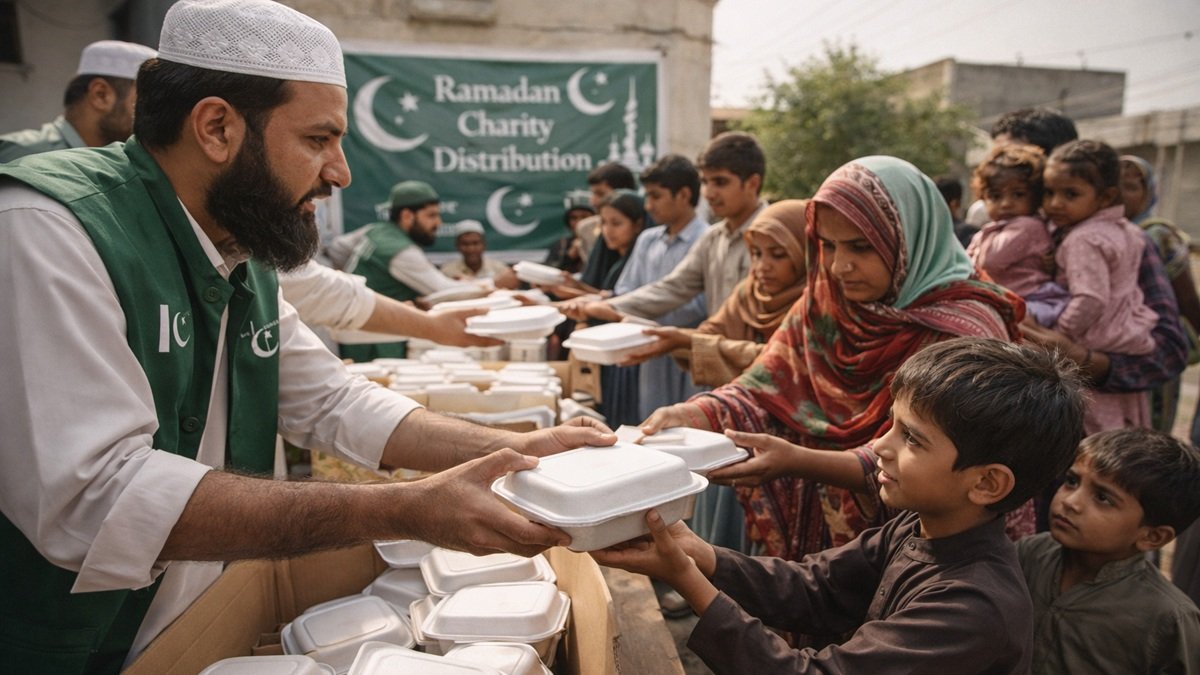
As Ramadan 2026 enters its final phase, Pakistani households are preparing for Eid. At the same time, many people feel unsure about Fitrana 2026, Fitrana and Fidya 2026, and how much they are required to pay this year.
This confusion is understandable. Food prices have shifted. Charity needs have increased. Religious guidance remains the same, but economic conditions have changed.
This article explains Fitrana and Fidya rates in Pakistan 2026 in a clear, step-by-step way, using verified religious rulings, Pakistan-specific context, and practical advice. The goal is simple: help families fulfil their duty correctly and with confidence.
Table of Contents
- Why Fitrana and Fidya Matter More in 2026
- What Is Fitrana? Meaning, Purpose, and Timing
- What Is Fidya? Who Must Pay and Who Is Exempt
- Kaffarah Explained: Why It Is a Serious Penalty
- Core Explainer: Fitrana, Fidya, and Kaffarah (Pakistan Context)
- Fitrana Rate 2026 in Pakistan: How Amounts Are Determined
- Fidya Rate Today: How Daily Fidya Is Calculated
- What Changed Compared to Last Year
- Local Impact: Why This Matters for Pakistani Society
- Expert Insight: What Scholars and Welfare Groups Say
- Step-by-Step Guide: How to Pay Fitrana or Fidya Correctly
- What Happens Next as Eid Approaches
- Key Facts at a Glance (Table)
- Frequently Asked Questions
Why Fitrana and Fidya Matter More in 2026
Every Ramadan, charity plays a key role in Pakistan’s social system. In 2026, that role feels even more important.
Food prices remain sensitive across provinces. Wheat, flour, and other staples—used as the base for Fitrana and Fidya—have shown uneven price movement. According to market summaries referenced by the Pakistan Bureau of Statistics, staple food costs continue to affect low-income households the most.
Because of this, Fitrana and Fidya are not symbolic payments. They directly affect whether struggling families can afford food, clothing, and basic Eid needs.
This is why understanding Fitrana rate 2026 and Fidya rate in Pakistan 2026 matters now more than ever.
What Is Fitrana? Meaning, Purpose, and Timing
Fitrana, also known as Zakat-ul-Fitr, is a mandatory charity paid at the end of Ramadan.
Its purpose is clear:
- To correct shortcomings in one’s fasts
- To help the poor celebrate Eid with dignity
Unlike Zakat, Fitrana is paid per person, not based on income or savings. In Pakistan, religious scholars link it to staple foods, most commonly wheat.
Islamic guidance shared by mosques and referenced by bodies such as the Council of Islamic Ideology stresses that Fitrana should be paid before the Eid prayer. Paying late removes its social benefit, even if the obligation remains.
What Is Fidya? Who Must Pay and Who Is Exempt
Fidya applies only in limited cases.
It is required when a person cannot fast at all due to permanent conditions, such as:
- Extreme old age
- Chronic illness with no expectation of recovery
For each missed fast, Fidya equals:
- Feeding one poor person for one day
- Or giving the cash value of that food
It is important to clarify what Fidya is not for.
Temporary conditions—such as travel, short illness, pregnancy, or breastfeeding—do not require Fidya. In these cases, missed fasts are made up later (Qada). This distinction is widely explained in public guidance issued by recognised Islamic welfare organisations in Pakistan. For more information on Ramadan 2026 dates and schedule, check our detailed guide.
Kaffarah Explained: Why It Is a Serious Penalty
Kaffarah is fundamentally different from Fitrana and Fidya.
It is not charity. It is a penalty for deliberate wrongdoing.
Kaffarah applies only when a person intentionally breaks a fast in Ramadan without a valid excuse. Forgetfulness, mistakes, or forced situations do not apply.
Classical Islamic rulings require:
- Fasting 60 consecutive days, or
- Feeding 60 poor people for each fast broken
Because of this, Kaffarah is always the largest and most serious obligation. Many scholars stress that people should seek guidance before assuming Kaffarah applies.
Core Explainer: Fitrana, Fidya and Kaffarah (Pakistan Context)
Purpose and when they apply
Fitrana (Zakat-ul-Fitr): Paid by every eligible Muslim at the end of Ramadan. It is linked to completing Ramadan, not missed fasts.
Fidya: Paid only when fasting is permanently impossible. It compensates each missed fast.
Kaffarah: A penalty for deliberately breaking a fast without excuse.
Basic amount structure (Pakistan context)
Fitrana 2026: Equivalent to roughly 2–2.5 kg of wheat per person, or its cash value.
Fidya: Same benchmark per missed fast.
Kaffarah: Feeding 60 poor people or fasting 60 days; often calculated as 60 times Fidya.
Who is liable to pay
Fitrana: Every Muslim with surplus beyond basic needs
Fidya: Only those permanently unable to fast
Kaffarah: Only for deliberate violations
Simple comparison
| Type | How Often | Relative Size |
|---|---|---|
| Fitrana | Once per person | Smallest |
| Fidya | Per missed fast | Medium |
| Kaffarah | Per violation | Largest |
Fitrana Rate 2026 in Pakistan: How Amounts Are Determined
Pakistan does not fix one national rupee figure.
Instead, scholars and welfare bodies calculate Fitrana using:
- Local wheat prices
- Market rates shared by provincial food departments
This approach keeps Fitrana fair across regions. Many charities publish guidance using these benchmarks, often referencing provincial price bulletins and mosque announcements.
Fidya Rate Today: How Daily Fidya Is Calculated
The Fidya rate today follows the same principle.
Each missed fast equals:
- Two simple meals for one poor person
- Or their cash equivalent
For someone unable to fast the entire month, the daily amount is multiplied by 30.
This method ensures consistency and avoids confusion.
What Changed Compared to Last Year
Religious rulings have not changed since Ramadan 2025.
However, economic pressure has increased. As a result, many families now choose to pay slightly more than the minimum. Welfare organisations report that higher voluntary payments help cover food gaps in urban and rural areas alike.
This reflects a growing awareness that minimum compliance is not always maximum impact. Similar to understanding Pakistan’s new solar net metering policy, staying informed helps families make better decisions.

Local Impact: Why This Matters for Pakistani Society
In Pakistan, Fitrana and Fidya act as a short-term safety net.
Collected funds often help families:
- Buy food for Eid day
- Purchase children’s clothes
- Cover basic household expenses
For many recipients, this assistance makes the difference between celebration and hardship.
Expert Insight: What Scholars and Welfare Groups Say
Religious scholars consistently highlight timing.
A senior scholar associated with mosque networks in Punjab explains:
“Fitrana only achieves its purpose when it reaches the needy before Eid. Delay removes its social value.”
Welfare groups echo this view and advise using trusted charities or direct local distribution.
Just as verification is important for NADRA facial recognition and CNIC verification, ensuring your charity reaches the right people requires careful attention to trusted channels.
Step-by-Step Guide: How to Pay Fitrana or Fidya Correctly
- Count how many people you support
- Calculate based on local wheat prices
- Choose food or cash
- Pay before Eid prayer
- Use reliable, transparent channels
For those managing property transactions, understanding processes like Punjab property registration and Fard Baraye Bay requires similar attention to detail and proper documentation.
What Happens Next as Eid Approaches
As Eid nears, mosques and charities increase collection drives. Late payments may still fulfil the obligation, but they reduce real-world benefit.
The final days of Ramadan are the most effective time to act.
For those interested in employment opportunities, check out Ministry of Defence jobs 2026 which offers positions across various grades.
Key Facts at a Glance
| Category | Details |
|---|---|
| Fitrana 2026 | Per person, once before Eid |
| Fidya Ramadan 2026 Pakistan | Per missed fast |
| Kaffarah | 60× Fidya or 60 fasts |
| Main goal | Dignity and relief |
| Payment deadline | Before Eid prayer |
| Who pays Fitrana | Every Muslim with surplus |
| Who pays Fidya | Only permanently unable to fast |
Frequently Asked Questions
Is Fitrana required for children?
Yes. Fitrana is required for every Muslim, including children. Parents or guardians typically pay Fitrana on behalf of their minor children.
Can Fitrana be paid in cash?
Yes, Fitrana can be paid in cash as long as it equals the value of the staple food (typically wheat) as determined by local market prices.
Who pays Fidya in 2026?
Only those who are permanently unable to fast due to extreme old age or chronic illness with no expectation of recovery are required to pay Fidya.
Does accidental eating require Kaffarah?
No. Accidental eating due to forgetfulness does not require Kaffarah. Kaffarah is only required for deliberately breaking a fast without a valid excuse.
What is the difference between Fitrana and Fidya?
Fitrana is paid once per person at the end of Ramadan by all eligible Muslims. Fidya is paid per missed fast by those who are permanently unable to fast due to serious health conditions.
When should Fitrana be paid?
Fitrana should ideally be paid before the Eid prayer. Some scholars allow payment during the last days of Ramadan to ensure it reaches the needy in time.
Can I pay Fitrana to multiple people?
Yes, one person’s Fitrana can be given to one poor person, or you can distribute it among several needy individuals.
What if I miss the Eid prayer deadline for Fitrana?
The obligation remains, but the social benefit is reduced. It should still be paid as soon as possible.
Is Fidya required for pregnancy?
No. Pregnant or breastfeeding women who cannot fast should make up (Qada) the missed fasts later when able. Fidya is only for permanent inability.
How is the wheat price determined for Fitrana?
Local scholars and welfare organizations typically consult provincial food department bulletins and current market rates to determine fair wheat prices.
Final Insight: Why This Still Matters
Fitrana and Fidya are not just obligations. In Pakistan, they are tools of social balance.
When paid correctly and on time, Fitrana and Fidya 2026 turn faith into food and responsibility into relief—exactly the purpose Ramadan was meant to serve.
For those interested in modern infrastructure developments, learn about satellite internet in Pakistan including Starlink pricing and launch policy.


Disclaimer: This article provides general information about Fitrana and Fidya rates in Pakistan 2026 based on commonly accepted Islamic principles and market conditions. Specific rates may vary by region and religious authority. Readers are encouraged to consult local scholars, mosques, or trusted Islamic welfare organizations for the most accurate and applicable guidance for their circumstances. Pakistan News Desk is not responsible for individual religious decisions or financial transactions made based on this information.