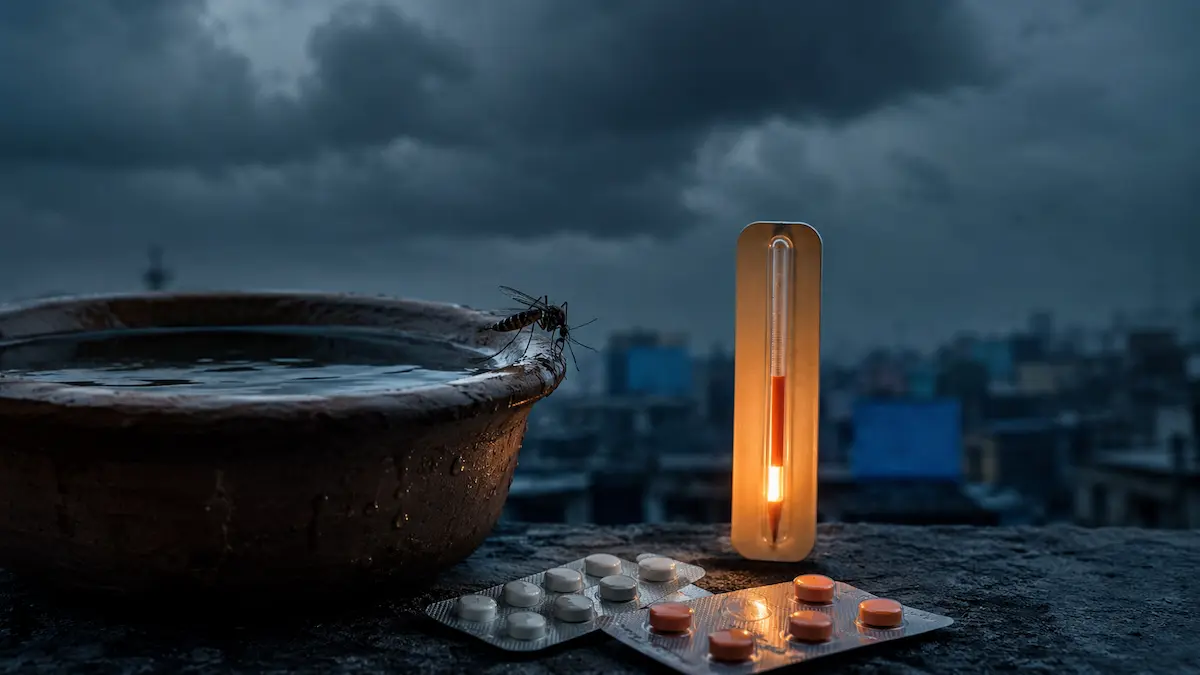
Why Dengue Risk Is Rising Again in Lahore and Rawalpindi
Dengue is no longer a surprise outbreak in Punjab. It comes back every year with the monsoon rains, and 2026 is no different. Punjab recorded more than 4,100 dengue cases last season. Rawalpindi alone crossed 1,000 reported infections in several health updates.
Several factors keep pushing the risk higher each year. Irregular monsoon rainfall, poor drainage, construction sites with standing water, uncovered rooftop tanks, and dense urban housing all create conditions where mosquitoes breed fast and spread quickly.
According to the World Health Organization Dengue Fact Sheet, dengue spreads faster in crowded urban areas where stagnant water remains untreated. Climate changes are also helping mosquitoes survive longer than before.
Lahore and Rawalpindi Hotspots Families Should Know
Some areas keep appearing in dengue monitoring reports season after season. In Lahore, these include Samanabad, Gulberg, Allama Iqbal Town, Faisal Town, and Lahore Cantt. Dense housing, construction activity, and poor stormwater management drive risk in each of these zones.
In Rawalpindi, older settlements face the biggest challenge. Areas like Pirwadahi, Dhoke Mangtal, Ratta Amral, Rehmatabad, and Dhoke Kala Khan have seen repeated dengue alerts due to drainage gaps and stagnant rainwater collecting in residential lanes.
Residents near graveyards, empty plots, and poorly maintained society entrances also report higher mosquito activity during monsoon months. Punjab’s Punjab Health Card program covers treatment at approved hospitals, which is important context for families planning ahead this season.
Ward Level Risk Matters More Than City Headlines
One major shift in Punjab’s dengue strategy is the focus on ward based monitoring. A city may appear stable overall while one union council faces serious mosquito activity. Two nearby streets can face completely different risk levels depending on drainage and water storage habits.
Signs your area could be high risk include: mosquitoes biting during daytime, standing water remaining after rain, nearby construction work, repeated fever cases in the same lane, uncovered rooftop tanks, and delayed garbage collection.
Early Dengue Symptoms Families Often Miss
Dengue symptoms look similar to summer flu in the early days. Many families delay testing because of this. Common early signs include high fever, severe body pain, headache behind the eyes, vomiting, weakness, joint pain, and skin rash. Children may become unusually tired before fever becomes severe.
Some warning signs require immediate hospital attention and should never be ignored at home:
| Warning Sign | Why It Matters |
|---|---|
| Severe stomach pain | Possible plasma leakage |
| Continuous vomiting | Dehydration risk |
| Black stool | Internal bleeding concern |
| Cold hands and feet | Shock warning |
| Extreme dizziness | Severe dengue complication |
What To Do Immediately When Symptoms Appear
Avoid aspirin and ibuprofen. Both medicines can increase bleeding risk during dengue. Start oral hydration early using ORS, soup, coconut water, or plain water. Get tested at a government facility quickly rather than waiting at home.
One common mistake is waiting for platelet test results before going to hospital. Doctors at Benazir Bhutto Hospital and District Headquarters Hospital in Rawalpindi advise seeking medical help as soon as symptoms worsen, not after multiple days at home. Pakistan also recently introduced rules requiring HIV and hepatitis testing before surgery, reflecting a broader push toward proactive health screening that families should be aware of.
Government Dengue Hospitals in Punjab
In Lahore, major government facilities include Punjab Institute of Cardiology, Punjab Kidney and Liver Institute, and district hospitals with dengue isolation wards. In Rawalpindi, Benazir Bhutto Hospital and District Headquarters Hospital remain the main public options.
Knowing the nearest facility before an emergency saves critical time during dengue season.
Why Fogging Alone Will Not Protect Your Family
Fogging only reduces adult mosquitoes for a short time. Mosquitoes return quickly if breeding sites remain untreated near and inside homes. Residents across Punjab report that main roads receive more fogging coverage than inner streets and side lanes.
Health workers consistently say household prevention makes a bigger difference than one round of fogging. A single uncovered tray, cooler, or rooftop corner can become a breeding site within days of rainfall.
Simple DIY Prevention Steps Every Family Can Follow
Low cost habits protect families better than expensive gadgets. Empty flower pot trays weekly. Clean roof gutters after every rainfall. Cover rooftop water tanks daily. Remove old tyres immediately. Check buckets and coolers every week.
| Task | Frequency |
|---|---|
| Empty flower pot trays | Weekly |
| Clean roof gutters | After rainfall |
| Cover rooftop tanks | Daily |
| Remove old tyres | Immediately |
| Check buckets and coolers | Weekly |
At home, install mesh screens on windows, use mosquito nets for children, wear full sleeves during evening hours, and empty standing water quickly after rain. These steps cost almost nothing but reduce risk significantly.
Frequently Asked Questions
Which months are most dangerous for dengue in Punjab?
Dengue cases usually rise between June and October during monsoon season.
Which Punjab cities face higher dengue risk?
Lahore, Rawalpindi, Faisalabad, and Multan regularly report higher dengue activity each season.
Can dengue mosquitoes breed inside clean homes?
Yes. Aedes mosquitoes often breed in clean stagnant water inside coolers, buckets, flower pots, and rooftop tanks.
Should families wait for platelet tests before visiting a hospital?
No. Doctors recommend early medical care if fever, vomiting, dizziness, or severe weakness develops. Do not wait at home for platelet results.
Does fogging completely stop dengue?
No. Fogging only reduces adult mosquitoes temporarily. Removing stagnant water remains the most effective prevention method.
Which medicines should be avoided during dengue fever?
Avoid aspirin and ibuprofen. Both can increase bleeding risk. Seek medical advice promptly instead.