
Why Pakistani Students Are Choosing China for AI Jobs
For years, China was known mainly as an affordable place to study. Pakistani families picked it for low fees and easy scholarships.
That picture is changing. Many students now choose China for artificial intelligence programs, engineering degrees, and career paths tied to the China Pakistan Economic Corridor (CPEC).
Families are no longer asking only where to study. They are asking where a degree actually leads.
China Is No Longer Just a Scholarship Destination
Lower tuition still matters. Living costs in many Chinese cities stay manageable for middle income Pakistani families.
But the bigger pull now is technology. Chinese universities have built strong programs in engineering, computer science, and artificial intelligence, many taught fully in English.
Students increasingly see a Chinese degree as a route to practical skills, not just a foreign paper.
Pakistani Student Numbers Keep Growing in China
This shift sits on top of an already large student base. Official data reported in 2025 put the number of Pakistani students in Chinese universities above 28,000.
That makes Pakistan one of China’s biggest sources of international students. A large student community brings real advantages.
Established networks make admissions easier. Alumni already in China help newcomers with guidance, housing, and university contacts.
AI Degrees Are Driving New Interest in China
Artificial intelligence is now one of the top reasons students consider China. The country has invested heavily in AI research, robotics, and automation over the past decade.
Chinese universities have responded with dedicated AI and data science programs at both undergraduate and postgraduate level.
Common subjects include machine learning, computer vision, robotics, and applied artificial intelligence. Many courses combine classroom work with industry projects.
How CPEC Links Education to Pakistan’s Economy
The China Pakistan Economic Corridor keeps shaping study choices. University partnerships under CPEC focus on engineering, energy, transport, and agriculture.
Pakistan has also widened its economic ties elsewhere in Asia. The Pakistan-Korea trade pact (CEPA) is another example of how new agreements are opening fresh job markets for skilled Pakistani workers.
Many students now view a Chinese degree as a direct link to industries that matter for Pakistan’s own growth.
China vs UK and Other Study Destinations
Study abroad conversations used to centre on the UK, US, Canada, and Australia. That conversation is shifting.
Families now weigh cost, scholarships, job prospects, and visa rules side by side. China often performs strongly on affordability and government funded support.
| Factor | China | Traditional Western Destinations |
|---|---|---|
| Tuition Cost | Generally lower | Often higher |
| Scholarship Availability | Strong government support | Competitive |
| STEM Programs | Extensive | Extensive |
| Living Costs | Relatively affordable | Higher in many cities |
| AI Research Investment | Rapidly growing | Established |
| Pakistan Specific Partnerships | Strong | Limited |
Scholarships Still Matter, But Competition Has Risen
The Chinese Government Scholarship Program still anchors most applications. For the 2026-27 cycle, the China Scholarship Council offered 75 seats for Pakistani students across bachelor’s, master’s, and PhD programs, according to the Higher Education Commission of Pakistan.
The HEC nomination window for that round closed in January 2026. A fresh call usually opens later in the year, so applicants should track HEC announcements closely.
HEC has also tightened other rules for students studying abroad. Its new rule on holding two degrees shows the commission is paying closer attention to how Pakistani students plan their studies overseas.
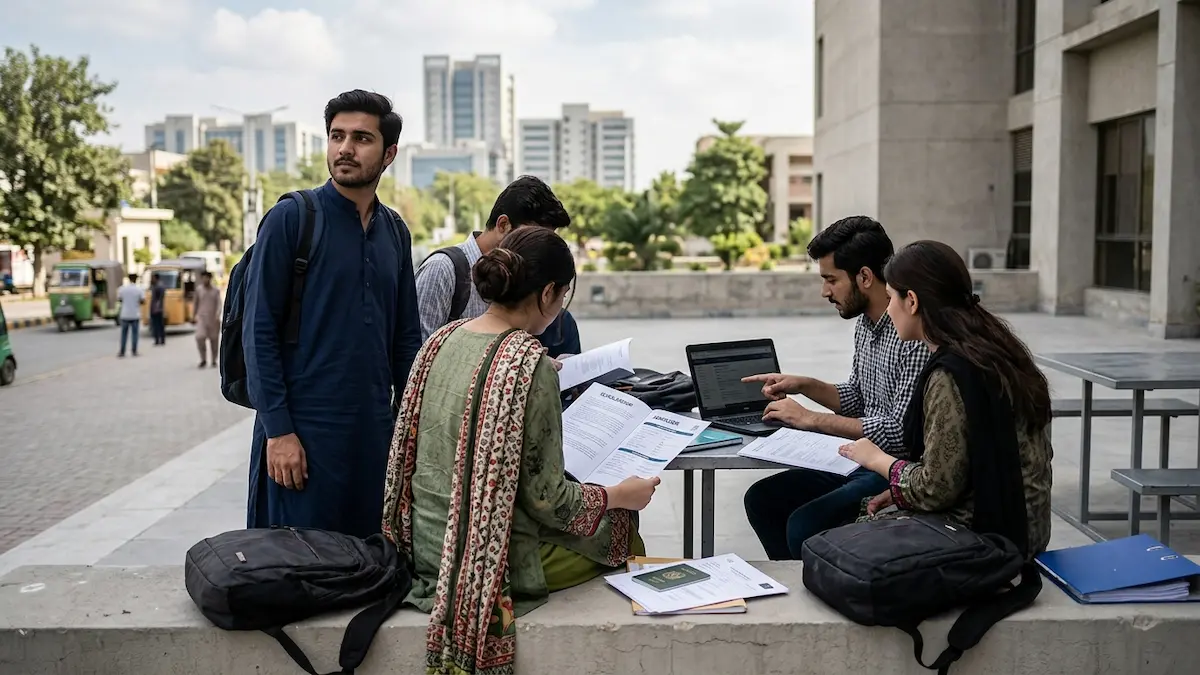
Applicants typically need transcripts, degree certificates, language proof, and recommendation letters. Success still depends on academic record and meeting official deadlines.
Career Opportunities After Studying in China
Job prospects now sit at the centre of the decision. Many graduates look at technology roles such as software development, data analysis, and cybersecurity.
Engineering remains strong too, with civil, mechanical, and electrical roles tied to China’s manufacturing base.
Pakistan’s overseas job market is widening elsewhere as well. Just as Saudi Arabia’s FIFA 2034 preparations are creating new roles for Pakistani workers, graduates from China are eyeing openings in trade, logistics, and research tied to Pakistan-China business links.
Chinese Language Skills Add a Competitive Edge
Most degree programs run fully in English. Even so, learning Mandarin alongside a degree can open extra doors.
Basic Chinese language skills help in trade, manufacturing, and logistics roles connected to Pakistan-China commerce.
Challenges Students Should Weigh Before Deciding
Studying in China is not without hurdles. Daily life often needs at least basic Mandarin, especially outside major cities.
Scholarship seats draw applicants from many countries, so competition stays high every year.
A foreign degree alone will not guarantee a job. Internships, language skills, and real industry exposure still matter the most.
Frequently Asked Questions
Why are Pakistani students choosing China over the UK?
Many students point to lower tuition costs, strong scholarship support, growing AI and engineering programs, and closer links between Chinese degrees and jobs in technology and industry.
How many Pakistani students are currently studying in China?
Official data reported in 2025 put the figure above 28,000, making Pakistan one of the largest sources of international students in China.
Does China still offer scholarships for Pakistani students?
Yes. The Chinese Government Scholarship Program offered 75 seats for Pakistani students for the 2026-27 cycle through HEC nomination. That application window has closed, and a new round is expected to open later in the year.
What are the most popular degree programs for Pakistani students in China?
Engineering, artificial intelligence, computer science, data science, and robotics remain the most sought after fields among Pakistani applicants.
Can Pakistani graduates find jobs after studying in China?
Outcomes depend on skills, language ability, and internships. Many graduates move into technology, engineering, research, and trade roles linked to Pakistan-China business ties.
Is learning Mandarin necessary to study in China?
Most degree programs are taught in English. Basic Mandarin skills are not required for admission but can open extra opportunities in trade and industry roles.