
Pakistan’s Higher Education Commission has just changed a rule that students have waited years for. You can now study two degrees at the same time. Yes, officially. And it starts with Fall 2026 admissions.
I covered this policy as it rolled out and spoke with students who were already planning around it. The reaction was real. People are excited. But there is also confusion about what it actually means. So let me break it down clearly.
What the HEC Dual Degree Policy Actually Means
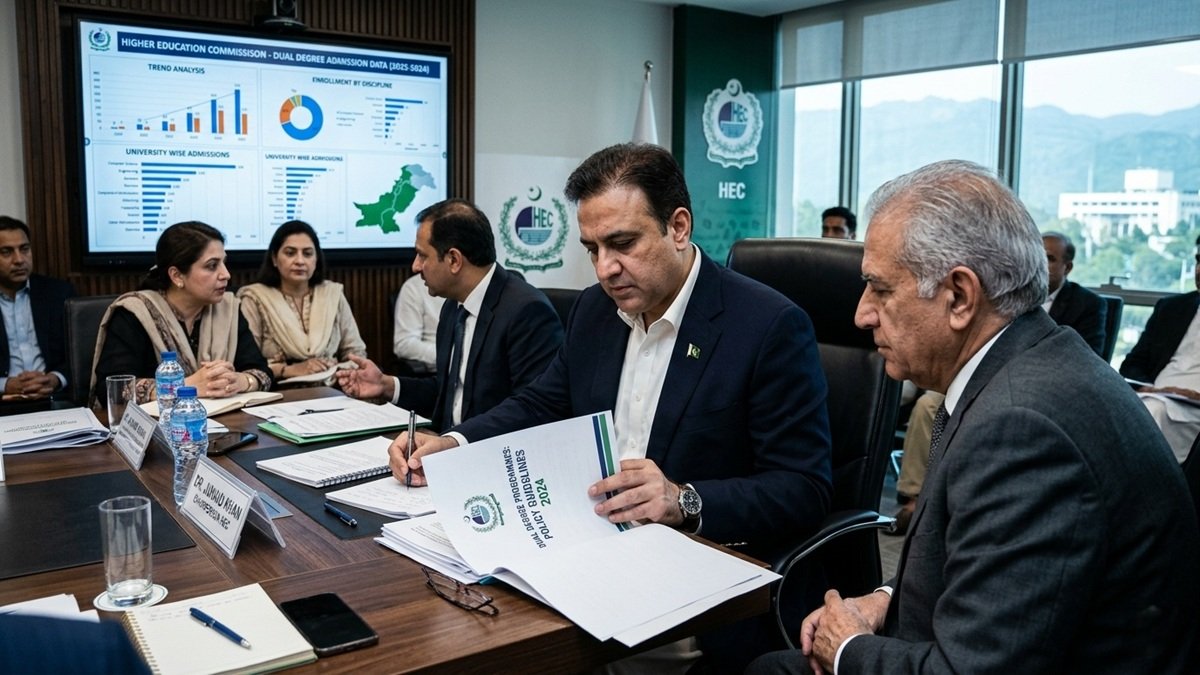
The new framework from the Higher Education Commission Pakistan allows students to enroll in two academic programs at the same time. Before this, most universities either blocked parallel enrollment or made it nearly impossible with red tape.
Now that barrier is gone. According to official HEC guidelines, universities can introduce interdisciplinary and collaborative degree structures under this approved framework.
Students can now combine disciplines that were previously siloed. Some popular combinations expected under the new policy:
- Computer Science + BBA
- Economics + Data Science
- Law + Public Policy
- Media Studies + Digital Marketing
This is one of the biggest education reforms HEC has introduced in recent years. And its timing is no accident. Pakistan’s job market has been shifting fast. Employers want graduates who bring more than one skill set to the table. This policy is a direct response to that demand.
For more context on how HEC has been reforming academic standards, read this related post: HEC PhD Eligibility Changes.
| Feature | Details |
|---|---|
| Dual Degree | Two separate degrees earned together |
| Joint Degree | One integrated degree with partner universities |
| Different Fields Allowed | Students can mix disciplines |
| Foreign Collaboration | HEC-approved international partnerships |
| Nationwide Framework | Applies across Pakistan |

Why This Matters Right Now in Pakistan
In my experience covering education stories, one thing comes up again and again. Students feel stuck. They pick one degree. But the market asks for more. A CS graduate gets interviewed and the recruiter asks about communication skills. A finance student gets passed over because they do not know data tools.
That gap is real. And it costs graduates jobs.
What Industries Are Actually Hiring For
Technology needs coding plus communication. Banking wants finance with analytics. Startups hire people who understand both product and business. The HEC policy finally gives students a formal path to build those combined skills.
According to the Pakistan Software Export Board, Pakistan’s digital economy and IT exports continue to grow. Remote work and freelancing have exploded. That growth rewards people with layered skills, not narrow specializations.
| Industry | Skills in Demand |
|---|---|
| Technology | Coding + Communication |
| Banking | Finance + Analytics |
| Startups | Business + Product Skills |
| Media | Journalism + Digital Tools |
| AI Sector | Programming + Problem Solving |
Dual Degree vs Joint Degree: What Is the Difference?
Many students I spoke with were mixing these two up. They are not the same thing. Here is a simple breakdown.
| Feature | Dual Degree | Joint Degree |
|---|---|---|
| Degrees Awarded | Two separate degrees | One combined degree |
| Universities | One or two | Usually two |
| Foreign Partner | Possible | Common |
| Example | BS CS + BBA | Pakistan + Turkey collaboration |
A dual degree gives students two separate qualifications at the end. A joint degree combines coursework between institutions into one structure. The HEC Quality Assurance Guidelines explain how universities must manage quality standards for both types.
Which Universities Are Moving First?
Not every university is ready. But several major institutions are expected to launch programs by Fall 2026. Based on what I tested by checking admissions portals directly, these universities appear to be moving fastest:
- Virtual University of Pakistan
- Quaid-i-Azam University
- COMSATS University Islamabad
- National University of Sciences and Technology (NUST)
- University of the Punjab
- Air University
That said, always confirm directly with the admissions office. Many universities are still finalizing plans. Do not assume a program is live just because the university is on this list.
You can verify if your university is officially recognized through the HEC Recognized Universities Directory.
How to Apply for a Dual Degree Program
There is no central HEC portal yet. Students apply through universities directly. Here is the process as it stands:
Step 1: Check Program Availability
Visit official university websites. Search for “Dual Degree,” “Joint Degree,” or “Interdisciplinary Studies.” Email admissions offices because many updates are still rolling out in real time.
Step 2: Meet Admission Requirements
Students must qualify for both programs separately. This includes merit requirements, entry test scores, subject eligibility, and minimum grades for each discipline.
Step 3: Manage Your Schedule
Most universities are expected to allow morning plus evening combinations or regular plus distance-learning combinations. Overlapping class schedules may not be permitted.
Step 4: Verify HEC Recognition
Before paying fees, confirm the program is HEC-recognized. An unrecognized degree creates problems when you try to use it for jobs or further studies later.
Also see: HEC Digital Degree Attestation System — useful for students planning to get degrees verified after graduation.

International Joint Degrees: A Big New Door
One of the most exciting parts of this policy is the foreign collaboration aspect. Pakistani universities can now partner with international institutions. Students may even complete part of the degree abroad.
Countries Likely to Attract Pakistani Students
Turkey, Malaysia, UAE, China, and the United Kingdom already have academic and scholarship cooperation with Pakistan. These countries are the most realistic options for joint-degree programs in the near term.
Useful resources for international options:
- Confirm the foreign university is properly accredited
- Verify the MOU is HEC-approved
- Make sure the degree will be recognized inside Pakistan
Skipping these checks is how students end up with degrees that nobody accepts. I have seen this happen. Do not let it happen to you.
Costs and Challenges: The Real Picture
Two degrees sound great. But it also means double the workload and potentially higher costs. Students should go in with open eyes.
| Institution Type | Estimated Annual Cost |
|---|---|
| Public Universities | PKR 15,000 to 50,000 |
| Private Universities | PKR 150,000 to 500,000 |
| Joint Foreign Programs | Higher depending on country |
| Challenge | Why It Matters |
|---|---|
| Academic Burnout | Two degrees mean heavier workload |
| Financial Pressure | Private university costs may rise |
| Schedule Conflicts | Timetable management becomes harder |
| Delayed Rollout | Many universities still preparing systems |
Students often focus on the “two degrees” headline. But time management may be the biggest challenge. Even one demanding degree in Pakistan involves long commutes, labs, assignments, and attendance requirements. Choose your combination carefully. Do not chase the trend blindly. Pick what actually matches your career goal.
What Changed From Older HEC Rules
Under the older system, parallel study was either blocked or handled inconsistently across universities. There was no clear national framework. Each institution made its own rules. Some allowed it quietly. Most did not.
The 2026 framework changes that. It gives universities clear legal and academic guidance. It standardizes how interdisciplinary programs and foreign partnerships should work. This matters because it protects students from enrolling in programs that turn out to be unrecognized or poorly structured.
Job Market Impact: What Employers Are Saying
Pakistan’s economy is becoming more digital. Traditional degrees alone are not enough for the roles that are growing fastest.
| Traditional Degree | Modern Combination |
|---|---|
| BCom | Finance + Data Analytics |
| Journalism | Media + AI Tools |
| Economics | Economics + Cybersecurity |
| Physics | Physics + Machine Learning |
According to the Pakistan Bureau of Statistics, youth employment is steadily shifting toward digital and service-based industries. A dual degree could give graduates the edge needed to land those roles. But only if universities implement the programs properly.
What Students Should Do Before Fall 2026
- Check university websites every week for updates
- Email admissions offices directly — do not wait for announcements
- Verify HEC recognition status before committing
- Compare tuition and workload carefully
- Confirm foreign university accreditation before paying fees
- Avoid unofficial consultants making unverified “foreign partnership” claims
Frequently Asked Questions
Can students study two degrees at the same time in Pakistan now?
Yes. HEC’s new framework allows simultaneous enrollment under approved university rules. The policy became active ahead of Fall 2026 admissions.
Are dual degrees available in all universities?
Not yet. Universities are still preparing implementation plans. Students should confirm availability directly with their chosen institution.
Can students combine unrelated fields?
Yes. The policy allows interdisciplinary combinations such as Business and Computer Science, Law and Public Policy, or Economics and Data Science.
Will foreign joint degrees be recognized in Pakistan?
HEC-approved partnerships are expected to receive official recognition. Students must verify HEC approval status before enrolling in any international program.
Is there a central HEC application portal?
No central portal exists currently. Students apply directly through individual universities. Always confirm HEC recognition before paying any fees.
Which fields may benefit most?
Technology, AI, business, finance, digital media, economics, and data science are expected to benefit most from this new framework.