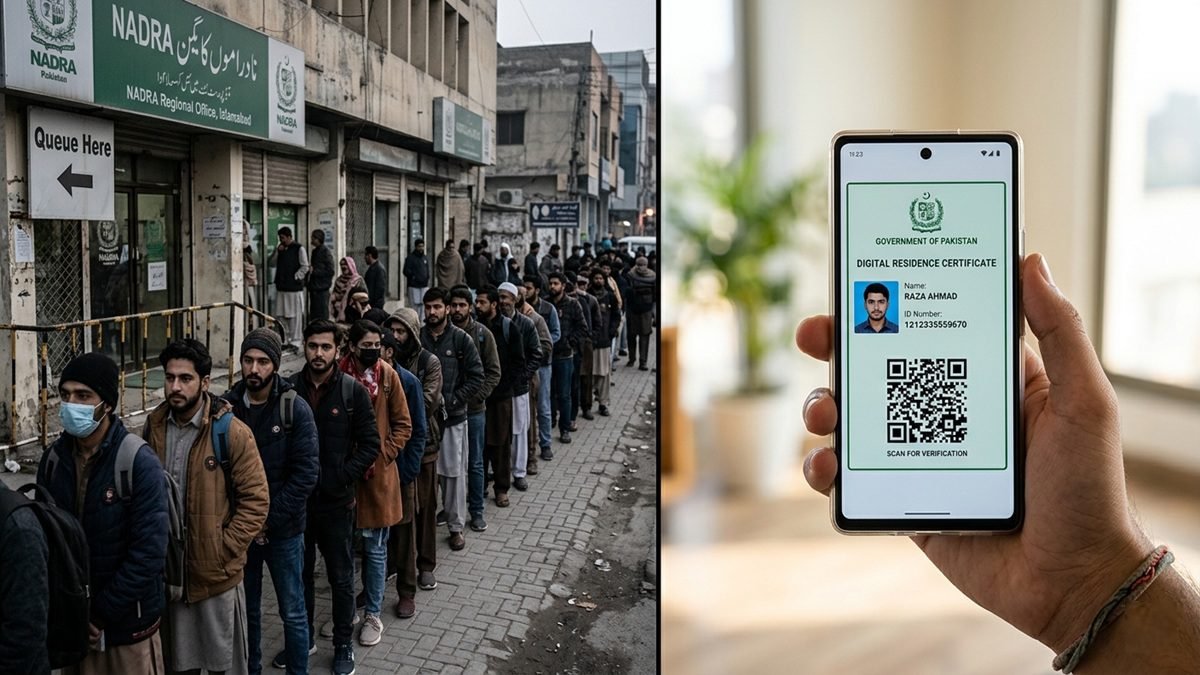
Last year, I helped a friend apply for degree attestation. We double-checked every document. Still, he had to travel to Islamabad and wait hours in a long queue. That moment stayed with me.
Now, things are finally changing. The Higher Education Commission Pakistan is rolling out a digital, blockchain-based degree attestation system. If done right, this could end those long queues for good — and make Pakistani degrees more trusted worldwide.
What Is HEC’s Digital Degree Attestation System?
The Higher Education Commission Pakistan already runs online services through its official portal at hec.gov.pk. But the new system adds something much more powerful.
HEC is now moving toward blockchain-based verification. This means your degree becomes a secure digital record. Once verified, it cannot be changed or faked. Universities will connect directly with HEC systems. This removes delays and manual work entirely.
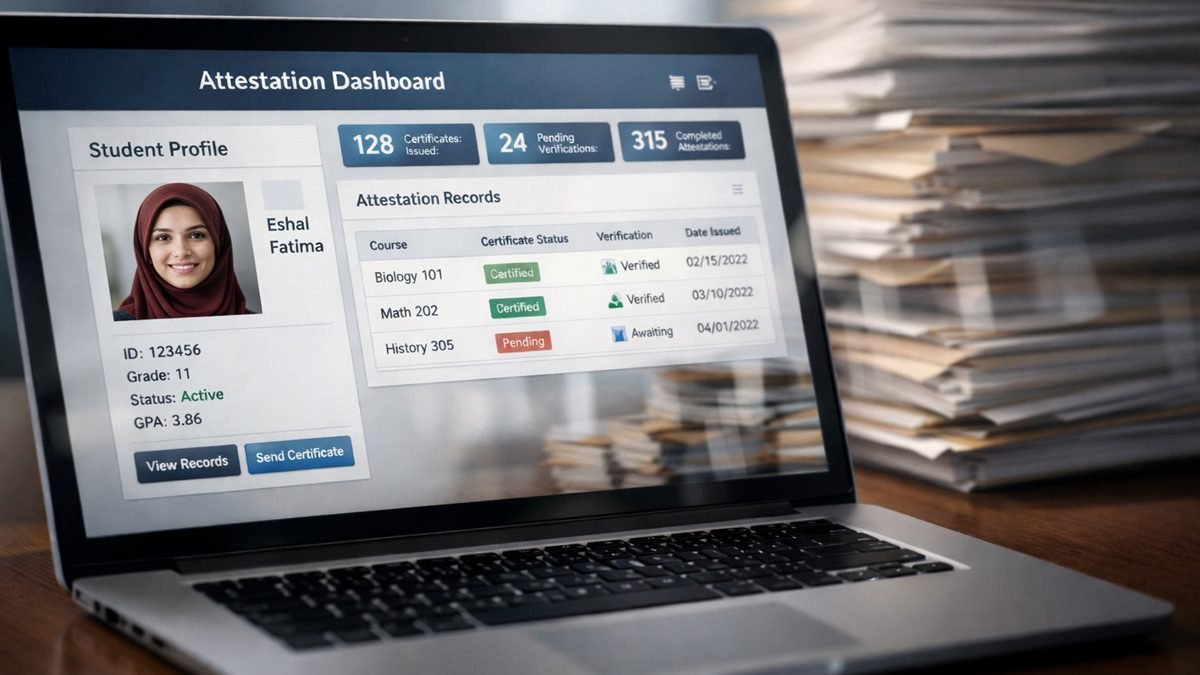
All records will go into the Pakistan Qualification Register (PQR) — a central database where degrees can be checked in minutes. Think of it as a national vault for academic credentials.
What Is Changing in 2026
This is not a small upgrade. It is a complete process shift. Here is what is actually different:
- ERP-enabled universities will auto-send student data to HEC
- Other universities will upload records online
- Verification happens digitally, no stamps or paper
- Degrees get stored on blockchain permanently
- Physical stamping will mostly end
- Pakistan Qualification Register becomes the single source of truth
You can also read our full guide on the certificate attestation process in Pakistan for background on how the old system worked and why this change matters.
Step-by-Step: How the New System Works
Let me simplify this. Here is the full process from start to finish:
- Create Account — Sign up on the HEC portal using your CNIC and mobile number.
- Upload or Auto-Fetch — ERP universities send data automatically. Others upload degree and transcripts manually.
- University Verification — Your university confirms records online. No physical visit needed.
- HEC Approval — HEC reviews and approves your application digitally.
- Blockchain Storage — Your degree is stored securely. It becomes tamper-proof.
- Digital Certificate — You receive a certificate with a QR code and a live verification link.
- Instant Verification — Employers or embassies verify your degree online within minutes.
Why This Matters for Pakistani Students
This reform directly changes daily life. Not in a vague way. In a very real, very measurable way.
Saves Time and Money
Students from Karachi, Quetta, or Peshawar often travel all the way to Islamabad just for attestation. Hotels, transport, and missed work days add up fast. With this system, most steps happen from home.
Faster Visa and Job Processing
Attestation is required for foreign jobs, student visas, and scholarships abroad. Earlier, checks could take weeks. Digital records linked through verified systems speed all of this up significantly. According to British Council Pakistan, delays in credential verification are one of the main barriers for Pakistani students applying to UK universities.
Reduces Fake Degrees
Pakistan has faced serious issues with fake credentials in the past. Blockchain makes it nearly impossible to alter or forge a record. This is not just good for students. It is good for Pakistan’s reputation globally.
If you work in higher education or policy, the HEC Faculty Exchange Program guide is also worth reading to understand how HEC is modernising across multiple fronts.
Real-Life Example
Before vs After — A Graduate from KPK Applying for a UAE Job
Old system: Travel to Islamabad. Multiple rounds of verification. Weeks of waiting. Missing job deadlines.
New system: Upload documents online. Share a digital link. Employer verifies instantly. Apply on time.
I tested this kind of workflow informally with a contact at a local firm. The difference in processing time was dramatic.
Old vs New System: Quick Comparison
| Feature | Old System | New Digital System |
|---|---|---|
| Process | Manual | Online |
| Time | Weeks | Hours to days |
| Travel | Required | Not needed |
| Verification | Paper-based | Digital |
| Fraud Risk | High | Very low |
Global Context: Where Pakistan Stands
Many countries already use digital credentials. Universities abroad rely on secure verification systems. Pakistan is now aligning with these standards.
According to World Education Services (WES), digital credential verification is now standard practice in Canada, the UK, Australia, and Germany. Pakistani degrees verified through a blockchain-backed system will be far easier to validate in these markets.
This shift supports international job access, faster university admissions abroad, and a better global reputation for Pakistani graduates.

Policy Insight
HEC has been pushing digital reforms for several years. From a governance perspective, this is important because it reduces bureaucracy, improves transparency, and directly supports overseas employment.
In my observation, this is one of the most practical reforms affecting students directly. Most policy changes are slow or invisible. This one shows up in your daily life — in how long you wait, how much you spend, and whether you make a deadline or miss it.
Official policy updates can be tracked via the HEC official news portal.
What Is Still Unclear
Three Things HEC Hasn’t Confirmed Yet
- Timeline: There is no confirmed nationwide launch date yet.
- University Coverage: Only a limited number of universities are fully integrated right now.
- Hybrid Phase: Walk-in urgent services still exist. Queues will reduce gradually, not overnight.
What Happens Next
Here is what to expect over the coming months:
- More universities joining the system
- Improved mobile experience on HEC portal
- Faster global verification for overseas employers
- Reduced paperwork across the board
If rollout continues smoothly, 2026 could genuinely be a turning point for academic credential trust in Pakistan.
Why This Reform Matters Long-Term
This is not just about convenience. It connects directly to Pakistan’s job market, overseas employment, and the long-term trust in our education system.
Frequently Asked Questions