Hyderabad Traffic Police Begin Mobile Robo Camera Enforcement
Drivers travelling through Hyderabad may now notice officers carrying small digital devices instead of paper challan books. This is part of the city’s growing AI based traffic enforcement network.
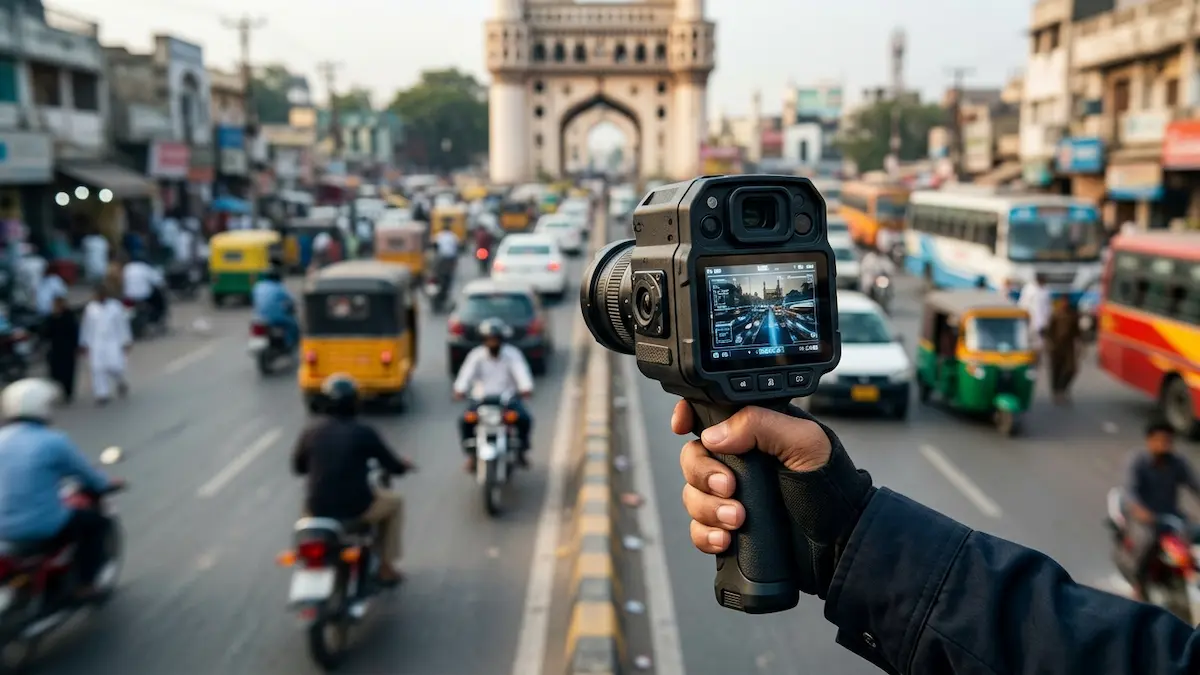
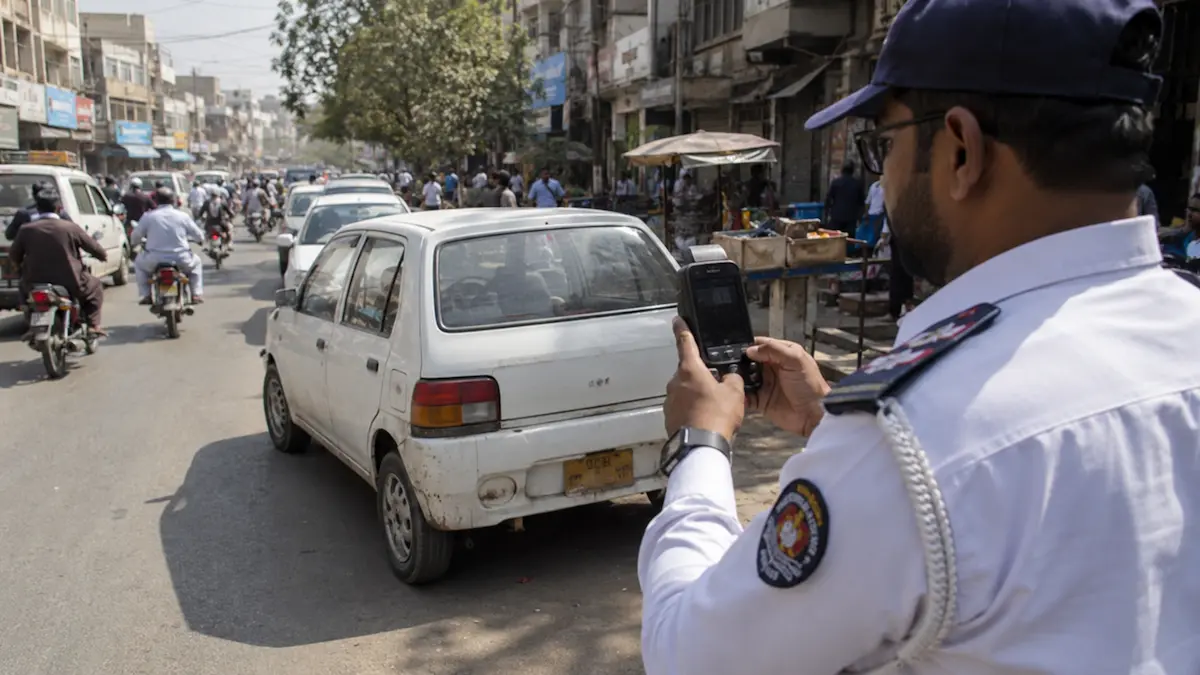
According to official police announcements, the handheld robo cameras let officers record photo and video evidence, verify a violation digitally, and process an electronic challan right at the scene. This includes offences such as wrong parking, one way driving, illegal number plates and unregistered vehicles.
What Has Changed From the Previous Traffic Camera System
Until recently, Hyderabad’s digital enforcement relied mainly on fixed cameras installed at major intersections and highways. Busy markets, school zones and narrow inner roads were harder to monitor.
The new mobile robo cameras close that gap. Officers can now carry the technology into shopping districts, school zones and temporary traffic diversions, giving the city broader coverage without building new camera infrastructure.
How the Mobile Robo Camera E Challan System Works
The process is simple. An officer spots a violation, records photo or video evidence on the handheld device, and the vehicle details are checked through the digital enforcement system.
Once verified, the offence is entered into the city’s electronic challan platform and the driver receives a digital record instead of a handwritten ticket. The evidence stays linked to the challan, creating an audit trail that can help settle disputes later.
Why Hyderabad Is Expanding AI Traffic Enforcement
This rollout builds on a wider digital traffic management strategy across Sindh. Several highways and urban corridors already use automated monitoring, and handheld devices extend that reach beyond fixed roadside equipment.
Similar reforms have been rolled out elsewhere too, including Punjab’s police reform programme, which reflects a broader national push toward technology driven policing.
Updated Penalty Structure Under AI Enabled Enforcement
The robo cameras focus on faster evidence collection, but the fines linked to common violations remain significant. The table below summarises the publicly reported penalty ranges.
| Violation | Reported Fine |
|---|---|
| Improper motorbike parking | Rs 2,000 |
| One way violation by motorcycle | Up to Rs 25,000 |
| Unregistered car or jeep | Up to Rs 50,000 |
| Heavy transport offences (one way driving, pressure horns, no registration) | Up to Rs 100,000 |
Mobile Robo Cameras Versus Fixed Traffic Cameras
The handheld devices do not replace Hyderabad’s existing camera network. Both systems now work together to cover different types of locations.
| Fixed Cameras | Mobile Robo Cameras |
|---|---|
| Installed permanently at major roads | Carried by officers to any location |
| Best for highways and junctions | Best for markets and narrow streets |
| Automatic monitoring | Officer assisted digital recording |
What If an E Challan Is Wrong
No digital system is completely error free, especially when number plates are unclear. Sindh Police has said review committees exist to handle complaints about incorrect challans and technical issues.
Drivers should keep their vehicle registration, driving licence and challan details ready when raising a dispute. Motorists can also report issues quickly through platforms such as the fastest police contact app rolled out in Islamabad, which shows how digital complaint tools are spreading across Pakistani cities.
Data Privacy and Public Trust
As enforcement becomes more digital, questions about footage storage and access naturally follow. Detailed public policy on retention periods for Hyderabad’s robo camera recordings has not yet been widely published.
Public trust in this kind of technology also depends on transparency in unrelated areas of policing, such as the recognition efforts seen in the Punjab responsible citizen award for a child rescue case, which shows how public confidence in law enforcement is built case by case.
Pakistan’s Wider Digital Traffic Enforcement Push
Hyderabad is not alone. Provinces across Pakistan are expanding electronic challan systems, automatic number plate recognition and CCTV based enforcement as part of broader efforts to modernise public services.
International experience, including official Sindh Police guidance and similar automatic enforcement projects in India, suggests that careful calibration, clear signage and transparent appeal processes are key to making such systems work well.
Practical Checklist for Hyderabad Drivers
A few basic checks before driving can help avoid an unwanted e challan.
Confirm your vehicle registration is valid, use only approved number plates, avoid one way streets, park only in permitted areas, and follow posted traffic signs. Digital enforcement now records violations far more quickly than before.
Frequently Asked Questions
What are Hyderabad Traffic Police mobile robo cameras?
They are handheld digital devices carried by traffic officers to record violations with photo or video evidence and process e challans through the existing system.
Which traffic violations can the robo cameras detect?
Wrong parking, one way driving, illegal number plates, unregistered vehicles and other offences covered under applicable traffic laws.
Do the robo cameras replace fixed traffic cameras?
No. Fixed roadside cameras continue operating on major roads. Handheld devices extend coverage to areas where permanent cameras cannot reach.
How is an e challan generated with the new system?
An officer records the violation, details are verified digitally, and the challan is processed electronically without paperwork.
Can drivers challenge an incorrect e challan?
Yes. Sindh Police has review committees for complaints about incorrect challans or technical errors, and official channels should be used to appeal.
What fines apply under this enforcement system?
Reported fines range from Rs 2,000 for improper parking to Rs 100,000 for serious heavy transport violations.
Hyderabad’s adoption of handheld mobile robo cameras marks another step in the city’s shift toward evidence based traffic enforcement. Officers can now document violations wherever they occur, rather than depending only on fixed camera locations. As implementation continues, public confidence will depend on consistent enforcement, transparent appeals and clear communication from Sindh Police and the Government of Sindh.