
Pakistanis usually watch petrol prices, the dollar, and IMF updates. But there is another lifeline that matters just as much: remittances from overseas workers. Rising Gulf tensions are putting that lifeline at risk. This is not just about the economy. It is about school fees, rent, groceries, and utility bills.
Why This Matters Now
If business activity slows in the Gulf, many Pakistani workers may not lose jobs overnight. But they could face less overtime, slower hiring, delayed renewals, or weaker monthly income. For families back home, even a small cut can hurt.
For official monthly updates, always track the State Bank of Pakistan (SBP) and legal overseas worker data from the Bureau of Emigration & Overseas Employment (BEOE).
Pakistan Still Depends Heavily on Gulf Remittances
Pakistan’s latest remittance numbers still look strong. That is the good news.
Workers’ remittances reached $3.3 billion in February 2026. Total inflows in July to February FY26 reached $26.5 billion. The two biggest sources were again Saudi Arabia and the UAE.
Source: Profit / Pakistan Today report citing SBP data
That means Pakistan is still getting strong dollar support from overseas Pakistanis. But it also shows how exposed the country remains to Gulf-linked shocks. The BEOE official data confirms that Gulf countries remain the top destination for Pakistani workers. For decades, Saudi Arabia and the UAE have absorbed a large share of labor outflows from Pakistan.

Overseas Pakistani workers remain a vital economic bridge between the Gulf and home.
How Gulf Tensions Could Affect Overseas Pakistani Workers
The risk is not that remittances suddenly stop. The bigger risk is that income becomes less stable. Here is how that can happen.
⚠️ Three Pressure Points to Watch
- Oil prices rise. Reuters reported that Pakistan increased petrol and diesel prices in early April 2026 after Middle East conflict pushed global oil prices higher.
- Gulf businesses face higher costs. Regional conflict can raise freight, insurance, and supply chain costs. That slows construction, logistics, retail, and private contracting.
- Hiring and overtime may weaken. That is often the first pressure point for Pakistani workers.
Reuters reported that Saudi Arabia’s non-oil private sector contracted in March 2026, with the Riyad Bank Saudi PMI falling to 48.8 from 56.1. A reading below 50 signals contraction. Reuters also reported that UAE non-oil private sector growth slowed to a near four-year low in March 2026, even though it stayed in expansion territory. That is the real warning sign.
Why This Is Not a Full-Blown Collapse Story
Many articles overreact here. This one should not.
Saudi Arabia and the UAE are more diversified than they were a few years ago. Saudi Arabia’s long-term Vision 2030 projects still support construction, tourism, infrastructure, and services. The UAE has broader strength in logistics, aviation, trade, finance, tourism, and free-zone business.
So the smarter reading is this:
- Low-skill and project-based workers face more risk first
- Skilled workers may hold up better
- Remittances may slow, not crash
- Household stress can still rise even without mass layoffs
The real danger is not a dramatic headline. It is a quiet squeeze.
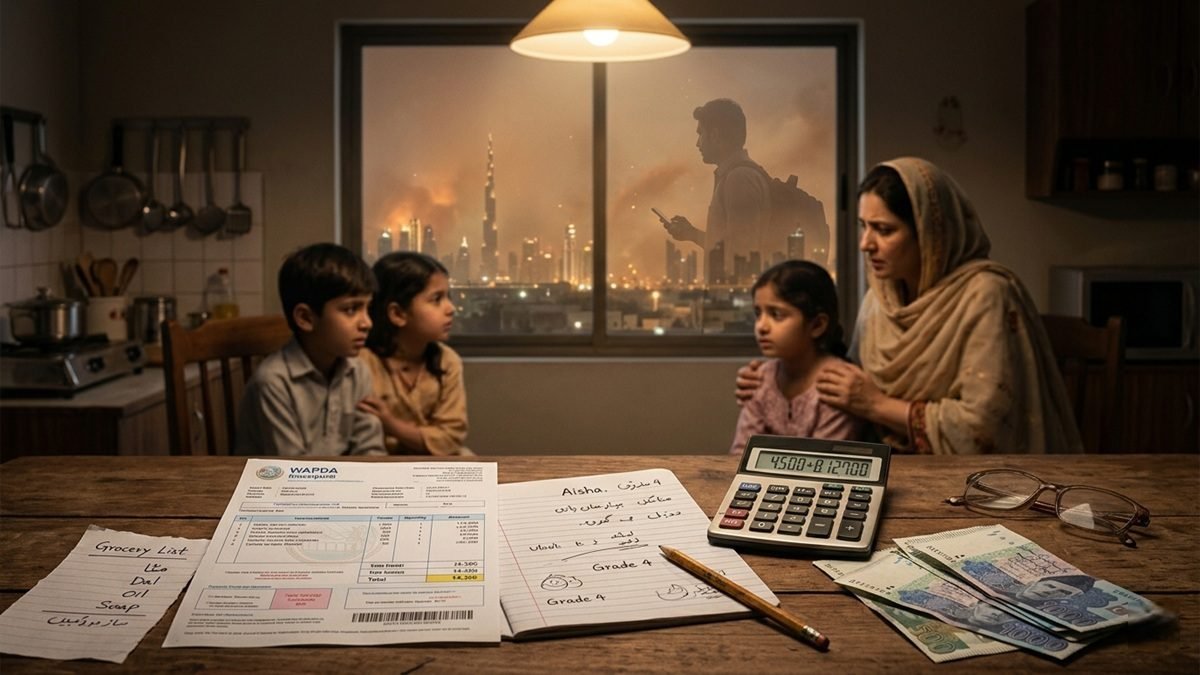
For millions of Pakistani families, monthly remittances fund daily essentials.
What a Slowdown Could Mean for Pakistan and Households
Even a moderate slowdown can hurt. Pakistan still needs dollar inflows badly. The SBP weekly statement of March 6, 2026 showed SBP-held reserves at about $16.3 billion, with total liquid reserves above $21 billion including banks. Better than the crisis lows of 2023. But Pakistan remains vulnerable because it imports energy, and oil shocks raise the import bill fast.
And inflation is already moving up. Reuters reported that Pakistan’s CPI inflation rose to 7.3% in March 2026, up from 7.0% in February.
For households in Rawalpindi, Islamabad, Lahore, Faisalabad, and other urban centers, a small drop in remittances can quickly affect:
- School fees and university costs
- Rent and utility bills
- Grocery and food budgets
- Bike or car installments
- Medical spending
The real risk is not just macroeconomic. It is personal.
What Changed Since the 2022 to 2023 Crisis
The good news is that Pakistan is not as fragile as it was in 2022 to 2023.
What Is Better Now
- Remittances are still growing year on year
- Foreign reserves are stronger than crisis lows
- Formal remittance flows remain solid
- IMF engagement is still supporting policy discipline
The IMF’s March 27, 2026 statement on Pakistan said the economy has stabilized compared with the worst phase. But it also warned that the Middle East conflict could pressure inflation, growth, and the current account. Pakistan is better prepared than before, but still exposed.
The Real Risk Most Analysts Miss
Not every overseas worker faces the same risk. This is the most useful part of the story.
Workers Most at Risk
- Construction-linked daily wage roles
- Small private contractors
- Transport support jobs
- Hospitality roles tied to travel demand
- Short-term maintenance contracts
- Informal work setups
Workers With Better Resilience
- Electricians and HVAC technicians
- Solar installers and safety staff
- Industrial maintenance workers
- Logistics coordinators
This is where Pakistan has a real opportunity. Instead of only worrying about a short-term remittance shock, Pakistan should focus on sending more skilled workers into higher-value Gulf jobs. That is the smarter long-term defense. For legal job routes, use the Overseas Employment Corporation (OEC) and verify recruiters through BEOE.
Key Facts at a Glance
| Key Signal | Latest Public Reading | Why It Matters |
|---|---|---|
| Pakistan remittances in Feb 2026 | $3.3 billion | Strong inflow, but high dependence |
| Jul to Feb FY26 remittances | $26.5 billion | Remains a major economic support |
| Main Gulf sources | Saudi Arabia and UAE | Biggest exposure point |
| SBP reserves (Mar 6, 2026) | ~$16.3 billion | Better than crisis lows |
| Pakistan CPI (Mar 2026) | 7.3% | Inflation is rising again |
| Saudi March PMI | 48.8 | Non-oil contraction warning |
| UAE March PMI | 52.9 | Growth slowed sharply, but still expanding |
What Pakistan and Families Should Do Now
The best response is not panic. It is preparation.
For Families
- Track monthly remittances closely for the next 3 to 6 months
- Prioritize essential spending first
- Delay non-essential purchases
- Avoid new debt if income looks uncertain
- Build a small emergency cash buffer if possible
For Workers Planning to Go Abroad
- Use only verified job channels
- Check recruiters through BEOE
- Prefer skilled categories over general labor
- Use the OEC portal instead of random social media ads
For Policymakers
- Protect formal remittance channels through banks
- Push licensed overseas job placement
- Expand technical training through official systems
- Reduce overdependence on low-skill Gulf jobs
Punjab’s TEVTA already provides training and overseas-readiness resources that can help workers shift into better categories. Also see: how Pakistan’s fuel crisis adds economic pressure on households.
What Happens Next
Watch these signals in the coming weeks:
- SBP monthly remittance updates
- Oil prices and Pakistan fuel price revisions
- Rupee movement
- Inflation data
- Saudi and UAE business activity
If tensions ease, Pakistan may avoid a serious remittance shock. If oil stays high and Gulf business activity weakens further, Pakistan could face slower remittance growth, more rupee pressure, and tighter household budgets.
Frequently Asked Questions
Could Gulf tensions reduce remittances to Pakistan in 2026?
Yes. They may not cause a sudden collapse, but they can slow remittance growth if Gulf business activity weakens.
Which Gulf countries matter most for Pakistan’s remittances?
Saudi Arabia and the UAE remain the most important Gulf sources.
Are overseas Pakistani jobs in immediate danger?
Not across the board. Lower-skill and project-linked roles are more exposed than skilled technical jobs.
Why does this matter for Pakistani families?
Because remittances often pay for rent, school fees, utilities, groceries, and medical costs.
Where can Pakistanis check legal overseas jobs?
Use the OEC and verify recruiters through BEOE.
What signals should families watch in the coming weeks?
Watch SBP monthly remittance updates, oil prices, rupee movement, Pakistan fuel price revisions, and Saudi and UAE business activity reports.