Murree Glass Train: What They’re Not Telling You
But then I dug deeper. Talked to locals. Read what media isn’t covering. And now I’m not so sure this is the win everyone’s celebrating.
🚂 What Is This Glass Train Anyway?
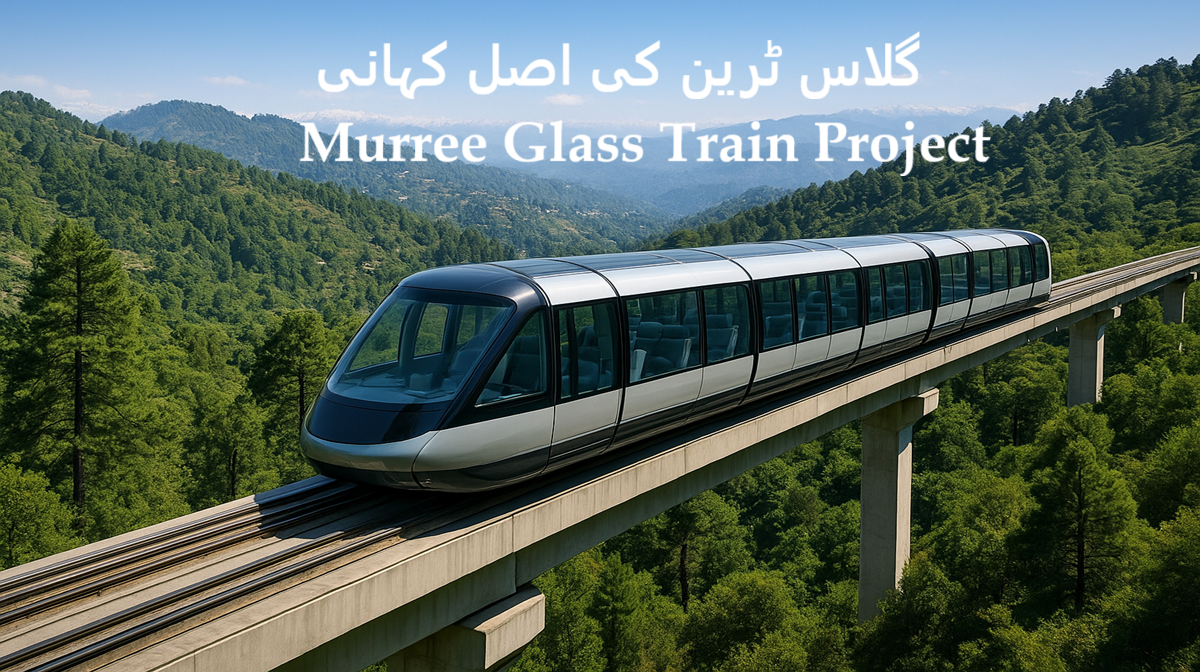
The Murree Glass Train is Pakistan’s new electric monorail project. It will connect Islamabad to Murree with glass-walled coaches offering scenic views.
Quick Facts:
- Route: Islamabad to Murree (40+ km)
- Power: Fully electric
- Price: Rs 500 standard, Rs 1000 premium
- Goal: Faster, safer hill travel
Sounds great on paper. But here’s what got me worried.
🌲 The Environmental Cost Nobody Talks About
Murree isn’t just hills. It’s a fragile ecosystem. Building elevated tracks means cutting trees and disturbing wildlife.
And here’s the kicker. More tourists mean more trash. More noise. More pollution.
I talked to Ahmed, a shopkeeper in Murree. He said: “We already struggle with waste during peak season. Where will all the new garbage go?”

What Could Go Wrong:
- Deforestation for stations and tracks
- Soil erosion increasing landslide risk
- Wildlife corridors destroyed
- Water pollution from tourist overflow
Pakistan’s WWF Pakistan has long highlighted the sensitivity of mountain ecosystems in the northern regions. Any large infrastructure project must go through rigorous environmental screening under the IUCN guidelines.
👨👩👧 What About The People Who Actually Live There?
This hit me hard. Locals might lose their homes for this project. Or face construction noise for months.
Fatima, who runs a small guesthouse, told me she’s scared. “Big hotels will come. We’ll get pushed out. Our quiet village will become a shopping mall.”
She’s not wrong. When tourism explodes, culture changes. Traditional life fades. Commercialization takes over.
Social Risks:
- Displacement of families for land acquisition
- Loss of local culture and traditions
- Overcrowding creating safety hazards
- Rising costs pushing locals out
You can explore how similar patterns are linked to urban planning decisions in Pakistan by reading about the Punjab Safe City rules and e-challan system that also affects everyday citizens.
💰 Follow The Money
Building a monorail in mountains? That’s expensive. Maintaining it in snow and rain? Even more.
| Cost Factor | Challenge |
|---|---|
| Construction | Steep terrain, landslide-prone areas |
| Maintenance | Snow, rain, extreme weather damage |
| Operation | Seasonal demand, off-peak losses |
| Safety | Emergency services, crowd control |
Here’s my concern. Who benefits? Big hotels. Tourist companies. Outside investors.
Small vendors? Local families? They might just get the burden without the profit.
Economic Concerns:
- High construction costs in difficult terrain
- Expensive winter maintenance
- Benefits flowing to big businesses, not locals
- Murree becoming dependent on tourism alone
Pakistan’s spending priorities are often debated online. See how Google Trends Pakistan 2025 shows what citizens are most searching for and caring about.
🔍 What Media Isn’t Showing You
I spent hours searching. Know what I didn’t find? Detailed environmental impact reports. Public consultation records. Long-term sustainability plans.
The Missing Information:
- Environmental studies: No public access
- Local consent: Unclear if obtained
- Future fare hikes: No guarantees
- Waste management: No clear plan
- Water supply: Already struggling
Media shows fancy renders. Talks about tourism boom. But ignores the hard questions.
Will ticket prices stay at Rs 500? Or will they double in two years?
Can Murree’s water supply handle 50,000 more tourists weekly?
Who’s monitoring environmental damage?
For broader context on how government digital and infrastructure projects impact ordinary Pakistanis, read about the M-Tag rules for motorcyclists in Pakistan — another policy with limited public consultation.
✨ But Wait — There’s Hope
I’m not saying cancel the project. I’m saying do it right.
What Could Make This Work:
- Solar-powered stations at every stop
- Tree replanting programs for every tree cut
- Strict waste management with recycling centers
- Local hiring policies giving jobs to residents
- Affordable fares with subsidies for locals
- Community consultation before any digging starts

Imagine this: The train runs on clean energy. Stations have solar panels. Every passenger plants a tree digitally. Locals get priority jobs as staff.
Waste gets sorted and recycled. Water gets managed smartly. Tourist numbers get controlled.
That’s a project worth celebrating.
🗣️ Real People, Real Concerns
These aren’t statistics. These are real families. Real livelihoods. Real fears.
Government relief schemes also matter for vulnerable communities. Learn about the Punjab Ration Card Scheme which helps low-income families across the province.
📋 What You Should Demand
As Pakistanis, we have a right to ask tough questions. Here’s what authorities must provide:
5 Non-Negotiables:
- Full Environmental Impact Report — Public. Detailed. Transparent.
- Community Consent Documents — Proof locals agreed. Fair compensation.
- Sustainable Practices Plan — Waste, water, energy, wildlife.
- Affordable Access Guarantee — No future price gouging.
- Independent Monitoring — Regular audits. Public updates.
Without these, this is just another flashy project that benefits the few.
Other government initiatives that have faced scrutiny for transparency include the Punjab Laptop Scheme for private university students — worth reading to understand how public projects roll out.
⚖️ The Balance We Need
Can this train work? Yes. But only if done carefully.
Tourism can boost economy. But not at the cost of environment. Not at the cost of local communities.
My Honest Take:
The Murree Glass Train could be amazing. Fast travel. Scenic views. Economic growth. All good things.
But right now? Too many questions. Too little transparency. Too many voices unheard.
Before celebrating, let’s make sure this project serves Pakistan — not just profits.
🔗 Want To Dig Deeper?
💭 Final Thoughts
I started researching this excited. I’m ending skeptical but hopeful.
This train can be great. It can connect people. Boost tourism. Create jobs.
But only if we do it right.
Listen to locals. Protect nature. Plan for the long term. Be transparent.
That’s not too much to ask. That’s the bare minimum.
- Share this article. Start conversations.
- Ask your representatives about environmental studies.
- Support local businesses in Murree.
- Demand transparency in development projects.
- Choose sustainable tourism when you travel.
Pakistan deserves projects that work for everyone. Let’s make sure this is one of them.
📰 Related News You Might Like:
📌 Also Read on Pakistan News Desk:
❓ Frequently Asked Questions