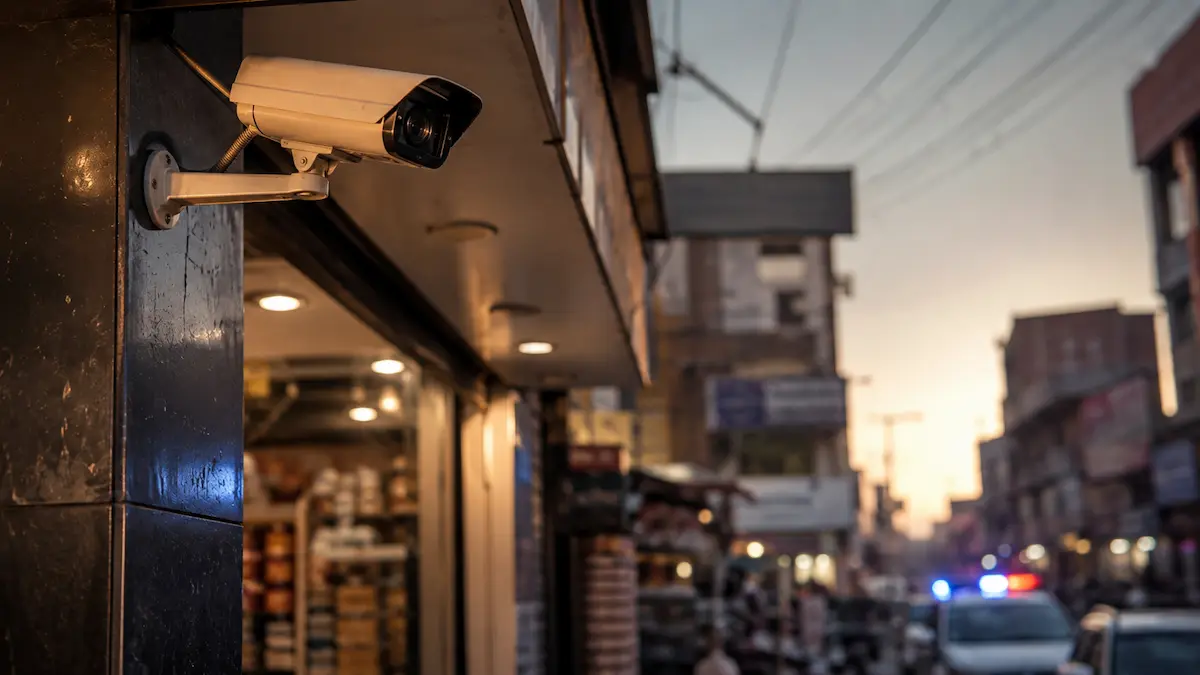
Faisalabad CCTV Order: What Shop Owners Need To Know
Faisalabad Police have issued a district wide order making CCTV cameras compulsory for commercial businesses. Shops, malls, wholesale markets, and departmental stores all fall under this rule.
The Faisalabad CCTV order gives business owners just one month to comply. Police say this is not only about shop security. It is part of a wider public safety and crime prevention plan.
Which Businesses Must Install CCTV Cameras?
The order covers almost every type of shop where people gather daily. This includes:
Retail shops, departmental stores, shopping malls, wholesale markets, commercial plazas, and large business centres.
Police say cameras must stay switched on and should clearly record entrances, exits, and customer areas. This makes it easier to trace suspects if a crime happens nearby.
Why Faisalabad Introduced This CCTV Policy Now
Officials say the main aim is to stop crime before it happens, not just record it afterward. Digital footage already helps Punjab Police identify suspects and support court cases.
This order pushes that idea further. Shopkeepers are now expected to become part of the district’s wider surveillance network, instead of police patrols working alone.
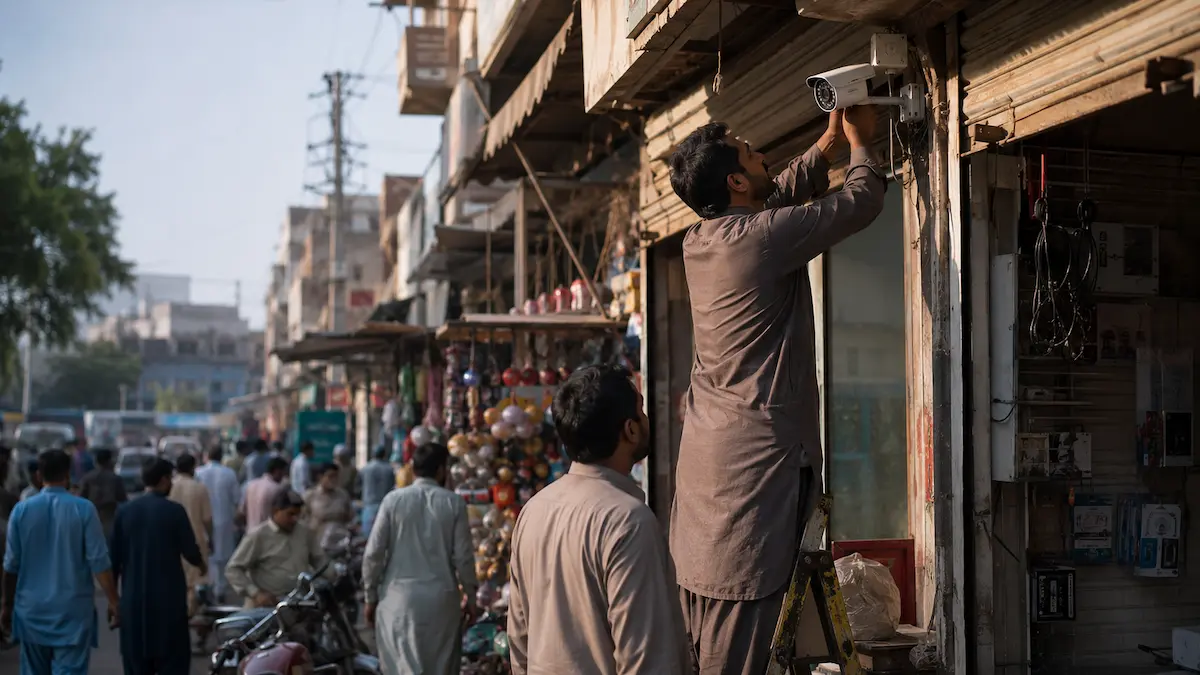
Crime Numbers Behind The Faisalabad CCTV Decision
Publicly reported figures show more than 15,000 robbery, snatching, and theft cases in Faisalabad during 2025. These cases hit shopkeepers, commuters, and residents across the district.
Police also point to Safe City style monitoring in other areas, where crime detection has improved compared with locations that still lack camera coverage.
Child Protection Is A Major Part Of The Order
One striking detail in this policy is its focus on child safety. Police have linked the CCTV order to rising concerns over child abuse cases in public spaces.
According to figures cited by local authorities, nearly 330 child sexual abuse cases were reported in Faisalabad during the first six months of 2026. This has pushed child protection into the centre of the debate around markets, schools, and shopping areas.
Parents and child safety groups across Punjab have also welcomed steps like the Punjab schools pink button emergency alert system, which works on a similar prevention first approach.
Pakistan’s Shift From Reactive Policing To Prevention
For years, Pakistani policing depended mostly on patrols and investigations after a crime already happened. That picture is changing fast.
Cities like Lahore, Islamabad, and Rawalpindi have already expanded Safe City camera networks. Residents in Rawalpindi can now also report incidents faster through tools such as the Islamabad fastest police contact app, showing how technology is reshaping everyday policing in Punjab.
Faisalabad’s new order fits into this same pattern. It treats private shop cameras as part of a bigger public safety system, not just individual shop security.
Compliance Versus Real Capability
Installing a camera is only step one. Past experience across Pakistan shows that cameras often stop working due to poor placement, weak internet, or power cuts during load shedding.
For footage to actually help police, a few basics matter most: clear night recording, visible entry and exit points, enough storage time, and backup power during outages.
Faisalabad Police have not yet released detailed technical standards for resolution or storage duration. Shop owners are currently working with only the basic installation requirement.
Cost Impact On Small Traders
Large malls and chain stores mostly already run CCTV systems. Smaller shopkeepers may need to buy new equipment before the deadline.
Typical costs include cameras, a digital video recorder, hard drives, cabling, installation charges, and backup power units where needed. For small family run shops, this adds a real financial burden within a tight one month window.
Even so, many traders already see CCTV as useful. It helps settle customer disputes, protects staff, and reduces theft losses over time.
Faisalabad CCTV Order At A Glance
| Key Point | Details |
|---|---|
| District | Faisalabad |
| Issuing Authority | Faisalabad Police |
| Deadline | One month from issuance of order |
| Businesses Covered | Shops, malls, wholesale markets, departmental stores, commercial outlets |
| Main Purpose | Crime prevention and evidence collection |
| Possible Action | Legal proceedings and sealing of premises for non compliance |
| Focus Crimes | Theft, robbery, harassment, child abuse and related offences |
What Happens After The Deadline
The next few weeks matter most. Police are expected to review compliance across shops, malls, and markets before deciding on enforcement action.
According to official police announcements, non compliant businesses could face legal proceedings and even sealing of premises. This mirrors broader Punjab Police reform efforts, including changes highlighted under the Maryam Ka Insaf Punjab Police reforms program.
As per government announcements, further technical guidelines on camera quality and storage may still be released before enforcement begins.
Why This Matters Beyond Faisalabad
Faisalabad is one of Pakistan’s largest industrial and commercial cities. Policies tested here often shape decisions in other Punjab districts.
If this CCTV order works well, it could become a model for commercial surveillance policy across the province. If enforcement is weak, it may end up as just another compliance exercise on paper.
Frequently Asked Questions
Who must install CCTV cameras under the Faisalabad order?
The directive applies to shops, shopping malls, departmental stores, wholesale markets, commercial plazas, and other business establishments across Faisalabad district.
What is the installation deadline?
Police have instructed businesses to install functional CCTV cameras within one month of the order.
What happens if businesses fail to comply?
According to police announcements, businesses that ignore the directive could face legal proceedings, including the possibility of premises being sealed.
Why has Faisalabad introduced this policy?
Officials say the objective is to improve crime prevention, strengthen investigations, deter offences, and support evidence collection in cases involving theft, robbery, harassment, and child abuse.
Does the order specify camera quality?
The public announcement requires businesses to install functional CCTV systems. Detailed technical specifications such as minimum resolution, storage periods, and backup requirements have not yet been publicly announced.
Could similar policies expand to other cities?
Pakistan has already expanded surveillance through Safe City initiatives in several major urban centres. Whether similar district level commercial CCTV requirements are introduced elsewhere will depend on decisions by provincial and local authorities.