
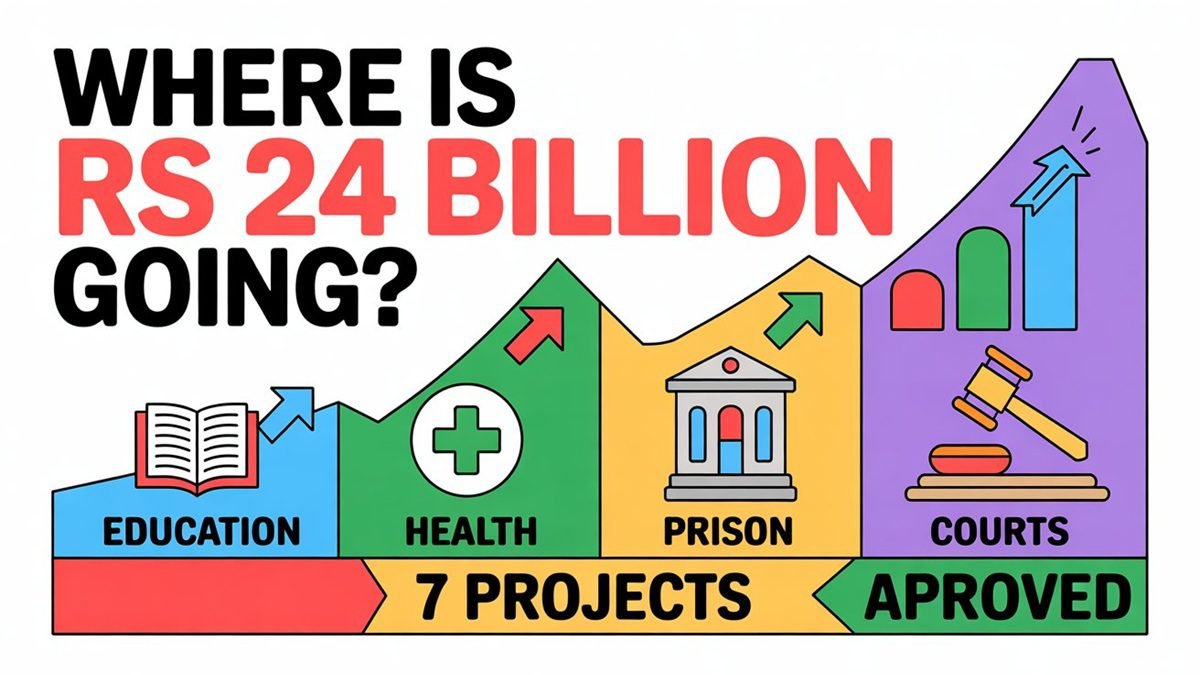
Pakistan has approved seven development projects worth Rs. 24.385 billion under the Uraan Pakistan initiative. This is not just a policy update. It directly affects schools, hospitals, courts, and public safety. In simple words, this is about how public money will shape everyday life.
So, what exactly is changing? And why does it matter now?
Overview of the Rs. 24.385 Billion Package
The Central Development Working Party approved these projects under the Planning Commission. This body reviews and clears major public sector schemes.
Pakistan is already navigating tight economic conditions. You can read about related fiscal pressure in our coverage of the mini-budget and IMF impact on salaries and bills. In that context, this package is significant.
This package focuses on five key areas:
- Education
- Healthcare
- Governance and security
- Infrastructure and justice
- Environmental monitoring
In contrast to older budgets, this one leans more toward services people use daily. That shift is important.
Full List of Approved Projects
Here is a simple breakdown of all seven approved projects:
| Sector | Project | Cost (Rs. million) |
|---|---|---|
| Environment | Air Quality Monitoring System Sindh | 1,418.400 |
| Governance | CTD Strengthening AJK | 1,981.650 |
| Education | Daanish School (ICT Kuri) | 6,996.586 |
| Education | Daanish School (Tando Muhammad Khan) | 3,693.836 |
| Health | Sindh Health Support Program | 2,266.997 |
| Infrastructure | Courts Complex Peshawar | 628.816 |
| Infrastructure | Model Prison Islamabad | 7,399.120 |
Total: Rs. 24.385 billion. Infrastructure and education take the biggest share of this package.
Sector-Wise Breakdown
Education
Two Daanish School projects form a major part of this package. These schools aim to support students from low-income families. You can learn more at the Daanish Schools official website.
Key updates for education projects:
- ICT Kuri project is limited to a girls hostel
- Sindh project must match cost standards of earlier schools
This shows stricter cost control compared to past spending.
Health
The Sindh Health Support Program focuses on improving public healthcare services. The World Bank’s Pakistan portfolio provides key context on international funding in this space.
Funding Breakdown — Health Project
- World Bank contribution: Rs. 2.1 billion
- Sindh Government share: Rs. 166 million
This highlights growing reliance on international support for social sectors.
Infrastructure and Justice
Two projects stand out in this category. First, the Courts Complex in Peshawar. Second, and more costly, the Model Prison in Islamabad.
The prison project is the largest single item in this package. It aims to improve jail conditions and reduce overcrowding. For policy context, see the Ministry of Law and Justice.
This indicates real attention toward justice system improvements, not just roads and buildings. That is a meaningful shift in how development money is being used.
Governance and Security
The CTD project in AJK is designed to strengthen counter-terrorism capacity. Official updates are available at the Ministry of Interior.
Authorities have asked for cost adjustments on this project. This suggests tighter financial oversight across the board.
This connects to broader law enforcement challenges across the country. Read our report on the Sindh Katcha operation and land survey for related context.
Environment
Air pollution is a rising concern, especially in Sindh. This air quality monitoring system will track pollution levels and support better policy decisions. The Pakistan Environment Department oversees this work.
Better data leads to better decisions. That is the simple logic here.
What Is Uraan Pakistan
Uraan Pakistan is a broader development approach aimed at improving public services and institutions. Its core principles are available on the Planning Commission vision page.
Its core focus includes:
- Efficient service delivery
- Stronger institutions
- Sustainable economic growth
This package fits into a larger reform plan. It is not a one-time announcement.
Local Impact Across Pakistan
This package spreads across different regions. That makes it more balanced than many previous rounds of spending.
- Islamabad — Major prison project
- Sindh — Health and environmental upgrades
- KP (Peshawar) — Courts complex
- AJK — Security improvements
Multiple provinces may see benefits at the same time. For budget and provincial data, the Ministry of Finance publishes detailed allocations.
Past vs Current Development Strategy
Earlier development spending often focused on large infrastructure like highways and energy. Now, the approach is shifting. This matters for ordinary people.
| Earlier Approach | Current Approach |
|---|---|
| Mega projects | Public services |
| Energy focus | Health and education |
| Urban-heavy spending | Wider regional spread |
This change reflects growing pressure to improve daily services. It also connects to energy and utility cost debates — see our piece on Pakistan’s 8pm market closure and fuel crisis for the broader economic picture.
Funding Sources
Not all funding comes from local budgets. This matters because it reduces pressure on national finances.
The health project is largely funded by the World Bank. Other projects draw from federal and provincial funds. Budget details are available at the Finance Ministry budget page.
This mix allows development to continue even during tight fiscal periods.
Expert Insights
Planning Commission officials have highlighted the importance of improving service delivery through such projects. Official statements are available at the Planning Commission press section.
Public Impact Explained
For the average citizen, this package could mean real improvements in everyday services.
- Better access to quality education
- Improved hospital services
- Faster court processes
- Better monitoring of air pollution
- Stronger security in AJK
However, real benefits depend entirely on execution. Approved projects in Pakistan have a long history of delays. That is the key challenge. Approval is just step one.
What Happens Next
Approval is just the first step. Implementation takes time and goes through multiple stages.
Next stages include:
- Detailed planning and design
- Fund release from the treasury
- Tendering and contractor selection
- Construction and delivery
Procurement updates are published at the Public Procurement Regulatory Authority.
Importantly, no official completion timelines have been announced yet. Projects are still in early stages.
Key Facts Summary
- Total projects: 7
- Total cost: Rs. 24.385 billion
- Largest project: Model Prison Islamabad (Rs. 7.399 billion)
- Major external funding: World Bank
- Key sectors: Education, health, governance, infrastructure, environment
Why This News Matters
Pakistan is under significant economic pressure. Public demand for better services is rising at the same time. That gap is real.
This package is not huge compared to total national budgets. Still, it targets areas that affect daily life directly. That makes it more relevant than many past announcements that focused on large infrastructure.
If implemented well, these projects can improve services without adding major financial strain. The World Bank funding for health is a good example. It brings in external resources while building local capacity.
The direction is clear. The challenge, as always, is delivery.
Frequently Asked Questions