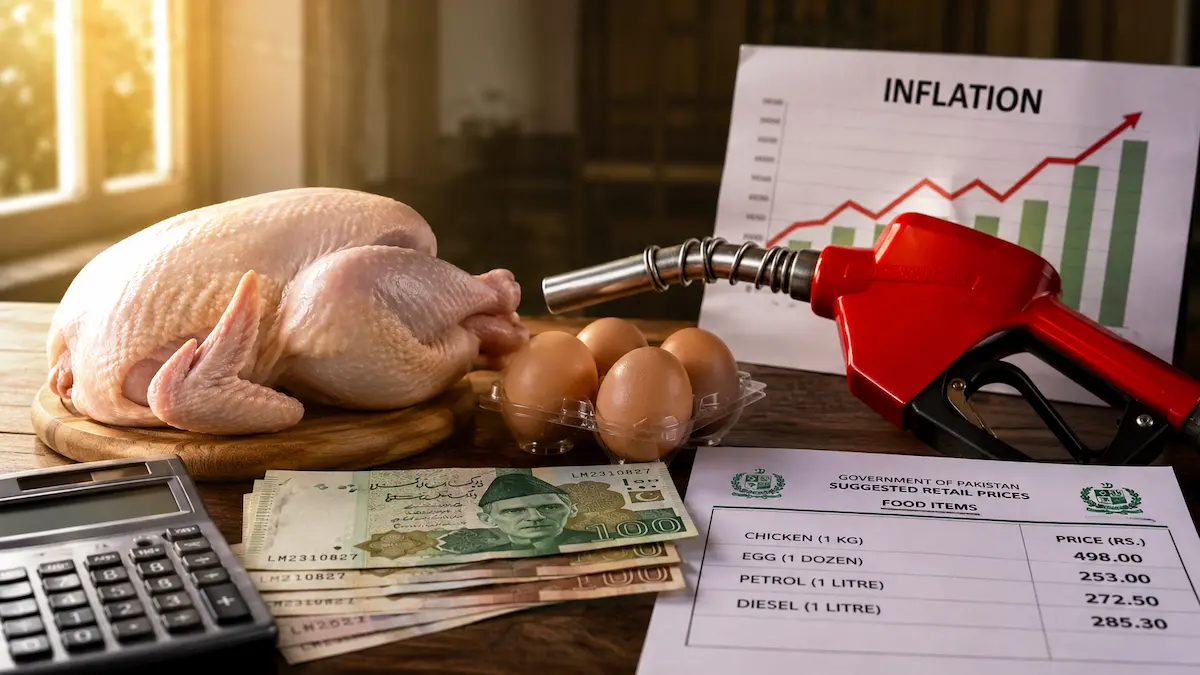
Why Chicken and Egg Prices Keep Rising in Pakistan
Across Lahore, Karachi, Islamabad and smaller cities, chicken and egg prices have climbed faster than most other food items. Official inflation numbers do not always capture how sharply this is hitting household budgets.
Why Protein Prices Matter More Than Headline Inflation
Inflation figures often get the headlines, but most households feel price pressure through daily grocery trips. Chicken and eggs are among Pakistan’s most affordable animal protein sources, so their rising cost matters directly for nutrition.
When these two staples become expensive, families do not always have an easy substitute. That is why small price jumps in chicken and eggs carry a bigger public impact than the same rise in less essential items.
Chicken and Egg Prices Continue to Outpace Official Rate Lists
District administrations regularly notify official poultry rates. Yet reports from multiple cities, including Lahore, Rawalpindi and Islamabad, have repeatedly shown that retail prices often exceed these officially notified lists.
In cities like Wah Cantt and Rawalpindi, consumers frequently pay considerably more than the rates displayed outside many shops. This gap between administrative pricing and actual market conditions has become a regular complaint.
Boneless chicken has been approaching Rs1,000 per kilogram in some retail markets, while eggs have ranged between Rs230 and Rs380 per dozen depending on the city and season.
Why Petrol Prices Affect Chicken and Egg Costs
Fuel prices reach far beyond the petrol pump. Diesel is used to move poultry feed, run cold chain trucks, and power farm generators during load shedding. Every increase in fuel cost adds another layer to the final retail price.
Poultry farms also depend heavily on electricity for temperature control and lighting. When electricity tariffs or fuel costs rise, farm expenses climb, and wholesale distribution costs follow the same pattern.
According to the Pakistan Bureau of Statistics, food inflation has remained a persistent contributor to overall consumer price trends, reflecting exactly this chain of rising input costs.
| Item | Official Trend | Market Reality |
|---|---|---|
| Live Chicken | Government notified rates | Retail prices frequently higher |
| Chicken Meat | Intended retail limits | Often Rs500 to Rs700 per kg depending on city |
| Eggs | Official notifications | Frequently above official prices |
| Petrol | Direct fuel price | Higher transport and farming costs |
| Diesel | Logistics cost | Raises food distribution expenses |
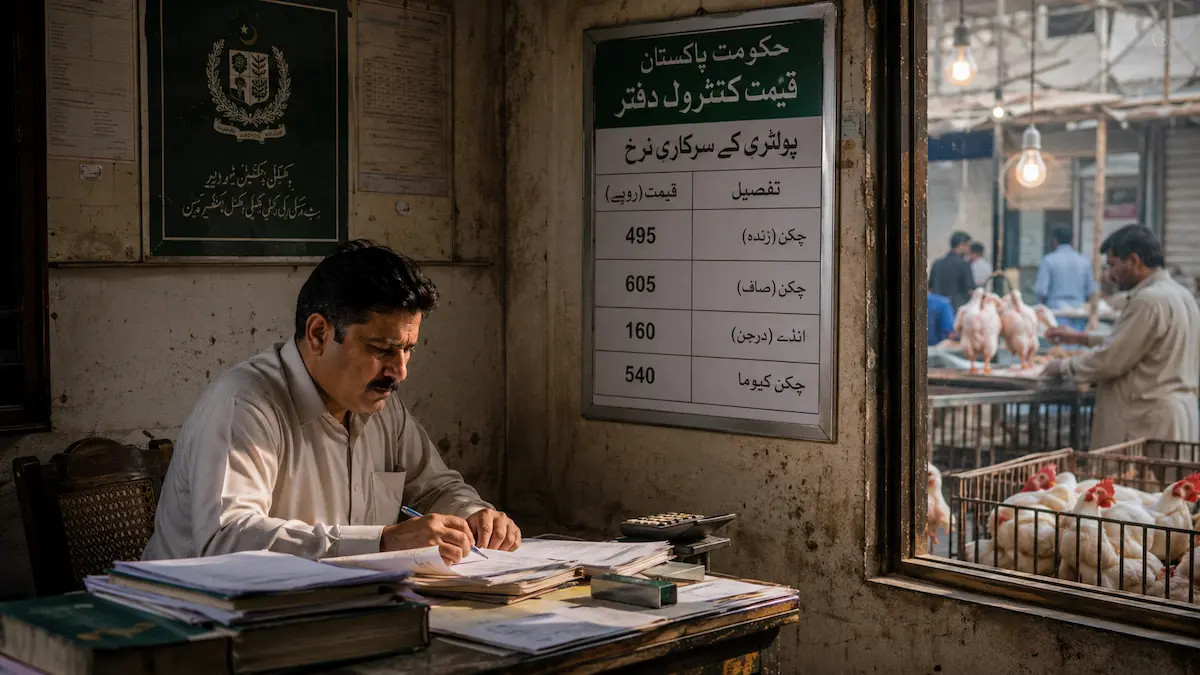
Why Official Price Lists Often Fail to Match Market Prices
This pattern is not limited to poultry. Vegetables like onions, tomatoes and garlic, along with lemons and bananas, also show regular gaps between official and retail prices, similar to trends seen in Karachi flour price movements.
Analysts note that several factors contribute to these price differences, including supply chain costs, transport expenses, weak enforcement, seasonal shortages, and local market conditions. These same pressures have also shown up in recent cement price increases in northern Pakistan, suggesting a wider pattern across essential goods.
Why Many Families Are Buying Less Animal Protein
Consumer interviews reported by local media and observations cited in public reporting suggest many lower and middle income households have reduced the frequency of purchasing chicken because of sustained price increases.
This shift is part of a broader squeeze described in reporting on falling living standards among Pakistan’s middle class, where everyday food choices are increasingly shaped by budget limits rather than preference.
How Poultry Prices Have Changed in Recent Years
Poultry farming in Pakistan depends heavily on imported soybean meal and maize for feed. Rupee depreciation has made these imports more expensive over the past few years, directly raising farm level costs.
Add to this the cost of transport, electricity and general inflation, and it becomes clear why chicken and egg prices have followed an upward path rather than settling after short term spikes.
What Rising Protein Prices Mean for Pakistani Households
Chicken and eggs are a primary protein source for many Pakistani families, especially children. When prices rise sharply, household budgeting becomes harder, and food security concerns grow alongside general inflation pressure.
Nutrition experts and public health researchers generally caution that reduced protein intake, especially among children, can have longer term effects on growth and development if the trend continues.
Analysis: Why Food Inflation Is Becoming a Nutrition Challenge
Publicly available inflation data, retail market reporting and government price notifications together indicate that rising poultry prices are affecting more than household spending. Because chicken and eggs are among Pakistan’s most commonly consumed protein sources, sustained price increases may influence dietary choices, particularly among lower and middle income families.
Economists generally note that when food inflation persists, households often substitute lower-cost alternatives, potentially reducing protein intake over time.
What Happens Next?
Future poultry prices will likely depend on fuel costs, seasonal demand, and how strictly official rate lists are enforced at the district level. Supply conditions during festive seasons often push prices higher for short periods.
Upcoming Pakistan Bureau of Statistics inflation reports will show whether food prices, including chicken and eggs, continue rising or begin to stabilize in the coming months.
Frequently Asked Questions
Why are chicken and egg prices rising in Pakistan?
Chicken and egg prices are rising because of higher feed costs, fuel prices, transport expenses, and rupee depreciation, which together push up production and distribution costs across the poultry sector.
What is the current price of chicken in Pakistan?
Retail prices vary by city, but boneless chicken has been approaching Rs1,000 per kilogram in several markets, while whole chicken meat often sells between Rs500 and Rs700 per kilogram depending on the city.
Why do egg prices differ from official rate lists?
Official rate lists are notified by district administrations, but actual retail prices often exceed these rates due to weak enforcement, supply chain costs, and local market conditions, with eggs frequently priced between Rs230 and Rs380 per dozen.
How do petrol and diesel prices affect chicken and egg costs?
Fuel prices raise the cost of transporting poultry feed, running cold chain systems, and operating farm generators, which increases overall production costs that are eventually passed on to consumers.
Are Pakistani households eating less protein because of price increases?
Consumer interviews reported by local media and observations cited in public reporting suggest many lower and middle income households have reduced how often they buy chicken because of sustained price increases.
What can bring poultry prices down in Pakistan?
Analysts note that stronger enforcement of official rate lists, stable fuel prices, and lower feed import costs could help ease pressure on chicken and egg prices over time.