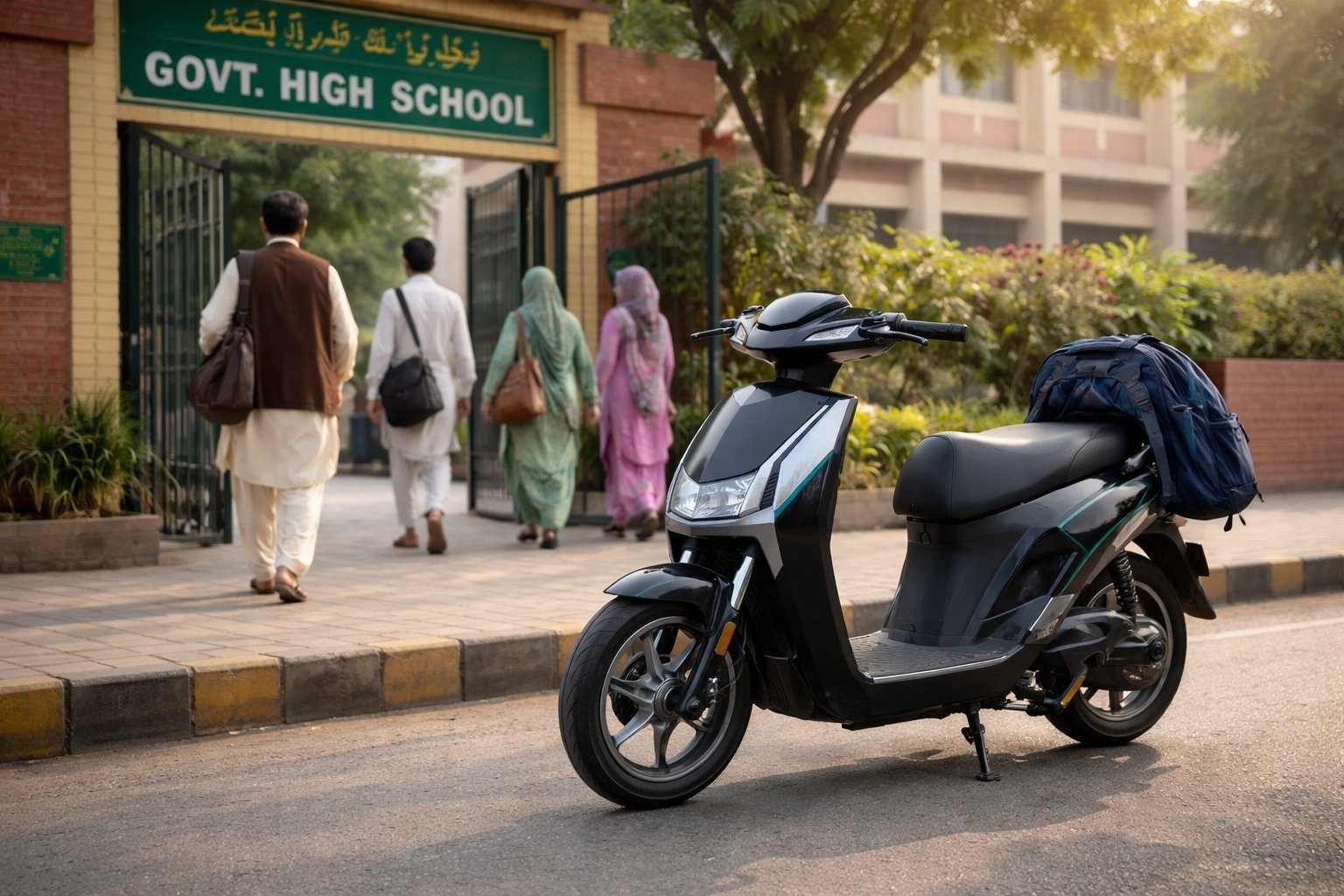
🚴 Punjab E-Bike Scheme for Teachers: When 147,000 Dreams Met 15,000 Bikes
📋 Table of Contents
- What Actually Happened
- E-Bike Scheme Details & Registration
- Why Did 147,000 Teachers Rush In?
- The Economics Behind Electric Bikes
- How Online Registration Changed Everything
- Part of Punjab’s Electric Mobility Vision
- Economic Impact Beyond Transport
- Challenges Nobody’s Talking About
- What Happens Next?
- Salary Calculator for Government Employees
- Frequently Asked Questions
What Actually Happened: A Quiet Launch, A Thundering Response
Here’s something you don’t see every day in government policy. The Punjab administration rolled out an electric bike program for teachers. No flashy billboards. No celebrity endorsements. Just a straightforward initiative to help educators with their daily commute.
Then something unexpected happened. Within weeks, teacher applications crossed 147,000.
The government had planned for roughly 15,000 bikes. That’s a 10:1 ratio of demand to supply. Ten teachers competing for every single electric bike.
This wasn’t hype or social media buzz driving numbers. This was real economic pressure, revealed in the cold light of data.
E-Bike Scheme for Teachers: The Core Details
Let’s break down what this e-bike scheme actually offers and how the e-bike scheme registration worked.
Key Features of the E-Bike Scheme
- Target Group: Government teachers in public-sector institutions
- Coverage: Primary, secondary, and higher secondary schools
- Application Method: Online through e-bike scheme portal
- Verification: CNIC and service credentials required
- Last Date: E-bike scheme last date was October 31, 2025
- Distribution: December 2025 through early 2026
Unlike previous bike schemes targeting students or general citizens, this one zeroed in on teachers specifically. Why? Because teachers represent a workforce with predictable travel patterns and minimal transport support from their employers.
How to Apply: E-Bike Scheme Online Apply Process
The e-bike scheme online apply process was refreshingly straightforward. Teachers logged into the provincial portal, submitted their credentials, and waited for verification. No running between offices. No greasing palms for faster processing.
Transparency was built in from day one. Applicants could track their status online. They knew exactly where they stood.
Why Did 147,000 Teachers Rush to the E-Bike Scheme Portal?
The answer isn’t sexy. It’s petrol prices.
Over the past two years, fuel costs in Pakistan have been on a relentless climb. For a teacher posted 25 kilometers from home, daily commuting on a traditional motorcycle can easily consume Rs. 8,000-12,000 per month.
Now multiply that across twelve months. You’re looking at Rs. 96,000 to Rs. 144,000 annually—just to get to work.
What Electric Bikes Offer Teachers
An electric bike changes the math completely. Here’s what makes them attractive:
- Predictable costs: Electricity pricing is far more stable than petrol
- Lower maintenance: Fewer moving parts, less frequent repairs
- Fuel independence: No more anxiety about petrol price hikes
- Environmental bonus: Teachers care about setting examples
For someone traveling 20-30 kilometers daily, switching to electric can cut annual transport costs by 60-70%. That’s not marginal savings—that’s life-changing money for a profession where salaries often lag behind inflation.
But there’s another layer. Electric bikes are no longer experimental in Pakistan. Chinese manufacturers have flooded the market with reliable, affordable models. Urban charging infrastructure is expanding. The technology has matured enough that early adopter risk is minimal.
The Economics: Why This Makes Sense for Teachers
| Factor | Petrol Motorcycle | Electric Bike |
|---|---|---|
| Monthly Fuel/Electricity | Rs. 8,000-12,000 | Rs. 2,000-3,000 |
| Annual Maintenance | Rs. 15,000-20,000 | Rs. 5,000-8,000 |
| Price Volatility | High (petrol prices fluctuate) | Low (electricity stable) |
| Environmental Impact | High emissions | Zero direct emissions |
Teachers aren’t making emotional decisions here. They’re doing the math. And the math says electric bikes save money—lots of it.
How Online Registration Changed Everything
Previous government schemes often suffered from accessibility problems. Rural applicants faced disadvantages. Urban centers dominated the beneficiary lists.
The e-bike scheme portal leveled the playing field. A teacher in rural Rajanpur had the same access as someone in Lahore. Digital registration removed geography as a barrier.
But transparency also highlighted the massive gap between supply and demand. When you can see 147,000 applications competing for 15,000 bikes, the pressure for expansion becomes undeniable.
Part of Punjab’s Electric Mobility Vision
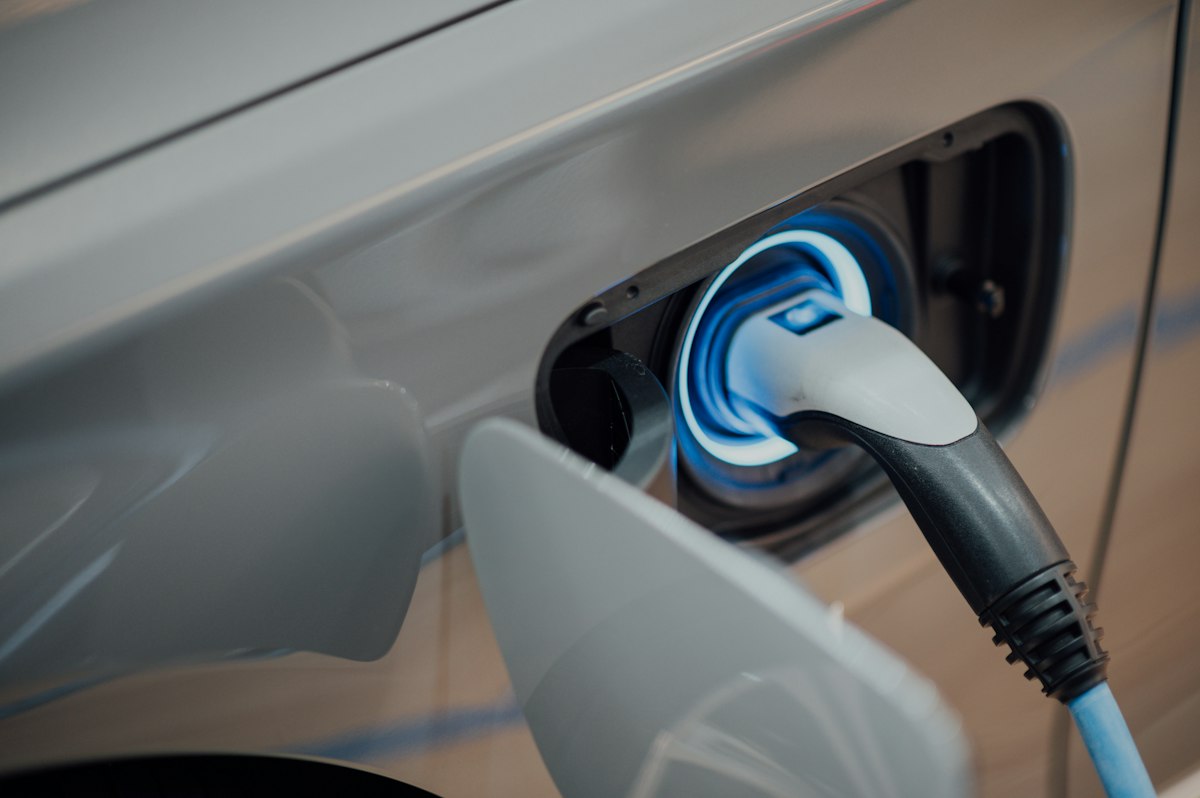
The teacher e-bike scheme doesn’t exist in isolation. It’s part of a broader push toward electric mobility across Punjab.
Over the past two years, the province has introduced incentives for electric two-wheelers, encouraged citizens to shift away from petrol bikes, and linked EV adoption with climate and energy goals.
Why Target Teachers Specifically?
Teachers are ideal early adopters for electric vehicles. Here’s why:
- Visibility: Teachers are present in every community, normalizing EV use
- Stability: Government employment means predictable income for maintenance
- Influence: Teachers shape community attitudes through daily interaction
- Fixed routes: Daily school commutes are perfect for EV range capabilities
When thousands of teachers adopt electric bikes, it sends a powerful signal: this technology works for real people in real situations.
Economic Impact Beyond Transport
Putting thousands of electric bikes on Punjab’s roads creates ripple effects across multiple sectors.
Local EV Market Growth
More electric bikes mean growing demand for battery servicing, spare parts, and local repair expertise. This creates opportunities for small businesses and technicians, particularly in secondary cities where EV services are still emerging.
Infrastructure Development
While not technically a construction scheme, electric mobility influences infrastructure needs. Schools and government buildings will need charging points. Electrical systems require upgrades. Urban planning must accommodate two-wheeler EV usage.
These secondary effects gradually feed into construction, electrical contracting, and energy infrastructure sectors—creating jobs and economic activity beyond the initial bike distribution.
Environmental Benefits Add Up
Individually, an electric bike may seem environmentally insignificant. But collectively, thousands of them reduce petrol consumption, urban air pollution, and transport-related emissions.
Two-wheelers account for a massive share of daily urban travel in Punjab. Electrifying even a portion of them delivers measurable environmental benefits without requiring major behavioral changes from users.
Challenges Nobody’s Talking About
Despite its success, the e-bike scheme exposes several weaknesses that need addressing.
⚠️ Critical Issues to Watch
- Supply-Demand Mismatch: With ten applicants per bike, unmet expectations could turn into frustration
- Charging Access: Urban teachers can charge easily. Rural teachers face power reliability issues
- Long-Term Maintenance: Battery replacement costs remain unclear. After-sales support network is underdeveloped
- Equity Concerns: How were the 15,000 recipients selected? Transparency on selection criteria matters
The biggest question: will there be a second phase? With 132,000 teachers left empty-handed, pressure for expansion is inevitable. But scaling up requires budget allocation, supplier coordination, and infrastructure planning.
What Happens Next? Three Possible Scenarios
The future of the e-bike scheme could unfold in several ways:
Scenario 1: Phased Expansion
The government announces additional phases, gradually expanding coverage. This would be the ideal outcome, but it requires sustained budget commitment.
Scenario 2: Private Sector Partnership
Given the demonstrated demand, private EV manufacturers might offer subsidized financing to teachers. This could supplement government efforts without requiring full public funding.
Scenario 3: Status Quo
The initial 15,000 bikes get distributed, but expansion stalls due to budget constraints. This would be disappointing given the overwhelming response, but it’s a realistic possibility.
🧮 Useful Tool for Government Employees
Are you a federal or KPK provincial employee? Calculate your pension and other benefits using this official calculator:
Access Pension Calculator →Frequently Asked Questions
Why This Scheme Matters for Pakistan’s Future
The overwhelming response to the e-bike scheme reveals something profound about Pakistan’s economic moment. Middle-class professionals—teachers, in this case—are being squeezed by rising costs that government salaries can’t keep pace with.
Transport costs are the hidden tax on daily life. Unlike food or rent, they’re less visible but equally relentless. Every petrol price hike chips away at household budgets, forcing difficult choices.
What makes this scheme different from typical welfare programs is its focus on reducing recurring expenses rather than providing one-time cash relief. An electric bike isn’t a handout—it’s infrastructure. It’s an asset that delivers value every single day for years.
For policymakers elsewhere in Pakistan, the lesson is clear: demand exists for programs that deliver tangible, ongoing financial relief. Teachers proved they’re ready to embrace new technology when it solves real problems.
The question now is whether government can scale up to meet that demonstrated demand. Because 132,000 teachers are still waiting—and watching.
Final Thoughts: Beyond the Numbers
The Punjab e-bike scheme started as a modest initiative for 15,000 teachers. It became a phenomenon that exposed deeper economic pressures and demonstrated massive appetite for sustainable transport solutions.
Those 147,000 applications tell multiple stories simultaneously:
- A story about transport cost pressures squeezing middle-class professionals
- A story about electric vehicles becoming mainstream rather than experimental
- A story about how digital accessibility can transform government program reach
- A story about demand vastly exceeding what policymakers anticipated
As the first bikes get distributed this December, attention will shift to implementation. Do they hold up under daily use? Does the charging infrastructure prove adequate? Will maintenance support meet needs?
The answers to these questions will determine whether this becomes a model for national replication—or remains a Punjab-specific experiment. Either way, it’s already shifted the conversation around electric mobility from “if” to “how fast.”
And that shift might be the scheme’s most lasting impact.