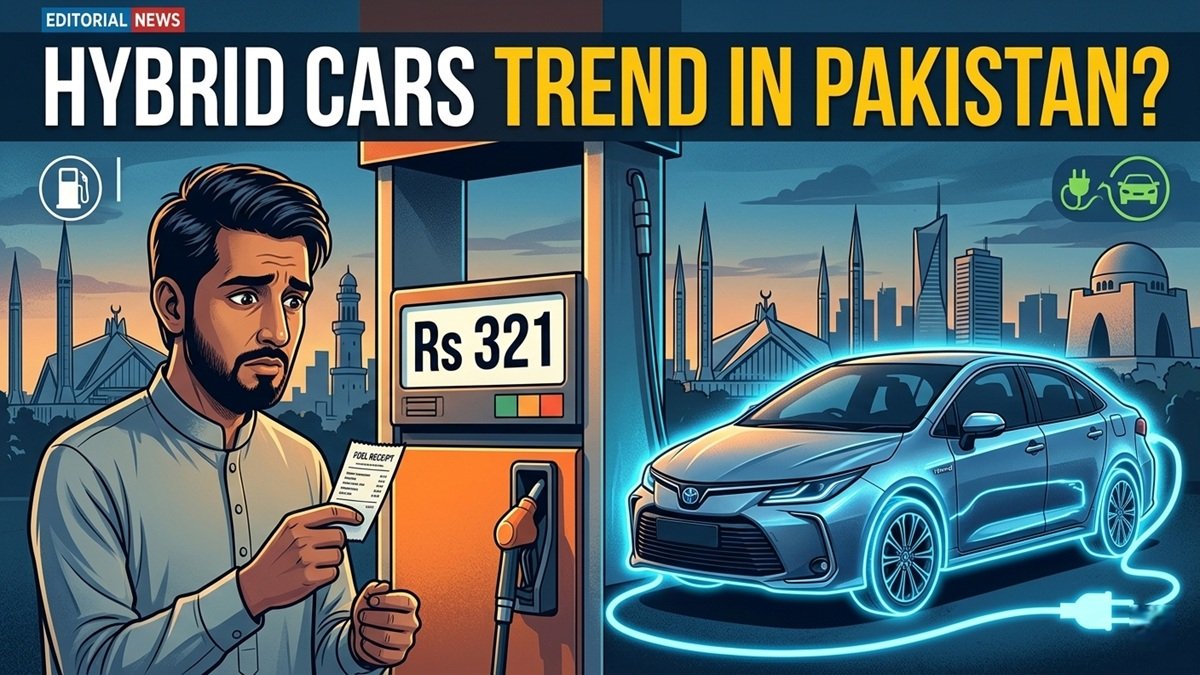
Petrol prices in Pakistan have entered a new reality. In early March 2026, the official price crossed Rs 321 per litre. For millions of drivers, this is not just a number. It affects daily budgets, travel plans, and even the type of car people want to buy next. This article explains why hybrid cars are now the smarter choice for Pakistani families.
📋 Table of Contents
- Pakistan’s Fuel Price Crisis Explained
- Why Petrol Reached Rs 321 per Litre
- How Fuel Prices Affect Pakistani Families
- Why Hybrid Cars Are Becoming Popular
- Hybrid vs Petrol Cars Fuel Cost Comparison
- Best Hybrid Cars Under Rs 60 Lakh in Pakistan
- Real Fuel Efficiency of Hybrid Cars in Pakistan
- Upcoming Hybrid Cars Launching in Pakistan in 2026
- Hybrid vs Petrol Ownership Cost (5-Year Analysis)
- Government Incentives for Hybrid Cars
- Expert Insights on Pakistan’s Hybrid Shift
- What Happens Next for Pakistan’s Auto Market
- Key Facts Summary
- Frequently Asked Questions
Pakistan’s Fuel Price Crisis Explained
Fuel price increases have become a regular concern for Pakistani consumers. However, the latest increase has created deeper anxiety because it crossed the Rs 300 per litre mark.
Petrol prices are reviewed twice each month by the Oil and Gas Regulatory Authority (OGRA). The regulator sets retail prices based on international oil markets and import costs.
Pakistan imports a large portion of its petroleum. Therefore, global oil price movements quickly affect local rates. According to energy sector data shared by the Ministry of Energy, petroleum products are one of Pakistan’s largest import expenses.
Because of this reliance on imports, global events often translate directly into higher fuel costs for Pakistani drivers.
Why Petrol Reached Rs 321 per Litre
Several international and economic factors contributed to the latest petrol price surge.
⚠️ Three Key Reasons Behind the Price Spike
- Geopolitical tensions in West Asia created uncertainty in global oil supply chains. Oil markets react quickly to such risks.
- Pakistan’s currency fluctuations increased import costs. Oil purchases happen in US dollars, so a weaker rupee raises the final price.
- Global crude prices have remained volatile in recent months.
According to market analysis by the International Energy Agency, oil prices often spike when supply disruptions and political risks occur simultaneously. Economic reports published by the State Bank of Pakistan also highlight that energy imports remain a major pressure on Pakistan’s foreign exchange reserves. Together, these factors pushed petrol prices beyond Rs 300 per litre.
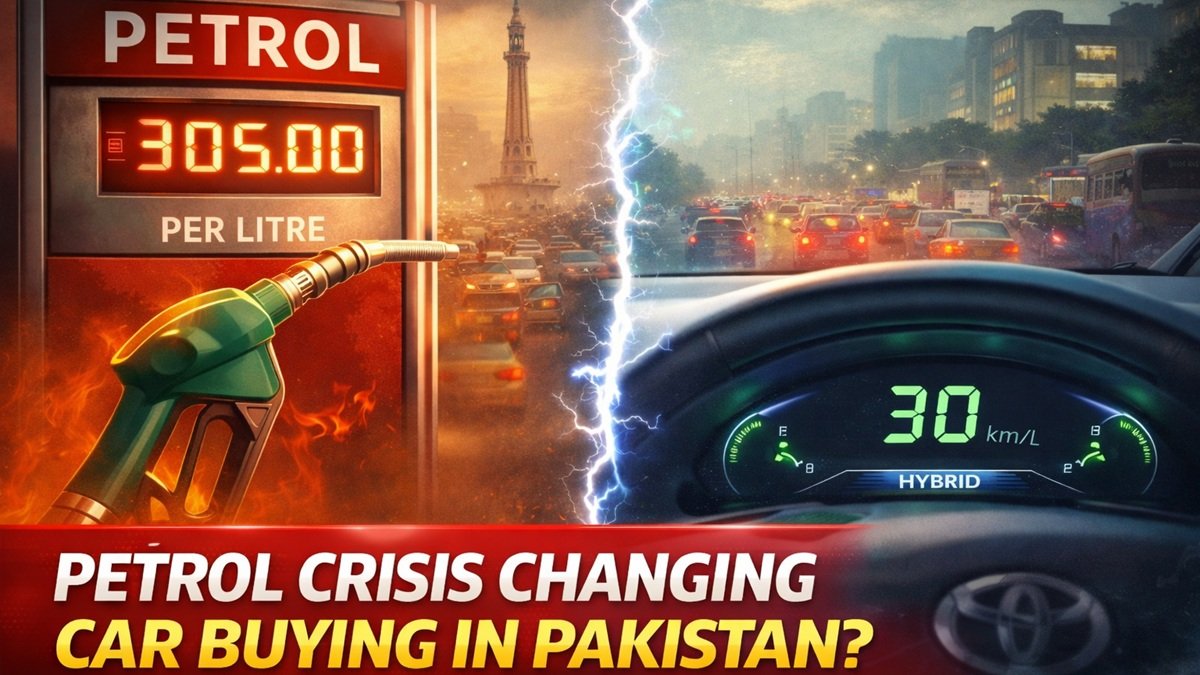
How Fuel Prices Affect Pakistani Families
When petrol prices rise, the impact spreads across the entire economy. Consider a typical urban commuter.
💸 Real Monthly Cost Example
A driver travelling 1,000 kilometres per month with a petrol car averaging 12 km/L needs around 83 litres of fuel. At Rs 321 per litre, the monthly fuel cost reaches nearly Rs 26,600. That is a major household expense every single month.
Wider Economic Effects
Fuel price increases lead to several indirect consequences for everyone. Even people without cars feel the pressure.
- Higher ride-hailing fares
- Increased public transport costs
- Higher delivery charges for food and groceries
- Rising logistics costs for businesses
Reports by the Pakistan Bureau of Statistics show that transport costs often influence inflation trends in Pakistan. For many middle-income families, transport costs now compete with essential expenses like utilities and groceries.
Why Hybrid Cars Are Becoming Popular
Because fuel costs are rising, drivers are now looking for cars that consume less petrol. Hybrid vehicles provide one practical solution.
🔋 How a Hybrid Car Works
A hybrid car uses both a petrol engine and an electric motor. The system automatically switches between them to improve efficiency. When the car slows down, regenerative braking converts energy into electricity and stores it in the battery. This is why hybrids often achieve 20 to 30 kilometres per litre, significantly higher than typical petrol cars.
Why Hybrids Fit Pakistani Conditions
Several factors make hybrid cars attractive in Pakistan’s specific environment.
- ✅ They perform well in traffic-heavy cities like Karachi, Lahore, and Rawalpindi
- ✅ They do not require charging stations
- ✅ They reduce fuel expenses significantly
- ✅ They maintain strong resale value
Industry data published by the Pakistan Automotive Manufacturers Association indicates that demand for fuel-efficient vehicles has grown steadily in recent years. As petrol prices remain high, this trend is accelerating.
Hybrid vs Petrol Cars Fuel Cost Comparison
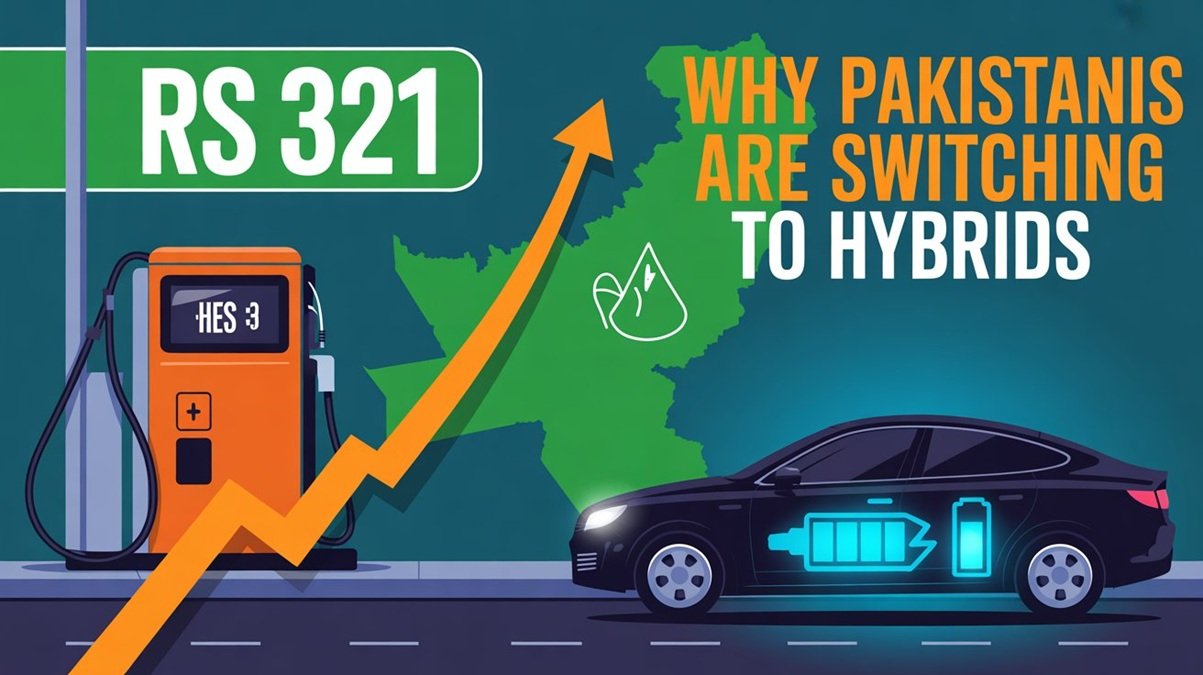
The real advantage of hybrids becomes clear when comparing monthly fuel costs. Below is a simple comparison for 1,000 kilometres of monthly driving.
| Car Type | Mileage | Fuel Used | Monthly Fuel Cost |
|---|---|---|---|
| Petrol Car | 12 km/L | 83 litres | Rs 26,643 |
| Hybrid Car | 25 km/L | 40 litres | Rs 12,840 |
💰 This means a driver can save over Rs 13,000 per month on fuel alone. Over a year, the savings can reach Rs 165,000 or more, depending on driving distance.
Pakistani automotive platforms such as PakWheels regularly publish real-world mileage comparisons based on user data. Check them before buying.
Best Hybrid Cars Under Rs 60 Lakh in Pakistan
For many buyers, affordability remains the biggest concern. Fortunately, several hybrid options exist within mid-range budgets.
| Model | Price Range | Mileage | Key Features |
|---|---|---|---|
| Toyota Aqua | 3.8M – 5.2M | 20–30 km/L | Compact, reliable city hybrid |
| Honda HR-V e:HEV | Around 9M | 25 km/L | Hybrid SUV with advanced safety |
| Suzuki Fronx (mild hybrid) | 3.8M – 5.2M | 18–22 km/L | Stylish compact crossover |
💡 Buyer Tip: The Toyota Aqua remains one of the most popular imported hybrids because of its reliability and strong resale value. Meanwhile, the Honda HR-V e:HEV appeals to families looking for space and safety features. Read our detailed review: Honda HR-V Hybrid Pakistan Offer.
Also read: Suzuki Fronx Pakistan Price & Fuel Average and our roundup of Top 5 Affordable Cars in Pakistan.
Real Fuel Efficiency of Hybrid Cars in Pakistan
Hybrid performance depends on driving style, road conditions, and temperature. However, real-world testing in Pakistan shows strong efficiency compared with petrol vehicles.
| Model | City | Highway | Average |
|---|---|---|---|
| Toyota Aqua | 22–25 km/L | 25–30 km/L | 25 km/L |
| Toyota Prius | 28–31 km/L | 29 km/L | 30 km/L |
| Honda HR-V e:HEV | 20–25 km/L | 25–28 km/L | 24 km/L |
| Haval H6 HEV | 18–19 km/L | 20 km/L | 19 km/L |
| Kia Sportage HEV | 14–16 km/L | 18 km/L | 16 km/L |
Upcoming Hybrid Cars Launching in Pakistan in 2026
Automakers have noticed the growing demand for hybrid vehicles in Pakistan. Several new models are expected to enter the market during 2026.
Confirmed or Announced Launches
- 🚗 Jaecoo J5 SHS HEV
- 🚗 GWM Tank 500 HEV
Expected Hybrid Models
- Suzuki Alto hybrid variant
- Honda HR-V locally assembled hybrid
- Kia Sportage hybrid
- BYD Sealion plug-in hybrid SUV
📊 Automotive analysts expect hybrid vehicles to capture around 25–30 percent of Pakistan’s passenger car market within the next few years if fuel prices remain high.
Hybrid vs Petrol Ownership Cost (5-Year Analysis)
Although hybrid cars usually cost more initially, their long-term fuel savings can offset that difference. The example below assumes 15,000 kilometres of driving per year.
| Cost Factor | Petrol Car | Hybrid Car |
|---|---|---|
| Purchase Price | Rs 4M | Rs 5.5M |
| Annual Fuel Cost | Rs 403,500 | Rs 192,600 |
| Maintenance | Rs 25,000 | Rs 30,000 |
| Insurance | Rs 40,000 | Rs 45,000 |
| 5-Year Total | Rs 7.67M | Rs 7.56M |
✅ Bottom Line: Hybrids may actually cost slightly less over five years, especially for drivers who travel frequently. The fuel savings close the gap on the higher purchase price faster than most people expect.
Government Incentives for Hybrid Cars
Pakistan has introduced limited incentives to encourage fuel-efficient vehicles. These benefits are part of the Auto Industry Development and Export Policy 2021-26.
According to the Federal Board of Revenue, hybrid vehicles receive certain tax reductions. Current incentives include:
- Lower customs duty on hybrid components
- Reduced taxes on some imported hybrid vehicles
- Duty concessions for testing new hybrid models
These incentives aim to reduce Pakistan’s fuel import bill while encouraging modern vehicle technology.
Expert Insights on Pakistan’s Hybrid Shift
Automotive experts believe the recent petrol price shock is changing consumer behavior.
Earlier, many buyers focused only on the purchase price of a car. Now, drivers carefully calculate fuel cost per kilometre. Economists also highlight a broader benefit. Lower petrol consumption means Pakistan spends less on energy imports. In the long run, wider adoption of hybrid vehicles could reduce the country’s dependence on imported fuel.
What Happens Next for Pakistan’s Auto Market
Pakistan’s automobile industry may undergo significant changes in the next few years. Several trends already point in that direction.
🔮 Key Developments Expected
- More locally assembled hybrid vehicles
- Entry of additional Chinese hybrid brands
- Possible policy incentives after 2026
- Gradual transition toward electric vehicles
If fuel prices stay above Rs 300 per litre, hybrid vehicles may soon become a common choice for Pakistani buyers.
Key Facts Summary
| Topic | Key Insight |
|---|---|
| Petrol Price | Rs 321 per litre |
| Petrol Car Mileage | 10–15 km/L |
| Hybrid Mileage | 20–30 km/L |
| Annual Fuel Savings | Up to Rs 165,000 |
| Government Goal | Increase hybrid and EV adoption |
Frequently Asked Questions