
Pakistan’s Birth Surge: A New Life Every 4.6 Seconds Is Overcrowding Cities
I have lived in Rawalpindi long enough to remember when the roads were quieter and hospitals less chaotic. Today the picture is different. Every hospital corridor feels tighter. Every school near my neighbourhood is packed. And the numbers explain exactly why.
Pakistan’s population has crossed 257 million as of late 2025. A baby is born every 4.6 seconds. That is not just a headline statistic. It is the sound of pressure building across every city in this country — pressure on water, jobs, housing, and healthcare that ordinary families feel every single day.
This article breaks down what is really happening, what the data shows, and why this issue now affects every household in Pakistan.
Pakistan’s Population Growth Explained
Pakistan’s population has risen steadily for decades. Growth rates have slowed compared to the 1980s. But the country still adds millions of people every year. According to World Bank Pakistan Data, the annual population growth rate remains close to 1.8 percent.
In my experience reporting on urban issues, the numbers in government reports always feel abstract until you step outside. Then you see them. More cars. More construction. More people waiting in queues that never seem to shorten.
| Indicator | Estimate |
|---|---|
| Total Population | 257+ million |
| Annual Growth Rate | Around 1.8% |
| Fertility Rate | Around 3.3 children per woman |
| Births Per Year | Nearly 6.9 million |
| Population Under 30 | More than 60% |
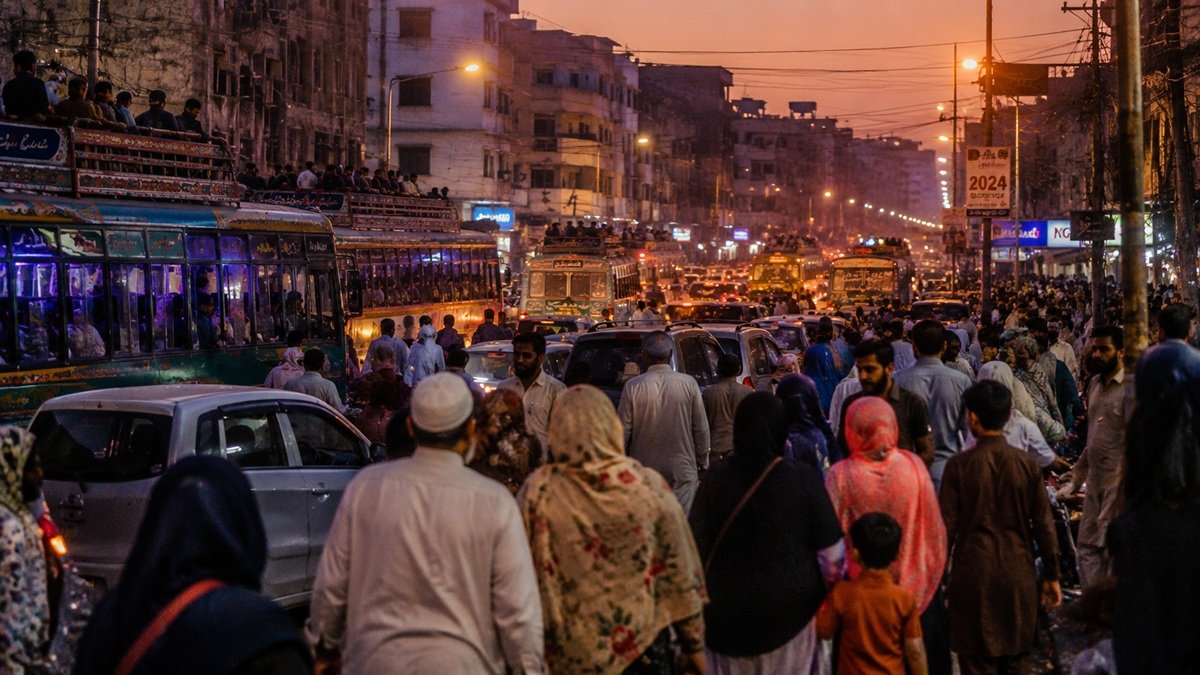
This growth matters because infrastructure expansion is not keeping pace. Roads, hospitals, schools, and public transport systems are already under stress in many urban areas. Meanwhile, migration from rural districts to major cities continues, increasing housing demand and traffic congestion even further.
Why the “Every 4.6 Seconds” Figure Matters
The number sounds dramatic. But the real impact shows up in everyday life. More births mean higher demand for schools, hospitals, electricity, clean water, housing, public transport, and employment. Urban centres are struggling to keep pace with this demand.
According to the World Bank Pakistan Overview, rapid urban growth is already affecting poverty reduction, infrastructure planning, and public services across the country.
In cities like Rawalpindi and Karachi, traffic congestion has worsened sharply over the last decade. Families also face higher costs for housing, private education, and healthcare. One major issue often ignored in public debate is “hidden overcrowding.” Many middle-income families now live in smaller spaces while sharing resources across larger households. This quietly increases pressure on utilities, sanitation, and urban infrastructure.
Healthcare and Education Systems Face Rising Pressure
Pakistan’s healthcare system already struggles with uneven access between urban and rural areas. According to the National Institute of Population Studies Pakistan, family planning awareness and reproductive healthcare services remain limited in several districts.
| Sector | Current Issue |
|---|---|
| Public Hospitals | Overcrowding |
| Rural Healthcare | Limited access |
| Schools | Capacity shortages |
| Maternal Healthcare | Uneven services |
| Family Planning | Low awareness in some areas |
According to UNICEF Pakistan, malnutrition and stunted growth remain serious concerns in lower-income communities. Education systems are also under pressure. Government schools in many urban areas already operate beyond capacity. As a result, more parents turn toward private schools despite rising fees.
Another growing concern is youth unemployment. Every year, millions of young Pakistanis enter the workforce. Yet job creation remains slow compared to population growth. This mismatch is one of the most visible consequences of the birth surge, and it is one I have seen firsthand in conversations with young graduates across the country.

Pakistan’s Water Crisis Is Becoming More Serious
Population growth is directly linked to Pakistan’s worsening water crisis. According to the Pakistan Council of Research in Water Resources, water availability per person has dropped sharply since independence.
Water Availability Decline
| Year | Water Per Person |
|---|---|
| 1951 | Around 5,000 cubic meters |
| 2025 | Below 1,000 cubic meters |
Experts warn Pakistan is approaching critical water scarcity levels. This is not a distant problem. It is happening now.
Agriculture consumes nearly 90 percent of the country’s freshwater supply. Yet outdated irrigation systems continue wasting large amounts. Climate change is making the problem worse through heatwaves, irregular rainfall, glacier melt risks, and longer dry seasons.
According to the Asian Development Bank, water management remains one of Pakistan’s biggest long-term economic and environmental challenges. A major issue rarely discussed is groundwater depletion in urban areas. Cities like Lahore and Rawalpindi increasingly rely on underground water extraction because surface water systems cannot meet demand.
Food Security Risks Are Increasing
Population growth also affects food prices and agricultural production. More people require more food, while climate stress and shrinking farmland reduce production capacity.
Key Food Security Concerns
- Water shortages reduce crop production
- Urban expansion affects farmland availability
- Rising imports increase pressure on foreign reserves
- Heatwaves damage agricultural output
According to the Food and Agriculture Organization Pakistan, climate-related pressure on agriculture is already affecting crop yields in several regions. Punjab and Sindh remain critical to Pakistan’s food supply. However, farmers increasingly report difficulties caused by unpredictable weather and irrigation shortages.
Food inflation further increases pressure on lower-income households, especially in large cities. This connects directly to the broader economic strain that Pakistan’s budget planning and income tax discussions are now grappling with.
Pakistan Has the Highest Fertility Rate in South Asia
Pakistan’s fertility rate remains higher than neighbouring countries. This explains why population growth continues faster than the regional average. According to the UN Data Population Division, Pakistan’s demographic transition has progressed more slowly than many South Asian nations.
| Country | Fertility Rate |
|---|---|
| Pakistan | 3.3 to 3.6 |
| India | Around 2.0 |
| Bangladesh | Around 2.0 |
| Nepal | Around 1.8 |
| Sri Lanka | Around 1.7 |
Bangladesh is often cited as a regional example because it expanded female education and community healthcare programs over several decades. Pakistan’s urban fertility rates have gradually declined. However, rural districts still record higher birth rates due to limited healthcare access and educational gaps.
Government Plans and Policy Challenges
Pakistan has introduced several population and healthcare initiatives over the years. However, implementation remains uneven.
The Revised Population Strategy Focuses On:
- Maternal healthcare improvements
- Family planning awareness campaigns
- Reproductive health services expansion
- Youth education programmes
- Expanded healthcare access in rural areas
According to the Ministry of National Health Services Pakistan, federal and provincial authorities continue working on population and health reforms. Meanwhile, UNFPA Pakistan supports awareness campaigns related to reproductive health and women’s healthcare.
Still, experts often point to weak coordination between federal and provincial departments after the 18th Amendment decentralized many health responsibilities. Political instability and limited funding have also slowed progress. One important shift now emerging is digital healthcare awareness. Mobile-based health information services are slowly improving outreach in urban and semi-urban areas.
Pakistan’s Youth Population Could Become an Economic Advantage
Despite the challenges, Pakistan’s young population could still become a major economic strength. More than 60 percent of Pakistanis are under 30 years old. If the country improves education, digital skills, and employment opportunities, this demographic could support long-term economic growth.
Sectors With Strong Potential
- IT and freelancing
- E-commerce
- Renewable energy
- Manufacturing
- Digital services
According to the Pakistan Software Export Board, Pakistan’s technology and freelance sectors have grown steadily in recent years. However, economists continue warning that population growth without job creation may increase unemployment and urban poverty.
Women’s workforce participation also remains lower than many regional economies. Expanding female education and employment could improve both economic growth and long-term demographic trends. This is consistent with patterns seen in other economies where cultural shifts, such as changing social preferences among younger Pakistanis, signal a generation thinking differently about family and finance.
Why This Debate Matters for Ordinary Pakistanis
Population growth is no longer just a government issue. It directly affects household life. Families increasingly deal with rising utility bills, expensive housing, school admission pressure, longer hospital wait times, traffic congestion, and water shortages. For younger Pakistanis, concerns about employment and quality of life are becoming closely tied to population pressure.
That is why the issue continues gaining attention across policy discussions, universities, and economic forums. In my experience, most families understand the pressure they live under. What they lack is consistent policy support and reliable public services that can absorb the demand.
What Happens Next?
Pakistan’s population debate will likely shape the country’s economic future over the next decade. Several major questions remain unanswered.
- Can enough jobs be created for a growing workforce?
- Will water shortages worsen without intervention?
- Can healthcare systems expand fast enough to serve demand?
- Will education access improve nationwide?
- Can population planning policies become more effective?
The answers will affect economic stability, food security, and urban development across the country. For now, the population continues rising rapidly. And with a new birth happening every few seconds, pressure on public systems is becoming harder to ignore.
Frequently Asked Questions